

Why Your Water Heater Matters More Than You Think
Water heater repair Parker services are essential when your morning shower turns ice-cold or you find a puddle near your tank. Here’s what you need to know right now:
Top reasons homeowners in Parker need water heater repair:
- No hot water – Often caused by a faulty heating element, thermostat failure, or sediment buildup
- Leaking tank or fittings – Can indicate corrosion, a failed pressure relief valve, or loose connections
- Strange noises (popping, rumbling, hissing) – Usually sediment accumulation at the bottom of the tank
- Inconsistent water temperature – Points to thermostat issues or a failing heating element
- Discolored or rusty water – May signal internal tank corrosion or sediment problems
When to repair vs. replace:
- Repair if your unit is under 8 years old and the fix is simple
- Replace if it’s 10+ years old, repairs cost 50% of a new unit, or you’ve had multiple service calls recently
There’s nothing quite like that moment when you realize the hot water’s gone—maybe you’re mid-shower, or trying to wash dishes after dinner. Your water heater is one of those home systems you don’t think about until it stops working. And when it does, it disrupts everything from your morning routine to your family’s comfort.
Water heaters don’t last forever. Traditional tank models typically give you 8-12 years of service, while tankless systems can push past 20 years with proper care. But here’s the reality: Parker’s hard water, with its mineral deposits and sediment, can shorten that lifespan significantly if you’re not staying on top of maintenance.
Whether you’re dealing with a minor leak, strange rumbling sounds, or a complete breakdown, understanding what’s happening with your water heater—and knowing when to call for professional help—can save you money, stress, and a lot of cold showers.
I’m Chris Hoffman, a Master Plumber with over 25 years of experience handling water heater repair Parker emergencies and installations throughout the Denver Metro area. At Gray Phoenix Plumbing, my team and I have diagnosed and resolved thousands of water heater issues, from simple thermostat replacements to complex tankless system installations, and we’re here to help you understand exactly what your water heater needs.
Is Your Water Heater Trying to Tell You Something?
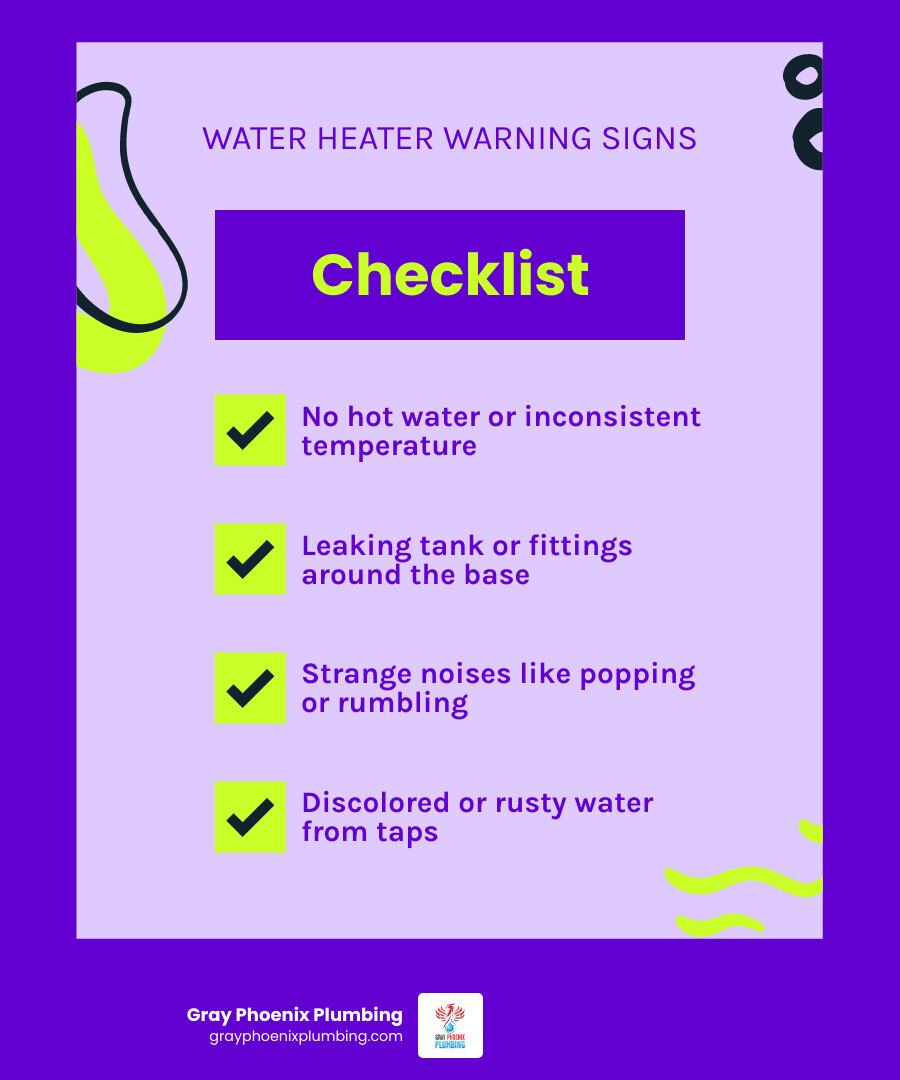
Your water heater often gives subtle (and sometimes not-so-subtle) hints that it’s struggling long before it completely gives up. Ignoring these early warnings can lead to bigger problems, including costly water damage or a complete system failure right when you need hot water most. We understand how frustrating it can be when a simple daily convenience like a warm shower becomes a struggle. That’s why we encourage Parker homeowners to pay attention to these common indicators.
Common Signs of a Failing Water Heater in Parker
When your water heater acts up, it’s not just an inconvenience; it’s a sign that something is amiss. Here are the common signs we see that indicate a water heater needs attention in Parker, CO:
- No Hot Water or Lukewarm Water: This is perhaps the most obvious sign. If your shower goes cold unexpectedly or your hot water runs out much faster than usual, it could be due to a faulty heating element (in electric models), a malfunctioning thermostat, or even a build-up of sediment reducing the tank’s capacity. A faulty dip tube might also be mixing cold water into the tank, leaving you with less hot water.
- Rusty or Discolored Water: If the water coming from your hot taps has a reddish or brownish tint, it often indicates rust inside your water heater tank. This can be a sign of internal corrosion and suggests your tank is nearing the end of its life. While a quick fix might involve flushing the tank, persistent rusty water usually means it’s time for a replacement.
- Strange Noises: Water heaters aren’t typically loud, so if you start hearing popping, rumbling, hissing, or even banging sounds, your unit is trying to tell you something. The most common culprit is sediment accumulation at the bottom of the tank. Hot water bursting through this sediment creates these noises, reducing efficiency and eventually damaging the tank.
- Leaks from Tank or Fittings: Any visible water pooling around the base of your water heater is a serious red flag. Leaks can stem from corrosion, a faulty temperature and pressure relief (T&P) valve, or loose fittings and pipes. While tightening fittings might resolve some minor leaks, a leak from the tank itself usually means the tank has cracked and requires immediate replacement. Leaks can also result from condensation, which can be mistaken for a tank issue.
- Malfunctioning Thermostat or Faulty Heating Element: These components are crucial for regulating and heating your water. Signs of their malfunction include inconsistent water temperatures (too hot or too cold), or a complete lack of hot water. Diagnosing these often requires professional assessment, as they can sometimes be repaired without replacing the entire unit.
- High Utility Bills: If your energy bills suddenly spike without a change in usage, your water heater might be working harder than it should. This reduced efficiency is often due to sediment buildup, an aging unit, or a failing heating element.
Ignoring these signs can turn a minor repair into a major headache, potentially leading to costly water damage. For a more comprehensive look at these warning signs, you can check out our guide on Don’t Ignore These Water Heater Warning Signs in Your Denver Home.
The Impact of Parker’s Water on Your Heater
Parker, like much of Colorado, is known for its hard water. What does this mean for your water heater? Hard water contains higher concentrations of minerals like calcium and magnesium. While generally safe to drink, these minerals can wreak havoc on your water heating system.
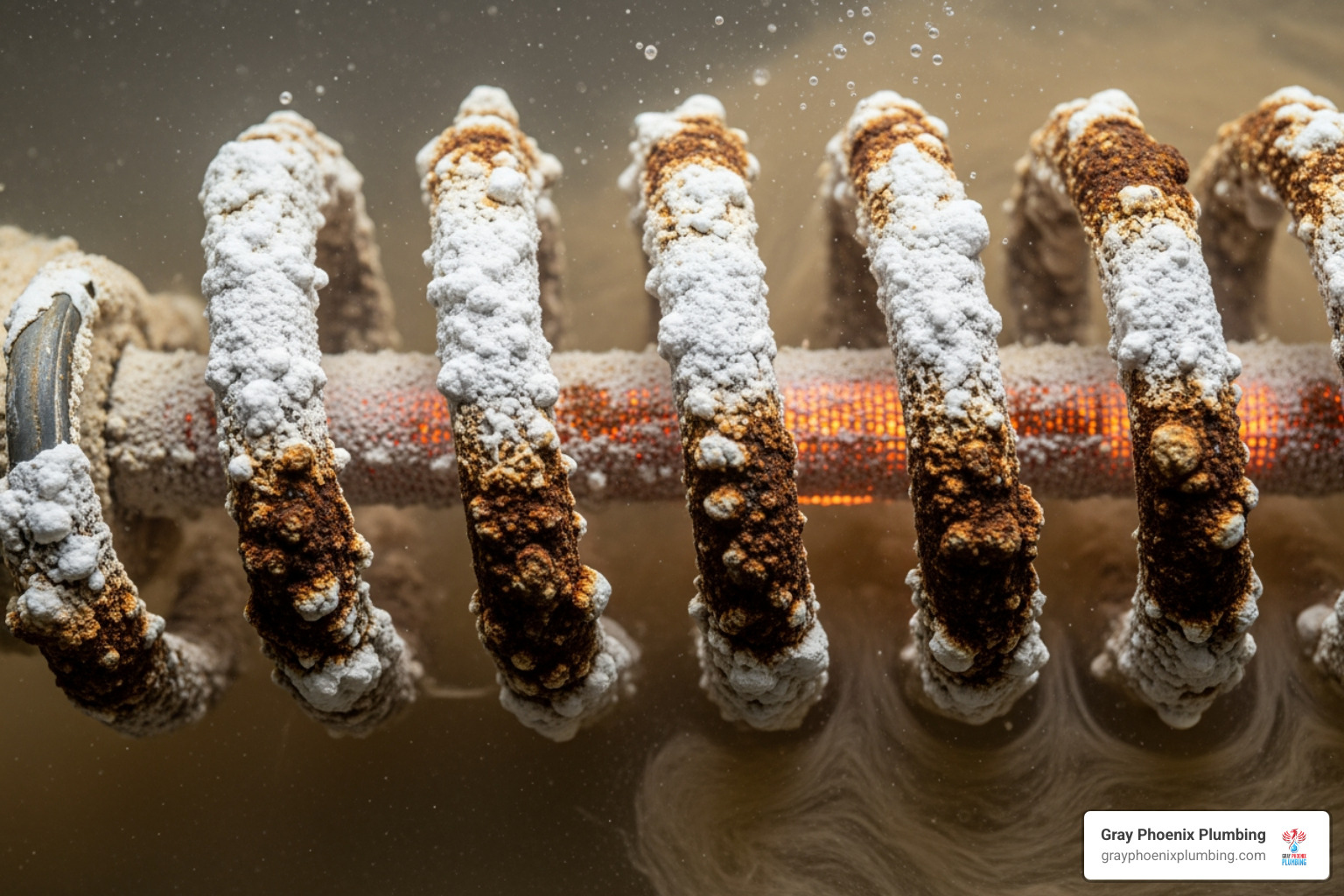
Over time, these minerals lead to sediment buildup and mineral deposits inside your tank or on heating elements, especially in traditional tank models. This acts as an insulating layer, forcing your water heater to work harder and longer to heat water. This not only reduces its efficiency but also contributes to the strange rumbling noises we mentioned earlier and can accelerate tank corrosion. For tankless heaters, mineral deposits can clog the heat exchanger coils, reducing performance.
The consequences of hard water on your water heater include:
- Reduced Efficiency: As sediment accumulates, the heating elements have to push through more material to heat the water, consuming more energy and increasing your utility bills.
- Shorter Lifespan: Constant exposure to mineral buildup and the stress of overheating can significantly shorten the lifespan of your water heater, sometimes cutting years off its expected service.
- Increased Repair Needs: Sediment and mineral deposits can lead to more frequent breakdowns, requiring professional cleaning or component replacement.
To combat the effects of Parker’s hard water and extend your water heater’s life, we often recommend considering a water filtration system. These systems can significantly reduce mineral buildup, protecting your water heater and improving the overall water quality in your home. Learn more about how to protect your home from hard water in our article, The Denver Water Solution: Why the Halo 5 is the Ultimate Whole House Filtration System for Your Home.
Understanding Your Water Heater: Types, Lifespan, and Upgrades
Choosing or maintaining a water heater can feel overwhelming with all the options available. But understanding the different types, their typical lifespans, and the benefits of modern upgrades can help you make informed decisions for your Parker home. At Gray Phoenix Plumbing, we service all types of water heaters, ensuring we can address your specific needs.
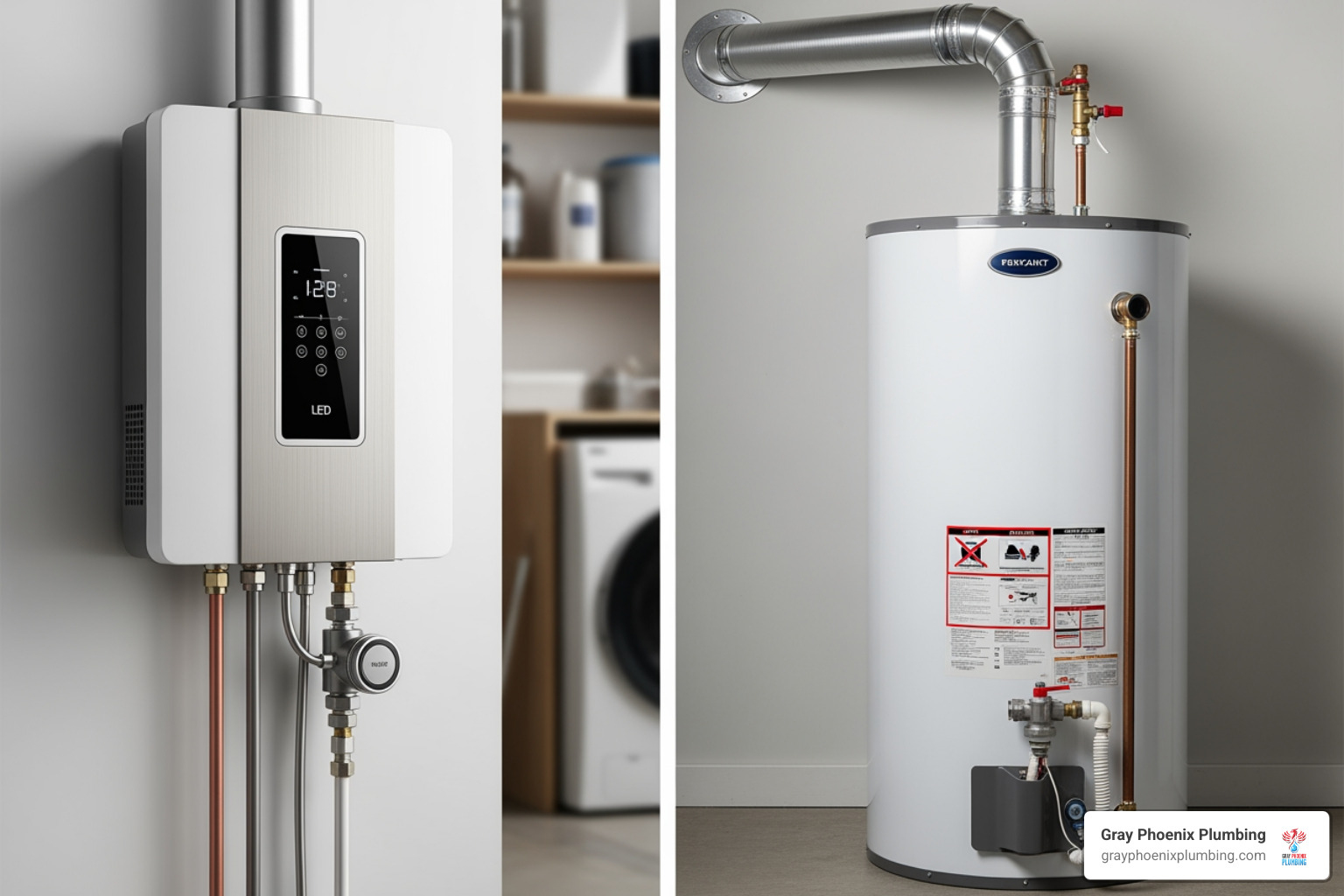
The world of water heating has evolved beyond just the traditional tank. Today, homeowners in Parker have choices that offer varying levels of energy efficiency, hot water delivery, and upfront costs. We work with traditional tank heaters, tankless (on-demand) models, and even advanced hybrid heat pump water heaters. Whether your system runs on gas vs electric, we have the expertise to repair, install, and maintain it. For a deeper dive into the mechanics of these systems, you can refer to General information on water heating systems.
Comparing Water Heater Types
Each type of water heater offers distinct advantages and disadvantages, especially concerning lifespan and energy consumption. Here’s a quick comparison:
| Feature | Traditional Tank | Tankless (On-Demand) | Hybrid (Heat Pump) |
|---|---|---|---|
| Lifespan | 8-12 years | 20+ years | 10-15 years |
| Energy Use | Higher standby loss | Highly efficient | Uses 60% less energy |
| Hot Water Supply | Limited by tank size | Unlimited | Limited by tank size |
| Upfront Cost | Low | High | Highest |
| Installation | Simpler | More complex | Complex |
Let’s elaborate on these:
- Traditional Tank Water Heaters: These are the most common type, storing and heating a set amount of water in a large tank. Their lifespan averages 8 to 12 years. While they have a lower upfront cost, they experience “standby heat loss” as they continuously heat water, even when you’re not using it. The amount of hot water available is limited by the tank’s capacity.
- Tankless Water Heaters: Also known as on-demand water heaters, these units heat water directly as it flows through, providing an endless supply of hot water. They can last up to 20 years or more with proper maintenance. Their main advantage is high energy efficiency, as they only heat water when needed, eliminating standby losses. However, they have a higher upfront cost and more complex installation. The advantages of tankless water heaters, such as continuous hot water and energy savings, make them an attractive upgrade for many Parker homes.
- Hybrid (Heat Pump) Water Heaters: These innovative systems absorb heat from the surrounding air and transfer it to the water in the tank, using electricity only to move heat, not generate it. They use significantly less energy—up to 60% less energy than traditional electric models. They typically last 10-15 years. While they have a higher upfront cost and more complex installation requirements (often needing specific space and temperature conditions), their energy savings can be substantial.
The Benefits of Upgrading to a Modern Water Heater
Upgrading your water heater isn’t just about getting a new appliance; it’s an investment in your home’s comfort, efficiency, and value. Here are some compelling reasons why many Parker homeowners choose to upgrade:
- Significant Energy Savings and Lower Utility Bills: Modern water heaters, especially tankless and hybrid models, are designed for superior energy efficiency. A heat pump water heater, for instance, uses 60% less energy than a traditional electric water heater. Even simply setting your water heater to 120 degrees Fahrenheit can save over 5% on water heating expenditures. These savings directly translate to lower monthly utility bills, putting money back in your pocket.
- Endless Hot Water (with Tankless Models): Say goodbye to cold showers! Tankless water heaters provide hot water on demand, meaning you’ll never run out, no matter how many people are showering or how many appliances are running simultaneously.
- Smaller Footprint: Tankless units are compact and wall-mounted, freeing up valuable space in your utility closet or garage. This can be a significant advantage for homes with limited space.
- Increased Property Value: A new, high-efficiency water heater can make your property more attractive and potentially worth more to home buyers, signaling that the home has been well-maintained and updated.
- Federal Tax Credits: To encourage energy-efficient upgrades, federal tax credits may be available for certain models. This can significantly offset the initial investment cost. You can find more information on these incentives at Federal tax credits for energy efficiency.
Considering a tankless option? Our team specializes in Tankless Water Heater Installation Service in Denver. For those interested in the latest in efficiency, we also offer Hybrid Water Heater Installation.
Your Guide to Water Heater Repair Parker
When your water heater acts up, the big question often boils down to: repair vs replace? This decision, along with understanding potential cost factors and knowing when to call for emergency services, is crucial. Finding a reliable, licensed plumber in Parker who prioritizes professionalism and reliability makes all the difference.
Deciding Between Repair and Replacement
This is one of the most common dilemmas homeowners face. While repairing your water heater might seem like the immediate, cheaper solution, it’s not always the best long-term choice. Here’s how we help you weigh your options:
- Age of Unit: The average lifespan of a traditional hot water tank is 8 to 12 years. If your unit is approaching or has surpassed this age, replacement often makes more sense. For a unit that’s 10+ years old, continuing to repair it can be like throwing good money after bad.
- Frequency of Repairs: Have you been calling for water heater repairs frequently in the past year or two? If your unit requires constant fixes, it’s a clear sign it’s nearing the end of its functional life.
- Cost of Repair vs. New Unit: A good rule of thumb is this: if the cost of the repair is half or more than the cost of a brand-new unit, replacement is generally the more economical choice. For example, if a repair costs $600 and a new unit costs $1200, replacing it makes financial sense. Water heaters leaking from tanks due to corrosion or rust are rarely cost-effective to repair.
- Energy Efficiency Gains: Older water heaters are simply not as efficient as newer models. Replacing an aging unit with a modern, energy-efficient one can lead to significant savings on your utility bills, quickly recouping the initial investment.
We’ll provide an honest assessment to help you decide if it’s worth it to repair your existing unit or if it’s time for a Water Heater Replacement.
What to Expect for Water Heater Repair Parker Costs
The cost range for water heater repair and installation services in Parker can vary significantly depending on several factors. While it’s difficult to give an exact figure without a proper diagnosis, we can offer some general expectations.
For repairs, the average repair cost can typically range around $600 nationally, but this can fluctuate based on the specific problem and the type of water heater (tank vs. tankless, gas vs. electric). Minor issues like a faulty thermostat or heating element might be on the lower end, while major component failures or addressing extensive sediment buildup could be higher.
For installation services, the cost is influenced by:
- Type of Water Heater: Traditional tank models are generally less expensive to install than tankless or hybrid units due to simpler plumbing and venting requirements. For example, the Cost to Install an Electric Tankless Water Heater can be higher due to electrical upgrades or specific venting needs.
- Size and Capacity: Larger units or those with higher flow rates typically cost more.
- Permits: Depending on the scope of the work, permits may be required by local Parker authorities, adding to the overall cost.
- Installation Complexity: If modifications to your plumbing, electrical, or gas lines are needed, the installation time and cost will increase.
- Parts and Labor: These are the primary drivers of any service cost. We believe in transparent, upfront pricing, charging by the job, not by the hour, so you know the full cost before we start.
We strive to offer budget-friendly rates for both residential and commercial customers in Parker, providing affordable solutions without compromising on quality.
Finding a Licensed and Insured Plumber in Parker
When it comes to something as vital as your water heater, you want to ensure you’re hiring qualified professionals. This is what you should look for in a plumber for water heater repair Parker services:
- Licensing Requirements: Always choose a plumber who is licensed in Colorado. This ensures they have met the state’s standards for knowledge and expertise. A licensed plumber understands local building codes and standards, which is invaluable for ensuring compliant and safe work.
- Insurance Importance: Confirm that the plumbing company is fully insured. This protects you from liability in case of accidents or damage that might occur during the service.
- Customer Reviews and Reputation: Look for plumbers with a strong reputation for quality work and customer satisfaction. Online reviews and testimonials offer valuable insights into a company’s reliability and professionalism. Ask for recommendations from neighbors or friends in Parker.
- Upfront Pricing: A reputable plumber will provide a clear, detailed, and upfront quote before any work begins. We believe in transparent pricing, so you pay the original quoted price – no matter how long the job takes.
- Service Guarantees: Choose a company that stands behind its work. We offer a Customer Care Guarantee on our services, providing you with peace of mind.
- 24/7 Emergency Availability: Water heater issues don’t always happen during business hours. Many professional plumbers, including us, offer 24/7 emergency services for urgent issues like major leaks or a complete loss of hot water. We understand that some issues can’t wait, and we’re here for you when you Need a Plumber Today?. We pride ourselves on our reliability, professionalism, and efficiency, ensuring you have hot water as quickly as possible.
DIY Maintenance to Extend Your Water Heater’s Life
While professional water heater repair Parker services are essential for complex issues, there’s plenty you can do as a homeowner to keep your unit running efficiently and extend its lifespan. Regular, simple maintenance can prevent many common problems and even help reduce your utility bills.
Annual maintenance is key to getting the most out of your water heater. These homeowner tasks are relatively easy and can make a big difference in improving efficiency and extending lifespan.
List of Simple Maintenance Tasks
- Flush the Tank: Annually remove sediment to improve efficiency and reduce noise.
- Sediment buildup is the enemy of efficiency and the source of those rumbling noises. Flushing your tank once a year helps remove these mineral deposits, ensuring your heating elements can work effectively. You can even perform a “mini-flush” while the unit is on, which is effective at removing sediment.
- Test the T&P Valve: Check the temperature-pressure relief valve for proper function.
- The T&P valve is a critical safety device designed to release pressure if it gets too high, preventing a potentially dangerous situation. We recommend monitoring this valve annually. It opens when pressure drops to 150 PSI or temperature reaches 120 degrees Fahrenheit. If it’s faulty, it can cause leaks, but it’s typically replaceable.
- Check the Anode Rod: Inspect and replace the sacrificial anode rod every 3-5 years to prevent tank corrosion.
- The anode rod is designed to corrode before the tank itself, sacrificing itself to protect your water heater. Checking and replacing it periodically is a small investment that can significantly extend your tank’s life.
- Adjust the Thermostat: Set to 120°F for safety and energy savings.
- The US Department of Energy advises setting your water heater to 120 degrees Fahrenheit for most homes. This temperature is hot enough for most needs, reduces the risk of scalding, and can save you over 5% on your water heating expenditures.
Performing these simple maintenance tasks can greatly impact your water heater’s longevity and performance, keeping your utility bills in check and providing reliable hot water for your Parker home.
Frequently Asked Questions about Water Heater Services
How long does a water heater last in Colorado?
A traditional tank water heater typically lasts 8-12 years, while a tankless model can last 20 years or more. High-efficiency tank models might extend this to 15 years. However, Parker’s hard water, with its mineral content, can shorten this lifespan without proper maintenance or a water filtration system to mitigate sediment and mineral buildup. Well-maintained tankless water heaters, professionally installed, can even last up to two decades.
Is it worth repairing a 10-year-old water heater?
It depends. If the repair is minor and inexpensive (like a thermostat or a small part), it may be worthwhile to get a few more years out of it, especially if it’s been well-maintained. However, for a unit at the end of its expected lifespan (8-12 years for traditional tanks), replacement with a more energy-efficient model is often the smarter long-term investment. If the repair cost is half the price of a new unit, or if you’ve had multiple repair calls recently, we usually recommend replacement. Leaks from a corroded tank, for example, are rarely cost-effective to repair.
Are emergency water heater services available in Parker?
Absolutely! We understand that a sudden loss of hot water or a major leak can be a crisis. Many professional plumbers, including Gray Phoenix Plumbing, offer 24/7 emergency services for urgent issues like major leaks or a complete loss of hot water, ensuring you’re not left in the cold. You can count on us for prompt solutions in emergency situations. For immediate assistance, we act as your trusted Denver 24 Hour Plumber.
Your Partner for Reliable Plumbing in Parker
Hot water is a necessity, not a luxury. From identifying strange noises to deciding on a full replacement, understanding your water heater is key to maintaining your home’s comfort. For homeowners in Parker, having a trusted, licensed professional is crucial. Gray Phoenix Plumbing provides transparent pricing and guaranteed work for all your plumbing needs, ensuring your system runs efficiently and reliably. For expert advice and service, contact a professional today. Expert Plumbing Services in Parker Co Gray Phoenix Plumbing


