

Why Professional Toilet Installation Littleton Matters for Your Home
Toilet installation Littleton is a critical home improvement project that combines proper measurements, quality components, and professional expertise to ensure a leak-free, efficient fixture that can last for decades. Whether you’re upgrading an outdated model, replacing a cracked unit, or installing a water-efficient toilet to lower your utility bills, understanding the installation process helps you make informed decisions and avoid costly mistakes.
Here’s what you need to know about toilet installation in Littleton:
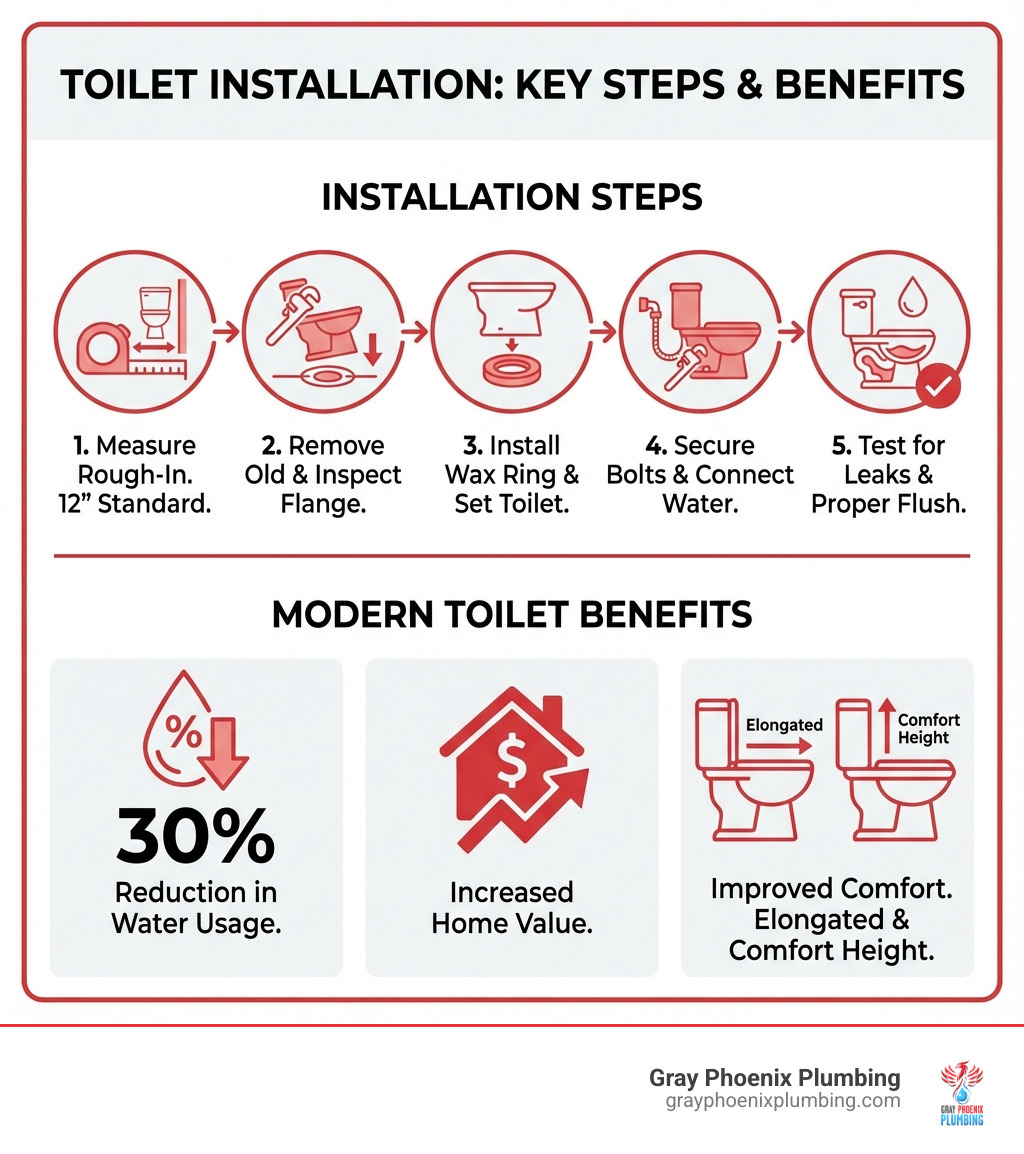
- Proper rough-in measurements – The standard is 12 inches from the wall to the center of the closet bolts
- Professional installation takes 1-3 hours for a standard replacement
- Cost factors include toilet type, existing plumbing condition, flange repairs, and labor
- Modern toilets use 1.28 gallons per flush compared to older models that use 3.5+ gallons
- Licensed plumbers ensure proper wax ring sealing, secure mounting, and leak-free connections
Installing a new toilet might seem straightforward, but even small mistakes—like an improperly seated wax ring or incorrect flange height—can lead to water damage, leaks, and expensive repairs down the road. Modern toilets also come with features like dual-flush systems, comfort-height seating, and pressure-assisted flushing that require specific installation knowledge.
I’m Chris Hoffman, a Master Plumber with over 25 years of experience serving homeowners throughout the Denver Metro area and Elbert County. I’ve completed countless toilet installation Littleton projects, from basic replacements to specialized comfort-height and dual-flush models, and I understand the importance of getting every detail right.
In this guide, we’ll walk you through everything you need to know—from deciding whether to repair or replace your existing toilet, to choosing the right model for your home, to understanding the professional installation process from start to finish.
Basic Toilet installation Littleton glossary:
Is It Time for a Change? Deciding Between Toilet Repair and Replacement
Ah, the humble toilet. It’s often taken for granted until it starts acting up, isn’t it? When your porcelain throne begins to misbehave, the big question arises: do we fix it, or is it time for a shiny new one? This isn’t just about convenience; it’s about water conservation, utility bills, and the overall health of your home in Littleton. We’ve seen it all, from minor annoyances to full-blown plumbing dramas. Let’s explore the common signs and help you weigh the options.
Signs Your Toilet Needs Repair
Before we jump to conclusions, let’s talk about the common issues that often point to a need for repair rather than a complete overhaul. Many toilet problems are fixable, and a skilled plumber can usually get things flowing smoothly again without a full replacement.
One of the most frequent culprits is a running toilet. That incessant sound of water trickling into the bowl, often in the dead of night, isn’t just annoying—it’s a significant water waster. A running toilet can waste hundreds of gallons of water a month, spiking your utility bill. This is typically caused by a worn flapper, a faulty fill valve, or a misaligned float. These are usually straightforward repairs, often involving replacing a small, inexpensive part.
Minor leaks are another common issue. If you notice a small puddle around the base of your toilet, it might be a worn wax ring or loose flange bolts. Left untreated, these minor leaks can damage subflooring and create mold problems, so it’s important to address them quickly. Sometimes, a leak can also occur from the tank, often due to a cracked seal or a loose connection.
A weak flush or partial flush can be frustrating, requiring multiple attempts to clear the bowl. This issue could be due to mineral buildup in the rim jets, tank issues, or a blockage in the trapway. Our team can often diagnose and clear these issues, restoring your toilet’s flushing power.
Then there are the gurgling noises. If your toilet is making strange sounds, like whistling, gurgling, or hissing, it can signal a fill valve problem or a venting issue within your plumbing system. These sounds are often a cry for help from your toilet!
Finally, a worn flapper or fill valve is a classic sign of needing repair. These internal components wear out over time, leading to many of the problems mentioned above, especially running toilets and weak flushes. Replacing these parts is a routine job for our plumbers.
For more information on how we can help with these common issues, please visit our page on Toilet Repair Littleton.
When to Consider a Full Replacement
While many issues can be repaired, there comes a point when replacement is the more sensible, cost-effective, and environmentally friendly option. Sometimes, repairing an old toilet is like putting a band-aid on a much larger problem.
One of the clearest indicators is frequent clogs. If your toilet seems to clog every other day despite careful use, it could be a sign of an outdated toilet design with a narrow trapway, or even issues with your home’s main drain line. Older toilets weren’t designed with the same efficiency as modern models, making them more prone to blockages.
Another major sign is a constant need for repairs. If we’re visiting your home every few months to fix a new problem with the same toilet, the accumulated cost of repairs can quickly exceed the cost of a new, more reliable unit. It’s often better to invest in a new toilet that will give you years of trouble-free service.
Visible cracks in the tank or bowl are non-negotiable. Cracks in the tank or bowl can cause dangerous leaks and structural failure, leading to significant water damage if not addressed immediately. Once porcelain is cracked, it’s virtually impossible to repair effectively, and replacement is the only safe solution.
Age is also a significant factor. The average lifespan of a toilet can be quite long for the porcelain itself, but the internal mechanisms typically last 5-10 years. We generally recommend considering a full replacement for toilets older than 15-20 years. Not only are their components likely worn out, but they are also far less water-efficient than modern models.
If you’re noticing high water bills without a clear reason, your old toilet could be the culprit. Toilets are responsible for about 30 percent of a home’s water usage. Older models can use 3.5 gallons per flush (GPF) or more, while modern, low-flow toilets use a mere 1.28 GPF. Upgrading can lead to significant savings.
Finally, if you simply desire a water-efficient model or want to update the look and functionality of your bathroom, replacement is the way to go. New toilets offer improved comfort, quieter flushing, and improved aesthetics that can lift your entire bathroom.
Here’s a quick guide to help you decide:
| Criteria | Repair (Recommended) | Replace (Recommended) |
|---|---|---|
| Age of Toilet | Under 10 years, minimal previous repairs | Over 15-20 years, frequent repairs |
| Cost of Service | Minor part replacement (flapper, fill valve), simple clog | Multiple major repairs needed, cost of repair > 50% of new toilet |
| Type of Problem | Running water, minor leaks, weak flush, occasional clogs | Cracked tank/bowl, sewage backup, constant clogs, severe leaks |
Toilet Emergencies Requiring Immediate Attention
Some toilet problems simply cannot wait. These are the “call us right now” situations that require immediate professional attention to prevent extensive damage to your Littleton home.
The most critical is major water leaks from the base. If water is gushing or steadily leaking from the bottom of your toilet, it indicates a severe seal failure or a cracked base. This can quickly saturate your subfloor, leading to structural damage, mold growth, and costly repairs. Shut off the water supply to the toilet immediately and call us.
Sewage backups are not only disgusting but also a serious health hazard. If your toilet is overflowing with raw sewage, or if sewage is backing up into your tub or shower, it indicates a major blockage in your main sewer line. This is definitely an emergency that requires prompt professional intervention.
A completely cracked bowl or tank also falls into the emergency category. As mentioned, a crack in the porcelain means the toilet is compromised and can fail catastrophically at any moment, leading to uncontrolled water release and potential flooding.
Finally, an overflowing toilet that won’t stop even after attempting to plunge or turn off the water can be an emergency. While often caused by a severe clog, if the water continues to rise and spill onto your bathroom floor, it needs immediate attention to prevent water damage.
When in doubt, it’s always best to err on the side of caution and call a professional plumber. We offer emergency plumbing services across the Denver Metro Area, including Littleton, to address these urgent situations.
Choosing the Perfect Throne: A Buyer’s Guide for Littleton Homes
Once you’ve decided that a new toilet is in your future, the fun begins: choosing the right one! With so many options available today, it can feel a bit overwhelming. But don’t worry, we’re here to guide you through the factors that matter most for Littleton homeowners, ensuring you select a toilet that’s efficient, comfortable, and aesthetically pleasing. Modern toilets are not just about flushing; they’re about enhancing your bathroom experience and contributing to water conservation efforts.
Water Efficiency and Savings
This is perhaps one of the most compelling reasons to upgrade your toilet. Older toilets, especially those installed before 1994, can use anywhere from 3.5 to 7 gallons per flush (GPF). That’s a lot of water!
Today, the standard for water-efficient toilets is 1.28 GPF, and Colorado’s water conservation standard for toilets aligns with this, set at 1.28 gallons per flush. By replacing an old, inefficient toilet with a modern 1.28 GPF model, you can significantly reduce your water consumption, which directly translates to lower utility bills in Littleton.
We highly recommend looking for WaterSense certified toilets. These models meet strict EPA criteria for water efficiency and performance. They are independently tested and certified to use at least 20% less water than standard toilets while still providing equal or superior flushing performance.
Beyond the standard low-flow models, you also have the option of dual-flush technology. These toilets offer two flushing options: a lower volume flush for liquid waste (typically 0.8 GPF) and a full-volume flush for solid waste (1.28 GPF). This provides even greater water savings by allowing you to use only the water needed for the job.
Considering that toilets are responsible for about 30 percent of a home’s water usage, installing a new, water-efficient toilet is one of the smartest investments you can make for both your wallet and the environment. It’s a simple change that makes a big impact on your household’s overall water footprint.
Finding the Right Fit and Style
Beyond efficiency, comfort and aesthetics play a huge role in choosing your new toilet. After all, it’s a fixture you’ll use multiple times a day!
One of the first decisions is between Round vs. Elongated bowls.
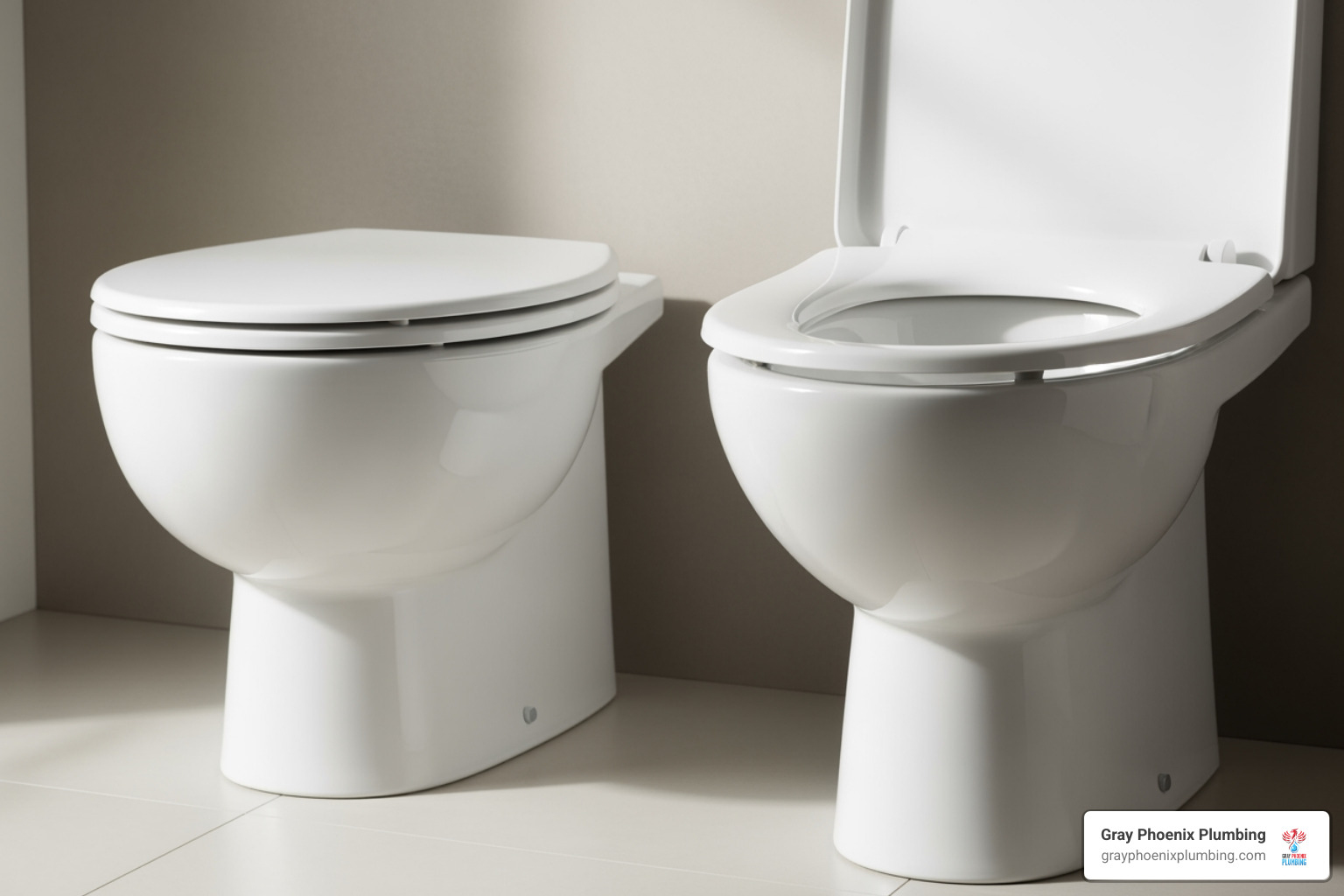
Elongated bowls, which are oval-shaped, tend to be more comfortable for most adults and are often preferred in master bathrooms. Round bowls, being more compact, are excellent for smaller bathrooms or powder rooms where space is at a premium.
Comfort height (ADA compliant) toilets are another popular choice. These toilets have a seat height of 17 to 19 inches (including the seat), compared to standard toilets which are usually 14 to 15 inches high. This higher seating makes them much easier to use for taller individuals, seniors, and anyone with mobility issues. They are an excellent option for aging-in-place renovations or simply for added comfort.
You’ll also encounter one-piece vs. two-piece designs. Two-piece toilets, where the bowl and tank are separate, are generally more common and often more affordable. One-piece toilets integrate the bowl and tank into a single, seamless unit. This design is usually sleeker, easier to clean (fewer crevices!), and can offer a more modern aesthetic.
The goal is to choose a toilet whose aesthetics matching your bathroom design. Whether you’re going for a traditional, modern, or minimalist look, there’s a toilet style to complement it. Newer toilet models often come with advanced features that improve comfort and usability, like quieter flushing mechanisms and sleek designs that lift your bathroom’s appeal. Updating your bathroom fixtures, including the toilet, can increase the overall value of your home.
Understanding Flush Types
The way your toilet flushes is more than just a matter of sound; it impacts efficiency and performance.
Most residential toilets use gravity-fed systems. These are the traditional toilets where water from the tank is released into the bowl, and the force of gravity creates the siphon action to clear the waste. They are generally quieter and less expensive.
Pressure-assisted flushing systems use a compressed air tank inside the toilet tank to force water into the bowl at a higher velocity. This results in a very powerful, efficient flush that is less prone to clogging. However, they are typically louder than gravity-fed models and often more expensive. They are great for high-traffic areas or where clogging is a persistent problem.
We can also assist with specialized installations for advanced models, such as wall-hung toilets, smart toilets with bidet functions, or even touchless flush systems. These modern conveniences can greatly improve your bathroom experience, and our licensed plumbers are equipped to handle their unique installation requirements.
For all your plumbing needs, including advanced toilet systems, we’ve got you covered. Check out our Residential Plumbing services for more details.
The Professional Toilet Installation Littleton Process Explained
You’ve picked out the perfect toilet – congratulations! Now comes the crucial step: installation. While some homeowners might consider a DIY approach, we highly recommend professional toilet installation Littleton. Why? Because proper installation ensures not only the immediate functionality of your new toilet but also its longevity and the prevention of costly water damage down the line. We believe in doing things right the first time, every time.
Advantages of Hiring a Licensed Plumber
Hiring a licensed and experienced plumber offers several significant advantages:
- Expertise and Experience: Our plumbers have extensive experience with all types of toilet models and plumbing systems. We know the nuances of different installations and can anticipate and solve potential issues before they become major problems.
- Ensuring a Leak-Free Installation: This is paramount. An improperly installed toilet can leak, causing damage to your subfloor, creating mold, and leading to expensive structural repairs. We ensure all connections are secure, and the wax ring is perfectly sealed for a watertight fit.
- Proper Tools and Materials: We come equipped with all the necessary specialized tools and high-quality materials to get the job done efficiently and correctly.
- Compliance with Codes: We are familiar with local Littleton plumbing codes and regulations, ensuring your installation meets all necessary standards.
- Warranties and Guarantees: We stand behind our work. Our services come with warranties and guarantees, giving you peace of mind that your investment is protected. If anything goes wrong, you know who to call.
- Efficiency and Speed: While it might seem like a simple task, professional installation is often quicker and cleaner than a DIY attempt, saving you time and hassle.
The First Step: Accurate Rough-In Measurements
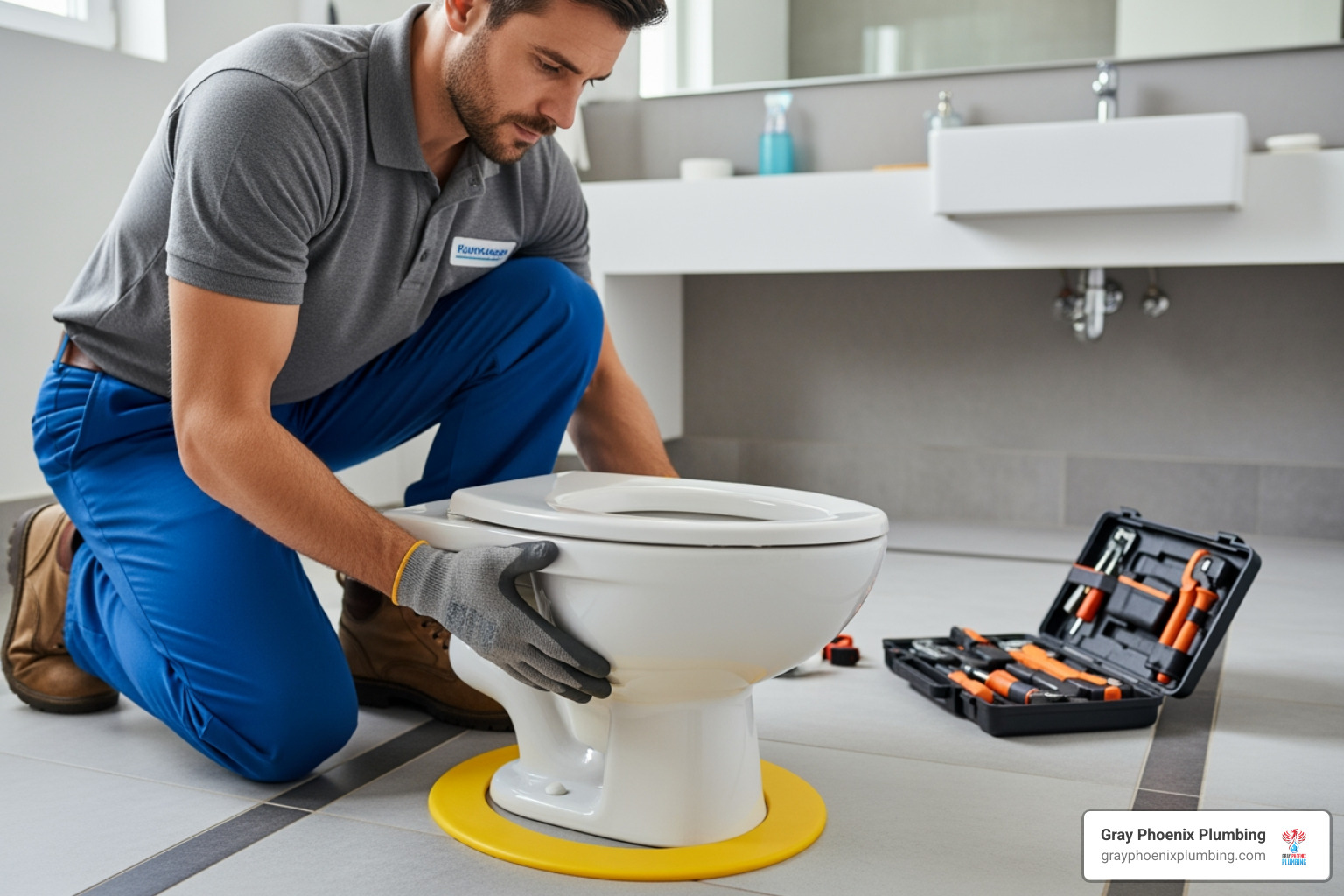
Before any installation begins, the most critical step is taking accurate measurements, especially the rough-in measurement. The rough-in is the distance from the finished wall behind the toilet to the center of the drainpipe (which is typically where the closet bolts that secure your toilet to the floor are located).
To determine your rough-in, you simply measure from the back wall to the center of one of the closet bolts that secure the existing toilet to the floor. It’s crucial to measure from the wall, not from the baseboard. The standard 12-inch rough-in is the most common, but we occasionally encounter 10-inch or 14-inch rough-ins in older homes or custom bathrooms in Littleton. Choosing a toilet with the wrong rough-in measurement will mean it won’t fit, either sitting too far from the wall or leaving a large gap.
This measurement is of utmost importance for a proper fit. If the rough-in isn’t correct, your new toilet simply won’t sit properly, or it won’t be able to be installed at all. We also check for clearance to nearby water supply lines and sidewalls to ensure the toilet fits comfortably within your bathroom space. Don’t forget to consider tank height if you have shelves or cabinets above the toilet!
For a detailed guide on how to measure, you can refer to resources like How to properly measure for a new toilet. We’ll handle these measurements during our initial assessment to ensure we recommend the perfect toilet for your space.
A Plumber’s Step-by-Step Installation Guide
When we arrive for your toilet installation Littleton, here’s a general overview of the professional process we follow:
- Shutting Off Water Supply: The first and most crucial step is to turn off the water supply to the old toilet, usually via the shut-off valve located behind or near the base of the toilet. We also flush the toilet to drain the tank and bowl as much as possible.
- Draining and Removing the Old Toilet: Any remaining water is removed, and the old toilet is unbolted from the floor flange. We carefully lift and remove the old unit, ensuring no damage to your bathroom floor.
- Inspecting the Toilet Flange: With the old toilet removed, we inspect the toilet flange—the pipe fitting that connects the toilet to the drainpipe. We check for any damage, corrosion, or instability. If the flange is broken or deteriorated, we’ll repair or replace it to ensure a solid foundation for your new toilet.
- Replacing the Wax Ring: This is a critical step for a leak-free seal. We remove the old wax ring and clean the area thoroughly. A new, high-quality wax ring is then placed over the flange, providing a watertight seal between the toilet and the drainpipe.
- Setting and Securing the New Toilet: The new toilet is carefully lowered onto the wax ring and flange, ensuring the closet bolts align with the holes in the toilet base. We gently rock the toilet to compress the wax ring and create a tight seal, then secure it evenly with washers and nuts. We’re careful not to overtighten, which can crack the porcelain.
- Connecting the Water Line: We connect the new flexible water supply line from the shut-off valve to the toilet tank, hand-tightening first, then gently with a wrench to prevent leaks.
- Testing for Leaks and Proper Function: Once everything is connected and secured, we slowly turn the water supply back on, allowing the tank to fill. We then perform several test flushes, carefully checking for any leaks around the base, supply line connections, and within the tank. We also ensure the toilet fills and flushes correctly, making any necessary adjustments to the fill valve or flapper.
This meticulous process ensures that your new toilet is installed correctly, efficiently, and provides reliable, leak-free service for years to come.
Factors Influencing the Cost of Toilet Installation in Littleton
The cost of toilet installation Littleton can vary depending on several factors. We believe in transparent pricing and will provide a detailed estimate before any work begins.
- Toilet Type and Complexity: The type of toilet you choose can influence the cost. Standard two-piece, gravity-fed toilets are typically less expensive to install than one-piece designs, comfort-height models, or specialized dual-flush or smart toilets that might require additional plumbing adjustments or electrical connections.
- Condition of Existing Plumbing: If your existing plumbing lines or shut-off valve are old, corroded, or damaged, they may need to be repaired or replaced during the installation. This is common in older homes in Littleton and can add to the overall cost.
- Flange or Subfloor Repairs: As mentioned, if the toilet flange is damaged, or if there’s existing water damage to your subfloor from a previous leak, these repairs will need to be addressed before the new toilet can be properly installed. This is crucial for a stable and leak-free installation.
- Labor Rates: Our labor rates reflect the expertise, licensing, and insurance of our professional plumbers. We ensure our team is highly trained and equipped to handle any situation.
- Disposal of the Old Unit: The cost may also include the proper disposal of your old toilet, saving you the hassle of hauling it away yourself.
While it might seem like an added expense, professional installation often saves homeowners money in the long run by preventing costly repairs due to improper DIY work.
Frequently Asked Questions about Toilet Installation
We get a lot of great questions from our Littleton neighbors about toilet installation and repair. Here are some of the most common ones we hear:
How long does a toilet typically last?
The porcelain of a toilet can last for decades, but the internal components like the flapper and fill valve usually need replacement every 5-10 years. A full toilet replacement is often recommended after 15-20 years for better efficiency and to prevent major failures. While the bowl itself might seem indestructible, the working parts inside the tank are constantly exposed to water and wear out over time.
Can a new, water-efficient toilet really save me money?
Yes. Toilets are responsible for about 30 percent of a home’s water usage. Replacing an old toilet that uses 3.5 gallons per flush (GPF) or more with a modern 1.28 GPF model can save a typical family thousands of gallons of water per year, significantly lowering utility bills. Imagine the water savings over a year or even a decade – it really adds up, making the initial investment in a new toilet well worth it.
How long does a professional installation take?
A standard, straightforward toilet installation by a professional plumber typically takes between 1 to 3 hours. This can be longer if unexpected issues arise, such as a broken flange or subfloor water damage that needs to be addressed. We always aim for efficiency without compromising on quality, ensuring your new toilet is perfectly installed.
Your Local Experts for Flawless Toilet Installation
Upgrading your toilet is a smart investment for your Littleton home. It’s not just about getting a new fixture; it’s about improving bathroom functionality, increasing your home’s value, and making a tangible step towards conserving water and lowering your utility bills. Modern, water-efficient toilets are a game-changer, and with the Colorado water conservation standard at 1.28 GPF, you’ll be doing your part for the environment too.
For a professional and stress-free experience, the licensed experts at Gray Phoenix Plumbing ensure your new toilet is installed correctly the first time. We handle everything from precise rough-in measurements to meticulous leak testing, guaranteeing a flawless and long-lasting installation. Whether you’re in Elizabeth, Parker, Castle Rock, Denver, or right here in Littleton, we’re your trusted partners for all your residential plumbing needs.
Don’t let a leaky, inefficient, or outdated toilet diminish your home comfort or inflate your water bills. Let us help you choose and install the perfect new toilet.


