

Why Whole House Water Filters Matter for Your Home
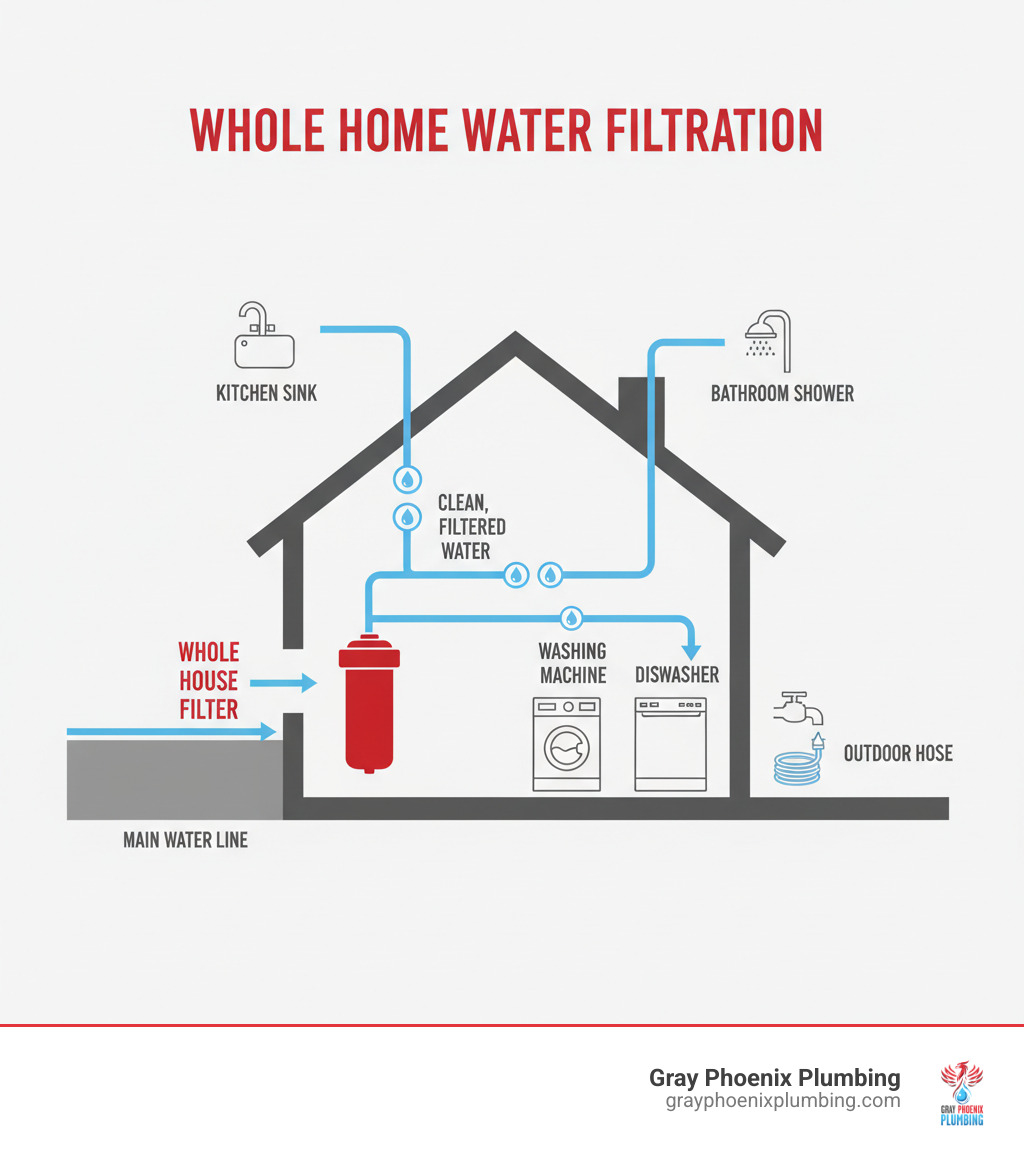
A whole house water filter is a point-of-entry (POE) system installed on your main water line, designed to treat all the water entering your home—ensuring cleaner, safer water from every tap, shower, and appliance.
Quick Answer: What is a Whole House Water Filter?
- Where it’s installed: At the main water line where water enters your home
- What it does: Removes contaminants like chlorine, sediment, iron, and sulfur from all your water
- Key benefits: Protects plumbing, extends appliance life, improves taste, healthier skin and hair
- Types available: Sediment filters, carbon filters, water softeners, iron/sulfur filters, UV systems
- Typical cost range: $500–$5,000+ for the system, plus installation and ongoing filter replacements
If you’ve noticed rust stains, a rotten egg smell, or scale buildup on your faucets, you’re not alone. Whole house water filtration systems are designed to reduce contaminants like chlorine, iron, and sulfur. Unlike point-of-use filters that only treat water at a single faucet, a whole house system addresses water quality issues everywhere in your home.
I’m Chris Hoffman, owner of Gray Phoenix Plumbing, and our team has installed countless whole house water filter systems throughout the Parker and Elizabeth areas, helping homeowners tackle everything from hard water and chlorine to iron staining. We’ve seen how the right system can transform a home’s water quality and protect your investment in plumbing and appliances.
The Telltale Signs: Do You Need a Filtration System?
Your water has a way of telling you when something’s not quite right. Here are the common signs that you may need a filtration system in your home.
- Bad Taste or Smell: A metallic, chemical, or just plain unpleasant taste or odor indicates that contaminants are making their way through your pipes.
- Chlorine or Chemical Odor: That “swimming pool” smell is from chlorine used by municipal systems to kill bacteria. While it disinfects, its byproducts are best filtered out before you drink or bathe in the water.
- Rotten Egg Smell: This unmistakable sulfur odor often points to hydrogen sulfide gas, a common issue in well water homes throughout Elbert County and Kiowa.
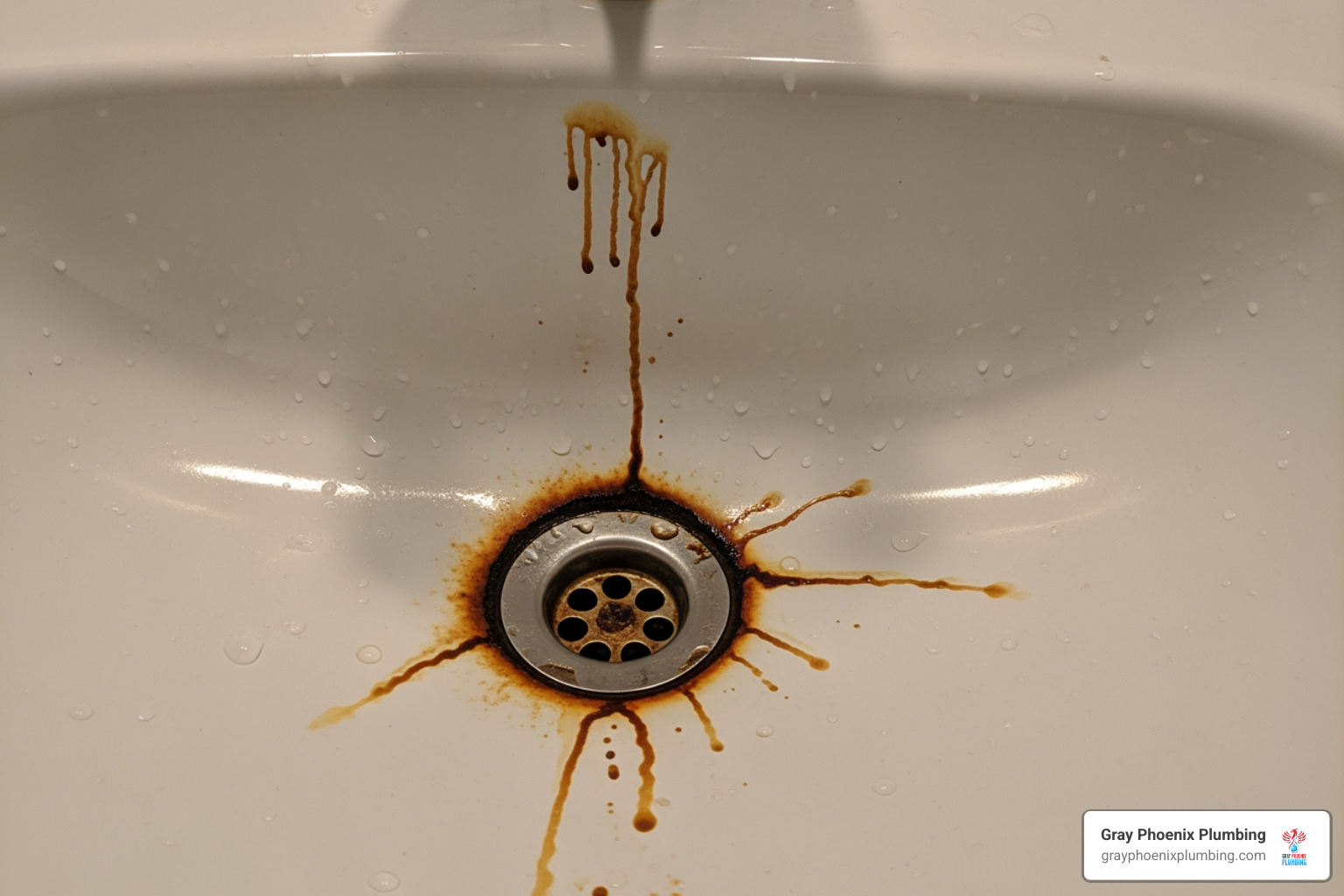
- Reddish-Brown Stains: If you see stains in sinks, toilets, or on laundry, that’s iron making its presence known. This is especially common for well water homes in areas like Franktown and Castle Rock.
- White, Crusty Buildup: Those deposits on faucets and showerheads are from calcium and magnesium, the minerals that cause hard water. This scale can damage appliances and make cleaning a chore.
- Dry, Itchy Skin and Dull Hair: Hard water and chlorine are often the hidden culprits, stripping away the natural oils that keep your skin and hair healthy.
- Cloudy or Murky Water: Visible particles of dirt, rust, or silt (sediment) not only look unappealing but can also clog your plumbing and wear down appliances.
These signs aren’t just annoyances; they’re your home’s way of telling you it’s time for a whole house water filter.
The Benefits Beyond Better Drinking Water
Clean, great-tasting water is just the beginning. A whole house water filter offers benefits throughout your home:
- Protects Plumbing and Pipes: By stopping sediment, scale, and corrosive chemicals at the point of entry, a whole house system prevents buildup in your pipes, helping you avoid expensive plumbing repairs.
- Extends Appliance Lifespan: Your dishwasher, washing machine, and water heater are shielded from hard water scale and contaminants, allowing them to run more efficiently and last years longer.
- Healthier Skin and Hair: When you shower in water free of chlorine and hard minerals, your skin stays naturally moisturized and your hair regains its shine and softness.
- Improves Taste of Food and Drinks: Coffee, tea, pasta, and soups all taste better when prepared with filtered water that doesn’t have chlorine interfering with the flavors.
- Brighter, Softer Laundry: Filtered water prevents chlorine from fading colors and stops hard water minerals from leaving clothes feeling stiff and looking dingy.
Decoding the Technology: Types of Whole House Water Filters
Understanding the different types of whole house water filter systems is key to choosing the right one. Each technology targets specific issues, and often, the most effective solution combines several methods.
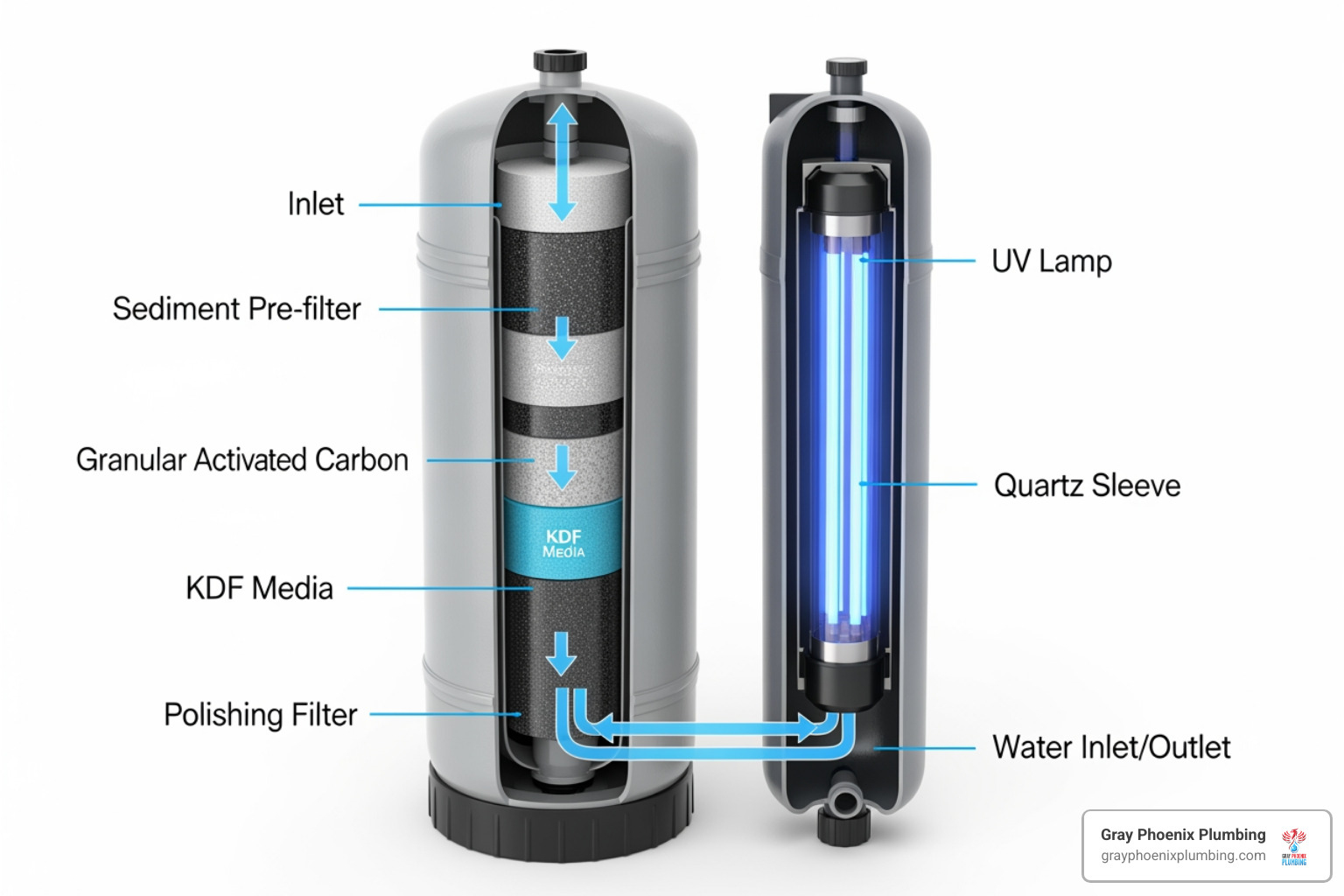
- Sediment Filters: This is the first line of defense, capturing large particles like dirt, sand, and rust. They protect plumbing and appliances from clogs and are essential for most well water systems.
- Activated Carbon Filters: These are heroes for removing chlorine, chloramines, bad tastes, and odors. Both Granular Activated Carbon (GAC) and denser Carbon Block filters adsorb these contaminants, dramatically improving your water’s flavor.
- Water Softeners & Conditioners: To combat hard water, traditional salt-based water softeners use ion exchange to remove calcium and magnesium, eliminating scale buildup. Salt-free water conditioners alter the minerals’ structure so they can’t stick to surfaces, offering a no-salt alternative.
- Specialty Media Filters: These are targeted solutions. Iron filters prevent rust stains by oxidizing and removing dissolved iron, while sulfur filters eliminate the “rotten egg” smell from hydrogen sulfide.
- UV Purifiers: An ultraviolet disinfection system provides a final safety barrier against bacteria, viruses, and other microorganisms like E. coli. UV light neutralizes these pathogens without adding chemicals, which is crucial for untreated well water.
For more detailed information on various filtration methods, you can explore our page on Water Filtration Systems.
Whole House vs. Point-of-Use (POU) Systems
When shopping for filtration, you’ll encounter two main categories. While both improve water quality, they serve different purposes.
A whole house water filter is a point-of-entry system that treats all water in your home. It protects plumbing and appliances and ensures clean water for drinking, cooking, showering, and laundry. It requires professional installation on the main water line.
A point-of-use (POU) filter, like a pitcher or under-sink unit, treats water at a single tap, primarily for drinking. While great for improving taste, it doesn’t offer the comprehensive protection of a whole house system.
For total home protection against issues like sediment, chlorine, iron, and hard water, a whole house water filter is the superior and more economical long-term solution.
Choosing Your System: Factors, Features, and Costs
Selecting the right whole house water filter is a matching process: we pair the right system to your home’s specific water quality issues. At Gray Phoenix Plumbing, we help homeowners in Elizabeth, Parker, and throughout Colorado find the perfect fit.

Key Factors to Consider:
- Water Quality Test: This is the most critical step. A professional test reveals exactly what’s in your water (iron, hardness, chlorine, etc.), creating a roadmap for choosing an effective system.
- Water Source: Municipal water is treated but often contains chlorine or chloramines. Well water is untreated and may have bacteria, iron, sulfur, and sediment.
- Flow Rate (GPM): The system must be sized to handle your household’s peak water usage (showers, appliances running simultaneously) to avoid pressure loss.
- Home & Family Size: Larger homes and more people require higher-capacity systems to keep up with demand.
- NSF/ANSI Certifications: Look for these independent certifications to ensure the filter has been tested to meet strict standards for contaminant reduction and safety.
Understanding the cost of a whole house water filter
A whole house water filter is an investment. The initial system price can range from a few hundred to several thousand dollars, depending on the technology and capacity. Professional installation by a licensed plumber is crucial for proper function and adherence to local codes. Ongoing maintenance includes predictable costs for filter replacements, salt for softeners, or annual UV lamp changes. The long-term value often outweighs the cost when you factor in savings from no longer buying bottled water and extending the life of your expensive appliances.
Potential Drawbacks and Considerations
- Upfront Investment: The initial cost for the system and installation is significant.
- Space Requirements: These systems need a dedicated space in a basement, garage, or utility room.
- Pressure Drop: This is avoidable. A properly sized and professionally installed system will not cause a noticeable drop in water pressure. Clogged filters are the usual cause of pressure loss over time.
- Maintenance: Systems require regular filter changes or salt refills to remain effective. We provide clear schedules to make this easy to manage.
Living with Your Filter: Maintenance, Lifespan, and Performance
Once your whole house water filter is installed, a little routine care will keep it performing at its best for years. Maintenance isn’t complicated and becomes a simple part of homeownership.
Filter Maintenance and Lifespan
- Sediment Filters: These are the first line of defense and typically need replacement every 3-6 months, especially on well water in areas like Elbert County.
- Carbon Filters: These last 6-12 months, tackling chlorine and improving taste.
- Specialty Media & Softeners: The media in these tanks can last for many years, often regenerating automatically through a “backwashing” cycle that flushes contaminants.
- Salt-Based Softeners: Simply require checking the salt level monthly and topping it off as needed.
Timely filter replacement is essential. A clogged filter can’t remove contaminants effectively and will reduce your water pressure, signaling that it’s time for a change.
How Filters Protect Your Water Heater
A filtration system, especially one with a water softener, acts as a bodyguard for your water heater. It prevents scale buildup on heating elements, which forces the unit to work harder, consume more energy, and fail prematurely. Cleaner water helps your water heater run more efficiently and last significantly longer. You can see how this vital component works with this helpful anode rod protection explained diagram.
Will a whole house water filter reduce my water pressure?
This is a common concern, but the answer is no—if the system is properly sized and installed. Our licensed plumbers at Gray Phoenix Plumbing calculate your home’s peak water demand to select a system with a matching flow rate (GPM). This ensures you won’t notice a pressure drop, even when multiple faucets and appliances are running.
The only time you should experience reduced pressure is when a filter becomes clogged, which is a sign that it’s time for routine maintenance. Professional installation is key to avoiding pressure issues from the start. For more information, you can visit our page on Water Heaters and Filtration Systems.
Conclusion: The Right Investment for Your Colorado Home
Installing a whole house water filter is a smart investment in your family’s comfort and your home’s long-term health. It’s preventive care for your entire household, eliminating chlorine odors, stopping rust stains, and protecting your water heater and other appliances from damaging scale and sediment.
The peace of mind that comes from knowing every tap delivers cleaner, safer water is invaluable. While there is an upfront cost, it’s often offset by long-term savings on bottled water, appliance longevity, and fewer plumbing repairs. More importantly, you can’t put a price on healthier skin, better-tasting food, and brighter laundry.
At Gray Phoenix Plumbing, we’ve helped countless Colorado families transform their water. Our licensed pros will test your water and recommend a whole house water filter system that fits your home, budget, and lifestyle.
Ready to see what truly clean water can do for your Colorado home? Learn about The Denver Water Solution: Why the Halo 5 is the Ultimate Whole House Filtration System for Your Home and find why so many homeowners in Elizabeth and beyond trust us for their water filtration needs.


