

Why Water Heater Maintenance in Centennial Matters for Your Home
Water heater maintenance Centennial is essential for homeowners who want to avoid cold showers, reduce energy bills, and prevent costly emergency repairs. Here’s what you need to know:
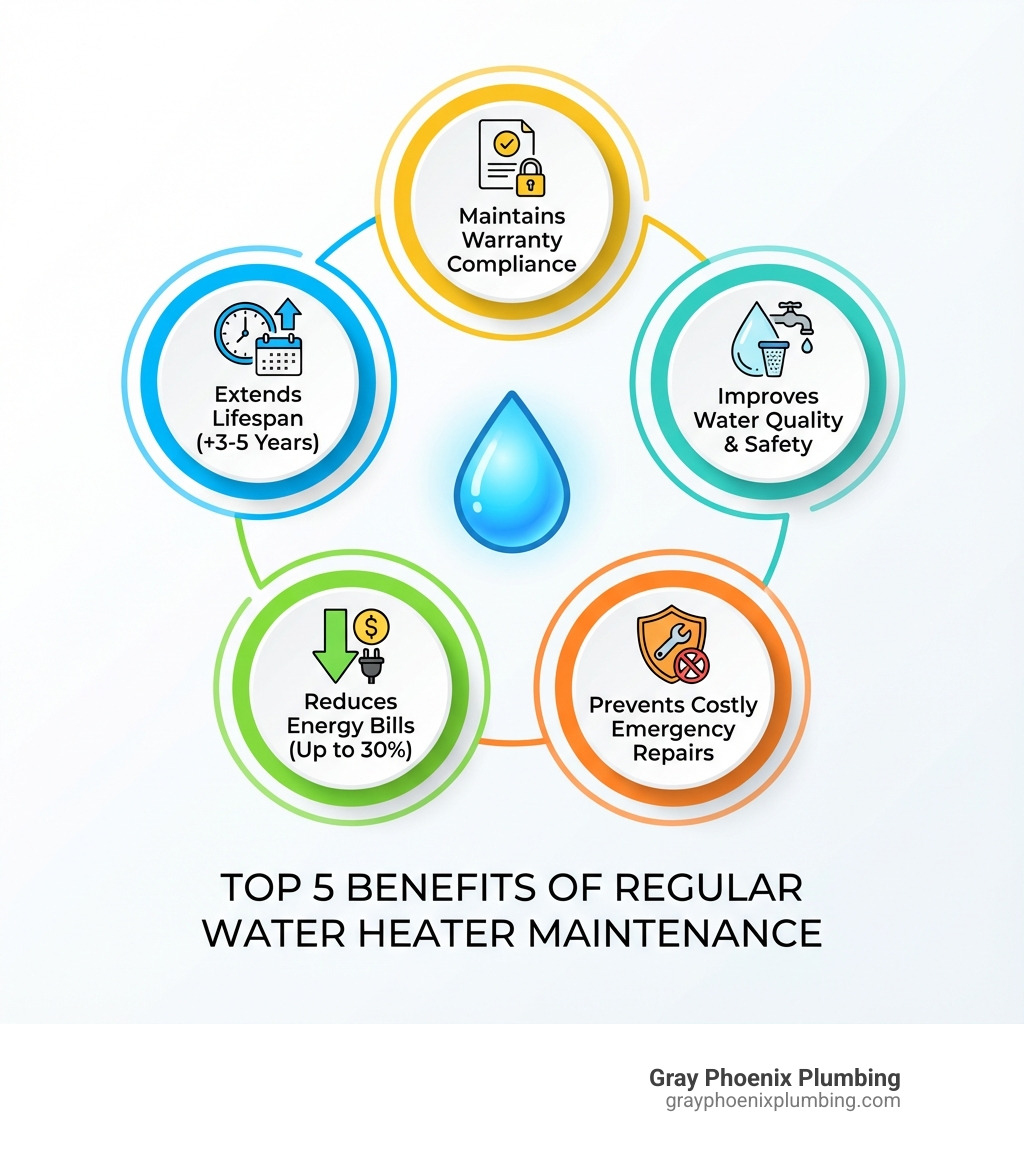
- Annual maintenance extends your water heater’s lifespan by 3-5 years
- Regular flushing removes sediment buildup that reduces efficiency by up to 30%
- Anode rod inspection prevents tank corrosion and premature failure
- T&P valve testing ensures safety and prevents pressure-related hazards
- Professional service catches small issues before they become expensive emergencies
You step into the shower to rinse away your slumber and get a chilling revelation: your water heater isn’t working. This frustrating scenario plays out in homes across Centennial every day, and it’s almost always preventable.
Water heaters are the backbone of your home’s comfort. They work quietly in the background, providing hot water for showers, laundry, dishes, and countless other daily tasks. But like any hardworking appliance, they need regular care to keep performing at their best.
Without proper maintenance, sediment builds up in the tank, efficiency drops, and your utility bills creep higher. Minor issues turn into major failures. A water heater that could have lasted 12 years might fail at 8. And when it does fail, you’re looking at not just the inconvenience of cold showers, but potentially thousands of dollars in water damage if a leak goes undetected.
The good news? Most water heater problems are completely avoidable with simple, proactive care. Traditional tank water heaters typically last 8-12 years, while tankless models can exceed 20 years—but only when they’re properly maintained. Annual maintenance costs a fraction of what you’d pay for emergency repairs or premature replacement.
For Centennial homeowners, regular water heater maintenance Centennial also means protecting your family from safety hazards like carbon monoxide leaks from gas units or scalding injuries from improperly set temperatures. It means cleaner, better-tasting hot water free from sediment and rust. And it means knowing your system is running efficiently, keeping your energy costs under control.
I’m Chris Hoffman, a Master Plumber with over 25 years of experience helping homeowners throughout the Denver Metro area with water heater maintenance Centennial services and all their plumbing needs. At Gray Phoenix Plumbing, we’ve seen how a simple annual maintenance routine can save homeowners from expensive emergencies and extend the life of their equipment by years.
Why Regular Water Heater Maintenance in Centennial is Non-Negotiable
We often take our water heaters for granted, but these unsung heroes work tirelessly to provide the comfort and convenience we rely on. Regular water heater maintenance Centennial isn’t just a suggestion; it’s a necessity for ensuring your home remains comfortable, safe, and efficient. Here’s why proactive care is non-negotiable for homeowners in Centennial, CO:
Energy Efficiency and Lower Utility Bills: One of the most immediate benefits of routine maintenance is improved energy efficiency. As a water heater operates, sediment (like magnesium, iron, and limestone) can build up at the bottom of the tank. This sediment acts as an insulator, forcing the heating element or burner to work harder and longer to heat the water. This extra effort directly translates to higher energy consumption and inflated utility bills. By regularly flushing your tank and performing other maintenance tasks, we help preserve your unit’s energy efficiency, which means more money stays in your pocket.
Preventing Costly Repairs and Water Damage: Imagine a small leak turning into a catastrophic flood in your basement. Water damage from plumbing failures costs homeowners billions of dollars each year. Neglecting water heater maintenance Centennial means minor issues—like a failing T&P valve or a corroded anode rod—can escalate into major, expensive repairs or even complete system failure. Proactive inspections allow us to catch these problems early, addressing them before they become emergencies that disrupt your daily life and potentially damage your home.
Safety First: Carbon Monoxide and Scald Injuries: Safety is paramount. For homes with gas water heaters, improper installation or neglected maintenance can lead to dangerous carbon monoxide leaks. This odorless, colorless gas is a serious health hazard. Furthermore, the Consumer Product Safety Commission identifies hot tap water as a major cause of scald injuries, especially for vulnerable populations like children and the elderly. Regular maintenance includes checking for proper ventilation and ensuring your thermostat is set to a safe temperature, typically between 120°F and 125°F, to prevent these risks.
Extending Lifespan and Improving Water Quality: A typical water heater lasts about 10 years. However, with proper maintenance, traditional tank water heaters can last 8-12 years, and tankless water heaters can reach an impressive 20 years or more. Routine care helps prevent the premature aging of components due to corrosion or excessive wear. Beyond longevity, maintenance also contributes to better water quality. By flushing out sediment and inspecting the anode rod, we help ensure your hot water is clean, clear, and free from rust or foul odors.
Signs Your Water Heater Needs Attention
Your water heater often gives subtle hints that it’s struggling before it completely gives up the ghost. Paying attention to these common signs can help you schedule water heater maintenance Centennial before a minor issue becomes a major headache.
- Inconsistent Water Temperature or Lukewarm Water: Are your showers starting hot and ending cold? Or is the water never quite as hot as it used to be? This often points to a malfunctioning thermostat, a failing heating element (in electric models), or significant sediment buildup reducing heating capacity.
- No Hot Water: This is the most obvious sign! For gas units, a pilot light that’s gone out or a faulty thermocouple could be the culprit. For electric units, a tripped breaker or a broken heating element is usually to blame.
- Rumbling or Popping Noises: If your water heater sounds like it’s brewing a pot of coffee (or worse, popcorn!), it’s almost certainly due to sediment buildup at the bottom of the tank. As the heating element attempts to heat the water, it must also heat through the layer of sediment, causing these unsettling sounds. This also significantly reduces efficiency.
- Leaks or Moisture Around the Unit: Any water around the base of your water heater is a red flag. It could be from a loose connection, a failing T&P valve, or a crack in the tank itself. Leaks should be addressed immediately to prevent extensive water damage.
- Discolored or Rusty Water: If your hot water comes out rusty, brownish, or cloudy, it’s often a sign of corrosion inside the tank or on the anode rod. This indicates that your tank’s protective lining may be compromised.
- Foul Odors from Hot Water: Does your hot water smell like rotten eggs? This unpleasant odor is typically caused by bacteria reacting with the anode rod, especially in areas with certain water chemistries. Flushing the tank and potentially replacing the anode rod can resolve this.
- Unit is Over 10 Years Old: While proper maintenance can extend a water heater’s life, most traditional tank units have a lifespan of 8-12 years. If yours is approaching or past this age, even without obvious problems, it’s wise to have it inspected and consider its remaining service life.
A Homeowner’s Step-by-Step Water Heater Maintenance Checklist
Performing regular water heater maintenance Centennial doesn’t have to be intimidating. While some tasks are best left to professionals, many essential checks can be done by a diligent homeowner. This annual checklist covers both gas and electric units, helping you keep your water heater running smoothly and safely.
Safety First: Essential Precautions
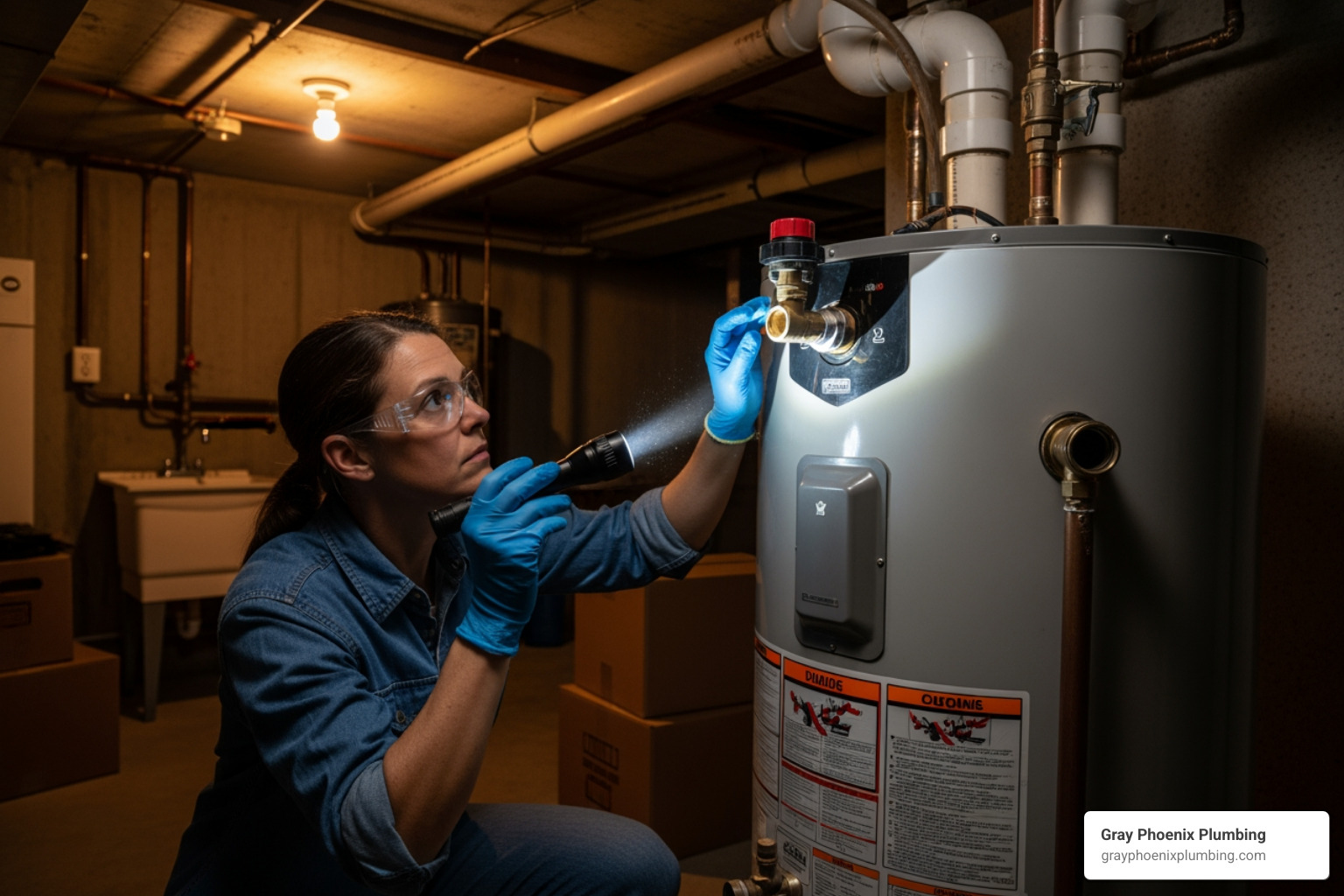
Before attempting any maintenance on your water heater, safety must be your absolute priority. We can’t stress this enough! Always wear protective gear, and if you’re ever uncomfortable working with gas or electricity, please call a professional.
- Turn Off the Power/Gas Supply:
- Electric Water Heaters: Locate your home’s main electrical panel and switch off the circuit breaker that controls the water heater.
- Gas Water Heaters: Turn the gas valve on the unit to the “OFF” position. If the pilot light is out, shut off the gas to the appliance.
- Shut Off the Water Supply: Close the cold water inlet valve located at the top of your water heater. This prevents new water from entering the tank.
- Wear Protective Gear: Always don gloves and safety goggles. Water can be extremely hot, and you’ll be dealing with tools and potentially corrosive elements.
- Let Water Cool: If you plan to drain the tank, allow several hours for the water inside to cool down. This prevents scalding injuries.
The Two Most Important Parts: Checking the T&P Valve and Anode Rod
These two components are critical for both the safety and longevity of your water heater.
Temperature and Pressure (T&P) Relief Valve Function:
The T&P valve is a crucial safety device found on both gas and electric water heaters. Its job is to release water if the temperature or pressure inside the tank exceeds safe limits, preventing a potentially dangerous explosion. It’s like a pressure cooker’s safety release valve for your hot water.
- Annual T&P Valve Test: We recommend that homeowners inspect their T&P valve once a year. To test it, place a bucket under the discharge pipe (the pipe extending from the T&P valve). Carefully lift the lever on the T&P valve a few times. You should hear a hiss and see some water discharge into the bucket. If no water comes out, or if it continues to drip after you release the lever, the valve may be faulty and needs to be replaced by a professional. A professional should inspect this valve every 5 years.
Sacrificial Anode Rod Purpose:
The anode rod is often called the “sacrificial” rod because that’s exactly what it does: it sacrifices itself to protect your water heater tank from corrosion. Made of magnesium, aluminum, or zinc, it attracts corrosive elements in the water, preventing them from eating away at the steel tank lining.
- Anode Rod Inspection: To extend the life of your water heater, we recommend inspecting the anode rod once a year. This is a more involved task, often requiring specialized tools and expertise to safely remove and re-install. If you’re comfortable, you can attempt to unscrew the hex head of the anode rod (usually located on the top of the tank). A rod in good working condition should be smooth and around a half-inch in diameter. If it’s heavily corroded, pitted, or less than half its original diameter, it’s time for a replacement. Because this task can be tricky and involves working with the tank’s interior, many homeowners in Centennial prefer to have our professionals handle anode rod inspections and replacements.
Flushing Your Tank: The Key to Efficiency and Longevity
Sediment buildup is the archenemy of your tank-style water heater. It’s the primary cause of those rumbling noises, reduced efficiency, and premature failure.
- Sediment Buildup and Mineral Deposits: Hard water, common in many parts of Colorado, contains minerals like calcium and magnesium. These minerals, along with other particles, settle at the bottom of your water heater tank, forming a layer of sediment. This layer can reduce your water heater’s efficiency by up to 30%, costing you more money every month.
- Draining and Flushing Process: We recommend flushing your water heater annually, or even more frequently if you have particularly hard water. To do this:
- Ensure power and water supply are off (as per “Safety First”).
- Attach a garden hose to the drain valve located near the bottom of the water heater.
- Direct the other end of the hose to a floor drain or outside.
- Open a hot water faucet in your home (this helps prevent a vacuum).
- Open the drain valve on the water heater.
- Allow the tank to drain completely. You’ll likely see cloudy water, rust, and sediment come out. Continue draining until the water runs clear.
- Once drained, close the drain valve, remove the hose, and turn on the cold water supply to refill the tank.
- Once the tank is full (water flows consistently from the open hot water faucet), close the faucet and restore power/gas to the unit.
For more detailed instructions, you can refer to manufacturer guidelines like those found here: https://www.hotwater.com/info-center/water-heater-maintenance.html. If sediment clogs the drain valve during this process, it might be a sign that a professional cleaning is needed.
Fine-Tuning for Savings: Temperature and Insulation
A few simple adjustments can make a big difference in both your energy bill and your safety.
- Optimal Temperature Setting: The recommended temperature setting for most homes is 120°F (often marked as “Low” or “L” on some thermostat dials). This temperature is hot enough for most household needs, helps prevent scalding injuries (especially for children and the elderly), and significantly reduces energy consumption compared to higher settings.
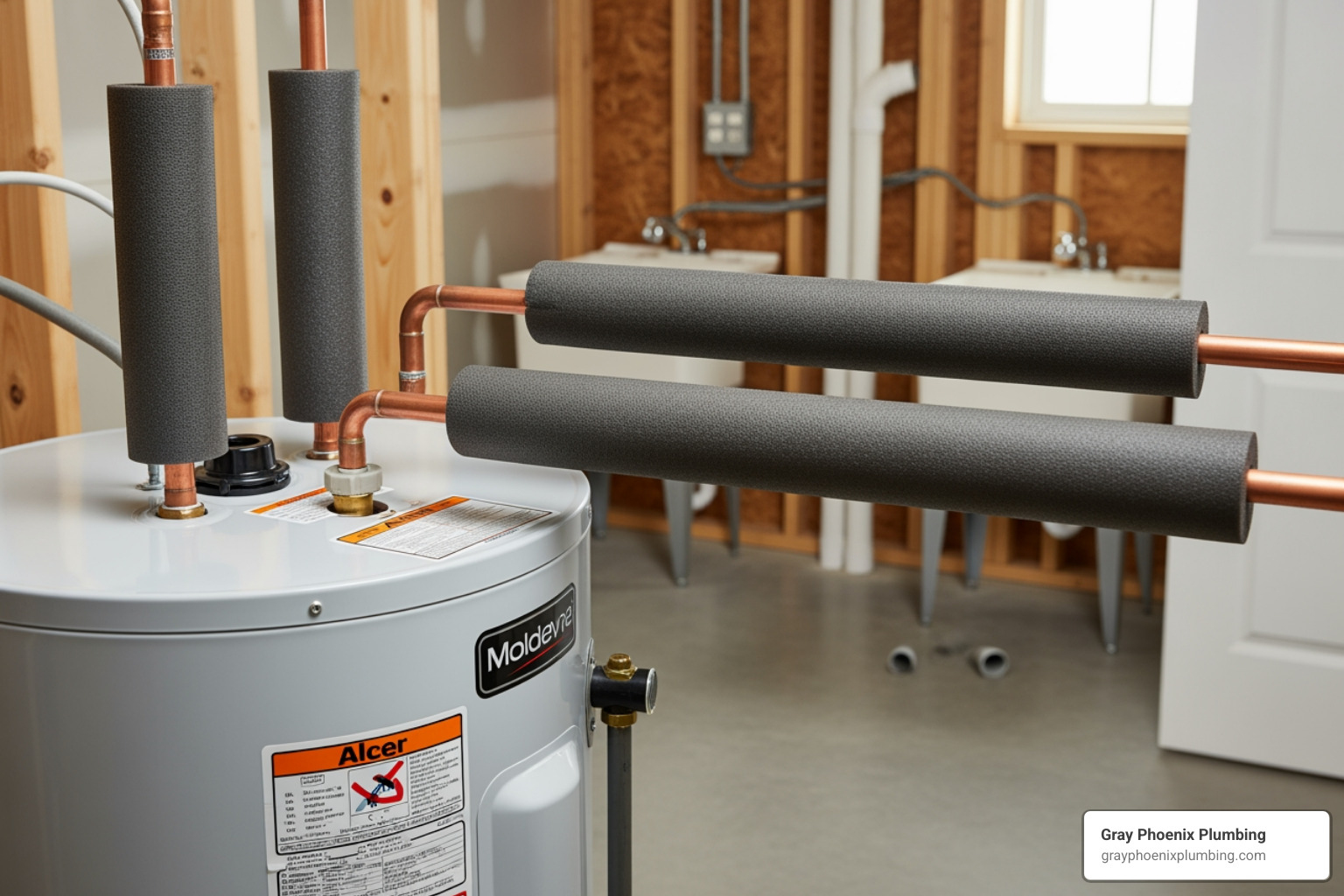
- Insulating Hot Water Pipes and Unit: We often find that homeowners overlook the benefits of insulation. Insulating the first six feet of hot and cold water pipes connected to the water heater, and potentially wrapping the tank with an insulation blanket (especially for older units in unheated spaces), can dramatically reduce heat loss. This means your water heater doesn’t have to work as hard to maintain water temperature, leading to further energy savings.
Tank vs. Tankless: Tailoring Your Maintenance Routine
While both types of water heaters benefit from regular care, their maintenance needs differ significantly. Understanding these differences is key to effective water heater maintenance Centennial.
| Feature | Traditional Tank Water Heater Maintenance | Tankless Water Heater Maintenance |
|---|---|---|
| Primary Goal | Remove sediment, prevent tank corrosion, ensure safety, extend lifespan. | Descale heat exchanger, clean filters, ensure safety, maintain continuous hot water. |
| Key Tasks | Annual flushing to remove sediment (crucial for efficiency and preventing noise). Anode rod inspection/replacement (every 1-5 years, depending on water quality) to protect the tank from corrosion. T&P valve testing (annually by homeowner, professionally every 5 years). |
Annual descaling (or “flushing” with a descaling solution) to remove mineral buildup from the heat exchanger. This is critical for efficiency and preventing damage. Inlet filter cleaning (annually) to ensure proper water flow. Gas line and ventilation checks. |
| Hard Water Effects | Accelerates sediment buildup, requiring more frequent flushing. | Causes mineral buildup on the heat exchanger, reducing efficiency and potentially leading to system failure if not descaled. |
| Lifespan | 8-12 years (with proper maintenance). | Up to 20 years or more (with proper maintenance). |
| DIY vs. Pro | Flushing can be DIY, but anode rod inspection/replacement and T&P valve replacement are often best left to professionals. | Descaling often requires a pump and special solution, making it a task typically performed by professionals. |
Traditional Tank Maintenance: As we’ve discussed, the core of tank water heater maintenance revolves around combating sediment buildup and tank corrosion. Our annual water heater maintenance Centennial service includes thoroughly flushing the tank and inspecting the anode rod to protect your investment.
Tankless Maintenance: Tankless water heaters, while more energy-efficient and longer-lasting, require a different kind of care. Because they heat water on demand through a heat exchanger, they don’t accumulate sediment in the same way a tank does. However, they are highly susceptible to mineral buildup (scale) on the heat exchanger, especially in areas with hard water.
- Descaling Process: The primary maintenance task for a tankless unit is descaling, which involves circulating a vinegar or specialized descaling solution through the unit to dissolve mineral deposits. This process helps maintain efficiency and prevents damage to the heating elements.
- Inlet Filter Cleaning: Tankless units also have an inlet filter that should be cleaned annually to prevent debris from entering the system.
While some advanced DIYers might tackle tankless descaling, it often requires specific equipment (a small pump and hoses) and expertise, making it a task where professional assistance is highly recommended.
DIY vs. Professional Service: Knowing When to Call for Help
We empower homeowners in Centennial, CO, to handle routine checks, but we also emphasize the importance of professional water heater maintenance Centennial. Knowing the difference can save you time, money, and ensure your family’s safety.
Simple DIY Tasks for Every Centennial Homeowner
There are several straightforward tasks you can perform to keep an eye on your water heater’s health:
- Visual Inspection for Leaks: Regularly check around the base of your water heater and all connections for any signs of moisture or dripping. Early detection of a small leak can prevent significant water damage.
- Testing the T&P Valve: As mentioned, a quick annual test of the T&P valve can confirm it’s operating correctly. Remember to use a bucket and watch for a quick burst of water.
- Checking the Temperature Setting: Confirm your thermostat is set to 120°F to balance comfort, energy efficiency, and safety.
- Cleaning Air Intakes on Gas Models: For gas water heaters, ensure the combustion air intake vents are free of dust, lint, and debris. A clean air supply is essential for efficient and safe operation.
When to Call a Pro for Water Heater Maintenance in Centennial
While DIY is great for basic checks, certain tasks and issues absolutely require the expertise of a licensed professional. When in doubt, it’s always safer to call us.
- Anode Rod Replacement: While you can inspect it, replacing a corroded anode rod involves draining the tank, safely removing the old rod (which can be seized), and installing a new one. This is a job where specialized tools and experience make a big difference.
- T&P Valve Replacement: If your T&P valve fails the annual test or is visibly leaking, it needs to be replaced. This involves working with water pressure and sealing, which is best handled by a professional. A professional inspection of this valve is recommended every 5 years.
- Gas Line or Pilot Light Issues: Any problems involving gas lines, the pilot light (if you have difficulty relighting it), or the burner assembly should always be handled by a qualified plumber. Gas leaks are extremely dangerous.
- Electrical Component Repair: For electric water heaters, issues with heating elements, thermostats, or wiring should only be addressed by a professional who understands electrical safety.
- Major Leaks or Tank Damage: If you notice significant leaking from the tank itself, or suspect internal damage, it’s time to call us immediately. A leaking tank often signals the end of the unit’s life and requires replacement.
- Installing a New Unit: Whether it’s a repair that escalated to a replacement or a planned upgrade, installing a new water heater (tank or tankless) involves precise plumbing, gas, or electrical connections, proper venting, and ensuring compliance with local codes. This is definitely a job for the pros.
Frequently Asked Questions About Water Heater Care
We get a lot of questions about water heater maintenance Centennial, and we’re always happy to share our expertise. Here are some of the most common inquiries we receive:
How often should I have my water heater professionally serviced?
We recommend annual professional water heater maintenance Centennial for optimal performance, extended longevity, and to prevent costly issues. Routine inspections by our licensed professionals can help avert potential problems and address them before they become emergencies. While homeowners can perform some basic checks annually, a professional eye ensures everything is functioning safely and efficiently.
What do strange noises from my water heater mean?
Strange noises like popping, rumbling, or hissing usually signal sediment buildup at the bottom of your water heater tank. As the heating element or burner tries to heat the water, it has to heat through this layer of sediment, causing these sounds. This also forces your water heater to work harder, reducing its efficiency and potentially shortening its lifespan. Flushing the tank, as described in our maintenance checklist, can often resolve this issue. If the noises persist after flushing, it’s a good idea to have us take a look.
How long does a typical water heater last?
The lifespan of a water heater depends significantly on its type and how well it’s maintained:
- Traditional Tank Water Heaters: Most traditional tank water heaters in Centennial, CO, typically last between 8-12 years. However, consistent annual water heater maintenance Centennial can help them reach the upper end of this range, or even exceed it by a few years.
- Tankless Water Heaters: These modern marvels boast a much longer lifespan, often exceeding 20 years with proper care, particularly regular descaling.
Regardless of the type, proper maintenance is the single biggest factor in maximizing your water heater’s lifespan and getting the most out of your investment.
Your Partner for Reliable Plumbing in Centennial
Investing in routine water heater maintenance Centennial is one of the smartest decisions you can make as a homeowner. It’s not just about avoiding cold showers (though that’s a huge plus!); it’s about protecting your home, saving money on energy bills, ensuring your family’s safety, and extending the life of a vital appliance. Proactive care truly is the key to preventing costly emergencies and enjoying consistent, reliable hot water.
At Gray Phoenix Plumbing, we understand the unique needs of Centennial homeowners. As a family-owned business, we pride ourselves on offering reliable residential plumbing, heating, cooling, and electrical services with a commitment to transparency and customer satisfaction. Our licensed, background-checked professionals are equipped with the expertise to handle all your water heater needs, from routine maintenance to complex repairs and installations. We believe in transparent pricing and stand by our Customer Care Guarantee, making us your trusted one-stop shop for home service needs.
Don’t wait for the chilling revelation of a cold shower. Be proactive about your water heater’s health.


