


Why You Need to Find a Leak in House Before It’s Too Late
Find a leak in house issues fast, because every day you wait costs you money and risks serious damage. Here’s how to detect a water leak in your home:
- Check Your Water Bill – Look for unexpected spikes (a family of four using over 12,000 gallons per month likely has a leak)
- Test Your Water Meter – Turn off all water, check the meter, wait 1-2 hours, and check again (if it changed, you have a leak)
- Inspect Common Fixtures – Test toilets with food coloring, check under sinks, examine appliances
- Look for Hidden Signs – Watch for stains, mold, musty smells, or warped floors
Water leaks are more than just annoying drips. The average household leaks nearly 10,000 gallons of water per year, which could be costing you an extra 10 percent on your water bills. That’s enough water to wash 300 loads of laundry, literally going down the drain.
But the financial hit from wasted water is just the beginning. Water leaks are a common cause of property damage, with some cases costing thousands of dollars to repair. Hidden leaks behind walls or under foundations can rot wood, buckle floors, and create the perfect environment for toxic mold growth before you even know they exist.
The good news? Most leaks are easy to find once you know where to look and what signs to watch for.
I’m Chris Hoffman, a Master Plumber with over 25 years of experience helping homeowners in the Denver Metro area find a leak in house situations before they turn into expensive disasters. At Gray Phoenix Plumbing, I’ve seen how a small, undetected leak can transform into a major headache—and how catching it early saves both money and stress.

The First Clues: Obvious Signs of a Water Leak
Sometimes, a leak announces itself with a dramatic burst, but more often, it’s a subtle whisper that grows into a roar. Learning to recognize these early warnings can save you a world of trouble. We’re talking about everything from an unexpected jump in your utility bill to that faint, earthy smell in the basement.
Spikes in Water Bills
One of the most common and often first indicators that you need to find a leak in house is an unusually high water bill. Your monthly water usage tends to be fairly consistent. If you suddenly see a spike without a corresponding increase in your water use – perhaps you haven’t been watering the lawn more or hosting extra guests – then it’s time to investigate. The Environmental Protection Agency (EPA) suggests that a family of four will typically use no more than 12,000 gallons of water per month. If your usage consistently exceeds this, especially during colder months when outdoor watering is minimal, you likely have a serious leak problem. These leaks could be costing you an extra 10 percent on your water bills!
Musty or Earthy Smells
Our noses are surprisingly good leak detectors. A persistent musty or earthy odor, particularly in areas like bathrooms, kitchens, or basements, is a strong indicator of hidden moisture. This smell often comes from mold or mildew that thrives in damp conditions created by a leak. Don’t ignore it – it’s your home telling you something isn’t right.
Visible Mold and Mildew
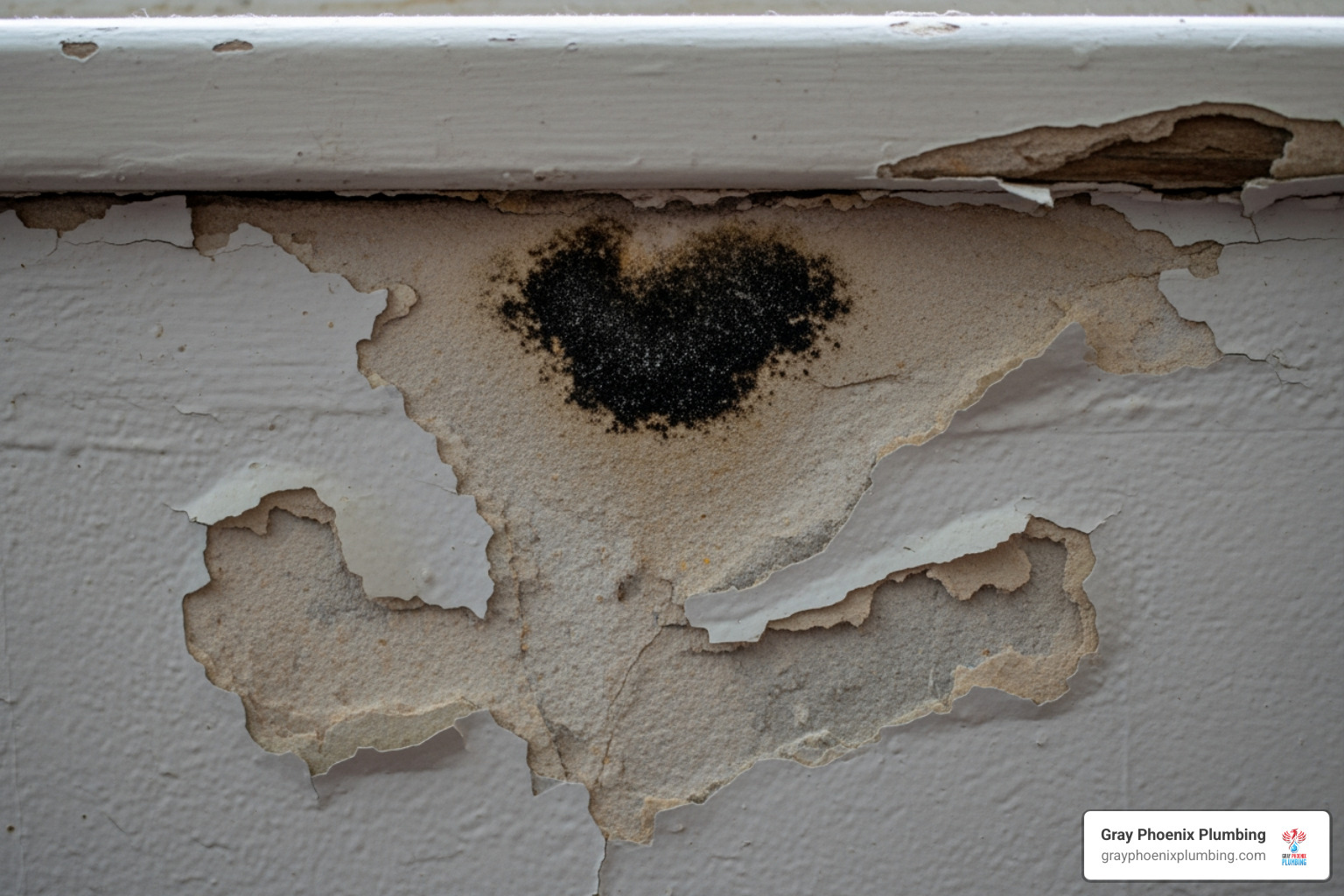
Where there’s water, there’s often mold. If you spot patches of mold or mildew growing on walls, ceilings, floors, or around fixtures, it’s a clear sign of excess moisture. Rotting, buckling, or peeling surfaces are common signs of water damage, showing up in 31% of cases, and damp or wet areas are common indicators, appearing in 26.5% of cases. Mold isn’t just unsightly; it can pose serious health risks and indicates a prolonged water issue that needs immediate attention.
Stains on Ceilings or Walls
Water stains are classic leak indicators. Look for discoloration – yellowish, brownish, or dark spots – on your ceilings or walls. These stains often appear directly below the source of the leak, but water can travel, so the stain might not be exactly where the pipe is leaking. Even small leaks, such as a faucet with a steady drip, can waste as much as 10,000 gallons of water per year, and that water has to go somewhere.
Bubbling or Peeling Paint
If your paint or wallpaper starts to bubble, blister, or peel, it’s a sign that moisture is trapped underneath. This is especially noticeable on walls or ceilings in rooms with plumbing, like kitchens, bathrooms, or laundry areas. The water pressure from a hidden leak forces the paint away from the surface, creating these tell-tale signs.
Warped Flooring or Baseboards
Water can cause wood, laminate, and even vinyl flooring to warp, buckle, or swell. Similarly, baseboards might appear to be pulling away from the wall or show signs of swelling. This indicates that water has seeped into the subflooring or behind the baseboards, often from a leak in an adjacent wall or under the floor.
The Sound of Dripping or Running Water
Sometimes, the simplest clue is the most obvious: sound. If you hear the faint but persistent sound of dripping, trickling, or even hissing water when all your faucets are off and appliances are not running, you likely have a leak. Take a quiet moment, especially at night, to listen carefully. The sound could be coming from inside a wall, under the floor, or from an appliance. A system with even a small leak could be wasting 6,300 gallons of water per month, and that much water usually makes a sound!
Your First Mission: Using Your Water Meter and Bill to Find a Leak in House
When we’re on the hunt for a leak, our water meter and utility bill are our most powerful allies. These tools can tell us if a leak exists, even when it’s completely hidden, and sometimes even help us narrow down its location.
Water Meter Test
This is arguably the most definitive DIY method to confirm a leak. Here’s how we conduct a water meter test:
- Stop all water use: Make sure no water is being used inside or outside your home. This means turning off all faucets, showers, dishwashers, washing machines, and irrigation systems.
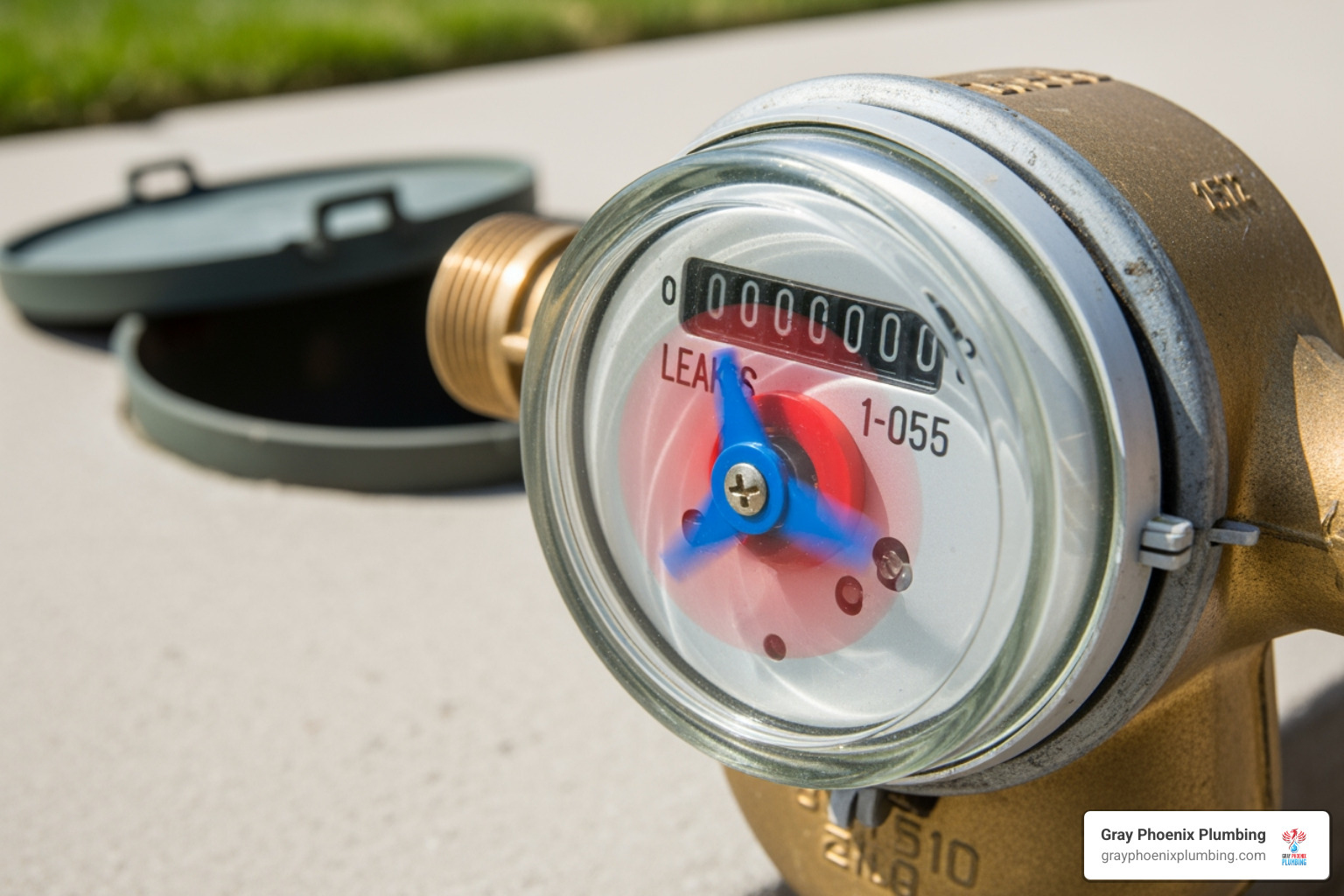
- Locate and read your meter: Your water meter is usually located near the street at the front of your property, often in a concrete box. Carefully remove the lid. Note the numbers from left to right under ‘Cubic Feet’ or ‘Gallons’. Many meters also have a small red or white flow-indicator triangle or a sweep-hand that spins when water is flowing.
- Wait and re-check: If the flow indicator is spinning, you have a fast-moving leak. If not, note the exact reading and wait for at least 30 minutes, or even 1-2 hours, without using any water.
- Compare readings: Check the meter again. If the numbers have changed, or the flow indicator is now moving, you have a leak. If the numbers haven’t changed, but you suspect a leak, it might be a very slow one, or perhaps an intermittent issue.
How to Read Your Meter
Understanding your water meter is key. The numbers indicate total water usage. The first number on the right often represents one cubic foot or gallon, the second is tens, and the third (often a different color) is hundreds. One full revolution of the sweep-hand usually equals one cubic foot or 7.48 gallons. By tracking these numbers, we can accurately detect changes in water flow.
Locating Your Main Shut-Off Valve
Knowing where your main water shut-off valve is located is crucial, not just for leak detection, but for emergencies. This valve is typically found in your front yard near the street, often close to your water meter. Indoors, it might be in your garage or basement, or part of your home’s manifold system. If your meter test confirms a leak, we can use the main shut-off valve to help pinpoint its location. Turn off the main valve to your house, then re-check the meter after an hour. If the meter stops moving, the leak is inside your home. If it continues to move, the leak is in the buried water line between the meter and your house.
Analyzing Your Water Bill for Trends
Your water bill is a historical record of your water usage, making it an excellent tool to find a leak in house. As mentioned, monthly water bills are generally predictable. If you notice a consistent increase in usage that you can’t explain, it’s a red flag. The Environmental Protection Agency suggests comparing your current bill with previous ones.
Comparing Winter vs. Summer Bills
It’s particularly helpful to compare your winter water bills. During these months, outdoor water use (like irrigation) is minimal, providing a clearer picture of your indoor consumption. If your winter usage for a family of four exceeds the benchmark of 12,000 gallons (or 16 CCF) per month, you almost certainly have a leak that needs attention. This kind of consistent, unexplained usage points directly to a hidden problem.
Sleuthing Around: Simple DIY Checks for Common Culprits
Once we’ve confirmed a leak with the water meter, our next step is to play detective and investigate the usual suspects. Most household leaks occur in a few common areas, and many can be found with simple DIY checks.
Here are the top 5 most leak-prone areas in a home:
- Toilets: These silent water-wasters are notorious for leaks.
- Faucets: Dripping faucets are a classic, but often ignored, leak source.
- Showerheads: Worn seals or loose connections can lead to drips.
- Appliances: Dishwashers, washing machines, and refrigerators with ice makers have multiple connection points.
- Water Heaters: Older units can develop pinhole leaks over time.
The Toilet Dye Test: A Simple DIY Method to find a leak in house
Toilets are one of the biggest culprits when it comes to water waste, accounting for up to 30 percent of your home’s water use. And with more than 20 percent of gravity-flush toilets leaking, check them regularly. The good news is, detecting a toilet leak is incredibly simple:
- Remove the tank lid: Carefully take off the lid from your toilet tank.
- Add food coloring: Put a few drops of dark food coloring (or a dye tablet) into the toilet tank water.
- Wait patiently: Do NOT flush the toilet. Wait for at least 10 minutes, or up to 30 minutes for slower leaks.
- Check the bowl: If any color appears in the toilet bowl, you have a leak. This means water is seeping from the tank into the bowl without flushing, usually due to a faulty flapper valve.
You might also notice a constantly running toilet or an occasional “phantom” flush, where the toilet seems to flush itself without anyone touching the handle. These are all signs of a leak. Often, the issue is a worn or poorly sealed flapper valve, or sometimes a worn fill valve that doesn’t shut off properly, causing the water level to rise too high. When checking, ensure the water level in the tank isn’t above the overflow pipe. If your toilet runs for a long time or suffers from an occasional “phantom” flush, this dye test is your first step to finding and stopping the leak.
Checking Faucets, Showerheads, and Appliances
Beyond the toilet, many other fixtures and appliances can harbor leaks.
- Dripping Faucets: This is probably the most visible type of leak. Check all faucets in your kitchen, bathrooms, and utility sinks. Even a slow drip can waste thousands of gallons a year. Often, the fix is as simple as replacing a worn washer or O-ring. Don’t forget to check under sinks for any signs of moisture, pooling water, or rust around pipe joints, which could indicate a leak in the supply lines or drain connections.
- Showerheads: Inspect your showerheads for constant drips, even after the shower has been turned off. A loose connection or a worn internal seal can be the culprit. You might also notice stray sprays of water coming from the showerhead, indicating a need for maintenance.
- Appliances: Our modern homes are full of water-using appliances, and each one is a potential leak source.
- Dishwashers: Check the supply lines and drain hose connections for any signs of dampness or pooling water around the base of the unit.
- Refrigerators with Ice Makers/Water Dispensers: The water supply line connecting to your refrigerator can develop leaks. Pull the fridge out and inspect the line and its connections for drips.
- Washing Machines: The hot and cold water supply hoses, as well as the drain hose, are common points of failure. Look for puddles behind the machine or signs of corrosion on the hose connections.
- Water Heaters: Older water heaters can develop pinhole leaks along their bottom due to corrosion inside the tank. Look for pooling water, rust, or other signs of leakage around the base.
For any of these fixtures, a thorough General Plumbing inspection can help us identify problems before they escalate.
Uncovering Hidden Dangers: Locating Leaks in Walls, Ceilings, and Foundations
While visible leaks are easy to spot, the truly insidious ones are often hidden from view, tucked away behind walls, under floors, or deep within your home’s foundation. These hidden leaks can cause extensive damage before you even know they exist.
Pinhole Leaks in Pipes
Pinhole leaks are tiny, often imperceptible holes in pipes that can slowly drip water for months or even years. Because they’re usually inside walls or ceilings, the first sign you might see is a water stain, bubbling paint, or a musty smell. These leaks can occur due to corrosion, especially in older plumbing systems, or from minor damage during construction.
Slab Leaks
A slab leak occurs when a water pipe running beneath your home’s concrete foundation develops a leak. These are particularly tricky to find a leak in house because they’re completely out of sight. Signs of a slab leak can include:
- Warm spots on the floor: If a hot water line is leaking, you might feel a warm spot on your flooring.
- Cracked or warped pavement: Water leaking underground can wash away soil, causing outside pavement or driveways to shift, crack, or warp.
- Foundation shifts: Water seeping into the soil below your home can cause ground movement, affecting the foundation and leading to cracks in walls or floors.
- Unexplained spikes in your water bill or the continuous movement of your water meter, even when all internal water is off.
Foundation Cracks
Beyond slab leaks, water can also intrude through cracks in your home’s foundation itself. This is especially true after heavy rainfall or if your landscaping directs water towards your home. Signs include damp or wet areas in your basement, efflorescence (a white, powdery substance) on concrete walls, or visible water seeping in. For comprehensive solutions to these issues, consider a professional Basement Leak Repair Aurora service.
Signs of Frozen or Burst Pipes
Living in Colorado, we know that freezing temperatures are a real threat to our plumbing. Water pipes that lead to exterior faucets can freeze and burst during cold winters. While a full burst pipe is usually obvious, a slow leak from a hairline crack caused by freezing can be harder to spot until significant damage occurs. If you’ve experienced a deep freeze and notice unexplained dampness or a sudden drop in water pressure, it’s worth considering. Our team is well-versed in Frozen Burst Pipe Repair for homes across the Denver Metro area.
When we’re trying to find a leak in house walls or ceilings, we look for puddles, discoloration, texture changes, musty smells, signs of mold and mildew, or even just water dripping sounds. These clues help us narrow down the hidden source.
Advanced Tools Pros Use to find a leak in house
For those elusive, hidden leaks, we rely on specialized tools and technologies that go beyond what the average homeowner has access to. These tools allow us to pinpoint leaks with incredible accuracy, minimizing the need for invasive and destructive exploratory work.
- Moisture Meters: These handheld devices measure the moisture content in building materials like drywall, wood, and concrete. They help us determine the extent of water intrusion and track the path of a hidden leak without tearing walls apart.
- Infrared (Thermal) Cameras: Thermal imaging cameras detect subtle temperature differences on surfaces. Water evaporating or flowing behind a wall will create a cooler spot, which the camera can visualize. This is incredibly useful for finding leaks in walls, ceilings, and even under floors.
- Acoustic Listening Devices: These highly sensitive microphones can amplify the sound of water escaping from a pipe, even if it’s deep underground or behind thick walls. By listening for the characteristic “hiss” or “drip” of a leak, we can often pinpoint its exact location.
- Tracer gas detection: For particularly stubborn or difficult-to-reach leaks, we can use tracer gas. This involves flushing the water out of the system and injecting a special, non-toxic gas. The gas escapes through the leak, and we use a handheld detector to pick up traces of it, identifying the precise location.
- Pressure Testing Equipment: The two most common water leak detection tests are Hydrostatic Testing and Isolation Testing. Hydrostatic testing involves pressurizing a plumbing system (or a section of it) and monitoring for a drop in pressure, which indicates a leak. Isolation testing takes this a step further by blocking off and pressurizing specific sections of pipe to narrow down the leak’s location systematically.
These advanced methods allow us to be incredibly efficient and accurate, saving our customers time, money, and unnecessary disruption to their homes.
Calling in the Cavalry: When to Contact a Professional Plumber
While we encourage homeowners to use the DIY tips to find a leak in house, there comes a point when professional expertise is not just helpful, but essential. Knowing when to call in a licensed plumber can prevent further damage, save you from costly repairs down the line, and provide peace of mind.
You should consider calling a professional plumber if:
- You can’t find the source: You’ve tried all the DIY methods – checked your meter, tested your toilets, inspected fixtures – but the leak persists, and its origin remains a mystery. If you’re not able to find the leak, you may want to consider contacting a professional plumber to locate and fix it.
- The leak is behind a wall or under a slab: These hidden leaks require specialized detection equipment (like those mentioned above) and often complex repairs that are best left to experts. Attempting to tackle these yourself can lead to greater damage and higher costs.
- You notice a sudden drop in water pressure: A significant, unexplained drop in water pressure throughout your home could indicate a major pipe breach or a slab leak, which requires immediate professional intervention.
- There is significant water damage: If you’re dealing with extensive water stains, warped flooring, mold growth, or structural concerns, the situation has likely escalated beyond a simple DIY fix. A plumber can address the leak, and then you may need other professionals for remediation.
- You’re uncomfortable performing repairs: If you are not sure about your ability to perform any of these steps, please consider contacting a licensed plumber. We understand that not everyone is comfortable with plumbing work, and that’s perfectly fine! Our team is here to help.
- It’s a plumbing emergency: Any leak is a plumbing emergency and usually a sign of a worse underlying problem, requiring immediate plumbing repair. Acting quickly can help prevent bigger problems down the line, especially if the leak is hidden or affecting your home’s structure.
At Gray Phoenix Plumbing, we offer expert Plumbing Leak Repair Aurora Guide services and are the trusted Leak Repair Plumber Denver Co residents rely on. Our licensed and background-checked pros serve Elizabeth CO, Elbert County, Parker, Castle Rock, Kiowa, Franktown, Denver, Littleton, Aurora, Lakewood, Thornton, Westminster, Brighton, Golden, Morrison, Conifer, Evergreen, Firestone, Erie, Bennett, Centennial, Agate, Jefferson, Colorado Springs, and throughout Colorado. We’re equipped with the right tools and expertise to handle any leak, big or small.
Conclusion: Winning the War on Water Waste
The journey to find a leak in house is a crucial one for every homeowner. From the subtle signs like a phantom flush or a musty smell, to the more obvious clues like spiking water bills and visible water stains, early detection is your best defense against water waste and property damage. We’ve explored how to be your own leak detective using your water meter, simple DIY checks for common culprits like toilets and faucets, and the indicators of more dangerous hidden leaks in walls and foundations.
The potential consequences of ignoring a water leak are significant. Water leaks can cause a tremendous amount of damage to your home and belongings if not repaired in a timely manner. Beyond the financial drain of higher water bills, unchecked leaks can lead to severe structural damage, including rotting wood, compromised foundations, and ruined drywall. Furthermore, persistent moisture creates the perfect breeding ground for mold, posing serious health risks to your family.
Proactive home maintenance, including regular leak checks, is an investment in the longevity and safety of your home. While many minor leaks can be fixed with a bit of DIY effort, recognizing when to call in the professionals is key. When leaks are hidden, persistent, or causing significant damage, the value of professional expertise becomes immeasurable.
At Gray Phoenix Plumbing, we are a family-owned business dedicated to providing reliable residential plumbing services across the Denver Metro area and surrounding communities. Our licensed, background-checked pros offer transparent pricing and stand by our Customer Care Guarantee. We’re your one-stop shop for all home service needs, including comprehensive leak detection and repair.
Don’t let a small drip turn into a disastrous flood. If you suspect a leak or need assistance with a complex issue, don’t hesitate to reach out. Let us help you win the war on water waste and protect your most valuable asset – your home.
Schedule professional Water Leak Detection with Gray Phoenix Plumbing today.


