

When Winter Strikes and Your Home Goes Cold
A boiler not heating is more than an inconvenience—it can turn your home into an icebox. If you’re facing this issue, here’s what to check first:
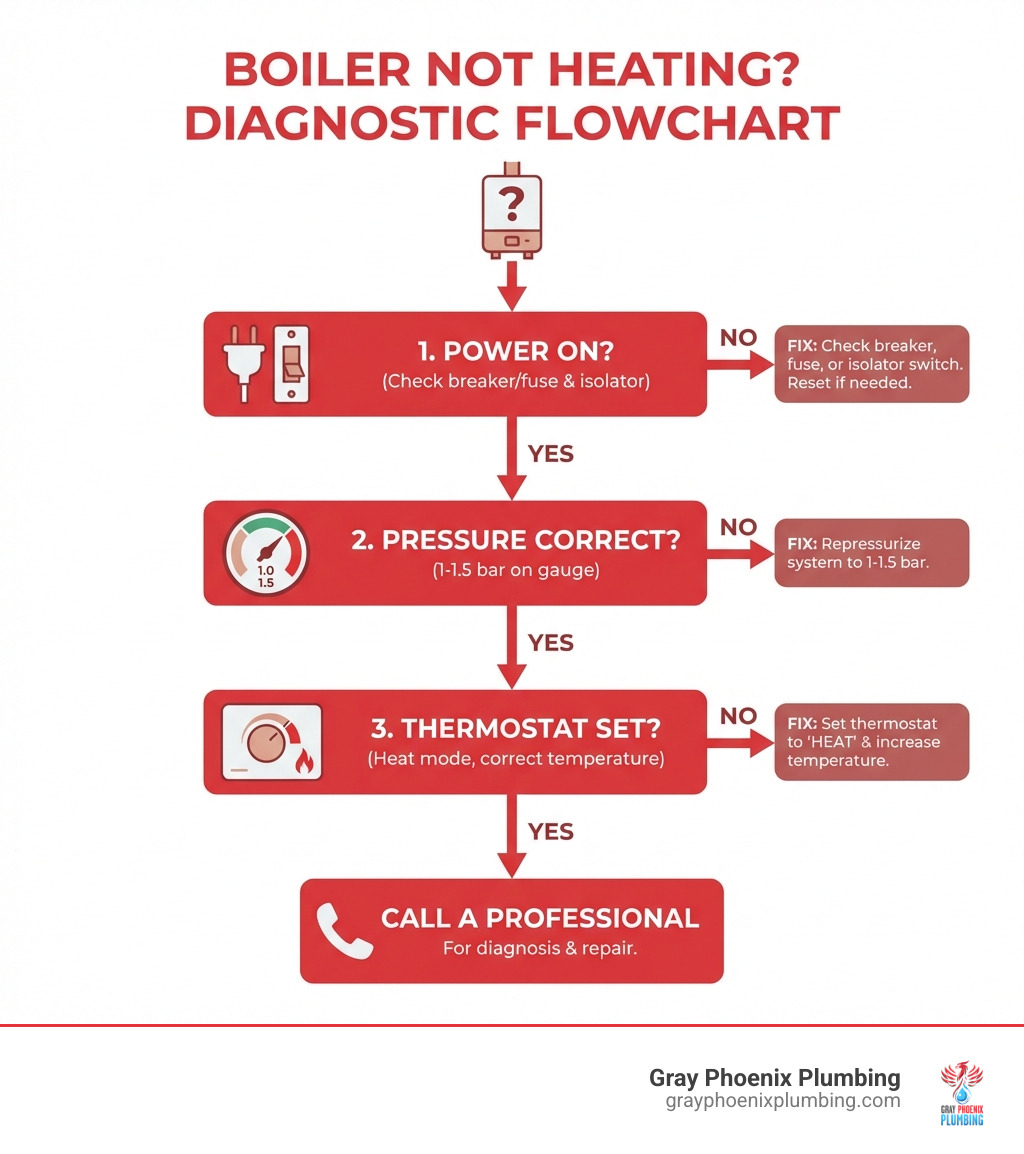
Quick 3-Step Boiler Check:
- Power – Verify the boiler has power by checking your circuit breaker, fuse box, and the boiler’s isolator switch.
- Pressure – Look at the pressure gauge; it should read between 1 and 1.5 bar.
- Thermostat – Confirm your thermostat is set to ‘heat’ and is at least 5 degrees above the current room temperature.
From a pilot light that keeps going out to strange gurgling noises, a lack of heat can make living spaces uninhabitable. Boiler malfunctions are especially common during winter, precisely when you need your heating system most.
Many boiler heating issues have simple fixes you can try yourself. However, some problems require immediate professional attention for safety, particularly anything involving gas, water leaks, or unusual flame colors.
I’m Chris Hoffman, and with 25 years as a Master Plumber, I’ve diagnosed countless cases of a boiler not heating for homeowners in the Denver Metro area. From frozen condensate pipes to failed ignitors, I’ve seen how quickly a heating failure can disrupt a family’s comfort and why a fast, accurate diagnosis matters.
First Response: Simple Checks Before You Panic
When your home feels like an igloo, it’s easy to panic. But before calling for help, perform a few simple checks. Often, the problem isn’t the boiler itself, but its power, thermostat, or water pressure.

Is It Getting Power?
It might sound obvious, but first check if the boiler has power. Without electricity, it’s just a cold metal box.
- Circuit Breaker/Fuse Box: Go to your electrical panel and look for a tripped circuit breaker or blown fuse. Reset the breaker or replace the fuse. If it trips or blows repeatedly, it signals a deeper electrical issue that requires a professional. For more on preventing such issues, consider More about preventing electrical overloads.
- Isolator Switch: Many boilers have a dedicated isolator switch nearby. Ensure it hasn’t been accidentally turned off.
- Power Cuts: Check if other appliances are working. If you have a wider power outage, your boiler won’t function. Also, ensure any prepayment gas meters have credit.
Is the Thermostat Set Correctly?
Your thermostat is the brain of your heating system. If it’s not communicating with the boiler, you won’t get heat.
- Mode and Temperature: Ensure your thermostat is set to ‘heat’ and the temperature is at least 5 degrees higher than the current room temperature. If it’s set too low, the boiler won’t fire up.
- Batteries: If your thermostat is battery-powered, dead batteries can make it unresponsive. Replace them.
- Timer Settings: Power cuts can reset programmable thermostats. Double-check that your heating schedule is active and correct.
- Smart Thermostats: For smart thermostats, ensure they are connected to Wi-Fi and check the app for error messages.
What’s the Boiler Pressure?
Boiler pressure is crucial. If it’s too low or high, the boiler may shut down as a safety measure.
- Pressure Gauge: Locate the pressure gauge on your boiler. The ideal pressure is between 1 and 1.5 bar. If the gauge is below 1 bar, you have a problem.
- Low Water Pressure: Low pressure is a common reason for a boiler not heating, often caused by a leak or gradual water loss. This may require manual repressurization.
- Repressurizing the System: If the pressure is low, you may be able to repressurize it using the boiler’s filling loop (a small pipe with two valves). Consult your boiler’s manual for specific instructions and carefully open the valves to let water in until the gauge reaches the recommended level. Do not overfill, as high pressure also causes problems. If a pressure regulating valve is failing, it will need repair.
Diagnosing the Deep Freeze: Common Causes for a Boiler Not Heating
Once you’ve ruled out simple checks, it’s time to investigate common culprits behind a boiler not heating. These issues often involve internal components and may require professional help.

Pilot Light or Ignition Failure
For older boilers, a pilot light issue is a frequent cause of no heat. Newer boilers use electronic ignition systems.
- Older Boilers (Pilot Light): A standing pilot light—a small, continuous flame—ignites the main burner. If this flame goes out due to a draught or faulty thermocouple, the boiler won’t fire up. The thermocouple is a safety device that cuts off gas if the flame is out. A pilot light that won’t stay lit often points to a malfunctioning thermocouple. If you can’t safely relight it following your boiler’s manual, or it keeps going out, call a professional. For visual guidance, see Troubleshooting a pilot light that won’t stay lit.
- Modern Boilers (Electronic Ignition): These use an electronic spark or hot-surface ignitor. Hot-surface ignitors typically last three to five years and should be replaced during preventive maintenance. If your electronic ignition isn’t working, you’ll need a professional.
Frozen Condensate Pipe: A Common Culprit for a Boiler Not Heating in Winter
This is a common issue in the Denver Metro area during cold winters. Condensing boilers have a pipe carrying condensate (acidic water) to an external drain.
- The Problem: In cold weather, this external pipe can freeze. The blockage triggers a safety lockout, causing your boiler not heating. You might hear gurgling noises before it shuts down.
- The Fix: You can often thaw a frozen condensate pipe by pouring hot (not boiling) water over the frozen section or wrapping it in a heat pack. Once thawed, reset the boiler per its manual. To prevent this, insulate the external pipe.
Strange Noises: Kettling, Banging, and Gurgling
Unusual noises are clear indicators of underlying problems.
- Kettling: A sound like a boiling kettle, usually caused by limescale or sludge buildup restricting water flow. This is common in hard water areas like Colorado and reduces efficiency. A professional flush is needed.
- Banging, Clanking, or Gurgling: These sounds often point to air trapped in the system. Bleeding your radiators can release this air. Gurgling followed by a shutdown could also indicate a frozen condensate pipe.
- Whistling: Can be caused by trapped air or, if combined with low pressure, a system blockage or pump issue.
- Droning or Humming: A loud droning can point to a faulty circulator pump.
- Ticking: Usually normal expansion and contraction of pipes as they heat and cool.
Internal Part Failures: Pumps and Valves
When core components fail, it directly impacts heating. These issues typically require professional repair.
- Circulator Pump Failure: This pump moves hot water to your radiators. If it fails, radiators stay cold. A faulty pump is a direct cause of a boiler not heating.
- Faulty Diverter Valve: In combi boilers, this valve directs hot water to taps or heating. If it gets stuck, you might have hot water but no heat (or vice-versa).
- Blocked Pipes: Sludge and debris can block pipes, preventing hot water from reaching radiators. Dark or rusty water when bleeding a radiator is a sign you need a plumber.
- Limescale Buildup: Limescale on the heat exchanger reduces its ability to heat water, leading to inefficiency and higher energy use.
- Faulty Pressure Relief Valve: This safety valve releases excess pressure. If it sticks open, it causes constant pressure loss, stopping the boiler from working. As with water heaters, failing parts can mean the boiler is old and needs repair. For similar insights, explore Signs you need a water heater replacement.
When to Call for Backup: Signs You Need a Professional
While it’s empowering to troubleshoot minor boiler issues yourself, there are critical moments when calling a licensed professional is not just advisable, but essential for your safety and the longevity of your system. DIY boiler repairs can be dangerous and may cause further damage, especially given the high pressures and temperatures involved in boiler systems.
Immediate Red Flags and Safety Warnings
Some boiler problems are not just inconvenient; they pose serious health and safety risks. If you notice any of these signs, turn off your boiler immediately and contact Gray Phoenix Plumbing without delay.
- Smell of Gas: If you detect even a faint odor of gas, turn off your gas supply, open windows, and evacuate your home. Then, call your gas provider’s emergency line and us. Do NOT attempt to diagnose or fix this yourself.
- Carbon Monoxide Symptoms: Be aware of the signs of carbon monoxide poisoning, which include headaches, dizziness, nausea, and confusion. Carbon monoxide is odorless and colorless, making it incredibly dangerous.
- Sooty Stains or Yellow Flame: Your boiler’s flame should be a clean, crisp blue color. If you see sooty stains around the boiler, or if the pilot light (for older boilers) or main burner flame is yellow or smoky, it indicates incomplete combustion. This is a serious issue that can lead to carbon monoxide production and requires immediate professional attention. A malfunctioning burner system needs to be addressed promptly, as it can lead to fire or carbon monoxide poisoning.
- Water Leakage Around the Unit: While a tiny drip might seem minor, any persistent water leak around your boiler can indicate a failing component, corrosion, or excessive pressure. This can lead to water damage, mold, and further system breakdown. Just as you wouldn’t ignore warning signs from your water heater, your boiler gives clear signals when it needs professional attention. For more insights on recognizing issues, you can check out our guide on don’t ignore these water heater warning signs.
- Persistent Lockouts or Error Codes: If your boiler frequently shuts down and displays an error code, even after you’ve tried resetting it, it’s signaling a recurring internal fault that needs expert diagnosis. Modern boilers often have diagnostic LED lights that flash error codes, which can point to specific issues.
- Boiler is Under Warranty: If your boiler is still under warranty, always call the manufacturer first. They should send a service engineer to your home, and attempting DIY repairs could void your warranty.
The Risks of DIY Boiler Repair
We understand the urge to save money and fix things yourself. However, boilers are complex appliances involving gas, high-pressure water, and electricity. Attempting repairs without proper training and certification can be incredibly dangerous and lead to more expensive problems down the line.
- Safety Hazards: Working with gas lines carries the risk of gas leaks, explosions, and carbon monoxide poisoning. Electrical components can deliver severe shocks. High-pressure water systems can cause scalding injuries.
- Voiding Warranty: Most boiler manufacturers will void your warranty if an unlicensed individual attempts repairs.
- Causing More Damage: A well-intentioned but incorrect DIY fix can turn a minor issue into a major, costly repair. Many parts, such as the diverter valve or PCB board, run into hundreds of dollars (not including labor), and misdiagnosis can lead to unnecessary replacements.
- Lack of Expertise: Diagnosing complex issues like a failing circulator pump, a faulty PCB board, or a cracked heat exchanger requires specialized knowledge and tools. A professional can quickly identify the root cause and ensure a safe, lasting repair. When facing complex boiler problems, attempting DIY repairs carries significant risks. For issues demanding immediate professional attention, such as a water heater emergency, we offer same-day water heater repair in Denver.
When in doubt, always call a licensed professional. Our team at Gray Phoenix Plumbing is trained, experienced, and equipped to handle all boiler repairs safely and efficiently across Elizabeth, CO, and the broader Denver Metro area.
Preventing a Winter Crisis: Essential Boiler Maintenance
An ounce of prevention is worth a pound of cure, especially when it comes to your boiler. Proactive maintenance is the best way to ensure your boiler keeps heating your home reliably, saving you from inconvenient breakdowns and costly emergency repairs. With proper annual maintenance, your boiler should last for 15-20 years.
- Annual Servicing: This is the single most important maintenance step. Having an annual cleaning and inspection from a licensed professional is the best way to keep your boiler in tip-top shape. Regular servicing ensures efficiency, catches potential problems early, and is often required to keep your manufacturer’s warranty valid. Our technicians check everything from the burner to safety controls, ensuring your system is running safely and efficiently.
- Bleeding Radiators: Before the heating season kicks into full gear, bleed your radiators. Air trapped in your hot water system reduces the heat you get from your radiators, forces your boiler to work harder, and consumes more fuel. If you bleed a radiator and only air, but no water, comes out, it means you need to add water to your boiler.
- Limescale Prevention: Limescale buildup is a common issue in hard water areas like ours. It reduces heat exchange efficiency and can lead to kettling noises. Regular system flushing, the use of water softeners, scale inhibitors, or installing a magnetic filter can help prevent this buildup.
- Insulating Pipes: During Colorado’s cold snaps, insulating external pipes, especially the condensate pipe, can prevent freezing and boiler lockouts. A well-insulated boiler tank will also retain heat, saving you a fortune on reheating costs.
- System Flushing: Periodic system flushing helps prevent the accumulation of sludge, debris, and airlocks, which can hinder water circulation and heating performance.
- Checking Flue Vents: Flue vents are vital for safely removing the byproducts of combustion. Ensure they are clear and unobstructed. Blocked flue vents can cause dangerous carbon monoxide to enter your home. Your boiler also needs sufficient air for the combustion process; clear space around it to ensure adequate airflow.
Just as with water heaters, regular maintenance is key to preventing major breakdowns. For more on comprehensive home appliance care, explore our guide on the ultimate guide to water heater maintenance.
How Different Boiler Types Affect Troubleshooting
The type of boiler you have can influence the troubleshooting steps and common issues you might encounter. While the fundamental principles of heating remain, their configurations differ.
| Boiler Type | Description | Common Heating Issues & Troubleshooting Focus |
|---|---|---|
| Combi Boiler | Compact unit, provides heating and hot water on demand, no separate tank. | No hot water/heating: Often diverter valve issues (stuck, faulty), flow sensor problems, plate heat exchanger limescale. Low pressure: Common, easy to repressurize. Frozen condensate pipe: Very susceptible in winter. |
| System Boiler | Stores hot water in a cylinder, but components like pump are built-in. | No hot water/heating: Malfunctioning pump (though often built-in, can still fail), cylinder thermostat issues, zone valve problems. Low pressure: Less common than combi due to sealed system, but can indicate leaks. |
| Conventional (Regular) Boiler | Requires a separate hot water cylinder and cold water tank (usually in loft). | No hot water/heating: Issues with external pump, zone valves, cylinder thermostat, immersion heater, or problems with the cold water feed tank (e.g., stuck float valve). Air in system: More prone to airlocks, requiring regular bleeding. Low pressure: Can indicate issues with feed and expansion tank. |
Understanding your boiler type helps us narrow down potential issues more quickly, especially when you call Gray Phoenix Plumbing for a diagnosis in Elizabeth, CO.
Frequently Asked Questions about Boiler Heating Problems
Why is my boiler working but the radiators are cold?
This is a common and frustrating scenario. If your boiler seems to be firing up and making all the right noises, but your radiators are refusing to warm up, several issues could be at play:
- Faulty Diverter Valve (Combi Boilers): As discussed, if you have a combi boiler, the diverter valve might be stuck, sending all the hot water to your taps instead of your central heating system. You’ll likely have hot water at the faucet but cold radiators.
- Air Trapped in Radiators: This is a very common culprit. Air pockets can prevent hot water from circulating through your radiators. If your radiators are warm at the bottom but cold at the top, they probably need bleeding. This is a simple DIY task using a radiator key.
- Malfunctioning Circulator Pump: The pump is responsible for moving hot water from the boiler to your radiators. If it’s not working, the water won’t circulate, leaving your radiators cold.
- Blocked Pipes or Radiators: Sludge, rust, or limescale can build up in your pipes or radiators, creating blockages that prevent hot water flow. This often requires a professional power flush.
- Faulty Thermostatic Radiator Valves (TRVs): If individual radiators are cold, check their TRVs. Ensure they are fully open (usually set to ‘5’ or ‘max’) and not stuck.
- Zone Valve Issues: In larger homes with multiple heating zones, a faulty zone valve could prevent hot water from reaching a specific area.
Bleeding the radiators is a good first step, but if that doesn’t work, a professional diagnosis is needed. Our team can quickly pinpoint the exact cause and get your heat flowing again.
How often should I have my boiler serviced to prevent heating issues?
It is highly recommended to have your boiler serviced annually by a licensed and certified technician. This isn’t just a suggestion; it’s a critical step for several reasons:
- Safety: An annual service checks for dangerous issues like carbon monoxide leaks, ensuring your boiler operates safely.
- Efficiency: Regular maintenance keeps your boiler running at peak efficiency, which means lower energy bills for you. A well-maintained boiler works less hard to heat your home.
- Longevity: With proper annual maintenance, your boiler should last for 15-20 years. Servicing catches minor problems before they escalate into major, expensive breakdowns.
- Warranty Validation: Many manufacturers require annual servicing to keep your boiler’s warranty valid. Skipping a service could mean you’re on the hook for costly repairs if a part fails.
- Proactive Problem Solving: Our technicians can identify worn parts or potential issues, like early signs of limescale buildup or a failing component, allowing us to address them before they cause a complete breakdown and leave you without heat during a Colorado winter.
Can I fix a boiler not heating issue myself?
You can and should perform certain simple checks and minor fixes yourself before calling a professional. These include:
- Verifying Power: Checking your circuit breaker, fuse box, and the boiler’s isolator switch.
- Checking Thermostat Settings: Ensuring it’s in ‘heat’ mode, set to the correct temperature, and has working batteries.
- Ensuring Correct Pressure: Checking the boiler’s pressure gauge and, if low, carefully repressurizing it according to your manual.
- Thawing a Frozen Condensate Pipe: Using hot water or a heat pack on the external pipe.
- Bleeding Radiators: Releasing trapped air to improve circulation.
- Resetting the Boiler: Following your boiler’s manual to press the reset button.
However, any work involving the boiler’s internal components, gas supply, or electrical wiring should always be left to a licensed professional due to significant safety risks. DIY boiler repairs can be dangerous, lead to further damage, and potentially void your warranty. If you are in doubt about any issue, it is best to leave the job to a professional.
Get Your Heat Back On with Expert Help
Dealing with a boiler not heating can be a chilly challenge, but by following our troubleshooting guide, you’re now equipped to handle many common issues. Remember to always prioritize safety, especially when dealing with gas or electrical components.
We understand the importance of a warm, comfortable home, particularly in Elizabeth, CO, and throughout the Denver Metro area. If you’ve tried the simple fixes and your boiler is still leaving you in the cold, or if you encounter any of the red flag safety warnings, don’t hesitate to reach out. Our family-owned business, Gray Phoenix Plumbing, offers reliable plumbing, heating, cooling, and electrical services, ensuring licensed, background-checked pros, transparent pricing, and our Customer Care Guarantee. We’re your one-stop shop for home service needs.
For reliable plumbing services in Elizabeth, CO, contact our team today!


