

Why Littleton Homeowners Are Making the Switch to Tankless
Tankless water heater Littleton homeowners are increasingly choosing for their homes offer endless hot water, significant energy savings, and a lifespan that can reach 20 years or more. If you’re tired of running out of hot water mid-shower or frustrated by high energy bills from constantly heating a 50-gallon tank, here’s what you need to know:
Quick Answer: Tankless Water Heaters in Littleton
- Energy Savings: Up to 30% lower utility bills compared to traditional tank heaters
- Endless Hot Water: On-demand heating means no more cold showers
- Longer Lifespan: 20 years vs. 8-12 years for traditional tanks
- Space Saving: Compact wall-mounted design frees up floor space
- Local Considerations: Colorado’s hard water and altitude require specialized installation and maintenance
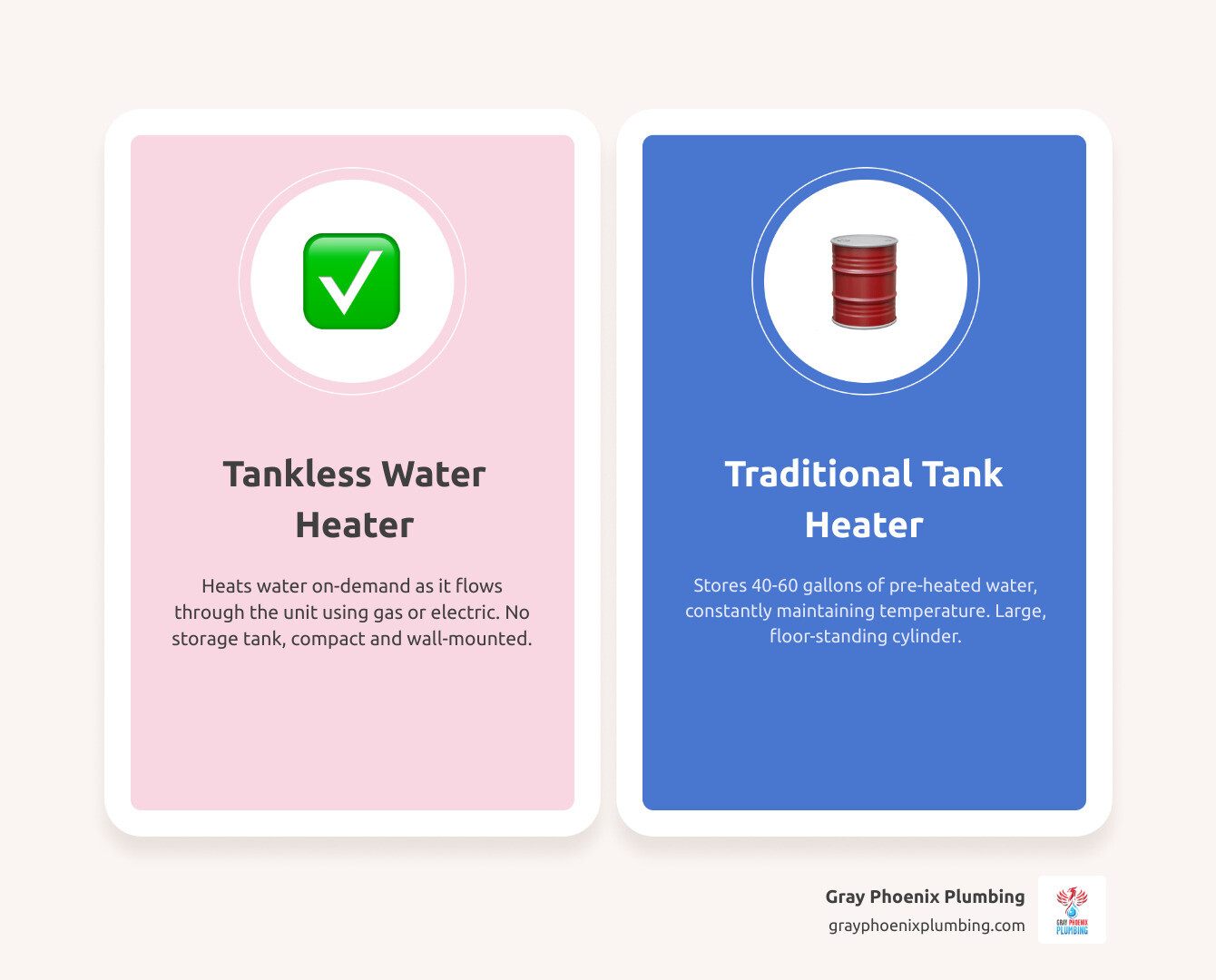
Traditional tank water heaters keep 40-60 gallons of water hot 24/7, whether you’re using it or not. That’s like leaving your car running in the driveway all day. Tankless systems only heat water when you turn on the tap, which is why they’re sometimes called “on-demand” or “instant” water heaters.
But there’s a catch for Littleton homeowners. Colorado’s naturally hard water can build up minerals inside your tankless unit, reducing efficiency and potentially damaging the heat exchanger. And our altitude affects how gas-powered units perform, requiring specific adjustments during installation.
I’m Chris Hoffman, a Master Plumber with over 25 years of experience installing and maintaining tankless water heaters throughout the Denver Metro area, including Littleton, Ken Caryl, and Columbine neighborhoods. I’ve seen how proper installation and maintenance custom to our local conditions can help a tankless water heater Littleton system last its full 20-year lifespan while delivering maximum energy savings. Let’s break down everything you need to know to make the right choice for your home.
Why Go Tankless? Key Differences and Major Benefits
Choosing a new water heater can feel like a daunting task, but understanding the core differences between tankless and traditional models can make the decision much clearer. For many homeowners in Littleton, the move to a tankless system isn’t just about getting hot water; it’s about upgrading their home’s efficiency, comfort, and long-term value.
What are the benefits of installing a tankless water heater in Littleton?
The advantages are compelling:
- Endless Hot Water: Imagine never running out of hot water, even if everyone in the house showers back-to-back or you’re running the dishwasher and laundry simultaneously. Tankless units heat water as you need it, providing a continuous supply. No more cold showers!
- Significant Energy Savings: Traditional tank heaters constantly heat and reheat a large reservoir of water, leading to “standby heat loss.” Tankless systems eliminate this by only activating when you turn on a hot water tap. This on-demand heating can translate to substantial savings, with some homeowners seeing up to 30 percent off their electric bills.
- Longer Lifespan: With proper care and maintenance, a tankless water heater can last up to 20 years, or even longer. This is significantly longer than the average 8-12 year lifespan of a traditional tank water heater.
- Space-Saving Design: Tankless units are compact and typically mount on a wall, freeing up valuable floor space in your basement, utility closet, or garage. Traditional tanks can be quite bulky, taking up a considerable footprint.
- Cleaner Water: Since water isn’t stored in a tank, there’s less opportunity for rust or sediment to build up and contaminate your hot water supply. This means cleaner water for bathing and washing.
If you want a deeper technical overview of how these systems work in general, the tankless water heating article on Wikipedia gives a good neutral explanation of on-demand technology.
Here’s a quick comparison to help visualize the differences:
| Feature | Tankless Water Heater | Traditional Tank Water Heater |
|---|---|---|
| Lifespan | Up to 20 years with maintenance | 8-12 years on average |
| Energy Usage | Heats on demand, no standby loss, 24-34% more efficient | Heats and reheats stored water, standby heat loss |
| Upfront Cost | Higher | Lower |
| Operating Cost | Lower utility bills | Higher utility bills |
| Space Required | Compact, wall-mounted | Large, floor-standing (40-60 gallons) |
Tank vs. Tankless: Efficiency and Cost Compared
The most striking difference between these two systems lies in how they handle hot water. A traditional water heater is essentially a large thermos. It heats a tank full of water to a set temperature and then works to maintain that temperature 24/7, even when you’re not home. This constant reheating is known as “standby heat loss” and it’s where a lot of energy (and money) is wasted.
Tankless water heaters, on the other hand, employ “on-demand heating.” When you open a hot water faucet, cold water enters the unit, where a powerful heat exchanger quickly warms it to your desired temperature before sending it to your tap. The unit then shuts off until the next call for hot water. This fundamental difference is why tankless systems are so much more energy-efficient, potentially saving households 27 to 50 percent more energy than typical tank heaters. For more details on installation, check out our complete guide to installing a tankless water heater.
While the “higher initial investment” for a tankless water heater Littleton installation might seem like a hurdle, it’s crucial to consider the “long-term savings” and “return on investment.” The reduced monthly utility bills often offset the upfront cost over the unit’s extended lifespan. When evaluating “cost considerations for electric and gas tankless water heaters,” remember that gas models often have lower operating costs due to natural gas prices, but electric models might be simpler to install if your home doesn’t have a gas line. For specific costs related to electric tankless units, you can explore our insights on the cost to install an electric tankless water heater.
Lifespan and Long-Term Value
One of the most appealing aspects of a tankless water heater is its impressive durability. With proper maintenance, these units boast an “average lifespan of 20 years,” and sometimes even longer. Compare this to a “traditional heater lifespan” of typically 8 to 12 years, and you can see the significant difference in longevity. This extended life means you’ll replace your water heater less often, saving you money and hassle in the long run.
The key to achieving this maximum lifespan, however, is consistent maintenance. The “maintenance impact on longevity” cannot be overstated. Just like changing the oil in your car, regular professional servicing ensures your tankless unit runs efficiently and prevents premature wear and tear. In fact, many manufacturers stipulate that professional maintenance is a requirement for “warranty requirements” to remain valid. Neglecting maintenance could void your warranty and shorten your unit’s life considerably.
Littleton-Specific Considerations: Hard Water and Altitude
Living in Colorado, we get to enjoy stunning mountain views and plenty of sunshine. However, our beautiful landscape also presents some unique challenges for home systems, especially for a tankless water heater Littleton residents rely on. Two major factors come into play: our notoriously hard water and our high altitude. These aren’t just minor details; they significantly impact the performance, efficiency, and maintenance needs of your tankless water heater.
Whether you’re in the Ken Caryl area or the Columbine neighborhoods, understanding these local conditions is crucial for ensuring your tankless system operates at its best.
How Colorado’s Hard Water Affects Your Unit
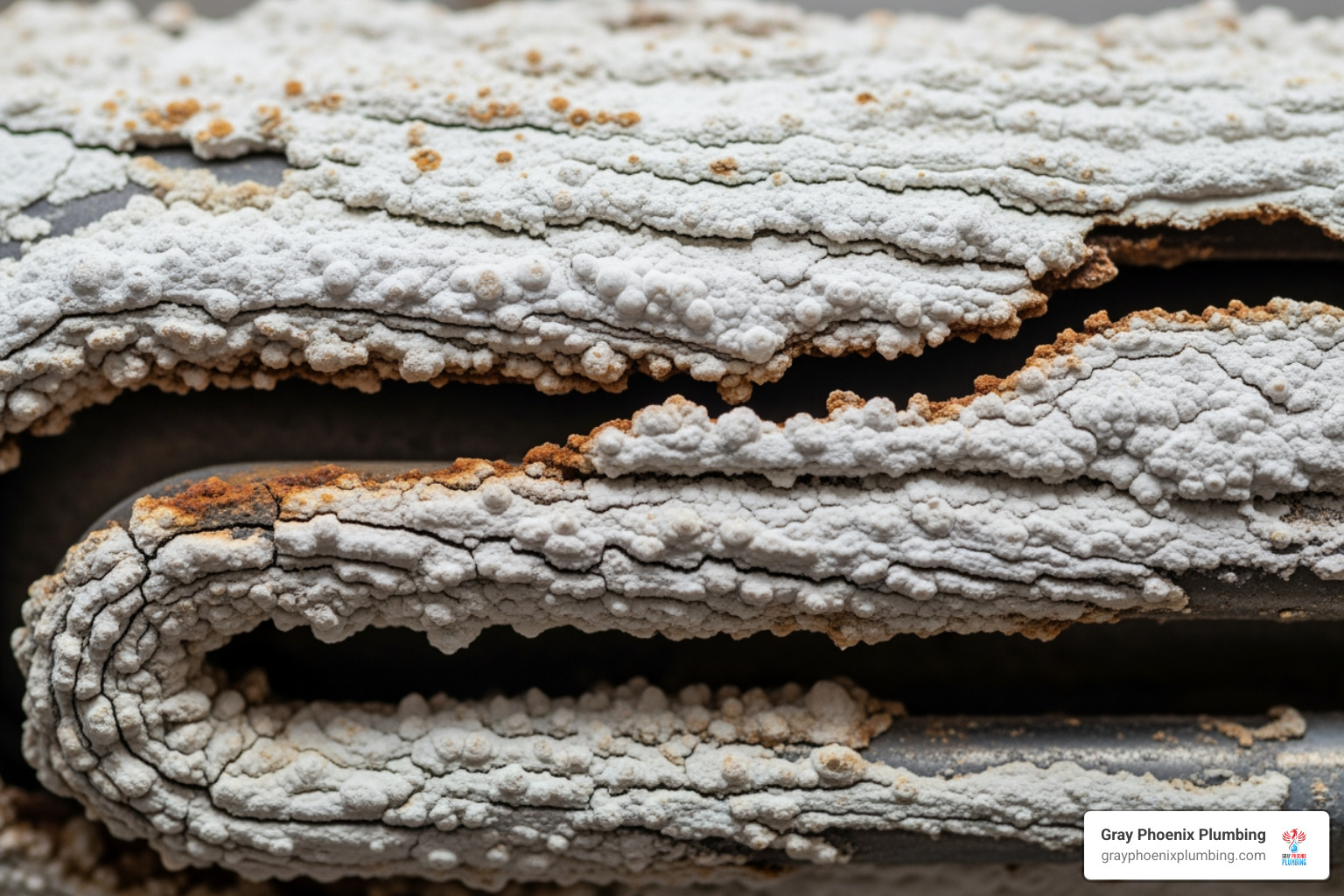
Colorado’s “Colorado water quality” is generally considered “hard water,” meaning it contains a high concentration of dissolved minerals like calcium and magnesium. While these minerals are usually harmless to consume, they can be quite problematic for appliances that heat water.
The primary issue is “mineral buildup,” often referred to as “limescale.” As hard water is heated, these minerals precipitate out and cling to surfaces, particularly the heat exchanger within your tankless unit. This “limescale” acts as an insulator, making it harder for the heat exchanger to transfer heat to the water. The consequences are significant:
- Reduced Efficiency: Your unit has to work harder and longer to heat the water, consuming more energy and negating some of the tankless system’s inherent efficiency benefits.
- Heat Exchanger Damage: Over time, severe mineral buildup can permanently damage the delicate heat exchanger, leading to costly repairs or even premature unit replacement.
- Restricted Flow: Limescale can also narrow water passages, leading to “low water pressure” for your hot water.
To combat this, we often recommend installing a “water softener” or other water treatment device before your tankless water heater. This proactive measure can dramatically extend your unit’s life and maintain its efficiency. Regular “descaling process” as part of your maintenance routine is also absolutely essential to flush out any accumulated minerals.
Altitude’s Impact on Performance and Installation
Littleton sits at an elevation of approximately 5,350 feet above sea level. While we love the thinner air for outdoor activities, it poses specific challenges for gas-fired appliances like tankless water heaters.
At higher altitudes, the air contains less oxygen, which affects combustion. This means that gas-fired tankless water heaters require specific adjustments to ensure they burn fuel efficiently and safely. Key considerations include:
- Gas Pressure Adjustments: Units need to be properly adjusted for the lower atmospheric pressure to ensure correct gas-to-air mixture. Without this, the unit may not operate efficiently or could even produce harmful byproducts.
- Proper Venting: Effective venting is critical to safely expel combustion gases. At altitude, venting requirements can be stricter to ensure proper draft and prevent backdrafting.
- Combustion Air Requirements: Just as important as venting is ensuring the unit has adequate combustion air. In some cases, specialized intake systems may be necessary.
- Manufacturer Specifications for High Altitude: Most tankless water heater manufacturers provide specific guidelines and sometimes require high-altitude conversion kits for their units to operate correctly and maintain warranty coverage.
This is where “local installation expertise for Littleton homes” becomes invaluable. We understand these “high altitude effects” and ensure that your tankless water heater Littleton installation adheres to all local codes and manufacturer specifications for optimal performance and safety.
Professional Installation and Maintenance for Your Tankless Water Heater in Littleton
Installing a tankless water heater isn’t a DIY job for the faint of heart. These are sophisticated appliances that require precise installation to ensure safety, efficiency, and longevity. We always recommend “professional installation” to prevent potential issues and maximize your investment. Our certified technicians have the expertise to handle everything from sizing the unit correctly to ensuring proper gas line upgrades and venting options. You can review our tankless water heater installation service in Denver for an idea of our process.
The installation process typically involves:
- Assessment and Sizing: We evaluate your household’s hot water needs (number of bathrooms, peak usage times) to determine the correct flow rate and capacity for your new unit.
- Location and Venting: Identifying the best location for the unit, considering access to water lines, gas lines (if applicable), and exterior venting.
- Plumbing and Gas Line Modifications: Upgrading existing pipes or gas lines to meet the unit’s requirements.
- Installation and Testing: Securely mounting the unit, connecting all lines, and thoroughly testing for leaks and proper operation.
Recommended Maintenance for Your Tankless Water Heater in Littleton
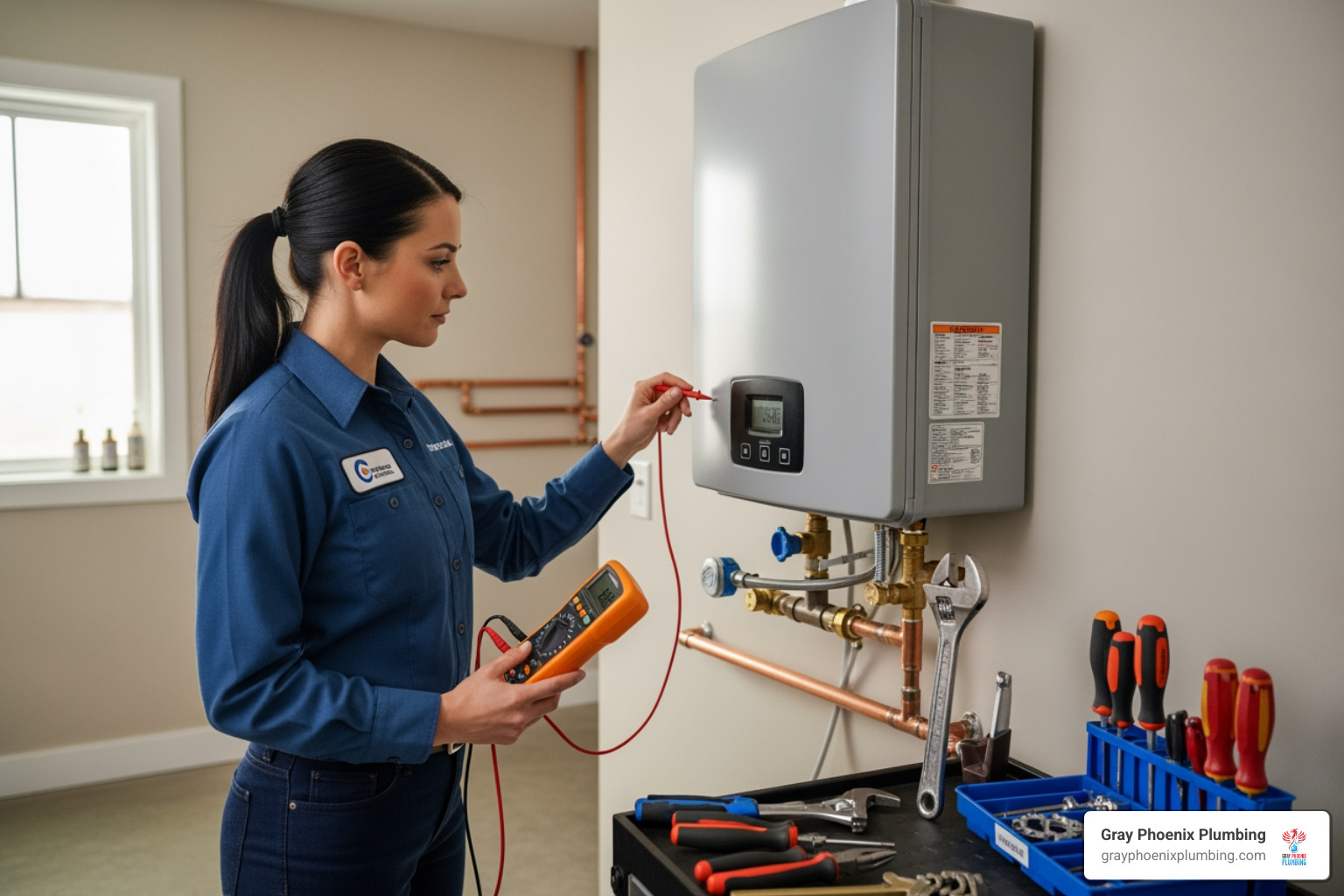
To ensure your tankless water heater Littleton system continues to provide endless hot water and energy savings for its full 20-year lifespan, regular maintenance is non-negotiable. Think of it as a necessary tune-up, much like servicing your car.
What maintenance is recommended for tankless water heaters, and how often should it be performed?
We recommend scheduling professional maintenance at least once a year. However, if you live in an area with particularly hard water (which is most of Colorado!) or if your unit is set to a very high temperature, you might consider servicing it every six months.
Here’s what our comprehensive maintenance process typically involves:
- Annual System Flush (Descaling): This is arguably the most critical task. We use a specialized solution to circulate through the unit, dissolving and flushing out any mineral buildup or “limescale” from the heat exchanger. This restores efficiency and prevents damage.
- Filter Cleaning and Replacement: Your tankless unit has filters that catch sediment before it enters the system. We clean or replace these to ensure proper water flow.
- Venting System Examination: We inspect the exhaust and air intake vents for any blockages, leaks, or corrosion, ensuring safe and efficient operation.
- Gas Line Pressure Testing and Adjustments: For gas units, we test gas pressure and make any necessary adjustments, especially crucial at our altitude, to ensure optimal combustion.
- Temperature Sensor Calibration and Testing: We verify that temperature sensors are accurate and that the unit is heating water to the desired setting.
- Performance Optimization: We check overall system performance, looking for any signs of wear or potential issues, and make adjustments to ensure peak efficiency.
Regular maintenance helps prevent common issues like mineral buildup affecting performance and addresses altitude-related performance issues proactively.
Signs You Need Repair or Replacement
Even with the best maintenance, sometimes things go awry. Knowing the “signs that indicate a need for tankless water heater repair or replacement” can help you act quickly and prevent minor issues from becoming major problems.
Keep an eye (and ear) out for these indicators:
- Error Codes: Most modern tankless units have digital displays that show error codes when something is wrong. Consult your owner’s manual or call us immediately if you see one.
- Fluctuating Water Temperatures: If your hot water is inconsistent, cycling between hot and cold, it could signal a problem with the unit’s thermostat, a clogged heat exchanger, or other internal issues.
- Low Hot Water Pressure: While tankless units typically don’t affect overall water pressure, a noticeable drop in hot water pressure could indicate mineral buildup restricting flow within the unit.
- Strange Noises: Banging, gurgling, rattling, or clicking sounds coming from your unit are usually a red flag. These can indicate sediment buildup, loose components, or a failing part.
- Leaks: Any visible water leaking from or around your tankless unit requires immediate attention. While tankless units don’t have large tanks to rupture, small leaks can still cause significant damage if left unchecked.
- Age of Unit: If your tankless water heater is approaching or has exceeded its 20-year expected lifespan, even minor issues might signal it’s time for a replacement rather than costly repairs.
If you notice any of these signs, don’t hesitate to call a professional. Early diagnosis can often save you from more extensive repairs or unexpected breakdowns.
Frequently Asked Questions about Tankless Water Heaters
We get a lot of questions from homeowners in Littleton and the surrounding Denver Metro area about tankless water heaters. Here are some of the most common ones we hear:
What is the typical cost for a tankless water heater installation in Littleton?
What is the typical cost range for tankless water heater installation in Littleton?
This is a great question, but the answer isn’t always a simple number because several factors influence the final price. While some sources indicate that most water heater installations can come in under $2,500, tankless systems often involve more complex setup.
Here are the main factors affecting the “installation cost factors”:
- Unit Price: The cost of the tankless unit itself varies widely based on brand, capacity (flow rate), energy source (gas or electric), and features.
- Labor: The complexity of the installation, especially if converting from a traditional tank, will impact labor costs. This includes time for removal of the old unit, installing the new one, and any necessary modifications.
- Plumbing Modifications: Converting from a tank to a tankless unit often requires rerouting water lines, and potentially upgrading pipe sizes for optimal flow.
- Gas Line Upgrades: If you’re installing a gas tankless unit, it may require a larger gas line than your previous tank heater, which adds to the cost.
- Venting Requirements: Tankless units require specific venting to the outside. Depending on your home’s layout, installing new or upgrading existing venting can be a significant part of the cost.
- Electrical Upgrades: Electric tankless units, in particular, often require dedicated high-amperage circuits, which might necessitate electrical panel upgrades.
- Permits: Local permits are usually required for water heater installations, which add a small administrative fee.
Because of these variables, it’s always best to get a personalized quote. We offer free, guaranteed proposals after assessing your home’s specific needs.
Are there local rebates for installing a tankless water heater?
Are there any local rebates or special offers available for tankless water heater installation or maintenance in Littleton?
Absolutely! Many “utility company incentives,” “government programs,” and “manufacturer rebates” are available to encourage homeowners to switch to more energy-efficient appliances like tankless water heaters. These incentives can significantly offset the upfront cost.
- Utility Companies: Companies like Xcel Energy in Colorado often offer rebates for installing high-efficiency natural gas or electric appliances. We recommend checking their website for current programs.
- Federal Tax Credits: Energy-efficient home improvements, including certain tankless water heaters, may qualify for federal tax credits.
- Manufacturer Rebates: Brands like Navien frequently offer their own rebates on qualifying units.
- Local Offers: Sometimes, local municipalities or plumbing companies (like us!) will have special promotions.
We encourage you to “check local providers” and utility websites regularly, as these programs can change throughout the year. We can also help guide you to available incentives during your consultation.
Can I install a tankless water heater outside?
Can I install a tankless water heater outside?
While it’s technically possible to install some tankless water heaters outside, especially models designed for outdoor use, it’s generally not recommended in “colder climates” like Littleton, Colorado. Our freezing winter temperatures pose a significant risk.
Outdoor units require robust “freeze protection,” and even with these features, there’s always a risk of damage during extreme cold snaps or power outages. If the unit freezes, it can cause irreparable damage and costly repairs.
Most “manufacturer guidelines” for outdoor installation are custom for warmer climates. If you’re considering an outdoor installation, it’s crucial to consult with a professional who understands local weather patterns and can advise on the best and safest approach. In most cases for Littleton, an indoor installation with proper venting is the preferred and safest option. To learn more about this, you can refer to our guide on installing a tankless water heater outside.
Your Local Littleton Plumbing Solution
Choosing a tankless water heater Littleton system is a smart investment in your home’s comfort, efficiency, and future. The benefits—from endless hot water and significant energy savings to a longer lifespan and space-saving design—make them an increasingly popular choice for homeowners throughout the Denver Metro area.
However, as we’ve discussed, Littleton’s unique environment, with its hard water and high altitude, means that expert installation and custom maintenance are not just recommended, but essential. This highlights the “importance of local expertise” for Littleton’s unique conditions. A local company understands these challenges and can ensure your system is perfectly calibrated for our specific environment.
At Gray Phoenix Plumbing, we pride ourselves on providing “professional service” that’s reliable, transparent, and backed by over 25 years of experience. We’re a family-owned business committed to licensed, background-checked pros, transparent pricing, and a Customer Care Guarantee. We’re your one-stop shop for all your home service needs, including expert tankless water heater solutions in Littleton, Elizabeth, Parker, Castle Rock, Kiowa, Franktown, Denver, Aurora, and across our Colorado service areas.
Don’t let cold showers or high utility bills be a part of your daily routine. Upgrade to the comfort and efficiency of a tankless water heater.
For all your residential plumbing needs, contact our team today


