

Why Understanding Tankless Hot Water Installation Cost Matters
Tankless hot water installation cost typically ranges between $1,200 and $3,500, with most homeowners paying around $2,800 for both equipment and professional installation. This investment can feel steep compared to traditional tank heaters, but understanding where your money goes helps you make a smart decision for your home.
Quick Cost Breakdown:
- Electric tankless units: $650–$2,500 total (unit: $500–$1,500 | installation: $150–$1,000)
- Gas tankless units: $1,650–$3,500 total (unit: $750–$2,000 | installation: $900–$1,500)
- Labor costs: $600–$1,850 on average
- Additional expenses: Electrical upgrades ($200–$800), gas line work ($400–$800), permits ($50–$200)
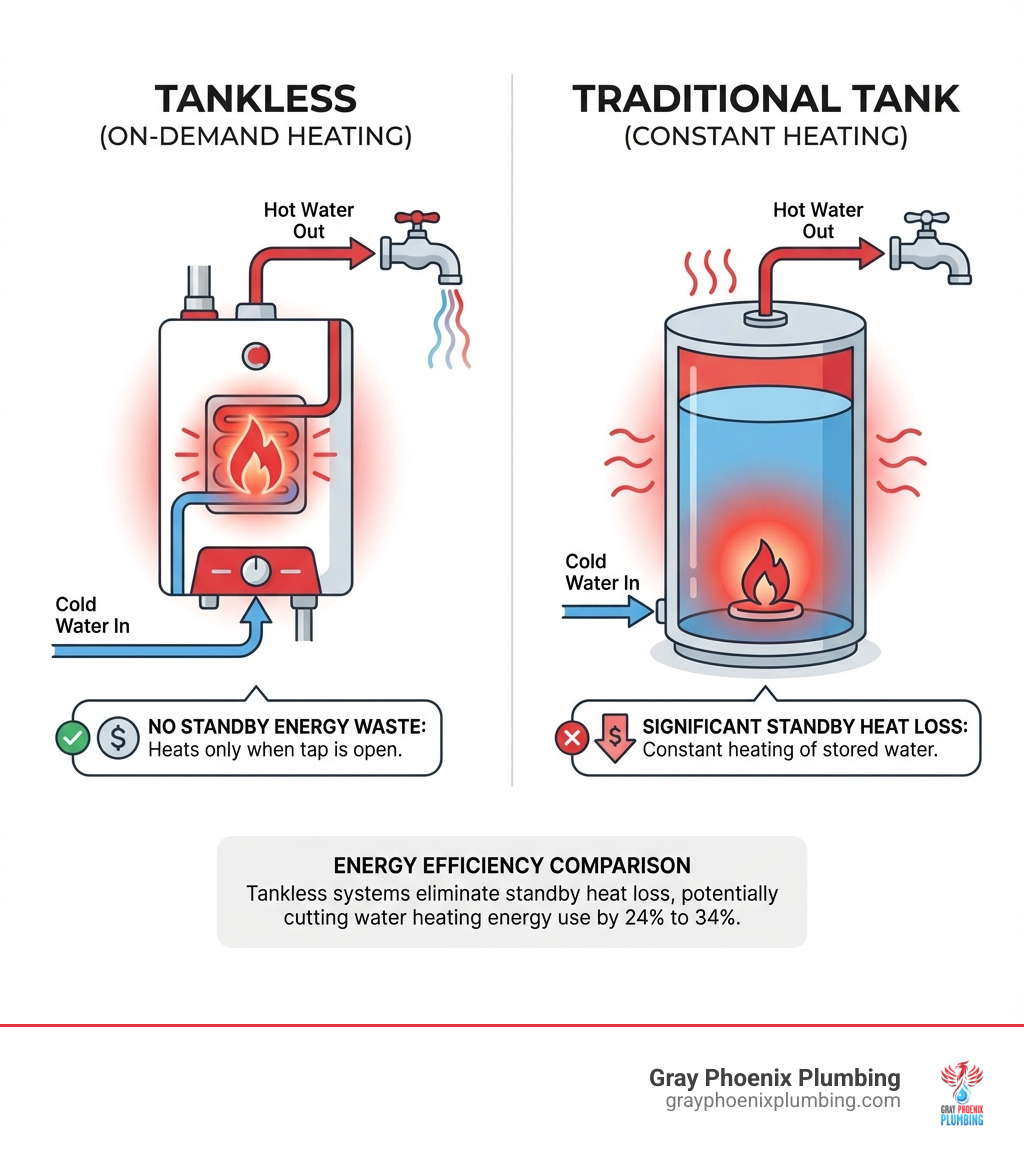
If you’re tired of running out of hot water mid-shower or watching your energy bills climb, a tankless system might be your solution. These compact units heat water on demand, eliminating the need for a bulky storage tank and potentially cutting your water heating energy use by 24% to 34%.
But here’s the reality: the upfront cost is higher than traditional heaters. A standard tank replacement runs $800–$1,500, while tankless systems start around $1,200 and can climb past $6,000 for complex installations. The good news? Tankless units last 15–20 years (nearly double a tank’s lifespan) and save you money every month through lower utility bills.
The total price depends on your home’s setup, the fuel type you choose, and whether you need infrastructure upgrades. A straightforward electric replacement in a well-equipped home costs far less than switching from electric to gas or installing your first tankless system.
Simple tankless hot water installation cost glossary:
- hot water heater contractor
- how to install a tankless water heater
- install tankless water heater outside
Understanding the Average Tankless Hot Water Installation Cost
When considering a tankless water heater, one of the first questions homeowners in Elizabeth, CO, and surrounding areas like Parker or Castle Rock ask is, “How much will this cost me?” The national average tankless hot water installation cost hovers around $2,800, covering both the unit and professional labor. However, your project could fall anywhere within the $1,200 to $3,500 range, or higher for complex jobs.
This price range includes the unit and installation labor but may not account for necessary upgrades to your home’s infrastructure. We believe in transparency, which is why we break down these costs for our neighbors across Denver, Littleton, Aurora, and other service areas.
For more detailed information on our water heater services, including traditional and tankless options, please visit our page on water heater replacement.
Unit Costs by Fuel Type
The fuel type is a primary driver of your overall tankless hot water installation cost. Each has its own advantages, efficiencies, and price.
-
Electric Tankless Units: With unit costs from $500 to $1,500, these are often the most affordable upfront. Total installation costs range from $650 to $2,500. They are highly efficient (98-99%) but may require electrical panel upgrades, adding to the cost. They are a practical choice for homes without natural gas access in areas like Lakewood or Thornton.
-
Natural Gas Tankless Units: These units cost $750 to $2,000, with total installation running $1,650 to $3,500. While less efficient than electric models (80-85%), they offer a higher flow rate (GPM), making them ideal for larger homes with high hot water demand.
-
Propane Tankless Units: A great option for homes off the natural gas grid in areas like rural Elbert County. Unit costs are $500 to $2,000, with total installation from $1,400 to $3,500. They perform similarly to natural gas units, but long-term fuel costs can be higher.
-
Condensing vs. Non-Condensing Models: This applies to gas heaters. Condensing units are more efficient (90%+) because they capture heat from exhaust gases. This leads to a higher unit cost ($1,500–$3,200) and more complex installation, with total costs potentially reaching $2,500–$6,700. Non-condensing units are less efficient (around 80%) but have a lower upfront cost.
Here’s a quick comparison to help you weigh your options:
| Feature | Electric Tankless Heater | Gas Tankless Heater (Natural/Propane) |
|---|---|---|
| Upfront Unit Cost | $500 – $1,500 | $750 – $2,000 |
| Installation Complexity | Moderate (electrical upgrades) | High (gas line, venting) |
| Average Operating Cost | Higher (depending on electricity rates) | Lower (depending on gas rates) |
| Energy Efficiency | 98-99% | 80-85% (non-condensing), 90%+ (condensing) |
| GPM Output | Lower (3-8 GPM) | Higher (8-10 GPM) |
Professional Installation and Labor Costs
The labor for your tankless hot water installation cost is significant because it requires specialized plumbing, gas, and electrical expertise. Labor costs typically range from $600 to $1,850. A standard installation takes 3 to 8 hours, but this can increase if your home needs modifications like new gas lines or electrical upgrades. The removal and disposal of your old water heater can add $100 to $500 to the bill. We ensure proper and environmentally responsible disposal of your old appliance.
For more insights into what our expert contractors can do for your hot water needs, check out our page on hot water heater contractors.
Key Factors That Influence Your Final Price
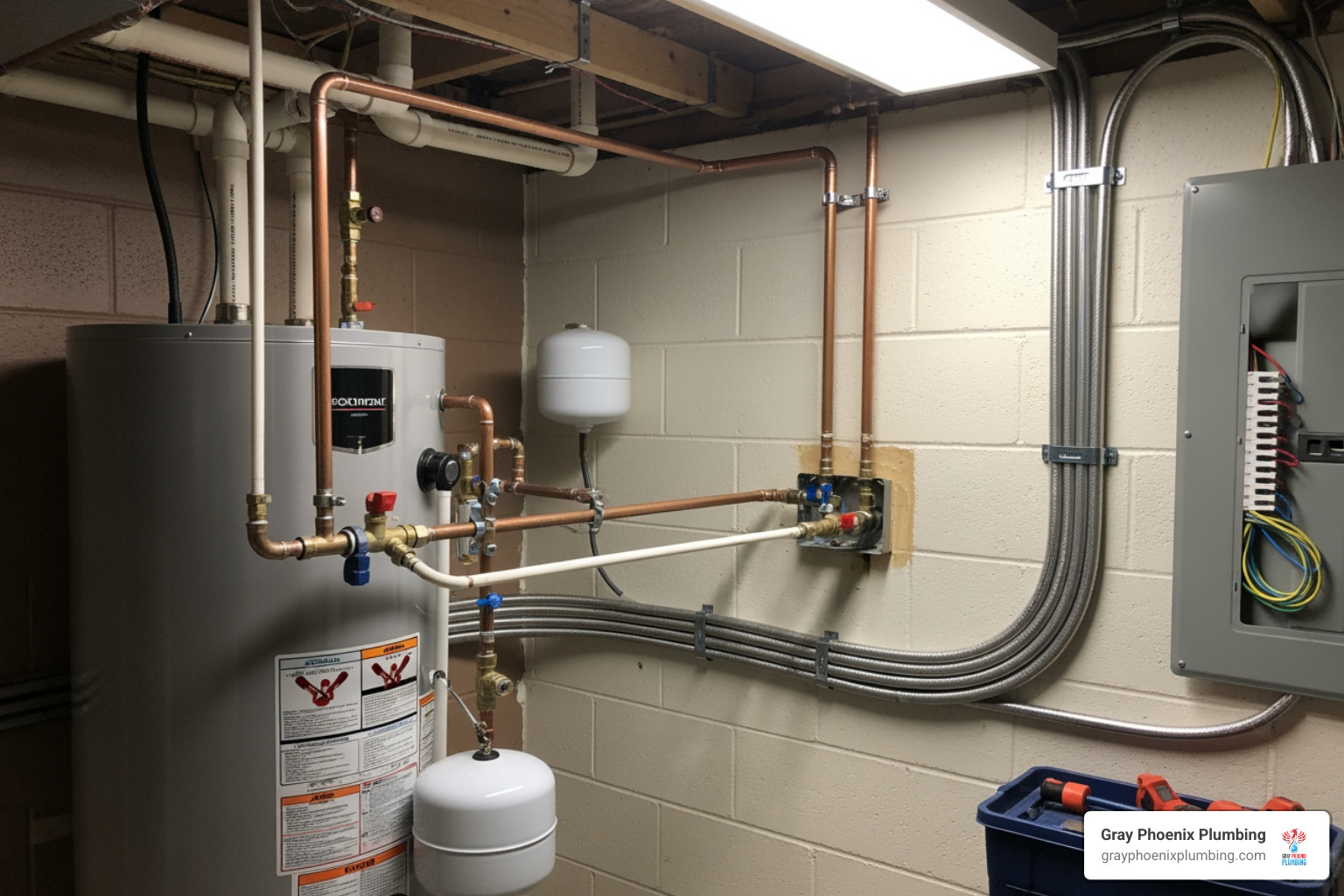
The final tankless hot water installation cost depends on several factors unique to your home.
-
New Construction vs. Replacement: Replacing an old water heater with a tankless unit can be complex, especially when converting fuel types (e.g., electric to gas), which is often more expensive than a direct replacement.
-
Location of Unit: Installation in easily accessible areas like a garage costs less. Working in tight spaces like a crawl space in Golden can increase labor costs by 10% to 15%.
-
Brand and Quality: Reputable brands like Rinnai, Navien, Rheem, and A.O. Smith cost more upfront but offer better reliability, efficiency, and warranties. A basic unit might be $200, while a high-end model can exceed $2,000.
How Sizing (GPM) Affects Your Tankless Hot Water Installation Cost
Choosing the correct size, measured in Gallons Per Minute (GPM), is critical. An undersized unit won’t meet your needs, while an oversized one is a wasted expense. GPM is the amount of hot water a unit can produce. In colder climates like Elizabeth, CO, the heater works harder to raise the water temperature, which can reduce its effective GPM.
To find your peak demand, add up the GPM of fixtures you might use at once. Expert plumbers advise determining the heater size based on how many fixtures might demand hot water at the same time. For example, if you have two showers, laundry, and a kitchen sink running, you will need a unit providing approximately 8 gallons per minute.
Typical flow rates:
- Shower: 1.5 – 6.0 GPM
- Bathroom Sink: 0.5 – 2.2 GPM
- Kitchen Sink: 1.0 – 2.2 GPM
- Dishwasher: 1.5 – 2.0 GPM
- Washing Machine: 2.0 – 3.0 GPM
Most homes need a system delivering 5.5 to 7.5 GPM. Whole-house systems (5-10 GPM) cost $450-$1,500, while smaller point-of-use units (0.5-2 GPM) cost $100-$300.
For comprehensive information on all our residential plumbing services, including water heater sizing, please visit our page on residential plumbing.
The Impact of Additional Modifications on Your Tankless Hot Water Installation Cost
Infrastructure modifications can add hundreds or thousands to your total tankless hot water installation cost.
-
Electrical Panel Upgrades: Electric units often need dedicated circuits. If your panel can’t handle the load, an upgrade can cost $200 to $2,000.
-
Gas Line Modifications: Gas heaters may require a larger gas line (typically 3/4-inch). Upgrading from a 1/2-inch line can cost $400 to $1,000.
-
Venting Requirements: Gas units must be vented outside, costing $300 to $800. Condensing models also need a drain for condensate, which can add complexity.
-
Water Pressure Regulators: To ensure consistent flow, a new pressure regulator might be needed, costing $250 to $350.
-
Building Permits and Inspections: Permits are required to ensure the installation meets local codes in areas like Morrison or Conifer. They typically cost $50 to $200.
Understanding these potential extra costs upfront will help you budget more accurately. For any general plumbing inquiries or services related to these modifications, please check out our general plumbing page.
The Long-Term Value: Savings, Lifespan, and Maintenance

While the initial tankless hot water installation cost might seem daunting, it’s crucial to view it as an investment. A tankless water heater offers significant long-term value through energy savings, an extended lifespan, and the sheer comfort of endless hot water. The pros of tankless systems generally outweigh the cons for many homeowners, leading to a strong return on investment.
Calculating Energy Savings and Lifespan
Tankless water heaters are highly energy-efficient because they eliminate “standby heat loss” from a constantly heated tank. The U.S. Department of Energy states they can be 24-34% more efficient for homes using up to 41 gallons of hot water daily. This translates to annual savings of around $100 for gas models and $50 for electric ones, potentially totaling $1,800 over the unit’s life.
Another key value is their lifespan. Tankless units last 15 to 20 years, nearly double the 8 to 12-year lifespan of a conventional tank heater. This extended durability means fewer replacements, saving you money and hassle over time.
For more information on energy-efficient water heating solutions, including hybrid options, explore our page on hybrid water heater installation.
How to Save with Rebates, Tax Credits, and Smart Choices
Several strategies can lower the upfront tankless hot water installation cost and boost your savings:
-
Federal Tax Credits: Look for federal incentives like the 30% tax credit (up to $600) for qualifying ENERGY STAR certified units. Always check for ENERGY STAR-certified products for current eligibility.
-
Utility Company Rebates: Local Colorado utilities often provide rebates of $100 to $300 for energy-efficient appliances. We can help you find rebates in your area.
-
Getting Multiple Quotes: Obtain at least three quotes from licensed plumbers to compare prices and scope of work.
-
Choosing the Right Size: Correctly sizing your unit prevents overspending on an unnecessarily large model.
-
Seasonal Discounts: Installers may offer 10-20% discounts during off-peak seasons like fall or spring.
-
Brand Rebates: Manufacturers like Rheem and Rinnai sometimes offer rebates of $100 to $400.
-
Package Deals: Bundling your installation with other plumbing work can lead to labor savings.
Ongoing Maintenance Costs
Regular maintenance is crucial for a tankless water heater to reach its 15-20 year lifespan. The primary task is annual descaling to remove mineral buildup, which is especially important in Colorado’s hard water areas. Professional descaling costs $100 to $500. Other tasks include cleaning filters ($30-$100 annually). Proactive maintenance prevents costly repairs and ensures your unit remains energy-efficient, saving you money in the long run. For more on water quality, visit our page on water filtration systems.
DIY vs. Professional Installation: A Cost and Safety Analysis
We understand the appeal of a do-it-yourself project, especially when facing a significant tankless hot water installation cost. However, when it comes to installing a tankless water heater, the risks far outweigh any potential savings. We strongly recommend against DIY installation for several critical reasons.
-
Risks of DIY:
- Gas Leaks and Carbon Monoxide Exposure: If you’re installing a gas tankless unit, improper connection of gas lines can lead to dangerous gas leaks, which can cause explosions or deadly carbon monoxide poisoning. Carbon monoxide is odorless and colorless, making it a silent killer.
- Electrical Hazards: Electric tankless water heaters require high voltage and dedicated circuits. Incorrect wiring can lead to electrical fires, shocks, or damage to your home’s electrical system.
- Voiding Warranty: Most manufacturers require professional installation for their warranties to be valid. A DIY job, even if seemingly successful, could mean you’re on the hook for full replacement costs if something goes wrong.
- Code Compliance: Tankless water heaters must be installed according to strict local plumbing, gas, and electrical codes. A DIY installation is unlikely to meet these standards, potentially leading to fines, difficulty selling your home, or even mandatory re-installation by a professional.
- Higher Long-Term Costs: Mistakes during DIY installation, such as improper sizing, venting, or connections, can lead to inefficient operation, frequent breakdowns, and costly repairs that far exceed any initial savings.
-
Why Professional Installation is Crucial:
Hiring a licensed and experienced professional like our team at Gray Phoenix Plumbing ensures that your tankless water heater is installed correctly, safely, and up to code. Our technicians are trained to:- Properly size the unit for your home’s specific needs.
- Safely handle gas lines and electrical connections.
- Install code-compliant venting systems.
- Perform necessary water pressure testing and system calibration.
- Ensure proper drainage and overflow protection.
- Verify all safety mechanisms are functioning correctly.
- Provide expert advice on maintenance and operation.
While it adds to the upfront tankless hot water installation cost, professional installation provides peace of mind, protects your home and family, and ensures your investment operates at peak efficiency for years to come. For a complete understanding of the installation process, refer to our install tankless water heater complete guide.
Frequently Asked Questions about Tankless Water Heaters
What is the biggest downside of a tankless water heater?
The biggest downside is the higher upfront tankless hot water installation cost, which can range from $1,200 to over $6,000, compared to $800-$1,500 for a traditional tank. This is especially true if your home requires electrical, gas line, or venting upgrades.
Other potential drawbacks include a brief delay for hot water to reach the tap and the fact that both gas and electric models require electricity to operate, meaning they won’t work during a power outage without a backup power source.
How do I choose the right size (GPM) for my home?
To choose the right size, you must calculate your home’s peak hot water demand in Gallons Per Minute (GPM). Follow these steps:
- List Fixtures: Identify which hot water fixtures might run at the same time (e.g., two showers and the dishwasher).
- Add Flow Rates: Add the GPM for each of those fixtures. A typical shower uses 2-3 GPM, while a dishwasher uses 1.5-2 GPM. If your total is 7 GPM, you need a unit that can supply at least that much.
- Consider Climate: In colder climates like Colorado, the heater must work harder, so a higher GPM rating may be needed. Our experts can help you determine the perfect size for your family’s needs.
Are tankless water heaters worth it in the long run?
Yes, for most homeowners, a tankless water heater is an excellent long-term investment despite the higher initial tankless hot water installation cost. The value comes from:
- Energy Savings: They are 24-34% more energy-efficient, saving you $50-$100 annually on utility bills.
- Longer Lifespan: They last 15-20 years, nearly double that of traditional tanks, meaning fewer replacement costs over time.
- Endless Hot Water: Enjoy a continuous supply of hot water on demand—a major benefit for families.
- Space Savings: Their compact, wall-mounted design frees up valuable floor space.
When you combine the savings, longevity, and convenience, the long-term benefits make it a worthwhile upgrade.
Upgrade to Endless Hot Water Today
Investing in a tankless water heater involves a higher upfront tankless hot water installation cost, but it’s a smart decision that pays dividends in the long run. You’re not just buying an appliance; you’re investing in energy efficiency, continuous comfort, and a longer-lasting solution for your home’s hot water needs. From the moment you turn on the tap, you’ll appreciate the endless hot water, and your wallet will thank you for the reduced energy bills.
For expert advice and a transparent quote in the Elizabeth, CO area, including Elbert County, Parker, Castle Rock, Kiowa, Franktown, Denver, Littleton, Aurora, Lakewood, Thornton, Westminster, Brighton, Golden, Morrison, Conifer, Evergreen, Firestone, Erie, Bennett, Centennial, Agate, Jefferson, and Colorado Springs, trust the licensed professionals at Gray Phoenix Plumbing. We’re here to ensure your tankless water heater installation is seamless, safe, and perfectly custom to your home.


