

Introduction: Your First Line of Defense Against Basement Flooding
Sump pump repair denver services are essential when your basement’s primary protection against flooding starts to fail. If your pump is making strange noises, running constantly, or not turning on during storms, you need immediate professional help to prevent costly water damage.
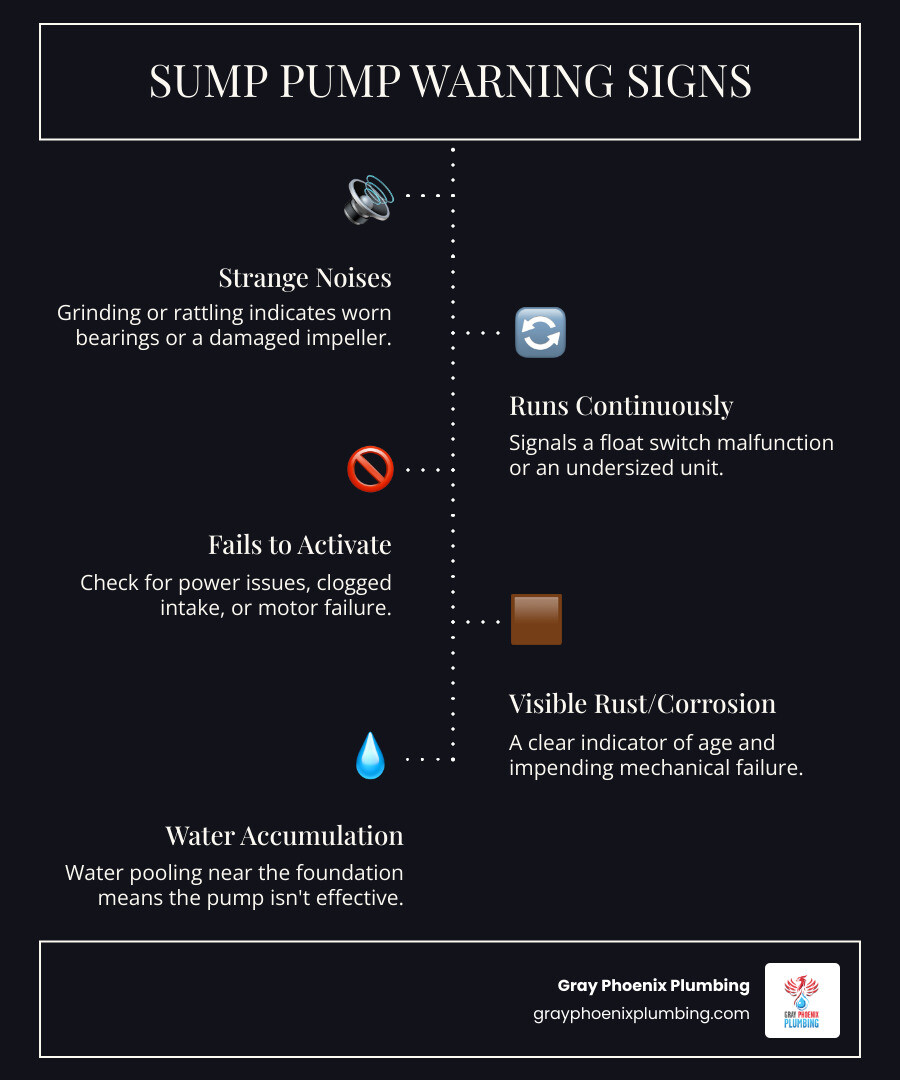
Quick Action Guide for Denver Homeowners:
- Strange grinding or rattling noises – Likely worn bearings or damaged impeller
- Pump runs continuously – Float switch malfunction or undersized unit
- Won’t turn on during rain – Power issue, clogged intake, or motor failure
- Visible rust or corrosion – Sign of age and impending failure
- Water pooling near foundation – System not pumping effectively
When to call immediately: Any sign of malfunction during active precipitation or if your pump is over 10 years old.
Denver’s weather patterns create unique challenges for homeowners. With an average of 59 days per year seeing heavy precipitation, plus spring snowmelt from the Front Range, your basement faces constant flooding risk. A functioning sump pump isn’t just convenient – it’s your home’s critical defense against thousands of dollars in water damage, mold growth, and foundation problems.
Your sump pump sits at the lowest point of your basement, automatically activating when water levels rise. It pumps that water away from your foundation through a discharge line, keeping your basement dry and your belongings safe. But like any mechanical system, sump pumps require maintenance and occasional repair to function when you need them most.
I’m Chris Hoffman, owner of Gray Phoenix Plumbing, and I’ve helped hundreds of Denver-area homeowners protect their basements through expert sump pump repair denver services and preventative maintenance. Our licensed team responds quickly to pump failures and provides transparent, upfront pricing so you know exactly what to expect.
Why a Functional Sump Pump is Essential in Denver
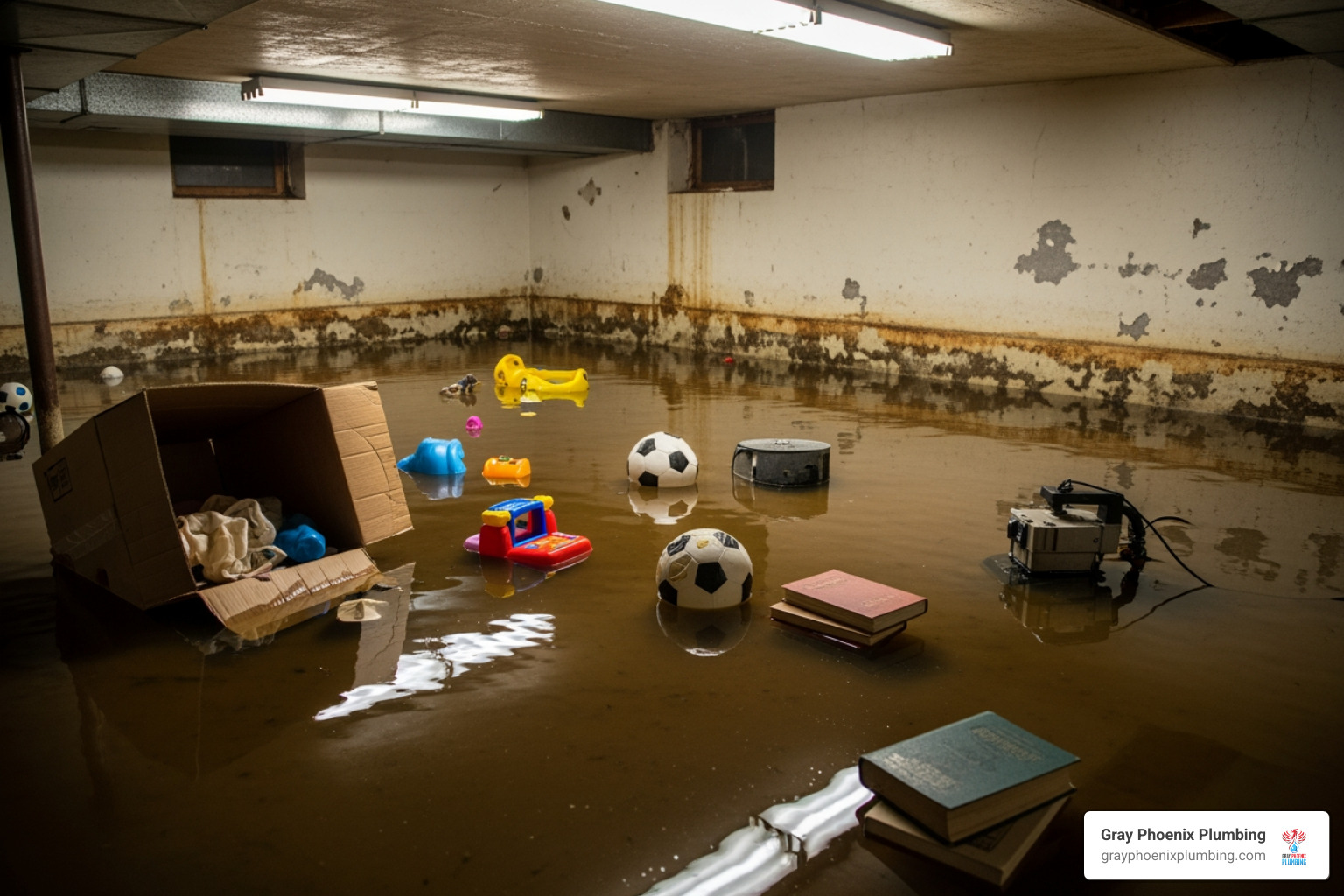
Living in Denver means dealing with unpredictable weather, from heavy spring snowmelt to intense summer thunderstorms. For homeowners in Denver and surrounding areas like Elizabeth, Parker, and Castle Rock, this poses a real threat to your home’s safety.
Water is your foundation’s worst enemy. When it accumulates, it creates hydrostatic pressure—a relentless force pushing against your foundation walls and floor. Over time, this pressure causes cracks, leaks, and serious structural damage. A working sump pump stops this problem by efficiently removing excess water and redirecting it away from your foundation.
The average cost of basement water damage cleanup ranges from $1,000 to $10,000 or more, not including replacing personal belongings. With Denver averaging 59 days per year with heavy precipitation, the risk is constant. Understanding how insurance handles these situations is also important, which is why we put together this helpful guide on Unclogging the Mystery: Your Home Insurance and Sewer Line Coverage.
Another major concern is mold and mildew growth. These unwelcome guests thrive in damp basements, destroying building materials, creating musty odors, and potentially causing respiratory problems, especially for children and the elderly. A functional sump pump maintains a dry environment, protecting your indoor air quality.
Beyond the practical reasons, a reliable sump pump provides invaluable peace of mind. When storms roll in, you can feel confident that your home is protected, not rushing to the basement with towels and buckets. That security is worth every penny.
A Homeowner’s Guide to Sump Pump Repair in Denver
When your sump pump shows signs of trouble, quick action can prevent a flooded basement. At Gray Phoenix Plumbing, we’ve seen how catching a minor issue early saves Denver homeowners thousands. The key is knowing what to look for and when professional help is necessary.
The troubleshooting process starts with recognizing warning signs. Our licensed technicians use proven methods to identify the root cause of pump failures, ensuring you get the right solution—whether it’s a targeted repair or a full replacement. When emergencies strike, our Emergency and Sewer services mean you’re never alone. We provide transparent, upfront pricing, so you know the cost before any work begins.
Common Signs That Require Sump Pump Repair in Denver
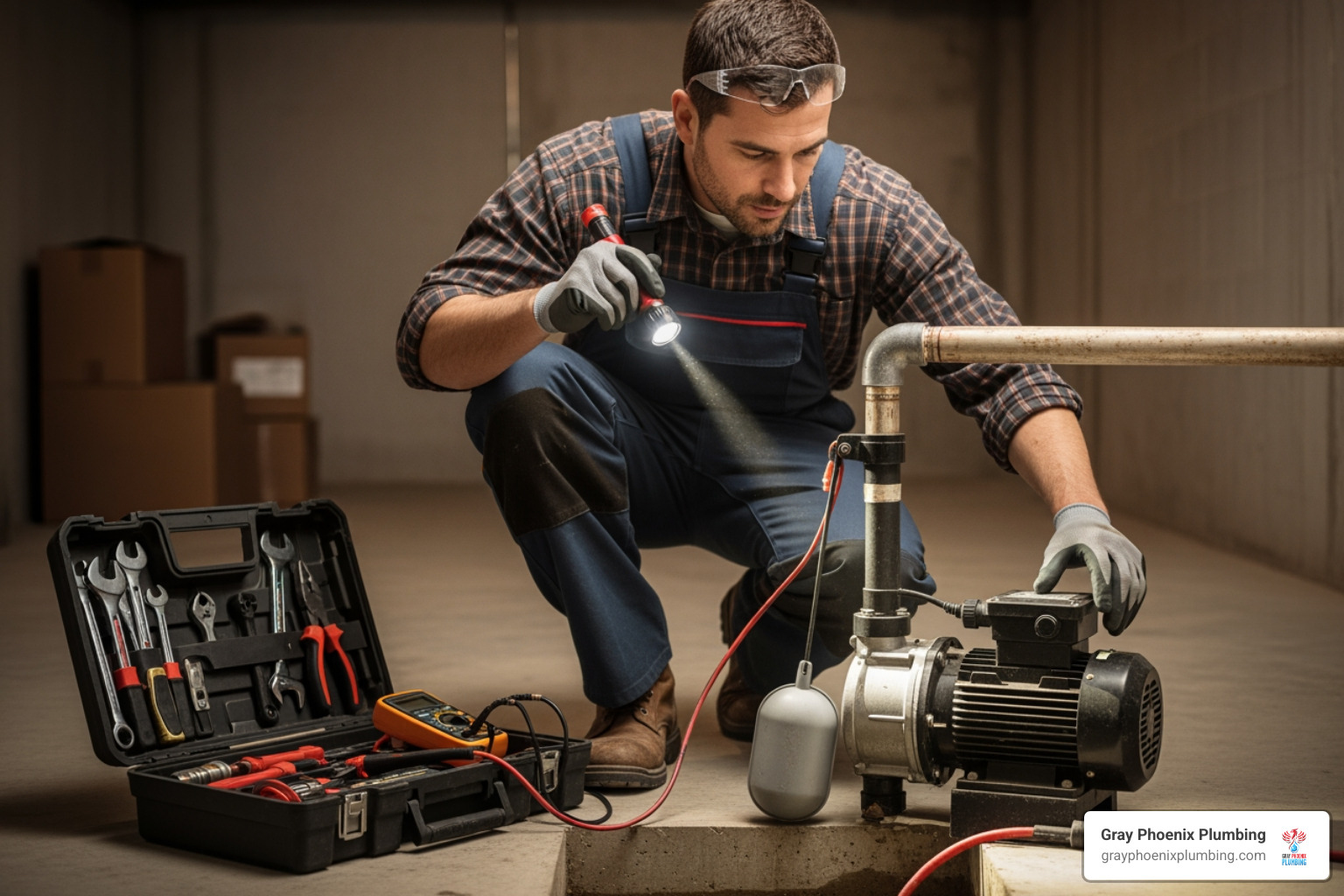
Your sump pump communicates problems through specific signals. Recognizing them helps you prevent emergencies.
- Strange grinding or rattling noises point to internal mechanical problems like worn bearings, a damaged impeller, or debris. A healthy pump is quiet, so these sounds signal an issue that will worsen if ignored.
- Constant running, even when the pit is dry, likely means a stuck float switch, an improperly sized pump, or a hidden leak. This wastes energy and dramatically shortens the pump’s lifespan.
- Failure to turn on is the most critical sign. If water rises and the pump doesn’t activate, your basement is vulnerable. This could be a power issue, a faulty float switch, or complete motor failure.
- Visible rust or corrosion on the pump or in the pit signals aging equipment. While some surface rust is normal, extensive corrosion indicates deteriorating internal components, especially on pumps over seven years old.
- Excessive vibration during operation suggests a mechanical imbalance, such as a bent shaft or damaged impeller. This vibration accelerates wear on other components, leading to more failures.
DIY Checks Before You Call for Service
Before scheduling professional sump pump repair denver services, a few simple checks might solve the problem.
- Check the power source. Many service calls are due to a tripped breaker or unplugged unit. Ensure the pump is plugged into a working outlet and check your electrical panel.
- Clean debris from the pit. Dirt, gravel, and other debris can clog the pump’s intake or jam the float switch. Wearing gloves, carefully remove any visible debris.
- Test the float switch. Manually lift the float arm. The pump should turn on as you raise it and shut off when you lower it. If it doesn’t respond, you’ve likely found the problem area.
- Inspect the discharge line. Ensure the line is clear of obstructions, including ice in the winter. The outdoor discharge point should direct water at least 10-20 feet from your foundation.
- Perform the bucket test. Pour a five-gallon bucket of water into the pit. The pump should activate, drain the water, and shut off. This confirms the entire system is working correctly.
When to Repair vs. Replace Your Sump Pump
The repair-versus-replacement decision balances cost and reliability. Here are the key factors:
- Pump Age: Repair is usually best for pumps under seven years old. For pumps over 7-10 years, replacement is often a better long-term value as they near the end of their typical 10-15 year lifespan.
- Frequency of Repairs: A single minor issue suggests repair is fine. Multiple repairs in a short time indicate a failing system where replacement is the smarter choice.
- Cost-Effectiveness: If a repair costs less than 50% of a new unit, it’s financially sound. If it’s more, replacement is a better investment for a new, warrantied system.
- Severity of Damage: Simple fixes like a stuck float switch are worth repairing. Major failures like a burned-out motor or cracked housing often make replacement more sensible.
- Performance Issues: If your pump struggles to keep up with water volume, upgrading to a properly sized replacement offers better protection than repairing an undersized unit.
- Technology Upgrades: Newer models offer better efficiency, alarms, and reliability. An upgrade can provide superior protection and lower operating costs.
- Visible Condition: Significant rust, cracks, or extensive wear are clear signs a pump is at the end of its life, making replacement the wisest option.
Our team at Gray Phoenix Plumbing evaluates these factors to give you honest recommendations. We’ll explain whether a simple repair or a quality replacement is the right choice for your home.
Proactive Maintenance to Prevent Sump Pump Failure
The best way to avoid an emergency call for sump pump repair denver services is to stay ahead of problems before they start. Think of your sump pump like your car—regular checkups keep it running smoothly when you need it most. And in Denver, where spring snowmelt and summer thunderstorms can hit hard and fast, you really need your pump to work every single time.
We’ve seen too many flooded basements that could have been prevented with simple, routine care. That’s why we encourage all our customers across our Service Area—from Aurora to Lakewood to Westminster—to make sump pump maintenance a priority. A little preventative care goes a long way in extending your pump’s lifespan and protecting your home from water damage.
Creating a Regular Sump Pump Maintenance Schedule
Here’s the approach we recommend to our customers: think of maintenance as happening in two parts, with you handling the quick checks and us handling the deeper inspection.
Every three months, especially before spring snowmelt hits and after summer storms wrap up, grab a five-gallon bucket and fill it with water. Pour it into your sump pit and watch what happens. Your pump should kick on pretty quickly, drain the water completely, and then shut off on its own. This simple bucket test tells you that your float switch and motor are doing their jobs. It takes about five minutes and can save you thousands in water damage.
Once a year, ideally in early spring or late fall, it’s time to bring in the pros. During an annual professional inspection, our licensed technicians get hands-on with your system. We’ll clean out any debris from the sump pit and pump intake screen—you’d be surprised what accumulates down there. We test the float switch to make sure it’s positioned correctly and responding properly. We check that the check valve is actually preventing backflow. We inspect your discharge line from top to bottom, making sure it’s clear and routing water away from your foundation like it should.
We also examine the motor and all electrical connections, looking for any signs of wear, corrosion, or damage that could lead to failure. If you have a backup system, we test that too. This annual service typically costs between $100 and $200, which is a small price compared to the thousands you’d spend dealing with a flooded basement.
Denver’s climate throws some unique challenges at your sump pump. Our freeze-thaw cycles can stress components, and sudden heavy rains can overwhelm a system that’s not quite right. Regular maintenance helps us spot those small issues—a slightly worn bearing, a float switch that’s getting sticky—before they turn into big, expensive emergencies.
Why a Sump Pump Backup System is a Smart Investment in Denver
Here’s something to think about: when does your basement need your sump pump the most? During heavy storms, right? And when do power outages most often happen? During those same storms. Your primary sump pump runs on electricity, so when the lights go out, your pump stops working—right when you need it most.
That’s why we strongly recommend a backup system, especially if you live in an area with a high water table or experience frequent power interruptions. It’s one of those investments that seems optional until the one time you desperately need it.
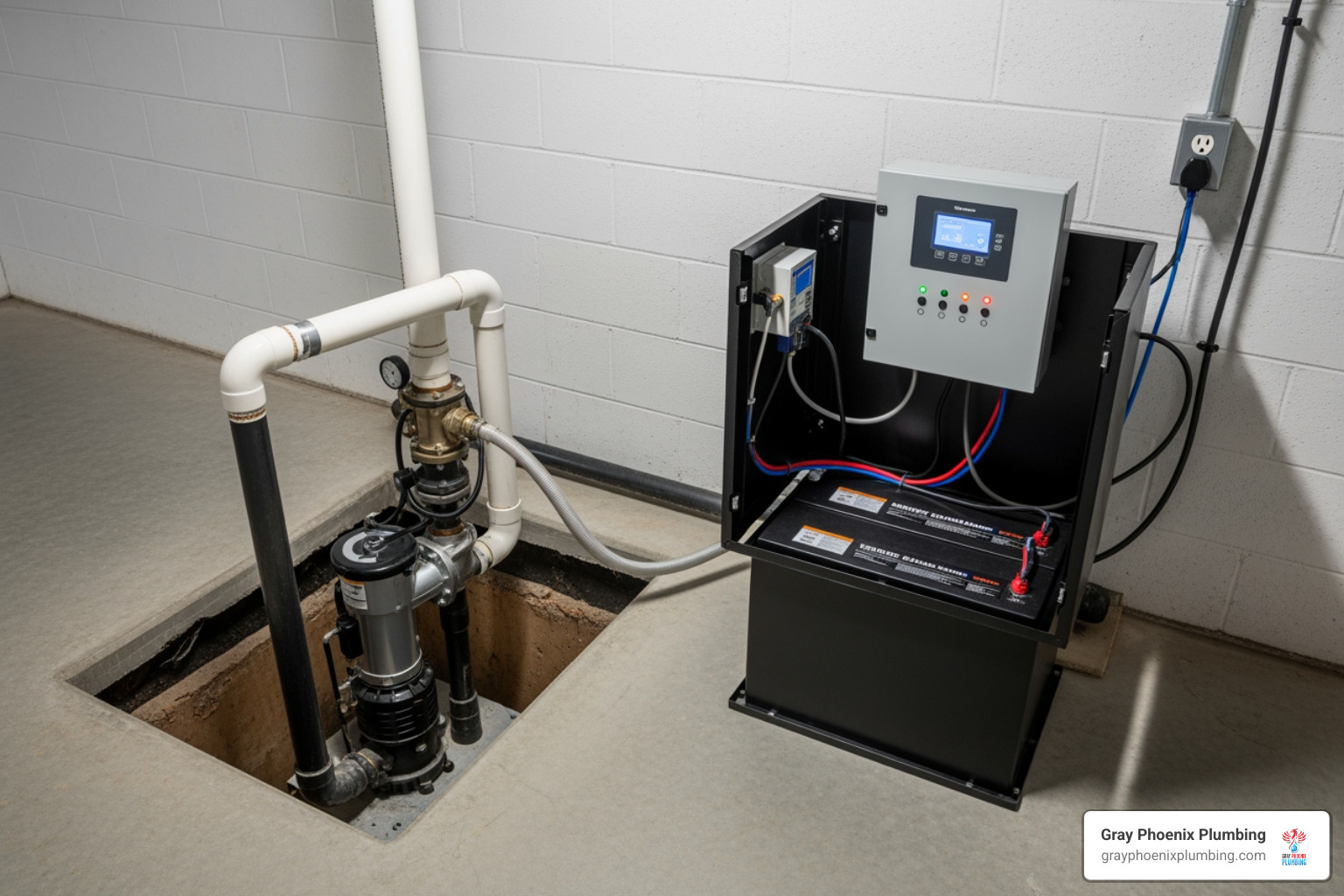
Battery backup systems are the most popular option we install. These systems use a marine-grade battery that automatically takes over when your main power fails or if your primary pump can’t keep up. Modern battery backups can run for several hours, giving you protection until power returns or we can get there to fix the main pump. Many newer models also include alarm systems that alert you to power failures or rising water levels—a nice feature when you’re away from home or asleep upstairs.
Water-powered backup systems work differently. They tap into your municipal water pressure to create suction that pulls water out of the pit. Because they don’t need electricity at all, they’re excellent for extended outages. The catch is that you need good, consistent water pressure for them to work effectively. We can test your home’s pressure and let you know if this option makes sense for you.
For homeowners in Denver, Elizabeth, Parker, and Castle Rock, where we see both heavy precipitation and weather-related power interruptions, a backup system isn’t just nice to have—it’s smart protection. It gives you genuine peace of mind knowing that even if everything goes wrong at once, your basement stays dry and your belongings stay safe.
Frequently Asked Questions about Sump Pump Repair in Denver
We talk with Denver homeowners every day about their sump pump concerns, and the same questions come up time and again. Whether you’re dealing with a failing pump or just want to understand your system better, these answers should help clarify what you need to know about sump pump repair denver services.
What types of sump pumps are available?
When it comes to protecting your Denver basement, you’ll typically choose between two main pump designs, each with its own personality and purpose.
Submersible pumps live right in the water at the bottom of your sump pit. Think of them as the quiet, hardworking type—the water around them actually muffles the motor noise, so you barely know they’re there. Their sealed housing protects the motor from debris and moisture, which means they tend to last longer and handle heavy water volumes with ease. The trade-off? They’re tucked away underwater, making them a bit trickier (and typically more expensive) to service when something goes wrong. For Denver homes that see significant water accumulation during spring snowmelt or summer storms, or if you simply want a quieter basement, submersible pumps are often the best choice.
Pedestal pumps take a different approach entirely. Their motor sits up high on a pedestal above the water, connected to the pit by an intake hose. This design makes them incredibly easy to access for maintenance—you can see everything that’s happening and fix issues without fishing around in water. They’re also gentler on your wallet upfront. The downside is they’re louder (that motor isn’t cushioned by water) and more visible in your basement. If you have a smaller sump pit, prefer straightforward maintenance, or are working within a tighter budget, pedestal pumps can be an excellent solution.
Our team can walk you through which type makes the most sense for your specific situation during a consultation. Every home is different, and we’ve seen just about every basement configuration Denver has to offer.
What are the most common causes of sump pump failure?
After years of responding to emergency calls across Elizabeth, Parker, and the greater Denver area, we’ve identified the usual suspects behind sump pump failures.
Power outages top the list, and it’s a cruel irony—your pump fails right when you need it most, during the storm that knocked out your electricity. Without a backup system, even a perfectly maintained pump becomes a useless hunk of metal in the dark.
Clogged or stuck float switches are another frequent culprit. The float switch is basically your pump’s “on” button, rising with the water level to trigger the motor. When debris tangles it up, wires get crossed, or it shifts out of position, your pump either won’t start or won’t stop running. We’ve pulled some interesting items out of sump pits over the years—everything from children’s toys to construction debris left by previous contractors.
Sometimes the problem started before you ever owned the home. Improper installation can haunt you for years, causing mysterious failures that trace back to incorrect sizing, poorly graded discharge lines, or shoddy electrical work. That’s why we’re sticklers about doing things right the first time.
Your pump might also simply be overwhelmed by the sheer volume of water. Denver’s spring snowmelt combined with a heavy rainstorm can send water rushing into your basement faster than an undersized pump can handle. The pump works perfectly—it’s just outmatched by Mother Nature.
Of course, lack of maintenance lets small issues snowball into expensive emergencies. A little debris becomes a clog, a worn bearing becomes a seized motor, and suddenly you’re dealing with a flooded basement instead of a simple service call. And finally, age and wear eventually catch up with every pump. After seven to ten years of faithful service, components naturally deteriorate, seals fail, and motors burn out. It’s not a matter of if, but when.
How often should a sump pump be serviced in Denver?
We get this question a lot, and the answer is simpler than you might think: you need both professional eyes and your own regular attention.
Schedule a professional service once a year. We recommend calling us in the fall or early spring, before the seasons when your pump will work hardest. During this visit, our licensed technicians give your system a thorough cleaning, test every component, check the discharge line, and catch potential problems while they’re still small and inexpensive to fix. This annual checkup typically costs between $100-$200—a bargain compared to the thousands you’d spend cleaning up after a flooded basement.
Between those professional visits, you should test your pump every two to three months. It’s incredibly simple: just pour a five-gallon bucket of water into your sump pit and watch what happens. Does the pump kick on promptly? Does it drain the water completely? Does it shut off when it should? This quick test takes five minutes and gives you peace of mind that your system is ready for action.
Here’s the thing about sump pumps—they sit idle most of the time, waiting for that moment when you desperately need them. Regular testing and maintenance ensure they’ll actually work when called upon. Since pumps typically last ten to fifteen years with proper care, sticking to this schedule helps you get every year of service you paid for. In Denver’s unpredictable climate, with our freeze-thaw cycles and sudden downpours, that consistent attention isn’t optional—it’s essential protection for your home and everything in it.
Secure Your Home with Expert Sump Pump Services
Your sump pump stands as your basement’s silent guardian, working tirelessly to protect your home from Denver’s unpredictable weather patterns. Throughout this guide, we’ve walked through the critical warning signs that demand attention, the simple checks you can perform yourself, and how to make smart decisions about whether to repair or replace your system. Most importantly, we’ve emphasized how a proactive maintenance schedule and a reliable backup system can save you from the stress and expense of a flooded basement.
Living in Denver means dealing with rapid spring snowmelt, sudden summer thunderstorms, and the occasional power outage that strikes at the worst possible moment. Your sump pump needs to be ready for all of it. That’s where having a trusted partner makes all the difference.
At Gray Phoenix Plumbing, we’re not just another plumbing company—we’re your neighbors, a family-owned business that understands what Denver homeowners face. We’ve built our reputation on delivering sump pump repair denver services that are fast, reliable, and backed by transparent pricing. No surprises, no hidden fees, just honest work from licensed, background-checked professionals who treat your home with respect.
Our Customer Care Guarantee means we stand behind every repair, every installation, and every maintenance visit. Whether you’re in Elizabeth, Parker, Castle Rock, Littleton, or anywhere across our service area, we’re committed to keeping your basement dry and your family safe. We’re your one-stop shop for home service needs, offering not just plumbing, but heating, cooling, and electrical services too.
Don’t wait until you’re ankle-deep in water to find your sump pump has failed. If your pump is making strange noises, running constantly, or simply getting up there in age, now is the time to take action. Regular maintenance costs a fraction of what you’d spend on water damage cleanup, and peace of mind is priceless.
Need immediate help? We’re available with 24/7 Emergency Plumbing Services in Denver – Rapid Response whenever disaster strikes. For scheduled maintenance or to discuss upgrading your system with a battery backup, reach out to our team today.
We also offer flexible Financing options to make essential home protection services affordable for every budget. You can learn more about our commitment to your privacy and satisfaction through our Privacy Policy, Conditions of Use, and Website Accessibility Policy.
Your home deserves the best protection, and your basement deserves to stay dry. Let’s make that happen together.


