

Why Every Water Heater Needs an Emergency Shut-Off Valve
A water heater emergency shut off valve is a critical safety device that lets you quickly stop water flow to your water heater during a leak or malfunction. Here’s what you need to know:
Types of Emergency Shut-Off Valves:
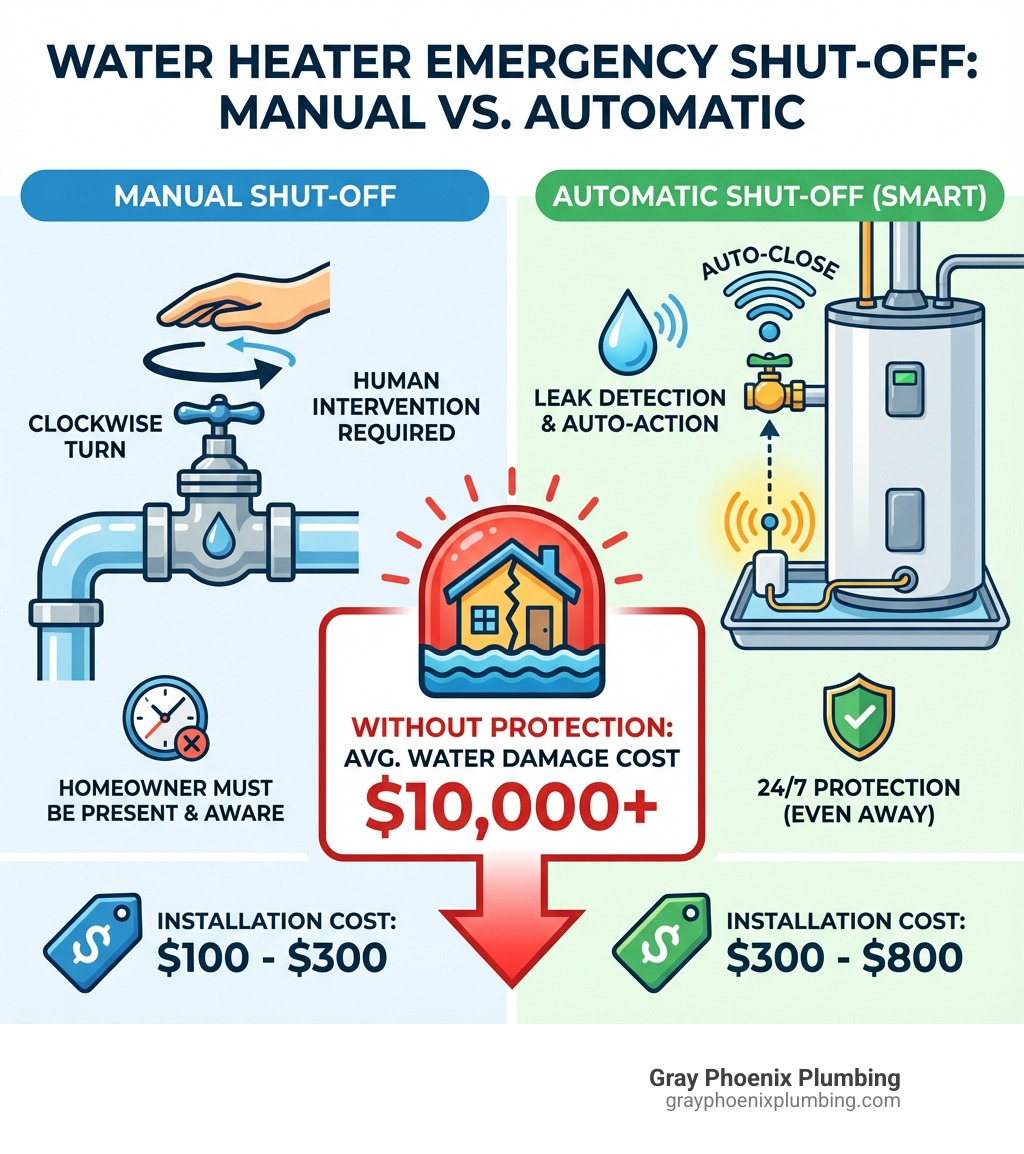
- Manual Valve – Located on the cold water inlet pipe; requires you to physically turn it off during an emergency.
- Automatic Valve – Uses moisture sensors to detect leaks and automatically shuts off the water supply without human intervention.
Key Benefits:
- Prevents catastrophic flooding and water damage.
- Enables safe maintenance and repairs.
- Can qualify you for homeowners insurance discounts.
- Provides 24/7 protection (automatic models).
Water damage from plumbing is a leading cause of homeowners insurance claims, with the average claim costing thousands, according to the Insurance Information Institute. Additionally, the U.S. Fire Administration reports that water heaters caused over 1,000 home fires in 2021. These statistics highlight why knowing how to shut off your water heater—or having a system that does it automatically—is essential.
Understanding your shut-off options is crucial. Manual valves require you to be home to act, while automatic valves provide protection even when you’re away, preventing minor issues from becoming major disasters.
I’m Chris Hoffman, a Master Plumber with over 25 years of experience helping homeowners in the Denver Metro and Elbert County areas protect their homes from plumbing emergencies, including countless water heater emergency shut off valve installations and repairs. I’ve seen how the right shut-off valve can save homeowners thousands in water damage and provide invaluable peace of mind.
Understanding Your Manual Water Heater Emergency Shut Off Valve
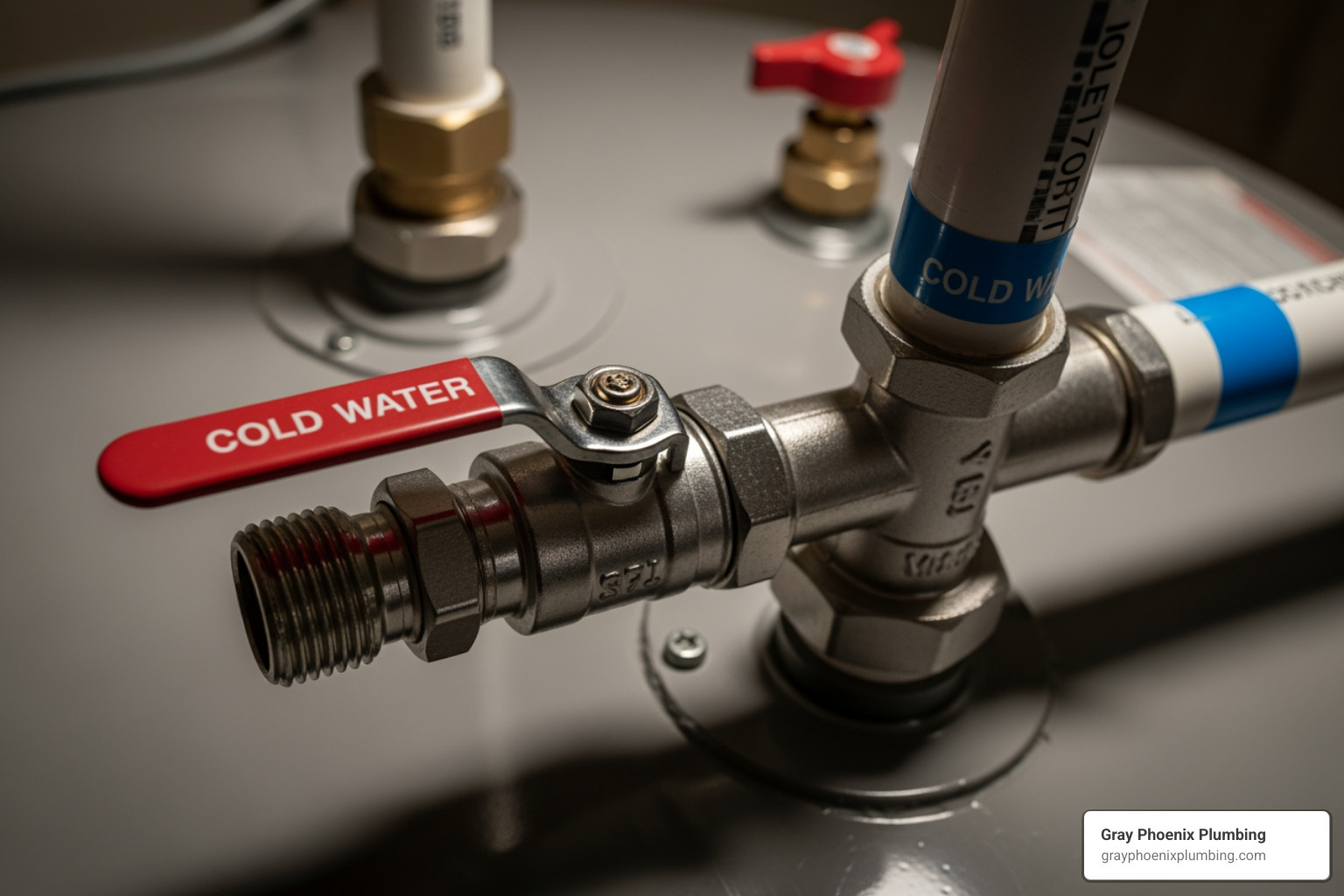
A manual water heater emergency shut off valve is your first line of defense against water damage. Its purpose is to stop water flow into the unit, preventing leaks from escalating, allowing for safe maintenance, or buying time for a professional to arrive.
On most tank water heaters, the shut-off valve is on the cold water inlet pipe, which brings fresh water into the tank. You’ll usually find it near the top of the unit where the cold water line connects.
Don’t confuse the water heater’s shut-off valve with your home’s main water supply valve. The main valve cuts off water to your entire house, while the dedicated water heater valve lets you isolate just that appliance. This allows the rest of your home’s plumbing to function during a water heater-specific emergency.
If you can’t find the valve, don’t panic. Some older homes may lack an accessible one. In an emergency, your next step is to shut off your home’s main water supply. We recommend all homeowners in the Elizabeth, CO, area know the location of both valves. If you can’t find yours, or if it’s stuck, contact us. We can locate it or install a new, accessible valve.
How to Manually Shut Off Your Water Heater
Knowing how to shut off your water heater is a crucial skill for any homeowner to prevent leak damage. Follow these steps:
- Locate the Cold Water Inlet Pipe: This pipe typically enters the top of your water heater, usually on the right side.
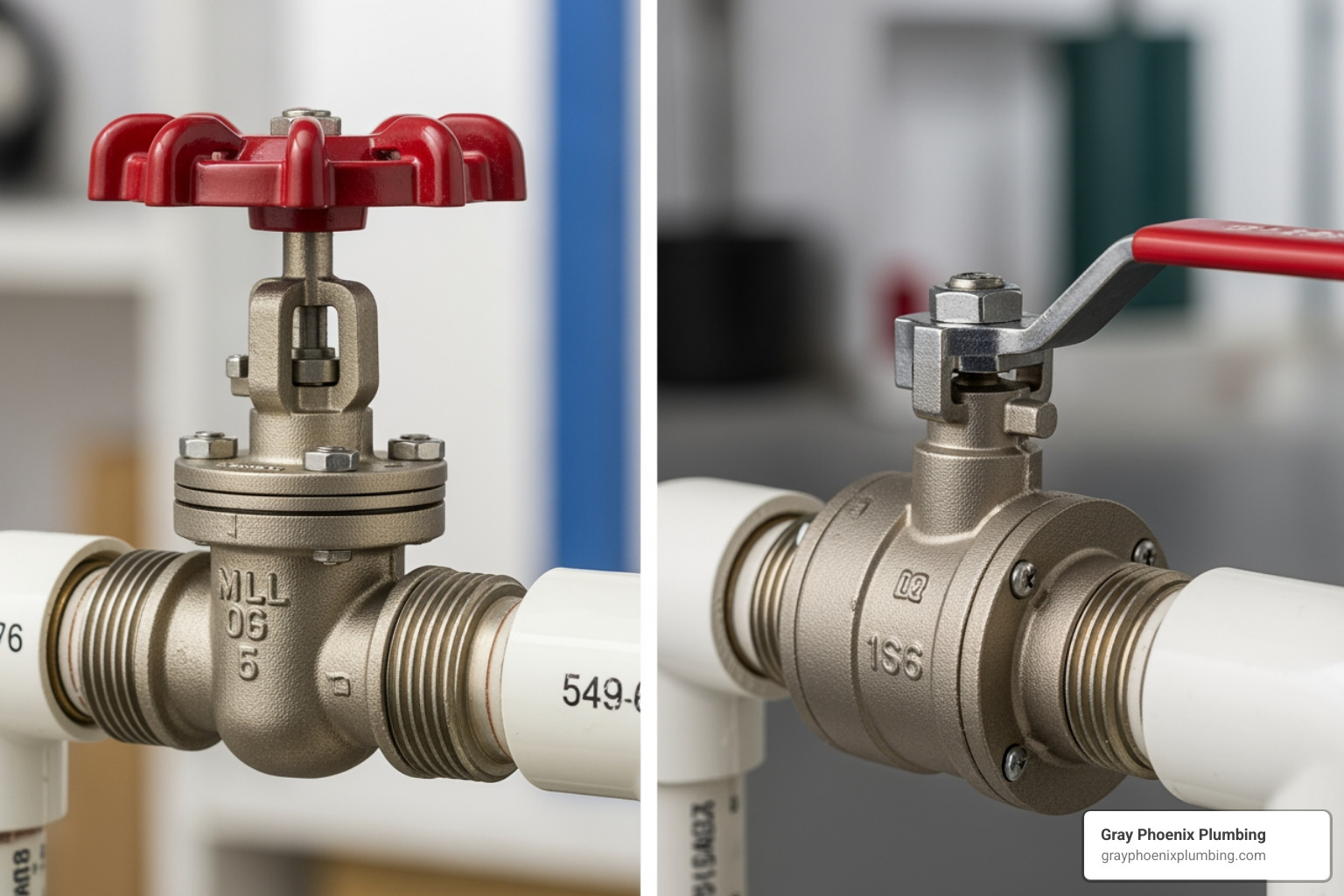
- Identify the Shut-Off Valve: Look for a handle on this pipe. There are two common types:
- Gate Valve: Has a round, wheel-like handle.
- Ball Valve: Has a straight, lever-style handle.
- Operate the Valve:
- For a Gate Valve: Turn the round handle clockwise until it stops.
- For a Ball Valve: Turn the lever a quarter turn (90 degrees) so it is perpendicular to the pipe.
Once the valve is turned, you should hear the water flow stop, indicating the supply is successfully shut off.
What if I Can’t Find or Operate My Valve?
Homeowners often find their shut-off valve is hidden or stuck from years of disuse. If you can’t find the dedicated valve in an emergency, shut off your home’s main water supply. This stops all water flow and prevents further damage. The main valve is often located where the water line enters your home, in a basement, garage, or outside near the water meter. The linked resource offers general tips on finding it, though specific municipal advice won’t apply to Colorado. FAQs • How do I shut off my water?.
If the valve is stuck, don’t force it. A corroded valve can break, causing a bigger leak. If it won’t turn with moderate effort, call a professional. A plumber can safely free or replace a stuck valve without causing more damage. Forcing a stuck valve can snap the handle or crack the pipe, turning a small leak into a flood. If you’re unsure or the valve won’t move, call us. Our 24/7 emergency services cover Elizabeth, Castle Rock, Denver, and surrounding areas.
The Upgrade: How Automatic Shut-Off Valves Provide 24/7 Protection
While manual valves are essential, they only work if you’re home to use them. An automatic water heater emergency shut off valve is a game-changer, providing 24/7 protection against leaks, even when you’re away or asleep. These devices detect leaks and automatically shut off the water supply to the heater, preventing minor drips from becoming catastrophic floods. This saves you from costly water damage repairs and provides invaluable peace of mind.
Beyond flood prevention, you may also qualify for homeowners insurance discounts. Check with your agent to see if installing an automatic shut-off valve can lower your premium.
We recommend an automatic valve for all homeowners, especially if your water heater is in a finished basement, an upper floor, or a closet without a floor drain. It’s also a wise investment if you travel often. For any home in the Elizabeth, CO, area, it’s a smart way to prevent costly water damage.
What is an Automatic Water Heater Emergency Shut Off Valve?
An automatic water heater emergency shut off valve is a fail-safe system that detects water leaks from your water heater and immediately cuts off its water supply.
Here’s how it generally works:
- Leak Detection: A moisture sensor is placed in the water heater’s drain pan or on the floor nearby.
- Signal and Activation: When the sensor detects moisture, it sends a signal to a control unit.
- Valve Closure: The control unit activates a motorized valve on the cold water inlet line, which quickly closes to stop water flow.
- Alerts: Many systems also sound an audible alarm and send an alert to your smartphone.
The motorized valve is designed for reliable, independent operation. For more on the importance of these valves, see this resource: The Importance of the Water Heater Shutoff Valve. Advanced models integrate with smart home systems, sending alerts to your phone and allowing remote control. This modern protection is a smart investment for any homeowner.
Key Features to Look for in an Automatic Valve
Not all automatic shut-off valves are created equal. To get the best protection for your home in Elizabeth, CO, look for these key features:
- Audible Alarm: Alerts anyone at home to a leak, providing an immediate warning even without a smartphone.
- Battery Backup: Ensures the valve works during a power outage, which is critical during Colorado’s severe weather.
- Smart Home Connectivity: Integrates with your smart home system or an app for remote alerts and control from anywhere.
- Multiple Sensor Capability: Look for systems that support multiple sensors for wider coverage, protecting not just the water heater but other appliances too.
- Plumbed-in vs. Actuator Models: Plumbed-in models are installed directly into the water line by a pro and are more reliable. Actuator models clamp onto an existing valve and can be less dependable. We recommend plumbed-in systems.
- Durable Construction: Choose valves made from high-quality, corrosion-resistant materials for long-term reliability.
Choosing a valve with these features is an investment in advanced home protection and peace of mind.
The Complete Emergency Shutdown Procedure
In a water heater emergency, you must shut off both the water and the power. This two-step procedure is critical for safety and preventing further damage.
Step 1: Turn Off the Gas or Electricity
First, cut the power to your water heater. This prevents hazards like gas leaks or electrical shorts and stops the unit from trying to heat an empty tank, which can cause severe damage.
For Gas Water Heaters:
- Locate the Gas Shut-Off Valve: Find the valve on the gas supply line running to your water heater, usually near the bottom.
- Turn it Off: Turn the lever or knob to the “OFF” position. A lever should be perpendicular to the pipe.
- Additional Safety: If you suspect a gas leak, also turn off your home’s main gas supply valve at the meter.
- If You Smell Gas: If you suspect a gas leak (rotten egg smell, hissing sound), evacuate immediately. From a safe distance, call your gas company and us. Do not use any electronics or create sparks.
For Electric Water Heaters:
- Locate Your Electrical Panel: Find your home’s breaker box.
- Identify the Water Heater Breaker: Look for the breaker labeled “Water Heater” or “HWH.” It’s often a double-pole breaker.
- Flip the Breaker: Flip the switch to the “OFF” position.
- Alternative (if present): Some units have a separate disconnect switch nearby; turn this off as well.
- Important: Never remove the electrical panel cover yourself.
Step 2: Drain the Water Heater Tank
After shutting off the power and water supply, drain the tank to minimize water damage and prepare for repairs.
- Connect a Garden Hose: Attach a garden hose to the drain valve at the bottom of the tank.
- Direct the Hose: Run the hose to a safe drainage spot like a floor drain or outside. Be careful, as the water will be hot.
- Open a Hot Water Faucet: Open a hot water tap somewhere in the house. This lets air into the tank, allowing it to drain properly.
- Open the Drain Valve: Open the drain valve on the water heater.
- Wait for Drainage: Draining can take 20-60 minutes. The tank is empty when water stops flowing.
This process ensures the unit is safe and empty for repair. For more details, see this guide: To Drain Your Water Heater.
Frequently Asked Questions about Water Heater Valves
Here are some common questions we hear from homeowners in Elizabeth, CO, and surrounding areas.
Can a faulty shut-off valve cause water damage?
Yes, a faulty water heater emergency shut off valve can cause water damage or prevent you from stopping it. Here’s how:
- Leaking Valve Stem: The packing around the stem can wear out, causing a persistent drip that leads to water damage and mold.
- Stuck Open Valve: A valve seized in the open position prevents you from stopping water flow during a leak, turning a small problem into a major flood.
- Stuck Closed Valve: This won’t cause a leak, but it will leave you without hot water until the valve is repaired or replaced.
A functional shut-off valve is critical for both emergencies and routine maintenance.
What are the risks of not having a working water heater emergency shut off valve?
The risks of a non-working water heater emergency shut off valve are substantial:
- Catastrophic Water Damage: If the tank ruptures and you can’t shut off the water, your home can flood in minutes, causing extensive damage to floors, walls, and belongings.
- Inability to Perform Maintenance: A working valve is necessary for routine maintenance like flushing sediment, which extends the life of your water heater.
- Increased Costs: Water damage restoration, including mold remediation, is extremely expensive and far outweighs the cost of repairing a valve.
- Health Hazards: Lingering moisture leads to mold and mildew, which can cause respiratory problems and allergies.
In short, a faulty valve leaves your home vulnerable to costly and disruptive water disasters.
What maintenance do shut-off valves require?
Your water heater emergency shut off valve needs simple, regular maintenance to ensure it works in an emergency. Here’s what to do annually:
- Exercise the Valve: Once a year, slowly turn the valve all the way off and then on again. This prevents it from seizing due to corrosion or mineral buildup.
- Check for Leaks: As you test the valve, look for any new drips around the valve stem.
- Inspect for Corrosion: Look for visible rust or mineral deposits, which can weaken the valve.
If you find leaks, heavy corrosion, or the valve is stuck, call a professional. Forcing it can cause a major break. This check is a key part of annual water heater maintenance, as recommended by the U.S. Department of Energy. For more on maintenance, see this guide: Water Heater Maintenance Guide | A. O. Smith.
Conclusion: Secure Your Home with Smart Plumbing Solutions
Maintaining your water heater emergency shut off valve is a fundamental part of responsible homeownership. We’ve covered the differences between manual valves, which offer essential control, and automatic systems, which provide 24/7 protection against devastating water damage.
A functioning shut-off valve is a smart investment that prevents costly repairs, reduces mold risk, and may even lower your insurance premiums. Being proactive by knowing your valve’s location, testing it, and considering an automatic upgrade can save you future stress and expense.
At Gray Phoenix Plumbing, we empower homeowners in Elizabeth, CO, and surrounding areas from Parker to Denver with solutions for a secure home. Our licensed pros are experts in installing and maintaining these critical safety devices. As a family-owned business, we’re committed to transparent pricing and our Customer Care Guarantee, making us your trusted partner for home services.
Take the Next Step in Protecting Your Home
Don’t wait for an emergency. Be proactive. Whether you need help finding your valve, repairing a stuck one, or upgrading to an automatic system, we’re here to help.
Contact us for 24/7 emergency plumbing services, professional valve installation, and the ultimate peace of mind.
Contact us for 24/7 emergency plumbing services


