

Understanding Your Options When Denver’s Underground Plumbing Fails
Sewer line repair Denver is a critical service when your home’s main drainage system fails. Here’s what you need to know right away:
Quick Answer: Your Sewer Line Repair Options in Denver
- Trenchless Repair: A modern “no-dig” method using pipe lining or bursting. Costs $4,500-$15,000, takes 1-2 days, and causes minimal yard disruption.
- Traditional Excavation: Involves digging a full trench to access pipes. Costs $3,500-$7,000 plus restoration, takes 3-5 days, and disrupts landscaping.
- Camera Inspection First: Always start with a $200-$500 video inspection to pinpoint the problem and avoid unnecessary work.
- Repair vs. Replace: Spot repairs fix isolated cracks ($1,000-$3,000). Full replacement is needed for collapsed or old pipes ($15,000-$30,000).
Sewer line problems are often complicated for Denver homeowners due to our unique challenges: shifting clay soil, stressful freeze-thaw cycles, and mature trees with invasive roots.
Fortunately, you have more repair options than ever. Trenchless technology offers a faster, less destructive alternative to the traditional “dig up your yard” approach. However, understanding when to use each method can save you thousands of dollars and significant disruption.
This guide covers everything about sewer line repair in Denver, from warning signs and repair methods to costs and finding the right contractor. You’ll get the information needed to make a confident decision.
As Chris Hoffman, a Master Plumber with over 25 years of experience in the Denver Metro area, I’ve repaired hundreds of sewer lines. At Gray Phoenix Plumbing, we know that the right approach to sewer line repair Denver homeowners face is the difference between a quick fix and a recurring nightmare.
Recognizing the Red Flags: Common Signs of a Sewer Line Problem
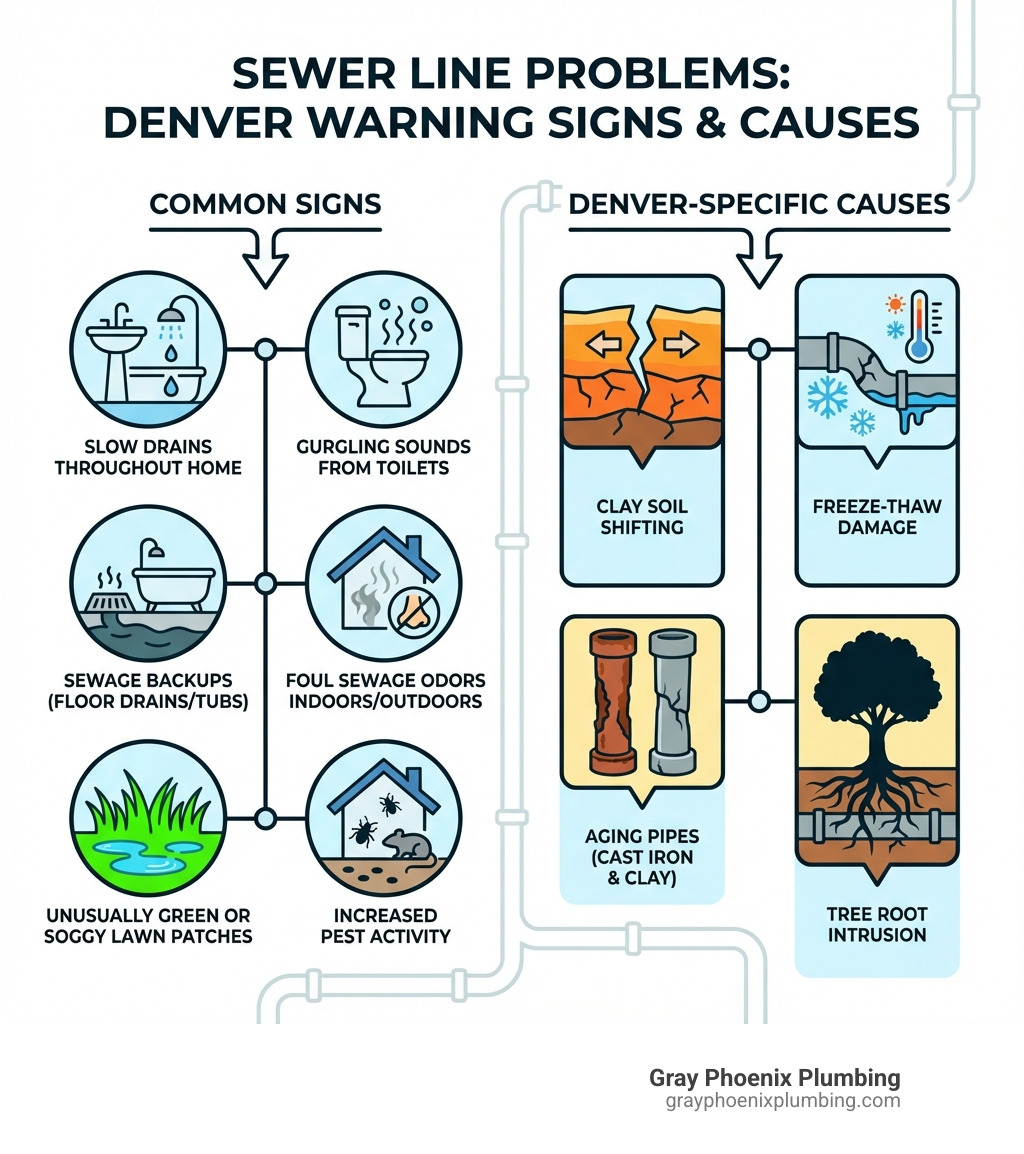
Recognizing the early warning signs of a sewer line problem in Denver can save you from extensive damage and costly repairs. Here are the most common indicators that your sewer line might be in distress:
- Slow Drains Throughout Your Home: If multiple fixtures are draining sluggishly, the issue is likely in your main sewer line, not a localized clog.
- Gurgling Toilets: Gurgling sounds after flushing or when other fixtures are used often indicate trapped air from a sewer line blockage.
- Sewage Backups: If wastewater backs up into your tub, shower, or basement floor drains, your main sewer line is blocked or compromised.
- Foul Odors: A persistent sewage smell inside or outside your home points to a crack or break in the sewer line.
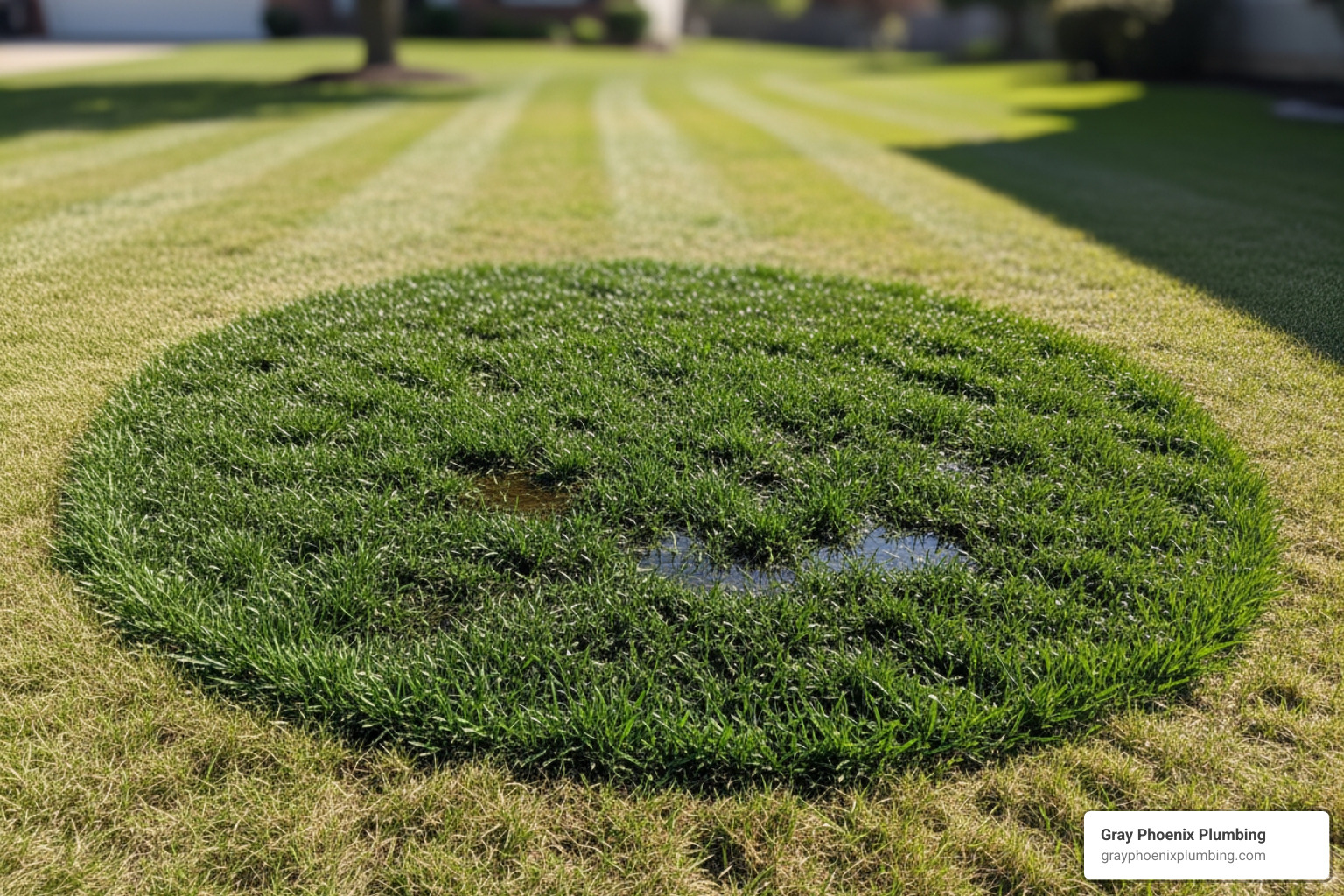
- Unusually Green Patches of Lawn: Soggy spots or unusually lush grass can be caused by a leaking sewer line fertilizing the soil.
- Pest Infestations: An increase in rodents or insects like cockroaches can mean they are entering your home through breaks in the sewer line.
- Mold Growth: Mold on lower-level walls can sometimes be linked to moisture from a leaking sewer pipe.
Denver homeowners also face specific challenges that contribute to sewer line issues:
- Clay Soil Shifting: Expansive clay soils shift with moisture changes, putting pressure on pipes and causing cracks or collapse.
- Freeze-Thaw Cycles: The ground’s expansion and contraction during Denver’s seasons stresses pipes, making older materials brittle and prone to cracking.
- Aging Infrastructure: Many older homes in Denver, Elizabeth, and Parker have cast iron or clay pipes that are past their 50-year lifespan and are susceptible to corrosion, cracking, and collapse.
- Tree Root Intrusion: Mature tree roots seek moisture and can easily infiltrate sewer lines through tiny cracks, causing blockages and significant damage.
If you notice any of these red flags, act promptly to avoid more severe damage and higher repair costs.
The First Step: The Importance of a Sewer Camera Inspection
When you suspect a sewer line problem, the first step is a professional sewer camera inspection. It’s essential for an accurate diagnosis and helps avoid unnecessary, costly repairs.
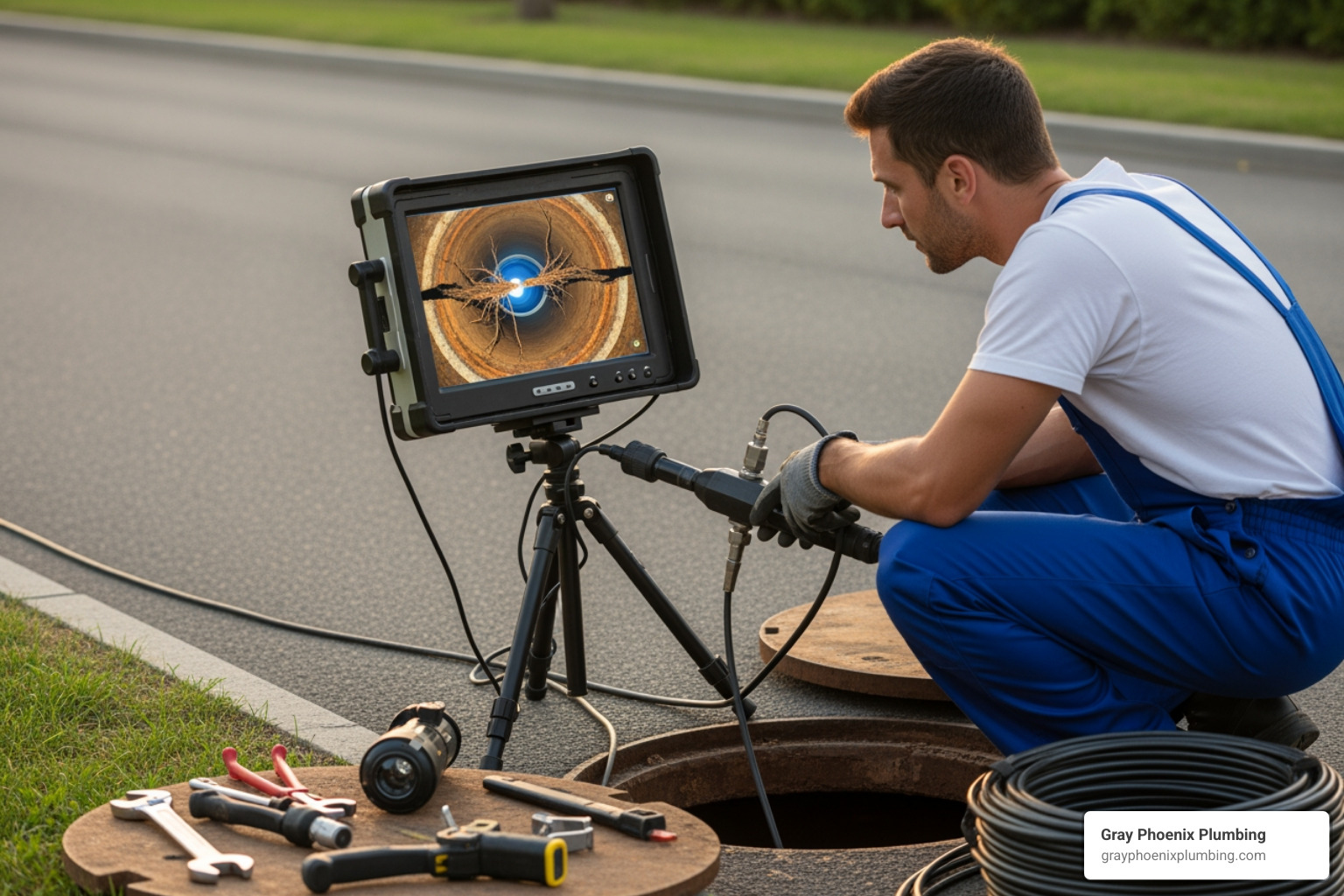
A sewer camera inspection sends a high-resolution camera through your sewer line, providing a real-time view of the pipe’s interior. This process allows us to:
- Pinpoint the problem’s exact location and depth: A locator on the camera tells us precisely where the damage is, eliminating guesswork.
- Identify the specific issue: We can see if it’s a clog, tree roots, a crack, a collapsed pipe, or a misaligned joint, which is crucial for choosing the right repair.
- Determine the pipe material: Knowing if your pipes are cast iron, clay, or PVC helps us recommend the best repair method.
- Save time and money: An accurate diagnosis prevents digging in the wrong spot or choosing the wrong solution. A $200-$500 inspection in Denver can save you thousands on the final repair.
For homeowners, especially those buying property in the Denver Metro Area, a sewer scope inspection is a non-negotiable step to avoid inheriting expensive problems.
We offer professional more info about sewer scope inspection services, providing a detailed video report and clear recommendations so you can make an informed decision.
Repair vs. Replacement: Making the Right Call for Your Denver Home
After a camera inspection, you’ll need to decide between repairing or replacing your sewer line. The choice depends on the damage’s severity, the pipe’s age, and its material.
When to Repair:
- Isolated Cracks: A single, localized crack in an otherwise healthy pipe can often be fixed with a spot repair.
- Minor Root Intrusion: If roots haven’t caused structural damage, hydro-jetting can clear them, and lining can seal the pipe.
- Localized Bellied Pipe: A small sag, or “belly,” in an otherwise good line can sometimes be corrected by excavating and repairing just that section.
When to Replace:
- Widespread Damage: Multiple cracks or breaks often make a full replacement more cost-effective than numerous spot repairs.
- Collapsed or Severely Bellied Pipes: A collapsed pipe or a severe belly that causes constant blockages requires replacement.
- Old Pipe Materials: Pipes over 50 years old (like cast iron) or made of materials prone to failure (like Orangeburg) should be replaced, as they are at the end of their lifespan.
- Recurring Clogs: Constant backups despite regular cleaning indicate a systemic problem that warrants a full replacement.
Our team provides expert diagnosis to help you weigh the pros and cons of each option. For immediate assistance, explore our emergency and sewer services.
The Main Event: Traditional vs. Trenchless Sewer Line Repair Denver
Choosing the right repair method involves deciding between traditional excavation and modern trenchless technology. Both are effective for sewer line repair Denver, but they differ in process, impact, and cost.
Traditional Excavation: The Old-School Dig
This method involves digging a trench to expose the damaged sewer line for replacement. While effective, it causes considerable disruption.
Process: A trench is dug along the pipe’s path, the damaged section is replaced with new pipe (usually PVC), and the trench is backfilled. Surface restoration (landscaping, concrete) is a separate, additional cost.
Pros:
- Direct Access: Allows for a complete visual inspection and can address any type of damage.
- Handles All Damage: Effective for severely collapsed or misaligned pipes.
Cons:
- Destructive: Causes extensive damage to lawns, driveways, and patios.
- Longer Timeframe: Typically takes 3-5 days, plus extra time for restoration.
- Higher Restoration Costs: You must pay to repair all property damage.
Trenchless Technology: The Modern, No-Dig Solution
Trenchless repair is a minimally invasive alternative that preserves your property. Instead of a trench, only small access points are needed.
Two Main Methods:
- Pipe Lining (CIPP): An epoxy-saturated liner is inserted into the old pipe. It inflates and hardens, creating a new, seamless pipe inside the old one.
- Pipe Bursting: A new pipe is pulled through the old one, while a bursting head breaks the old pipe apart and pushes it into the surrounding soil.
Pros:
- Minimal Disruption: Preserves your landscaping, driveway, and other structures.
- Faster Completion: Most jobs are finished in 1-2 days.
- Cost-Effective: Often cheaper overall by eliminating expensive restoration costs.
- Durable: New pipes and liners have a lifespan of 50+ years and can improve flow.
Cons:
- Limitations: Not suitable for completely collapsed pipes or those with severe grading issues.
Which Method is Right for Your Sewer Line Repair Denver?
The best method depends on the damage, pipe material, and your budget. We will recommend the most effective solution for your specific situation.
| Feature | Traditional Excavation | Trenchless Technology |
|---|---|---|
| Disruption | High (extensive digging, landscape damage) | Low (minimal access points, preserves property) |
| Cost | $3,500 – $7,000 (plus significant restoration costs) | $4,500 – $15,000 (often lower overall due to no restoration) |
| Time | 3-5 days (plus restoration time) | 1-2 days (often completed in a single day) |
| Durability | New pipes (e.g., PVC) are long-lasting | Very durable (50+ year lifespan for liners/new pipes) |
| Applicability | All types of damage, including full collapse | Not suitable for fully collapsed pipes or severe grade issues |
Understanding the Costs: What to Expect for Sewer Repair in Denver
The cost of sewer line repair Denver can range from $1,000 for minor spot repairs to over $30,000 for a full replacement. The final price depends on several factors.
Key Factors That Influence Your Final Bill
- Camera Inspection Cost: This essential first step costs $200-$500 in Denver and saves money by ensuring an accurate diagnosis.
- Length and Depth of the Line: Longer and deeper pipes require more labor and materials, increasing the cost.
- Location of the Problem: A repair under a yard is least expensive. A repair under a driveway, concrete slab, or your home’s foundation is more complex and costly.
- Pipe Material: The type of existing and new pipe material can affect labor and material costs.
- Repair Method Chosen:
- Spot Repair: $1,000 – $3,000.
- Traditional Excavation: $3,500 – $7,000, plus significant restoration costs.
- Trenchless Repair: $4,500 – $15,000. Often cheaper overall by avoiding property restoration expenses.
- Full Sewer Line Replacement: $15,000 – $30,000.
Financing Your Sewer Line Repair Denver
A sudden sewer repair can be a financial burden. Here are your options:
- Homeowner’s Insurance: Check your policy. Many cover “sudden and accidental” damage but exclude gradual wear, corrosion, or root intrusion. Optional sewer backup coverage is a wise addition for Denver homeowners. We can provide reports to assist with claims.
- Company Financing: At Gray Phoenix Plumbing, we offer payment plans and financing options for qualified customers to help you manage the expense without stress.
Choosing Your Pro: Finding a Reputable Denver Sewer Contractor
Choosing the right contractor for sewer line repair Denver is crucial for a successful, long-lasting repair. Here’s what to look for:
- Specialized Experience: A company specializing in sewer repair will have more experience and the right equipment (like trenchless technology) for complex jobs.
- Licenses and Insurance: Always verify the contractor is licensed and insured to protect yourself from liability. You can check licenses with the Colorado Department of Regulatory Agencies (DORA).
- Local Expertise: A contractor familiar with Denver’s clay soil, trees, and freeze-thaw cycles can provide more effective, durable solutions.
- Customer Reviews: Check online reviews on Google, Yelp, and the BBB for insights into a company’s reputation and quality of work.
- Written Estimates: Get a detailed, written estimate outlining the scope of work and all costs to prevent surprises.
- Warranties: A reputable company will offer a strong warranty. A 5-year transferable warranty is a great sign of quality work.
At Gray Phoenix Plumbing, we are a family-owned business with licensed, background-checked pros. Our Customer Care Guarantee ensures you receive reliable, high-quality work.
Proactive Prevention: How to Avoid Future Sewer Line Disasters
Many sewer line problems can be prevented with proactive measures, helping you avoid costly and inconvenient disasters.
- Regular Professional Drain Cleaning: Schedule drain cleaning every 1-2 years to remove buildup before it causes a major blockage. Hydro-jetting is highly effective for severe buildup and minor roots.
- Mind What You Flush: Only flush human waste and toilet paper. Avoid flushing “flushable” wipes, grease, feminine hygiene products, paper towels, and harsh chemical drain cleaners, as they cause clogs and damage pipes.
- Strategic Landscaping: When planting, choose trees with less aggressive roots and plant them away from sewer lines. For existing trees, consider root barriers. Avoid parking vehicles over your sewer line.
- Periodic Sewer Scope Inspections: A professional sewer scope inspection every 2-3 years can catch minor issues like small cracks or early root intrusion before they become major repairs. This is also essential before buying a new home.
- Follow EPA Guidelines: Adhering to the EPA’s wastewater management guidelines is part of responsible homeownership, protecting both the environment and your family’s health.
Implementing these measures can extend the life of your sewer line and reduce the risk of emergencies.
Frequently Asked Questions about Sewer Line Repair in Denver
Here are answers to common questions about sewer line repair Denver homeowners have.
How long does sewer repair in Denver take?
The timeline depends on the method:
- Trenchless methods (pipe lining/bursting): These are fastest, typically taking 1-2 days.
- Traditional excavation: This takes longer, usually 3-5 days for the plumbing work, plus additional time for property restoration.
- Emergency repairs: Service begins immediately to resolve the issue as quickly as possible.
Factors like weather or unexpected complications can extend these timelines.
Can I claim sewer line repair on my homeowner’s insurance?
It depends on your policy. Many policies may cover sudden and accidental damage but do not cover gradual deterioration from corrosion or root intrusion. Optional “sewer backup” coverage is a valuable addition for Denver homeowners. Always check with your insurance provider to understand your specific coverage. We can provide detailed reports to assist with claims.
How much does trenchless sewer repair cost in Denver?
Trenchless sewer repair in Denver typically costs $4,500 to $15,000. The final price depends on the method (pipe lining vs. bursting), length and diameter of the pipe, and accessibility. While the upfront cost can be similar to traditional methods, trenchless repair often saves money overall by eliminating the need for expensive landscape and property restoration, which can add thousands to a traditional repair bill.
Your Next Steps for a Healthy Sewer System
Dealing with a sewer line problem can be daunting, but you’re now equipped with the right information. We’ve covered the warning signs, the importance of camera inspections, repair vs. replacement, and the differences between trenchless and traditional methods.
Key Takeaways:
- Diagnose First: Always start with a professional camera inspection to accurately identify the problem.
- Weigh Your Options: Understand the pros and cons of trenchless and traditional repair for your specific situation.
- Prevent Proactively: Regular maintenance and careful habits can reduce your risk of future issues.
- Hire a Licensed Pro: Choose a licensed, insured, and reputable contractor with experience in Denver’s unique challenges.
At Gray Phoenix Plumbing, we are a family-owned business providing reliable, transparent service. Our licensed, background-checked pros are experts in all aspects of sewer line repair Denver homeowners need. We back our work with a Customer Care Guarantee for your peace of mind.
For expert diagnosis, repair, or a sewer emergency in Elizabeth, Denver, Parker, or our other service areas, don’t hesitate to reach out. Explore our emergency and sewer services today, and let us help keep your sewer system healthy.


