

Why Finding the Right Sewer Line Repair Contractor Matters
Sewer line repair contractors are licensed plumbing professionals specializing in fixing and replacing failing sewer lines. Sewer problems often appear without warning—one day your drains work, the next you have gurgling toilets, foul odors, or sewage backing up into your home.
When this happens, you need help fast. However, not all plumbers have the specialized equipment or experience for sewer line work. Choosing the wrong contractor can lead to wasted money and repeated problems, while the right one provides a lasting solution.
This guide covers everything from spotting warning signs to vetting contractors, so you can hire with confidence.
Quick Reference:
- How to Find a Pro: Verify licenses/insurance, read reviews, get multiple quotes, ask about trenchless options, and check warranties.
- Average Costs: Repairs can range from $150 – $3,800, while a full replacement often costs $50 – $250 per linear foot.
- Timeline: Most jobs take 1-5 days.
I’m Chris Hoffman, owner of Gray Phoenix Plumbing. I’ve helped hundreds of homeowners in Elizabeth and the Denver metro area steer sewer line issues. Finding a trustworthy contractor shouldn’t be a guessing game—this guide will show you what to look for.
Simple sewer line repair contractors word guide:
- does home insurance cover sewer line repair
- pipe relining near me
Is Your Sewer Line Failing? Key Signs and Lifespan
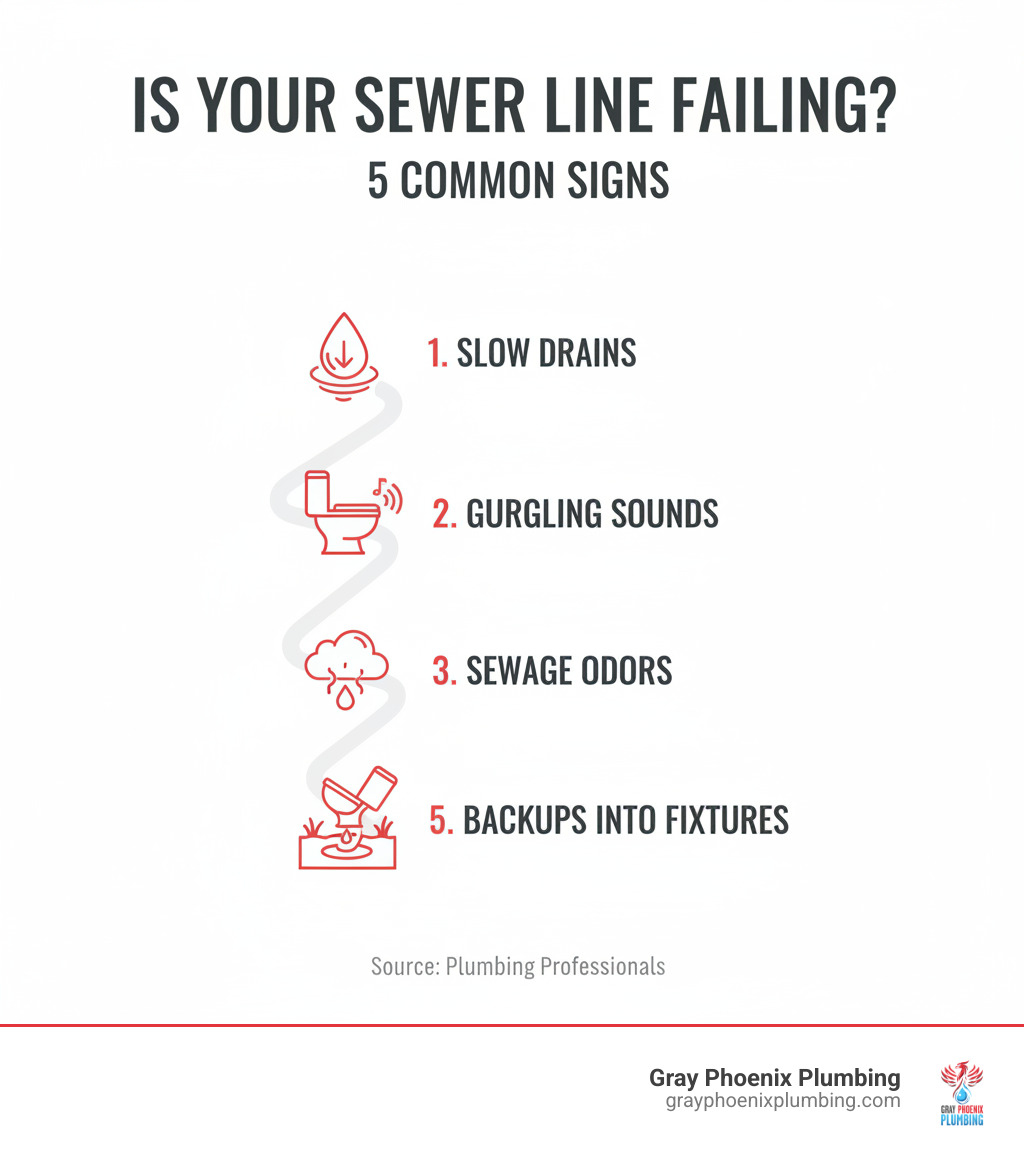
Your sewer line usually gives warning signs before a complete failure. Recognizing these signals can save you from a costly sewage disaster.
Key Warning Signs:
- Gurgling Sounds: Bubbling from toilets or drains indicates trapped air from a blockage or collapse.
- Multiple Slow Drains: If the kitchen sink, shower, and tub all drain slowly, the problem is likely in your main sewer line.
- Foul Odors: Sewage smells inside or outside your home mean sewer gas is escaping through cracks or blockages.
- Sewage Backup: Wastewater coming up through drains is a true emergency. Contact qualified sewer line repair contractors immediately. Our Emergency and Sewer team is ready to help.
- Yard Problems: Look for unusually green patches of grass, soggy areas, sinkholes, or an increase in pests, which can all point to a leaking or broken pipe.
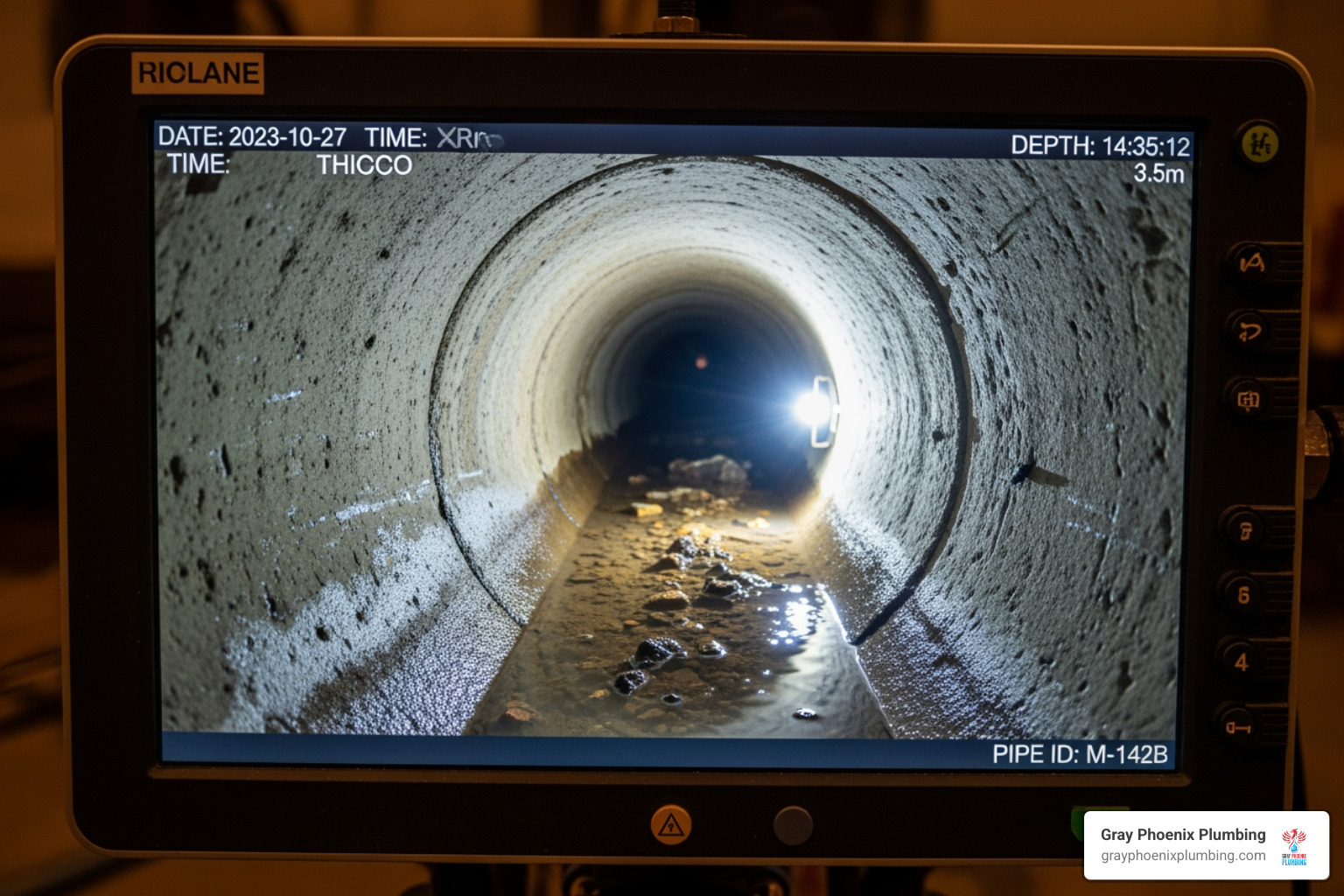
If you notice these signs, a professional Sewer Scope Inspection can diagnose the exact problem without guesswork.
How Long Do Sewer Lines Last?
A sewer line’s lifespan depends on its material and environmental factors.
- Orangeburg Pipes (30-60 years): Made of wood pulp and tar, these are prone to deforming and collapsing.
- Clay Pipes (30-60 years): Brittle and susceptible to tree root intrusion at the joints.
- Cast Iron Pipes (50-100 years): Strong but can corrode over time or be damaged by roots.
- PVC Pipes (100+ years): The modern standard, PVC is durable, flexible, and resists corrosion and clogs.
Factors like shifting soil and tree root intrusion can shorten any pipe’s life. Regular maintenance is key to longevity.
When to Schedule a Professional Inspection
Consider a sewer inspection if you are:
- Buying a home, especially one built before 1980.
- Experiencing recurring clogs that keep coming back.
- Planning major landscaping or construction.
- Performing proactive maintenance every 5-10 years to catch issues early.
For urgent situations, our team offers 24/7 Emergency Plumbing Services in Denver: Rapid Response in Elizabeth, Parker, Castle Rock, and surrounding areas.
Understanding Sewer Line Solutions: Repair vs. Replacement
When you have a sewer line problem, it’s important to know the difference between cleaning, repair, and replacement to choose the right solution.
Cleaning vs. Repair
Sewer line cleaning removes blockages but doesn’t fix the pipe itself. Methods include drain snaking (using an auger to break up clogs) and hydro-jetting (using high-pressure water to clear stubborn buildup and roots). If you need frequent cleanings, it’s a sign your pipe needs a more permanent repair.
Sewer line repair fixes the physical pipe by patching cracks or sealing joints. Sewer line replacement is necessary when the pipe is extensively damaged, has multiple failing sections, or is made of deteriorating material like Orangeburg.
Traditional Sewer Repair: The Digging Method
Traditional repair involves digging a trench to expose the damaged pipe, cutting out the bad section, and replacing it. This method is necessary for completely collapsed pipes or when the pipe’s grade needs adjustment. The major downside is significant landscape disruption, as it can tear up lawns, gardens, and even driveways, requiring costly restoration.
The Benefits of Trenchless Sewer Line Repair
Trenchless technology allows sewer line repair contractors to fix pipes with minimal digging, preserving your yard and hardscaping. It’s faster, less invasive, and often more cost-effective when you factor in restoration costs.
| Feature | Traditional Sewer Repair | Trenchless Sewer Repair |
|---|---|---|
| Cost | Moderate to High | Moderate to High |
| Time | 3-5+ days | 1-2 days |
| Disruption | High (extensive digging) | Low (minimal digging) |
| Durability | Excellent (new pipe) | Excellent (new pipe-within-a-pipe) |
| Landscape | Significant damage/restoration | Minimal impact, preserves landscaping |
Two common trenchless methods are:
- Pipe Lining (CIPP): A resin-coated liner is inserted into the old pipe, creating a new, seamless pipe within the old one. This seals cracks and stops root intrusion.
- Pipe Bursting: A new pipe is pulled through the old one, fracturing the old pipe outward and replacing it without a trench.
Trenchless solutions offer homeowners in Elizabeth, Parker, and the Denver metro area an effective, long-lasting repair with minimal disruption.
The Financials: Costs, Responsibility, and Insurance Coverage
Understanding the potential costs of sewer line work can help you make informed decisions and avoid financial surprises.

Typical Costs:
- Repair: $150 to $3,800, depending on the complexity and method.
- Replacement: $50 to $250 per linear foot, often totaling $2,000 to $10,000 for a typical 40-foot line.
- Emergency Service: Expect higher hourly rates plus a trip fee for after-hours calls.
Costs are influenced by the repair method (trenchless vs. traditional), pipe length and depth, accessibility, and the extent of the damage. Permits and landscape restoration can also add to the total price.
Who Pays for the Repair: Homeowner or City?
In almost all cases, the homeowner is responsible. You own and must maintain the sewer lateral—the pipe running from your house to the city’s main sewer line under the street. This includes the portion under the sidewalk and public right-of-way. The city is only responsible for the main line itself. Contact your local utility in Elizabeth, Denver, or Castle Rock to confirm the exact point of responsibility.
Does Homeowners’ Insurance Cover Sewer Lines?
Usually, no. Standard homeowners’ insurance policies typically exclude sewer line failure due to “wear and tear,” which covers most issues like corrosion, root intrusion, and aging pipes. A policy might offer coverage only if the damage was “sudden and accidental,” like a contractor accidentally crushing the pipe.
However, you can often add protection:
- Water Backup Coverage: An essential add-on that covers damage from sewage backing up into your home.
- Service Line Coverage: A specific endorsement that protects exterior utility lines (sewer, water, gas) from damage, including wear and tear and root intrusion.
Review your policy with your insurance agent to understand your specific coverage. For more details, read our guide: Unclogging the Mystery: Your Home Insurance and Sewer Line Coverage.
How to Hire the Best Sewer Line Repair Contractors
Finding a trustworthy sewer line contractor is crucial for a successful repair. With the right approach, you can hire a qualified professional who will solve your problem effectively.
Start by searching online for “sewer line repair contractors near me” and asking for personal referrals. Once you have a short list, it’s time to vet them.
Step 1: Verify Licenses and Insurance
This is non-negotiable. A valid license proves the contractor meets state requirements for competency. In Colorado, plumbers are licensed through the Department of Regulatory Agencies (DORA). Also, ensure they have both general liability insurance (to cover property damage) and worker’s compensation (to protect you if a worker is injured). A reputable contractor will provide proof of both without hesitation.
Step 2: Check Reviews and Reputation
Read customer experiences on Google, Angi, and the Better Business Bureau to gauge a contractor’s reliability and communication skills. Also, ask for references from recent, similar jobs.
Watch for these red flags:
- No online presence or verifiable reviews.
- Bids that are significantly lower than others.
- High-pressure sales tactics or demands for full payment upfront.
- Refusal to provide proof of licensing and insurance.
Step 3: Key Questions to Ask Potential sewer line repair contractors
Before signing a contract, ask these questions to assess their expertise and professionalism:
- How much experience do you have with my specific problem (e.g., root intrusion, collapsed pipe)?
- Do you offer trenchless repair methods?
- Who will perform the work—your employees or subcontractors?
- What is the estimated timeline for the project?
- Is cleanup and yard restoration included in the estimate?
- What kind of warranty do you offer on parts and labor?
- Can I get a detailed, written estimate breaking down all costs?
At Gray Phoenix Plumbing, we use our own licensed professionals, provide clear, itemized pricing, and stand behind our work with a solid warranty.
Frequently Asked Questions about Sewer Line Repair
Sewer line issues can be confusing. Here are clear, honest answers to some of the most common questions we hear from homeowners in the Denver metro area.
How long does a typical sewer line repair take?
Most repairs take 1 to 5 days. The timeline depends on the method and complexity.
- Trenchless repairs (pipe lining or bursting) are fastest, often completed in 1-2 days because they require minimal digging.
- Traditional trenching repairs take longer, typically 3-5 days or more, due to the extensive excavation and restoration involved.
Obstacles like concrete patios, large tree roots, or other utility lines can also extend the project timeline.
What are the risks of attempting a DIY sewer line repair?
Sewer line repair is not a DIY project. The risks are significant and can lead to costly, dangerous consequences.
- Health Hazards: Raw sewage contains harmful bacteria, and sewer gas is toxic and flammable.
- Incorrect Diagnosis: Without a sewer camera, you’re working blind and may fix the wrong thing.
- Property Damage: You could easily puncture the pipe, strike a gas or electrical line, or cause a major sewage backup into your home.
- Code Violations: DIY work bypasses required permits and inspections, leading to fines and problems when selling your home.
- No Warranty: If your repair fails, you are 100% responsible for fixing it again.
Leave this job to professional sewer line repair contractors to ensure it’s done safely and correctly.
What kind of warranty should I expect from sewer line repair contractors?
A reputable contractor will always provide a written warranty covering both parts and labor. This protects your investment if the materials or workmanship fail.
The materials themselves often have a long manufacturer’s warranty. The contractor’s workmanship guarantee is separate and covers the installation quality. You should expect:
- 1 to 5 years for most repairs.
- 10 years or more for full line replacements using modern materials like PVC.
Always get the warranty details in writing before any work begins. At Gray Phoenix Plumbing, our Customer Care Guarantee ensures you have peace of mind long after the job is done.
Conclusion: Secure Your Home with a Trusted Professional
Dealing with a sewer line problem is stressful, but with the right information, you can steer the challenge with confidence. We’ve covered how to spot warning signs, understand your repair options, and properly vet sewer line repair contractors.
The most important takeaway is to act early. Ignoring gurgling drains or foul odors allows minor issues to escalate into major emergencies like a pipe collapse or sewage backup. Proactive repairs save money, stress, and property damage.
When hiring, remember to verify licenses and insurance, check reviews, and get a detailed, written estimate. A trustworthy professional will explain your options, whether it’s modern trenchless technology or traditional excavation, and help you make the best decision for your home and budget.
If you’re in the Elizabeth, Parker, Castle Rock, Kiowa, Franktown, Denver, Littleton, Aurora, Lakewood, Thornton, Westminster, Brighton, Golden, Morrison, Conifer, Evergreen, Firestone, Erie, Bennett, Centennial, Agate, Jefferson, or Colorado Springs areas, you don’t have to face sewer problems alone. Gray Phoenix Plumbing is a family-owned business built on transparent pricing and a commitment to quality.
We treat your home like our own. Whether you need an emergency repair or a proactive inspection, our team is here to provide honest solutions.
Ready to get peace of mind about your sewer system? Schedule a Sewer Scope Inspection today!


