

Why Repiping Matters for Centennial Homeowners
Repiping Centennial CO is a comprehensive plumbing solution that involves replacing the old, deteriorating water supply lines throughout your home with new, reliable piping. If you’re experiencing recurring leaks, discolored water, low water pressure, or strange noises from your walls, it might be time to consider more than just a simple repair. Repiping is the definitive, long-term fix for an aging plumbing system.
Quick Answer: What is Repiping?
- Definition: The complete replacement of a home’s hot and cold water supply pipes.
- Common materials: PEX (cross-linked polyethylene) or copper pipes are the modern standards.
- Typical timeline: Most whole-home repiping projects take between 3 to 7 days, depending on the size and complexity of the home.
- Average cost: While it varies, a whole-home repipe is a significant investment, often around $15,000. However, this prevents far costlier emergency repairs and water damage down the line.
- Best for: Homes with known problematic materials like polybutylene (PB) pipes, older homes with galvanized steel, or any house experiencing multiple, recurring plumbing issues.
While Centennial is a relatively newer city, many of its established neighborhoods were built between the 1970s and 1990s. This specific era of construction brings unique plumbing challenges that today’s homeowners must address. Homes from this period often contain polybutylene (PB) pipes, a material now infamous for its high failure rate. These pipes can become brittle and crack without warning, leading to catastrophic water damage. Compounding this issue is Centennial’s hard water, which accelerates mineral and scale buildup inside pipes, and the region’s dramatic freeze-thaw cycles, which put immense stress on plumbing systems. Together, these factors create a perfect storm for plumbing problems.
Repiping isn’t just about fixing leaks as they appear; it’s a proactive investment in your home’s health and your peace of mind. It’s about ensuring the water your family drinks and bathes in is clean and free from rust particles. It’s about protecting your home’s value and preventing the kind of extensive water damage that can ruin walls, floors, and cherished belongings. The average home has several hundred feet of pipes hidden behind walls and under floors, making a wholesale replacement a much more sensible and cost-effective approach than endlessly chasing individual leaks.
I’m Chris Hoffman, and as a Master Plumber with over 25 years of hands-on experience in the Denver Metro area, I’ve helped countless Centennial homeowners steer repiping Centennial CO projects to eliminate recurring plumbing headaches for good. This guide will walk you through everything you need to know to make an informed decision about your home’s plumbing future.
Is It Time for Repiping? Key Signs and Centennial-Specific Issues
When your plumbing system starts showing signs of age, it can be tempting to opt for a quick, seemingly inexpensive fix. However, patching one leak often feels like playing a game of whack-a-mole; as soon as one is fixed, another springs up elsewhere. Addressing the root cause of persistent problems often requires a more comprehensive approach. Repiping, while a significant undertaking, is often the most cost-effective and long-lasting solution, especially when considering the hundreds of feet of hidden pipes that make up the vast majority of your home’s plumbing infrastructure.
Telltale Signs Your Pipes Are Failing
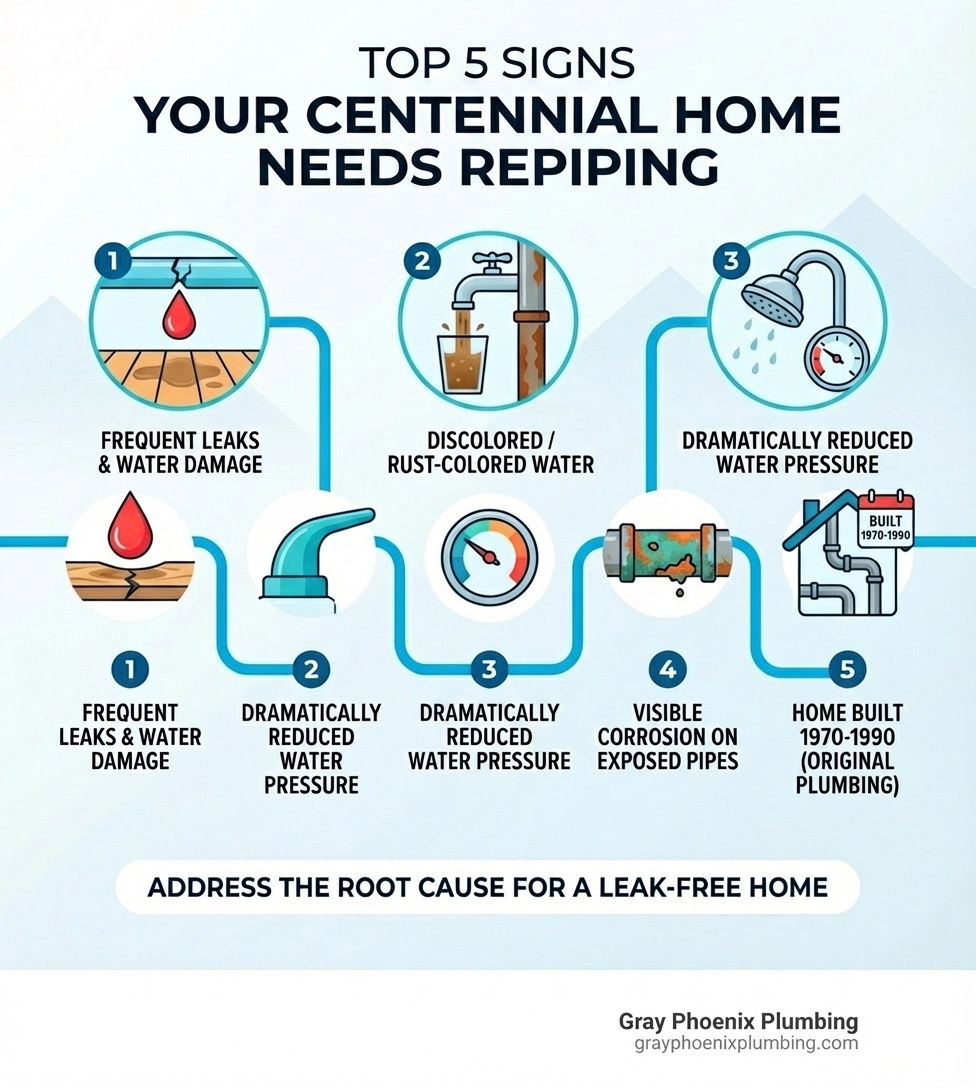
Your home’s plumbing system usually gives you clear warnings when it’s nearing the end of its functional life. Ignoring these signs can lead to catastrophic failures, costly water damage, and ongoing frustration. Here are the common indicators that your Centennial home might need repiping Centennial CO:
- Frequent Leaks: Are you on a first-name basis with your plumber because you’re constantly calling them to patch up new leaks? One or two isolated leaks can happen, but multiple leaks over a short period are a strong signal that your entire plumbing system is deteriorating. Continuing with individual repairs is often a temporary band-aid on a much larger problem and can become more expensive in the long run.
- Low Water Pressure: If your showers have gone from invigorating to a disappointing trickle, or it takes forever to fill a pot of water, your pipes are likely the culprit. Over time, corrosion and mineral deposits (scale) from hard water can build up inside galvanized or copper pipes, narrowing the internal diameter and severely restricting water flow. Repiping with new, full-bore pipes is the only permanent solution to restore strong, consistent water pressure throughout your home.
- Discolored Water: Does brown or yellow water come out of your faucets, especially first thing in the morning or after you’ve been away? This is a clear sign of internal pipe corrosion. Rust and other sediments are breaking off from the inside of your pipes and mixing with your water supply. This not only affects the taste and appearance of your water but also indicates the pipes are decaying from the inside out.
- Rusty or Foul-Smelling Water: Beyond just discoloration, if your water has a distinct metallic taste or a strange, unpleasant odor, it could be due to advanced corrosion in galvanized steel pipes. This is not only unappealing but can also pose health concerns and stain your fixtures and laundry.
- Noisy Pipes: Banging, clanging, shuddering, or whistling sounds coming from your walls when you turn a faucet on or off can indicate a variety of problems. These noises, often called “water hammer,” can be caused by loose pipes, high water pressure, or air in the lines, all of which are more common in aging, corroded plumbing systems.
- Visible Corrosion: Take a look at any exposed pipes you can access, such as those under sinks, in your basement, or near your water heater. Do you see any signs of flaking, discoloration, green stains (on copper), or rust spots? These are clear, visible signs of decay. If the pipes you can see are corroding, it’s almost certain that the pipes hidden within your walls are in a similar or worse condition.
- Flakes in Water: If you ever notice small, dark flakes or particles in your water, especially when filling a bathtub, you could be seeing pieces of corroded pipe breaking off and flowing through your system. This is a serious red flag that your pipes are actively deteriorating.
Solving these issues directly through repiping ensures cleaner, safer water and consistent pressure throughout your home, eliminating the constant worry of the next plumbing emergency.
Unique Plumbing Challenges for Centennial Homes
Centennial, like many Front Range communities, has a diverse housing stock. However, certain eras of construction and local environmental factors present specific challenges that often make repiping Centennial CO a necessary upgrade for homeowners.
- Polybutylene (PB) Pipes: A significant concern for homes built between the late 1970s and the mid-1990s in Centennial is the presence of polybutylene (PB) pipes. This gray plastic piping was once hailed as a material of the future but is now known to be extremely unreliable. The plastic reacts with chlorine and other chemicals commonly found in municipal water supplies, causing it to become brittle and develop micro-fractures from the inside out. These pipes can fail suddenly and without any warning, leading to extensive and costly water damage. Many insurance companies will not even cover homes with known PB piping, making replacement a top priority. Learn more about polybutylene pipe issues and why they’re considered a major plumbing concern.
- Galvanized Steel Pipes: Many older homes in the Denver area, particularly those built before the 1970s, were constructed with galvanized steel pipes. While incredibly strong on the outside, their zinc coating erodes over time, exposing the steel to water and causing it to rust from the inside. This internal corrosion leads directly to the rust-colored water, metallic taste, and low water pressure mentioned earlier. Eventually, these pipes can become so clogged with rust and scale that water flow is reduced to a trickle, or they can rust through completely, causing leaks.
- Hard Water in Centennial: The water supplied to Centennial and the surrounding Denver metro area is notoriously hard, meaning it has a high concentration of dissolved minerals like calcium and magnesium. Over the years, these minerals precipitate out of the water and form a hard, chalky deposit called limescale inside pipes, water heaters, and fixtures. This scale buildup narrows the diameter of pipes, reduces the efficiency and lifespan of your water heater, and clogs faucet aerators and showerheads. For older plumbing systems already weakened by age, this additional stress can accelerate their failure.
- Freeze-Thaw Cycles: Colorado’s climate is known for its dramatic temperature swings, especially during the spring and fall. These freeze-thaw cycles put immense stress on plumbing systems. When water freezes, it expands by about 9%, exerting powerful pressure on the pipe walls. While modern materials like PEX are flexible and can withstand this expansion, older, rigid materials like copper and galvanized steel are much more susceptible to cracking and bursting under these conditions, especially if they are already weakened by corrosion.
These specific, local challenges highlight why a proactive approach to your home’s plumbing, including considering a full repipe, is often the smartest and most cost-effective long-term decision for Centennial homeowners.
Repiping vs. Repair: Making the Right Long-Term Choice
When faced with a leak or low water pressure, homeowners often weigh the immediate cost of a spot repair against the larger investment of a full repipe. While a quick fix might seem appealing, it’s crucial to consider the long-term implications for your home and your wallet.
- Spot Repairs: These are often just a temporary solution. If one section of an aging pipe system has failed, it’s a strong indication that other sections, made of the same material and installed at the same time, are also nearing the end of their lifespan. You might fix one leak today, only to have another spring up in a different location a few months later. This cycle of reactive repairs can become a constant source of stress and expense, not to mention the cumulative damage from multiple small leaks over time.
- Whole-Home Repiping: This is a permanent solution that addresses the root cause of the problem. By replacing all the old, deteriorating supply lines, you eliminate the risk of future leaks from those pipes. Considering that the average home has several hundred feet of pipes hidden in walls, ceilings, and crawlspaces, a comprehensive replacement is often the most efficient and effective approach. It provides lasting peace of mind, knowing that your plumbing infrastructure is sound, reliable, and up to modern standards for decades to come. It’s an investment in your home’s safety, functionality, and value.
The Repiping Process: Materials, Timeline, and What to Expect
Undertaking a whole-home repiping project can seem daunting, but understanding the process and what to expect can ease your mind and help you prepare. At Gray Phoenix Plumbing, our goal is to make the experience as smooth and non-intrusive as possible. We prioritize clear communication and meticulous workmanship to ensure a high-quality, lasting solution with minimal disruption to your daily life.
Choosing Your New Pipes: PEX vs. Copper
When it comes to repiping, the two most common and reliable materials used today are PEX (cross-linked polyethylene) and copper. Each has its own set of advantages and is suited for different situations. We’ll help you choose the best material for your home and budget.
| Feature | PEX (Cross-Linked Polyethylene) | Copper |
|---|---|---|
| Flexibility | Highly flexible, allowing it to bend around corners. This means fewer fittings are needed, reducing potential leak points and often speeding up installation. | Rigid and requires fittings for every turn, which can increase labor time and the number of joints. |
| Corrosion & Scale Resistance | Extremely resistant to corrosion and scale buildup, even in areas with hard water like Centennial. This ensures consistent water pressure over its lifespan. | While durable, copper can corrode over time, especially with acidic water conditions. It is also more susceptible to mineral buildup than PEX. |
| Cost | Generally more affordable than copper, both in terms of material cost and the labor required for installation. | A premium material with a higher upfront cost for both the pipes and the skilled labor needed for soldering joints. |
| Freeze Resistance | PEX can expand under pressure, making it much more resistant to bursting if water inside it freezes. This is a significant advantage in Colorado’s climate. | Rigid copper pipes are prone to bursting when frozen, which can lead to severe water damage. |
| Durability & Lifespan | Has a proven lifespan of 50+ years. It’s a durable, modern material that has become the industry standard for residential repiping. | Known for its long lifespan, often lasting 50-70 years or more. It’s a time-tested material that has been used for decades. |
| Other Considerations | Cannot be used in areas exposed to direct sunlight (UV rays) and requires specific tools for creating secure connections. | Requires soldering with an open flame, which demands careful safety precautions during installation. It is also a recyclable material. |
While PEX and copper are the top choices, other materials like CPVC (chlorinated polyvinyl chloride) exist but are generally less favored by professionals due to being more brittle and prone to cracking over time compared to PEX.
The Step-by-Step Process for Repiping Centennial CO Homes
A professional repiping project follows a structured process to ensure efficiency and quality from start to finish.
- Initial Consultation and Assessment: We begin with a thorough inspection of your current plumbing system. We’ll identify the type of pipes you have, locate signs of wear and tear, and discuss your specific concerns, like low water pressure or water quality issues. We’ll then provide a detailed, transparent quote outlining the scope of work and material options.
- Project Planning and Scheduling: Once you approve the project, we’ll schedule the work at a time that’s convenient for you. We map out the entire plumbing system to plan the most efficient and least disruptive route for the new pipes.
- Protecting Your Home: On the first day, our team takes extensive measures to protect your home. We lay down drop cloths and plastic sheeting to cover floors, furniture, and belongings in all work areas, ensuring your home stays clean.
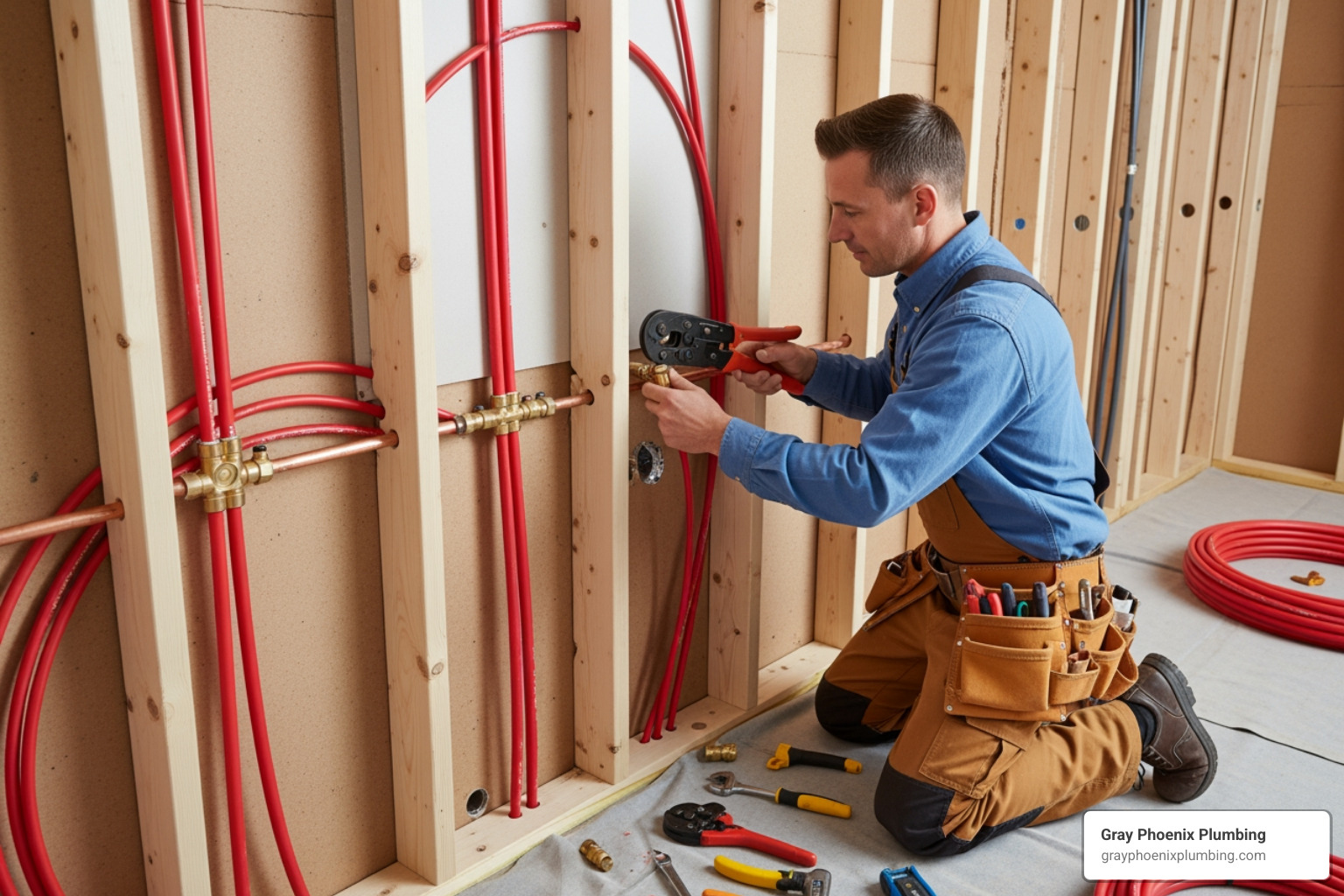
- Installing New Pipes: We then begin installing the new PEX or copper piping. In most cases, we can run the new, flexible PEX lines through attics, crawlspaces, and behind walls in a way that minimizes the need for drywall cutting. The new system is often run in parallel to the old one initially.
- Switchover and Removal of Old Pipes: Once the new system is fully installed and pressure-tested, we’ll switch your water supply over to the new pipes. This is typically done in a single day to minimize downtime. The old, disconnected pipes are then either removed or, if they are in inaccessible areas, left in place (decommissioned).
- Wall Repair and Cleanup: Any necessary drywall cuts are professionally patched, textured, and made ready for you to paint. Our team thoroughly cleans all work areas, often leaving them cleaner than when we arrived.
- Final Inspection and Walkthrough: We conduct a final, comprehensive inspection of the new plumbing system to ensure every connection is secure and functioning perfectly. We’ll then do a walkthrough with you to explain the work, answer any questions, and ensure you are 100% satisfied.
Project Timeline and Phased Approaches
The duration of a whole-home repipe depends on several factors, including the size of your house, the number of bathrooms and fixtures, and the accessibility of the existing pipes. For an average-sized home in Centennial, the entire process typically takes between 3 to 7 days.
For larger homes or more complex situations, we can sometimes perform the repipe in phases to better accommodate your family’s schedule. For example, we might complete the upstairs plumbing first, then move to the main level. However, the most efficient and cost-effective method is usually the whole-home approach, which allows our team to work uninterrupted and complete the project faster. We’ll discuss all options with you during the initial consultation to find the best plan for your specific needs and budget.


