

Why Choosing the Right Water Purification System Matters
The best water purification system depends on your specific water quality issues, budget, and household needs. Here’s a quick comparison to help you decide:
| System Type | Best For | Removes | Cost Range |
|---|---|---|---|
| Reverse Osmosis (RO) | Heavy metals, PFAS, TDS | 90-99% of dissolved contaminants | $150-$800 |
| Activated Carbon | Chlorine, taste, odor, VOCs | Chemicals and organic compounds | $20-$400 |
| UV Purification | Bacteria, viruses | Microorganisms (chemical-free) | $150-$1,200 |
| Whole-House Systems | Comprehensive home protection | Varies by configuration | $800-$10,000+ |
Quick Answer: For most homes, a reverse osmosis system provides the most comprehensive protection against contaminants like lead, arsenic, and PFAS, while activated carbon filters offer an affordable solution for improving taste and removing chlorine.
When you turn on your tap, you expect clean, safe water. But the reality is that water can contain everything from chlorine and heavy metals to bacteria and emerging contaminants like PFAS—even in treated municipal supplies.
According to the EPA, legal limits are set on more than 90 contaminants in drinking water, yet 1 in 3 people globally don’t have access to safe, clean drinking water. Even in the U.S., aging infrastructure and local contamination can compromise what comes out of your faucet.
Choosing a water purification system isn’t just about better-tasting water. It’s about protecting your family’s health, reducing your environmental footprint by eliminating single-use plastic bottles, and potentially saving hundreds of dollars per year compared to buying bottled water.
The challenge? There are dozens of purification technologies on the market—from simple pitcher filters to sophisticated whole-house systems—each with different capabilities, costs, and maintenance requirements. Some remove bacteria but not chemicals. Others eliminate minerals along with contaminants. Understanding which system targets your specific water quality issues is essential.
As Chris Hoffman, a Master Plumber with over 25 years of experience helping Denver Metro and Elbert County homeowners, I’ve installed and serviced countless water purification systems and guided families toward solutions that match their unique needs. Throughout this guide, I’ll break down the options to help you find the best water purification system for your home.
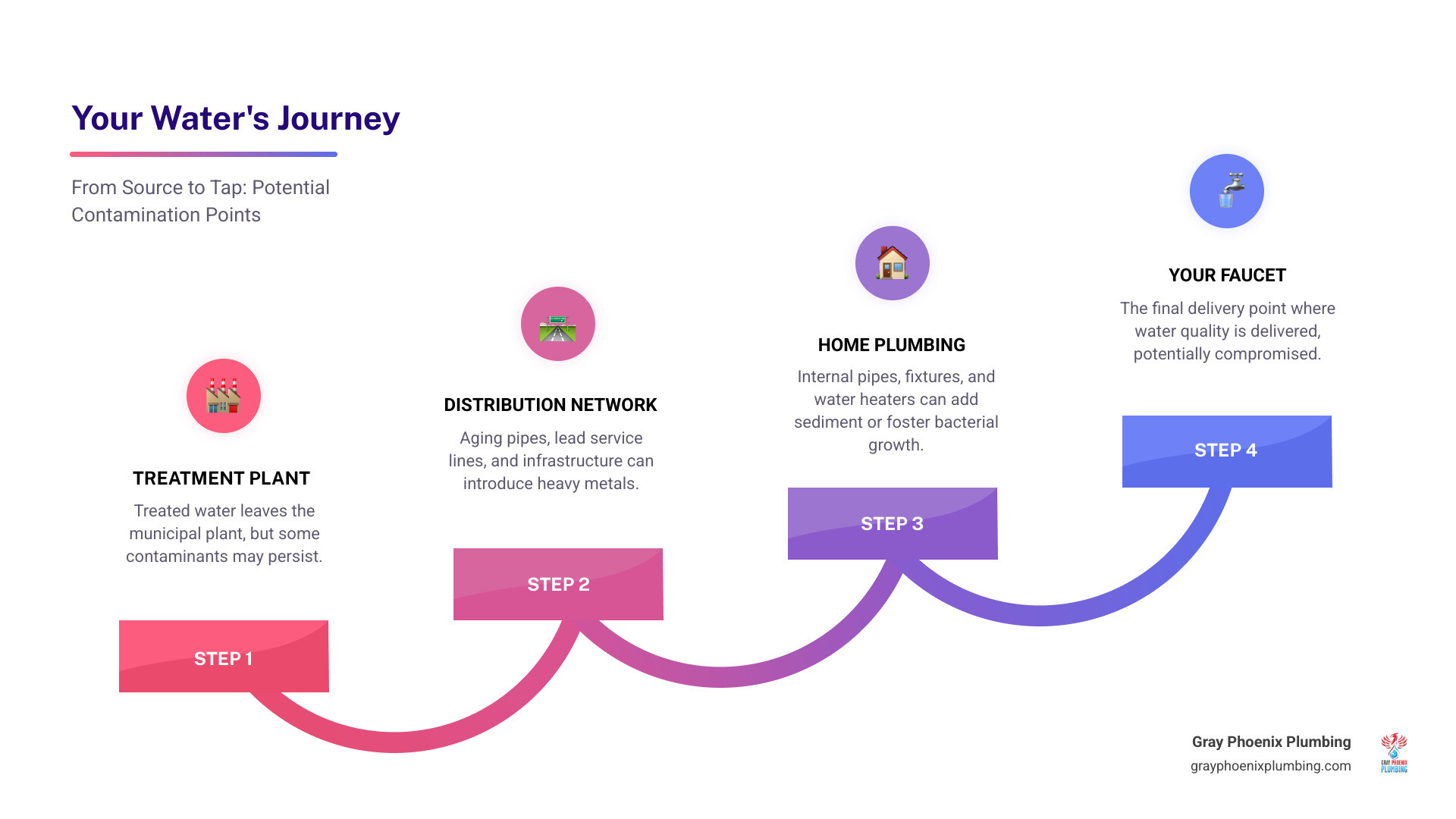
Why Purify Your Home’s Water? The Hidden Risks in Your Tap
We all want to trust the water coming from our taps, especially here in Colorado. However, water quality can be surprisingly complex, even in well-regulated areas like Elizabeth, CO, and the broader Denver Metro. Understanding the risks—and the benefits of purification—is the first step towards ensuring truly pure water for your family.
Health Risks: What’s Lurking in Your Water?
Water may appear clean, but impurities often slip through unnoticed. The primary concern with untreated or inadequately treated water is the presence of harmful contaminants that can pose serious health risks.
- Waterborne Microorganisms: These tiny invaders are responsible for a host of illnesses. Bacteria, protozoa, and viruses are common culprits. Diseases such as diarrhea, cholera, dysentery, and typhoid can be transmitted through contaminated water. Viruses like rotavirus and norovirus are particularly insidious because they are the smallest of all waterborne disease-causing microorganisms, often slipping past standard filters. According to the CDC, boiling water for one minute is necessary to ensure that all waterborne microorganisms are killed, but who has time for that every time they want a glass of water?
- Chemicals: Beyond biological threats, our water can contain various chemicals. Chlorine, used to disinfect municipal water, can leave an undesirable taste and odor, making your water taste like a public swimming pool. Volatile Organic Compounds (VOCs), pesticides, and herbicides can also find their way into water supplies, potentially impacting long-term health.
- Heavy Metals: Lead is a well-known concern, often leaching from old pipes into drinking water, especially in homes with older plumbing (e.g., built before 1951). But lead isn’t alone. Other heavy metals that can make their way into tap water include fluoride (which some choose to remove), uranium, molybdenum, barium, arsenic, nickel, cobalt, and zinc. These can come from natural sources, industrial runoff, or even your home’s plumbing.
- PFAS (Forever Chemicals): These “forever chemicals” are a group of man-made compounds that don’t break down easily and can accumulate in the environment and our bodies. Some reports suggest they may be more prevalent than previously thought and are toxic even in very small amounts. They are a growing concern for water quality nationwide, including here in Colorado.
Environmental Impact: Ditching Single-Use Plastics
Beyond health, choosing a home water purification system is a powerful statement for environmental stewardship. The statistics are staggering:
- Every minute, one million single-use plastic bottles are purchased around the world.
- This works out to 1.3 billion bottles per day or a mind-boggling 481.6 billion bottles per year.
- Many of these bottles end up in landfills, where they will take at least 450 years to degrade.
- The average American drinks approximately 26 gallons of bottled water a year, equivalent to 208 single-serving 16.9-ounce bottles. Each plastic bottle uses about 9.25 grams of plastic.
- What’s more, a liter of bottled water can contain 240,000 pieces of microplastic.
By installing a home water purification system, we can drastically reduce our reliance on these environmentally damaging products, cutting down on plastic waste and microplastic exposure.
Economic Benefits: Smart Savings for Your Wallet
Let’s talk dollars and cents. Investing in a best water purification system might seem like an upfront cost, but it’s a savvy economic choice in the long run.
- Many purification systems can break even with the cost of bottled water after just one to two weeks of travel (if we were buying bottled water on a trip). For home use, the savings accumulate even faster.
- Consider the expense of buying bottled water for a family over a year. An under-sink filter, for example, can save hundreds of dollars annually compared to constantly purchasing bottled water.
- These systems also protect your home. Hard water, common in parts of Colorado, can cause mineral buildup that damages appliances like water heaters, dishwashers, and washing machines, leading to costly repairs or premature replacements. A good purification system can extend the life of these investments.
Understanding Your Options: Types of Water Purification Systems
Choosing the best water purification system means understanding the fundamental differences between how systems treat water in your home. We generally categorize them into two main types: Point-of-Entry (POE) and Point-of-Use (POU).
Point-of-Entry (Whole-House) Systems
Imagine having clean, filtered water from every tap in your home—that’s the power of a Point-of-Entry (POE), or whole-house, system. These systems are installed where the main water line enters your home, treating all water before it’s distributed to your kitchen, bathrooms, laundry room, and other fixtures.
- Comprehensive Protection: A whole-house system provides complete protection against contaminants throughout your entire home. This means purified water for drinking, cooking, showering, bathing, and even washing clothes. For instance, a whole-house carbon filter can reduce chlorine at all taps, which can improve skin and hair health and prevent damage to plumbing fixtures.
- Addressing Broad Issues: These systems are ideal for addressing widespread issues like hard water (common in parts of Elbert County and Colorado Springs), high levels of chlorine or chloramines, sediment, or other contaminants affecting all water used in the home. If you’re concerned about contaminants in your shower water, a whole-house system is the way to go.
- Considerations: POE systems typically involve a higher initial cost due to their size and comprehensive nature. Professional installation is almost always recommended to ensure proper sizing, setup, and to prevent leaks, which is where our licensed plumbers at Gray Phoenix Plumbing excel. For more detailed information, explore our dedicated page on Water Filtration Systems.
Point-of-Use (POU) Systems
Point-of-Use (POU) systems, on the other hand, treat water at a specific fixture, such as your kitchen sink or a particular showerhead. They are designed to provide targeted filtration for the water you’ll be drinking, cooking with, or using for personal care.
- Targeted Filtration: POU systems are perfect if you primarily want to improve the quality of your drinking and cooking water or address a specific issue at one tap. They generally offer a lower cost and easier installation compared to whole-house systems.
- Types of POU Systems:
- Under-Sink Filters: These are installed directly beneath your kitchen sink, providing filtered water through a dedicated faucet or by connecting to your existing cold water line. They are out of sight, keep your counters clear, and often offer multi-stage filtration.
- Countertop Models: These sit on your counter and connect to your existing faucet via a diverter or are self-contained units that you fill manually. They are great for renters or those who want a portable option without permanent installation.
- Faucet-Mounted Filters: These attach directly to your faucet, allowing you to switch between filtered and unfiltered water. They are typically the most affordable and easiest to install of the POU options.
- Pitcher Filters: While not plumbed-in, pitcher filters are a basic form of POU. They’re convenient for small amounts of filtered water but often have limited contaminant removal capabilities and frequent filter replacement needs.
How to Choose the Best Water Purification System for Your Home
Selecting the best water purification system for your home isn’t a one-size-fits-all decision. It requires a bit of detective work and careful consideration. Our goal is to help you steer this process to find a solution that perfectly matches your needs in Elizabeth, CO, or anywhere in the Denver Metro area.
Identify Your Needs: What’s in Your Water?
The most crucial step is to understand what contaminants are actually present in your water. We can’t stress this enough: test your water!
- Water Testing: If you’re on a private well in Elbert County or Franktown, annual testing by a state-certified lab is essential. Well water is unregulated, meaning you’re solely responsible for its safety. The EPA offers a Protecting Private Drinking Water Wells: A Brief Guide that provides excellent guidance. For municipal water in Elizabeth, Parker, or Denver, your utility provides an annual Consumer Confidence Report (CCR) detailing local water quality. If you have concerns, a private test can offer more specific insights into your home’s tap.
- Reading Water Quality Reports: These reports will list contaminants detected and compare them against regulatory limits. This information is your roadmap to selecting a system that targets your actual water issues, whether it’s lead, chlorine, hardness, or emerging contaminants.
Understanding Certifications: Your Assurance of Performance
Once you know what you’re dealing with, look for systems that are independently certified. This is your guarantee that a system performs as claimed. Key certifications to look for include:
- NSF/ANSI Standards: These are developed by NSF International and the American National Standards Institute.
- NSF/ANSI 42: Aesthetic effects (improves taste, odor, chlorine reduction).
- NSF/ANSI 53: Health effects (reduces contaminants with health impacts like lead, PFAS, cysts).
- NSF/ANSI 58: Reverse osmosis systems (reduces TDS, fluoride, lead, arsenic).
- NSF/ANSI 401: Emerging contaminants (pharmaceuticals, pesticides).
- NSF/ANSI 372: Lead-free design (ensures the product itself doesn’t add lead).
- NSF 177: Shower filters (specifically for chlorine reduction).
- WQA (Water Quality Association) & IAPMO (International Association of Plumbing & Mechanical Officials): These organizations also certify filters to NSF standards, providing an additional layer of verification.
Practical Considerations: Beyond the Price Tag
- Filter Lifespan & Maintenance Costs: Don’t just look at the upfront price. Consider the long-term cost of ownership, including replacement filters. Some filters last months, others years. We’ll dive into this more in our FAQ section.
- Flow Rate (GPM/GPD): For whole-house or under-sink systems, flow rate (gallons per minute or day) matters. A low flow rate can be frustrating when filling a pot or taking a shower.
- System Capacity: Match the system’s capacity to your household’s daily water usage to ensure optimal performance and filter life.
Finding the best water purification system for specific needs
- Well Water vs. City Water:
- Well Water: Requires a comprehensive approach. After testing, you might need a sediment filter, followed by a UV system for bacteria/viruses, and then potentially an RO or specialized chemical filter for heavy metals or other contaminants.
- City Water: Often needs solutions for chlorine, hardness, and specific contaminants identified in your CCR or testing (e.g., lead from older pipes).
- Solutions for Hard Water: Colorado is known for having soft to moderately hard water, but many areas, especially those with well water, can still experience significant hardness. Hard water contains high levels of calcium and magnesium, leading to scale buildup. Ion exchange systems, commonly known as water softeners, are the most effective solution. Our H2O Harmony line offers custom solutions for hard water, helping you say goodbye to residue and hello to better water.
- Systems for Fluoride Removal: If fluoride removal is a priority, reverse osmosis (RO) systems or activated alumina filters are generally the most effective.
- Targeting Lead or Other Heavy Metals: RO systems, some specialized carbon filters, and ion exchange filters can effectively reduce lead and other heavy metals. Always check for NSF/ANSI 53 or 58 certification for these concerns.
Key features to look for in the best water purification system
When comparing systems, a few features can significantly improve convenience, performance, and peace of mind:
- Filter Life Indicators: Many modern systems include digital displays or lights that tell you when it’s time to change filters, taking the guesswork out of maintenance.
- Remineralization Stages: RO systems can remove beneficial minerals along with contaminants, sometimes leading to a “flat” taste. A remineralization stage adds healthy minerals back, improving taste and balancing pH.
- Low Water Waste Technology: Traditional RO systems can be water-intensive. Look for WaterSense labeled RO models or systems that boast lower waste ratios (e.g., 1:1 or 2:1 purified to wastewater) to conserve water.
- Ease of Maintenance: Consider how easy it is to change filters. Are they twist-on cartridges, or does it require tools and a bit of plumbing expertise?
- Warranty: A good warranty indicates manufacturer confidence in their product.
A Closer Look at Top Purification Technologies
Now that we understand the types of systems and what to look for, let’s dive into the core technologies that make up the best water purification system options available.

Reverse Osmosis (RO)
Reverse osmosis is often considered the gold standard for comprehensive water purification.
- How it Works: RO systems use household water pressure to force water through a semi-permeable membrane. This membrane has incredibly tiny pores that allow water molecules to pass through but block larger molecules and dissolved solids. It’s like a super-fine sieve for your water!
- What it Removes: RO is incredibly effective, typically removing 90-99% of a vast array of contaminants. This includes dissolved solids, chemicals like chlorine and fluoride, heavy metals such as lead, arsenic, uranium, and barium, as well as PFAS, bacteria, and viruses. This results in very high-purity water.
- Pros: Exceptional contaminant removal, produces great-tasting water (especially with remineralization), reduces microplastics, and saves money on bottled water.
- Cons: RO removes beneficial minerals along with the bad ones, which some find gives the water a “flat” taste. This can be remedied with a remineralization stage. Traditional RO systems also produce wastewater (brine) as contaminants are flushed away. Older models can waste 3-10 gallons for every gallon purified, though newer, more efficient WaterSense labeled systems significantly reduce this to 2.3 gallons or less of waste per gallon of treated water. They also tend to have a slower flow rate than other filter types.
- Installation: Countertop RO models are easy to install, while under-sink and whole-house RO systems may require professional plumbing. For more in-depth information, check out our Halo 5 Water System Complete Guide.
Activated Carbon Filtration
Activated carbon filters are one of the most common and versatile water purification technologies.
- How it Works: Carbon filters work through a process called adsorption. Contaminants stick to the surface of the porous carbon material as water passes through. Think of it like a magnet for impurities.
- What it Removes: Activated carbon is highly effective at removing chlorine and chloramines, improving water’s taste and odor dramatically. It also tackles many VOCs, pesticides, and herbicides. This is why it’s a staple in many pitcher filters, faucet filters, and under-sink systems.
- Pros: Affordable, significantly improves water aesthetics (taste and smell), relatively easy to maintain, and does not remove beneficial minerals.
- Cons: Activated carbon does not remove dissolved minerals, heavy metals (like lead or arsenic, unless specifically designed with additional media), bacteria, viruses, or most inorganic pollutants. For comprehensive protection, carbon often works best as a pre-filter or in combination with other technologies.
UV Purification
Ultraviolet (UV) purification offers a chemical-free way to deal with biological contaminants.
- How it Works: UV systems use a special lamp that emits germicidal ultraviolet light. As water flows past the lamp, the UV light penetrates the cell walls of microorganisms, damaging their DNA and rendering them unable to reproduce or cause illness.
- What it Removes: UV light is highly effective at deactivating bacteria, viruses, and protozoa (like Giardia and Cryptosporidium). It’s a popular choice for well water treatment where microbial contamination is a concern.
- Pros: Chemical-free, no change in water taste or odor, and very effective against a wide range of microorganisms.
- Cons: UV purification only treats biological contaminants; it does not remove chemicals, heavy metals, sediment, or other particulates. For UV to be effective, the water must be clear, so pre-filtration for murky water is often necessary. Home UV systems require electricity and periodic lamp replacement, while portable UV purifiers depend on battery life.
Frequently Asked Questions about Water Purification
We get a lot of questions about water purification, and for good reason! It’s a topic with many nuances. Here are some of the most common inquiries we address for our customers in Elizabeth, CO, and surrounding areas.
Do water filters remove beneficial minerals?
This is a fantastic question, and the answer depends entirely on the type of system you choose.
- Yes, some do: Technologies like reverse osmosis (RO) and distillation are designed to remove nearly everything from the water, including beneficial minerals like calcium and magnesium. While this results in incredibly pure water, some people find it tastes “flat.” For those who prefer the mineral content or health benefits, remineralization filters can be added to RO systems to restore these essential minerals and balance the pH.
- No, most don’t: Simpler filtration methods, such as activated carbon filters, are designed to target specific contaminants like chlorine, VOCs, and sediment, while leaving beneficial minerals intact. These systems are excellent for improving taste and odor without altering the mineral profile.
So, if retaining minerals is important to you, consider a carbon-based system or an RO system with a remineralization stage.
How often do I need to change my water filter?
The lifespan of a water filter varies significantly based on its type, your household’s water usage, and the quality of your incoming water. Think of it like changing the oil in your car – it depends on how much you drive and the conditions.
- Pitcher Filters: Typically need replacement every 2-4 months.
- Faucet-Mounted & Countertop Filters: Often last 3-6 months.
- Under-Sink Filters (Cartridge-based): Can range from 6-12 months.
- Reverse Osmosis (RO) Pre/Post-Filters: Usually changed every 6-12 months.
- RO Membranes: These are the heart of the RO system and typically last 2-5 years, depending on water quality and usage.
- Whole-House Media: Depending on the media type (e.g., carbon, water softener resin), these can last 5-10+ years.
- UV Lamps: Generally need replacement every 9-12 months, as their germicidal effectiveness diminishes over time.
It’s always best to follow the manufacturer’s guidelines for your specific system. We also recommend paying attention to signs like decreased flow rate, a return of bad tastes or odors, or visible sediment, as these are strong indicators that it’s time for a change.
Can I install a whole-house water filter myself?
The DIY spirit is strong in Colorado, and we appreciate that! For some homeowners with solid plumbing experience, certain simple cartridge-based whole-house systems might be a feasible DIY project.
However, for most whole-house water purification systems, especially more complex setups like a best water purification system that includes multiple stages, UV, or a water softener, professional installation is highly recommended.
Here’s why:
- Proper Sizing: Sizing a whole-house system correctly is crucial for optimal performance and flow rate. Too small, and it won’t keep up with demand; too large, and you’ve overspent.
- Plumbing Expertise: Installing a whole-house system involves cutting into your main water line, which requires precise plumbing work to prevent leaks, ensure proper bypass lines, and meet local codes.
- System Integration: Integrating various components (sediment filters, carbon filters, UV, water softeners) requires knowledge of the correct order and connections for maximum effectiveness.
- Warranty & Safety: Professional installation ensures your warranty remains valid and, most importantly, protects your home from potential water damage.
For a system like a Halo 5 Water Filtration Installation, which often combines several powerful technologies, our licensed plumbers at Gray Phoenix Plumbing have the expertise to ensure a seamless and effective setup, giving you peace of mind. We’re here to help homeowners throughout Elizabeth, Elbert County, Parker, and the wider Denver Metro area with all their water filtration needs.
Conclusion: Your Path to Pure, Healthy Water
Choosing the best water purification system for your home is an investment in health, environment, and long-term savings. We’ve seen that the journey to pure water starts with understanding what’s in your tap, whether you’re dealing with hard water in Colorado Springs or concerns about lead in older Denver homes.
We’ve explored the hidden risks of untreated water, from microscopic pathogens to “forever chemicals,” and celebrated the environmental and economic benefits of ditching single-use plastic bottles. We’ve also broken down the options, from comprehensive Point-of-Entry systems that treat every drop of water in your home to targeted Point-of-Use solutions for drinking and cooking.
Remember these key takeaways:
- Test Your Water: It’s the only way to know precisely what contaminants your system needs to address.
- Understand Certifications: Look for NSF/ANSI, WQA, or IAPMO seals to ensure validated performance.
- Consider Total Cost: Factor in both the upfront price and the ongoing maintenance costs, especially filter replacements.
- Match to Your Needs: Whether it’s removing chlorine for better taste, tackling hard water, or ensuring comprehensive protection against heavy metals and viruses, there’s a technology for you.
For homeowners in Elizabeth, CO, Elbert County, Parker, Castle Rock, Kiowa, Franktown, Denver, Littleton, Aurora, Lakewood, Thornton, Westminster, Brighton, Golden, Morrison, Conifer, Evergreen, Firestone, Erie, Bennett, Centennial, Agate, Jefferson, and Colorado Springs, seeking expert advice and professional installation, Gray Phoenix Plumbing provides reliable solutions. Our licensed, background-checked pros are ready to guide you through the options and ensure your system is perfectly installed for optimal performance.
To explore your options and ensure your family has the purest water possible, learn more about our Water Filtration Systems today. We’re here to help you achieve pure genius in your home’s water.


