

Why Plumbing Leak Detection Denver Matters for Your Home
Plumbing leak detection Denver is essential for protecting your home from costly water damage, structural issues, and high utility bills. Here’s a quick guide:
Quick Guide to Denver Leak Detection:
- Common Signs – High water bills, musty odors, water stains, mold, or the sound of running water when fixtures are off.
- DIY First Step – Check your water meter’s leak indicator with all water turned off.
- Professional Help – Call a licensed plumber for hidden, slab, or behind-wall leaks.
- Advanced Technology – Thermal imaging, acoustic sensors, and tracer gas locate leaks without destruction.
- Your Responsibility – Homeowners own the service line from the street to the home; Denver Water handles mains and meters.
- Average Costs – Minor repairs under $200; slab leaks or pipe replacement can cost $500-$2,000+.
Even a slow drip can waste 150 gallons of water daily, potentially causing serious hidden damage. Denver’s freeze-thaw cycles put extra stress on pipes, and our dry air can hide small leaks by evaporating surface moisture while damage continues unseen.
The longer a leak goes undetected, the more damage it causes, weakening foundations and promoting mold growth. Catching leaks early is the difference between a simple fix and a home disaster.
I’m Chris Hoffman, a Master Plumber with over 25 years of experience in the Denver Metro area. At Gray Phoenix Plumbing, I’ve seen how small leaks become major problems. We provide expert plumbing leak detection Denver services to find and fix leaks before they cause catastrophic damage.
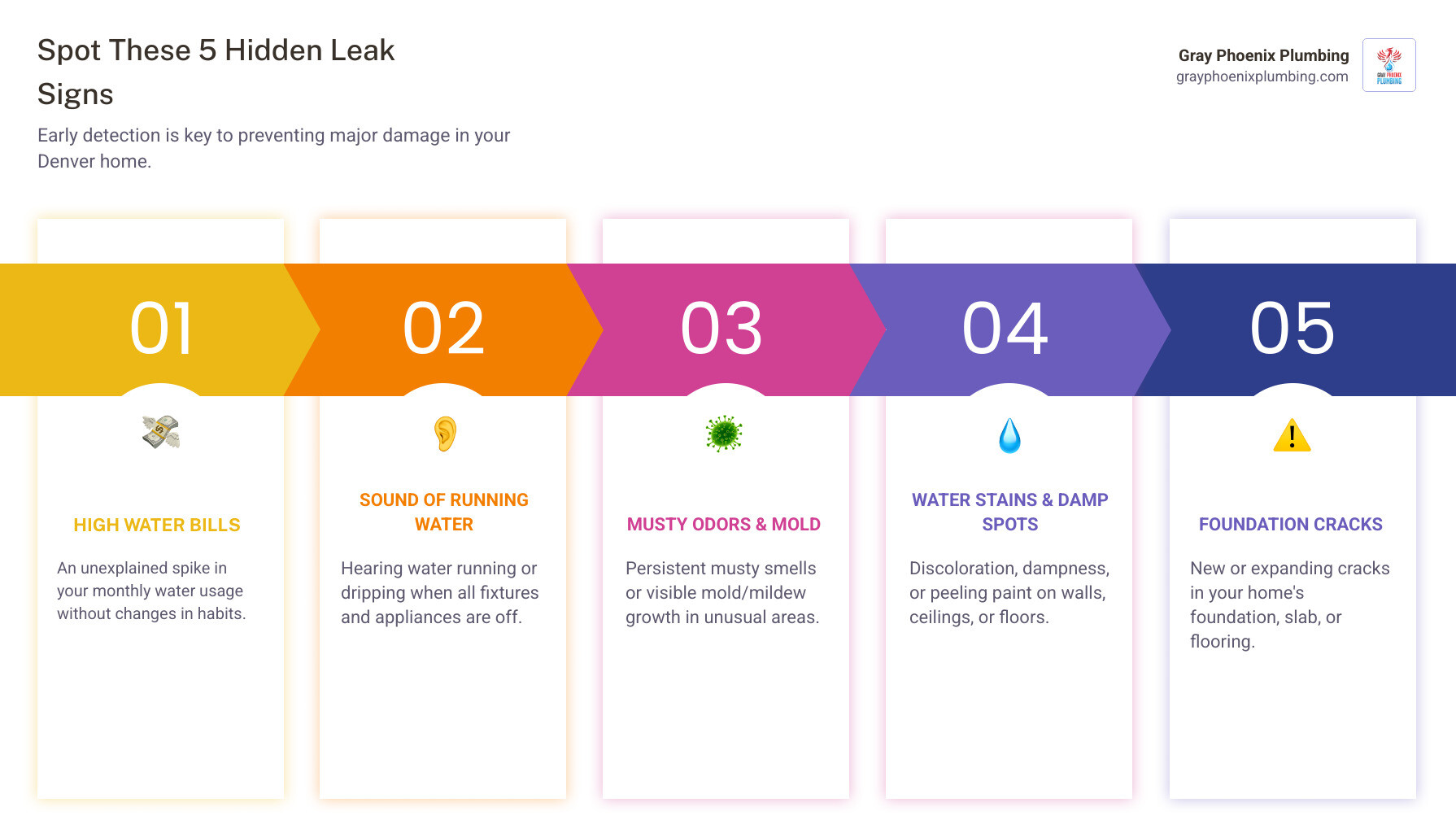
Telltale Signs: How to Spot a Hidden Plumbing Leak
Hidden leaks leave clues if you know what to look for. Recognizing these signs early can save you significant trouble and expense.
- Unusually high water bill: A sudden spike in water usage without a change in habits is a major red flag. A small drip can waste 150 gallons daily.
- Sound of running water: If you hear trickling or dripping when all fixtures are off, you may have a hidden pipe leak, especially under your foundation (a slab leak).
- Musty odors and mold growth: Damp, earthy smells often point to a leak creating a breeding ground for mold. Visible mold on walls or ceilings not normally exposed to moisture is a certain sign of a hidden leak and a potential health risk.
- Damp spots or foundation cracks: Water stains on walls and ceilings, sagging floors, or new cracks in your foundation indicate water is seeping through building materials and may be weakening your home’s structure.
- Low water pressure: A sudden drop in water pressure throughout your home can be caused by a significant leak in your plumbing system.
For more details, see our guide on More info about water leak detection. Denver Water also has resources on how to Learn how to check your meter for leaks from Denver Water.
The DIY Water Meter Test
Your water meter can confirm a hidden leak. This simple test is your first step.

Here’s how to do it:
- Turn off all water: Ensure no water is being used inside or outside your home (no faucets, toilets, appliances, or irrigation).
- Check the leak indicator: Locate your meter (usually outside near the street). Most have a small triangle or gear that spins when water flows. If it’s moving while your water is off, you have a leak.
- Record meter readings: If there’s no indicator, write down the meter reading. Don’t use any water for several hours (e.g., overnight). If the reading has changed in the morning, you have a leak.
This test confirms a leak but doesn’t locate it. That’s where our plumbing leak detection Denver expertise is needed.
Common Leak Locations in Denver Homes
Certain areas in Denver homes are more prone to leaks:
- Aging pipes: Older galvanized steel or copper pipes can corrode and develop pinhole leaks.
- Freeze-thaw cycle damage: Denver’s climate can cause pipes in unheated crawl spaces, garages, or exterior walls to freeze and burst.
- Toilets and faucets: A running toilet or dripping faucet can waste hundreds of gallons.
- Under sinks and behind appliances: Check connections for dishwashers, washing machines, and refrigerators.
- In basements and crawl spaces: Leaks here can go unnoticed, leading to mold and structural damage. Our Sump Pump Installation Denver services can help keep these areas dry.
The Professional Approach to Plumbing Leak Detection in Denver
When DIY methods aren’t enough or you suspect a serious hidden leak, it’s time for professional help. Gray Phoenix Plumbing specializes in plumbing leak detection Denver services, using advanced, non-invasive techniques to find leaks accurately while minimizing disruption and property damage.

Our goal is pinpoint accuracy, especially for challenging slab leaks under your foundation or behind-wall leaks that can cause rot and mold. For comprehensive solutions, we offer Fix It Fast Comprehensive Plumbing Repair Services in Denver.
Advanced Leak Detection Technologies
Modern plumbing leak detection Denver uses cutting-edge technology to precisely locate leaks without destructive guesswork. Our tools include:
- Acoustic listening devices: These sensitive microphones detect the sound of water escaping from a pressurized pipe, even through concrete or walls, to pinpoint the leak’s location.
- Thermal imaging cameras: Infrared cameras visualize temperature differences on surfaces, revealing “cold spots” caused by hidden moisture from a leak behind walls or under floors.
- Tracer gas systems: For elusive leaks, we introduce a safe, non-toxic gas into the pipes. The gas escapes through any crack, and a specialized detector pinpoints its source on the surface.
- Video camera pipe inspection: A high-resolution camera is sent through drain lines to visually inspect the pipe’s interior for cracks, blockages, or other damage.
Learn more about our See advanced methods in action or our Main Water Line Repair services for larger issues.
Trenchless Repair: A Modern Fix for Damaged Pipes
Once located, we can often repair pipes without extensive digging using trenchless pipe repair methods. One innovative technique is Spray In Place Pipelining (SIPP), which rehabilitates pipes from the inside.
- Minimal excavation: SIPP requires only small access points, preserving your landscaping and driveway.
- Cost-effectiveness: By avoiding major excavation and restoration work, SIPP is often more cost-effective in the long run.
- Durability: An epoxy resin coating creates a new, seamless, and corrosion-resistant pipe within the old one.
- Extending pipe lifespan: SIPP can extend the life of your plumbing system for decades.
This method is a testament to how modern technology allows for effective, long-lasting repairs with minimal disruption. For more on our repair options, visit our Leak Repair Near Me Pipe Repair page.
Risks, Costs, and Responsibilities of Water Leaks
Ignoring a plumbing leak can lead to significant damage, health hazards, and financial burdens. The primary risks include:
- Structural Damage: Water can warp wood, ruin drywall, and compromise your home’s frame. Slab leaks can cause foundation weakening by eroding the soil beneath your home, leading to cracks and settling.
- Mold Growth & Health Risks: Leaks create damp environments perfect for mold, which can cause respiratory issues and allergic reactions.
- Financial Impact: Beyond wasted water costs (a slow drip can waste 4,500 gallons a month), you face escalating repair bills. A minor issue can become a major restoration project. Our Plumbing Repair Denver Services can help.
The Average Cost of Plumbing Leak Detection Denver
The cost of plumbing leak detection Denver and repairs varies based on leak location, severity, and accessibility. A visible leak under a sink is cheaper to fix than a hidden slab leak requiring specialized tools.
- Detection vs. Repair: The service to detect a leak is separate from the cost to repair it.
- Minor Repairs: Simple, accessible leaks (dripping faucet, leaky toilet) are often under $200 to repair.
- Major Repairs: Complex issues like slab leaks or main line repairs can range from $500 to $2,000+, depending on the damage and repair method (e.g., trenchless vs. traditional excavation).
Gray Phoenix Plumbing provides transparent, upfront estimates before any work begins.
Denver Water vs. Homeowner: Who Fixes the Leak?
Understanding responsibility is key to a quick resolution:
- Denver Water’s Responsibility: Denver Water is responsible for the water mains under public streets and the water meter itself.
- Homeowner’s Responsibility: You are responsible for the service line from the street connection into and throughout your home. This includes all interior pipes and fixtures. If the leak is on your property past the meter, the repair is your responsibility.
If you suspect a public leak, report it to Denver Water Customer Care at 303-893-2444.
Your Action Plan: DIY vs. Calling a Pro for Plumbing Leak Detection Denver
For plumbing leak detection Denver, knowing when to DIY and when to call a pro is key. Regular DIY checks (water meter test, visual inspections) are your first line of defense.
Call a professional if your meter test indicates a leak you can’t find, you suspect a slab leak, or you see mold or water damage. Hidden leaks require specialized tools to locate without causing more damage. For emergencies like a burst pipe or flooding, call a pro immediately. Find us when you search for a Denver Plumber Near Me.
What to Do Immediately if You Suspect a Major Leak
If you have a major leak, take these steps to minimize damage:
- Shut off the main water valve: Know where your main shut-off is (basement, crawl space, or outside) and turn it off to stop water flow.
- Turn off the water heater: If the leak involves hot water, turn off the heater’s power (gas valve or circuit breaker).
- Clean up standing water: Mop up water to prevent further damage, being mindful of electrical hazards.
- Call for emergency help: Contact a professional immediately. Gray Phoenix Plumbing offers 24/7 Emergency Plumbing Services in the Denver area.
How to Proactively Prevent Plumbing Leaks
Preventative measures can save you from future emergencies:
- Regular plumbing inspections: Schedule annual professional inspections to catch weak spots early.
- Winterizing pipes: In Denver’s cold winters, insulate pipes in unheated areas and disconnect outdoor hoses.
- Monitoring water pressure: High water pressure (above 80 psi) stresses pipes. Consider a pressure reducing valve (PRV) if yours is too high.
- Installing a whole-house water filtration system: A system like the Halo 5 protects your plumbing from mineral buildup and corrosion. Learn more about The Denver Water Solution Why the Halo 5 is the Ultimate Whole House Filtration System for Your Home.
Frequently Asked Questions about Denver Plumbing Leaks
Here are answers to common questions we receive from Denver-area homeowners.
Can a small, slow drip really cause serious damage?
Yes. A small drip can waste over 150 gallons of water daily (4,500 gallons a month). This constant moisture leads to mold growth, which poses health risks, and wood rot, which compromises your home’s structural integrity. An ignored drip can turn a minor issue into a costly disaster.
What is a slab leak and why is it considered a major problem?
A slab leak is a leak in a water pipe beneath your home’s concrete foundation. It’s a major problem because it is hidden and can go undetected for a long time. The leaking water can erode the soil supporting your foundation, causing severe structural damage like cracks and settling. It also leads to high water bills and mold growth. Repairing slab leaks requires specialized detection and repair techniques.
How can I tell if a leak is my responsibility or Denver Water’s?
The dividing line is the water meter:
- Denver Water’s Responsibility: They are responsible for the public water mains in the street and the water meter itself.
- Your Responsibility (Homeowner): You are responsible for the service line from the street connection into your home and all plumbing within your property. If the leak is past the meter, it’s your responsibility to fix.
Report public leaks to Denver Water Customer Care at 303-893-2444. For leaks on your property, Gray Phoenix Plumbing provides expert plumbing leak detection Denver services.
Don’t Let a Small Leak Become a Denver Disaster
The key takeaway for every Denver homeowner is this: be vigilant, act quickly, and don’t hesitate to call the professionals.
Signs like a high water bill, the sound of running water, or a musty odor are warnings. Ignoring them can lead to costly structural damage and unhealthy mold growth. Professional detection from Gray Phoenix Plumbing uses non-invasive technology to pinpoint leaks with precision, saving you time and money.
We are proud to serve Denver, Elizabeth, Parker, Castle Rock, and surrounding Colorado communities. For expert help with plumbing leak detection Denver and reliable repairs, trust our licensed professionals to keep your home safe and dry. Don’t wait for a drip to turn into a disaster—Contact a Denver leak repair plumber today!


