

Why the Best Tankless Water Heater Can Transform Your Home’s Comfort and Efficiency
The best tankless water heater delivers endless hot water on demand while cutting energy bills by up to 30%. Here are the top considerations when choosing one:
Top Tankless Water Heater Picks:
- Best Overall: Rinnai RU199iN – Superior flow rate (11 GPM), 20-year lifespan, industry-leading efficiency
- Best Value: Rheem RTEX-18 – 99.8% energy efficiency, affordable electric option
- Best for Efficiency: Navien NPE-240A – 98% thermal efficiency, ComfortFlow™ technology eliminates cold water sandwich effect
- Best for Large Homes: Rinnai SENSEI RX Series – Up to 0.98 UEF, handles multiple fixtures simultaneously
- Best Electric: Stiebel Eltron – 7 GPM flow rate, supports 1-3 fixtures, compact design
Key Features to Look For:
- Flow rate of 2-10 GPM depending on household size
- UEF rating of 0.90 or higher for condensing models
- Temperature rise capability for cold climates (30-35°C in Canada)
- ENERGY STAR certification for rebate eligibility
- 10-20 year warranty on heat exchanger
Unlike traditional tank heaters that continuously heat 40-50 gallons of water, tankless units heat water only when you turn on the tap. This on-demand approach eliminates standby heat loss and can save you $100 or more annually on utility bills.
The reality? A frigid Canadian morning shower surprise or a family of four running out of hot water mid-shower doesn’t have to be your normal. Tankless technology provides an endless supply of hot water while lasting 20+ years—nearly double the lifespan of traditional tank heaters.
I’m Chris Hoffman, a Master Plumber with over 25 years of experience installing and servicing the best tankless water heater systems throughout the Denver Metro area. I’ve helped hundreds of homeowners transition from bulky, inefficient tanks to modern tankless solutions that deliver consistent hot water while reducing energy costs.
Why Go Tankless? Key Benefits Over Traditional Heaters
Switching to a tankless water heater isn’t just about getting hot water; it’s about upgrading your entire home experience. Compared to traditional tank models, a tankless unit offers a host of compelling advantages that make it a smart investment for homeowners in Elizabeth, CO, and across the Front Range.
First and foremost, you get Endless Hot Water. Picture this: long, luxurious showers without the fear of the water turning icy cold. With a tankless system, water is heated on demand, so you never run out. This is a game-changer for large families or homes with multiple hot water demands.
Next up, significant Energy Savings. Traditional tank water heaters constantly heat and reheat a large tank of water, even when you’re not using it. This is known as standby heat loss, and it’s a major energy drain. Tankless units eliminate this waste by heating water only as it flows through the system, saving you up to 30% on energy bills compared to tank models. This on-demand approach makes tankless units incredibly energy efficient, leading to substantial annual savings.
The Longer Lifespan is another huge benefit. While traditional tank water heaters typically last 8-12 years, a well-maintained tankless unit can serve your family for 20+ years or even longer. This longevity means fewer replacements and a better long-term return on your investment.
Beyond savings, tankless water heaters offer space-saving benefits. These compact units mount on your wall, freeing up valuable floor space in your utility room, basement, or garage. This can be a major plus for homes where space is at a premium. Additionally, the reduced risk of a large tank bursting means a Reduced Flood Risk, offering peace of mind. Finally, upgrading to a modern, energy-efficient tankless system can even contribute to an Increased Home Value, making your property more attractive to potential buyers.
Understanding the Technology: Fuel Types & Efficiency
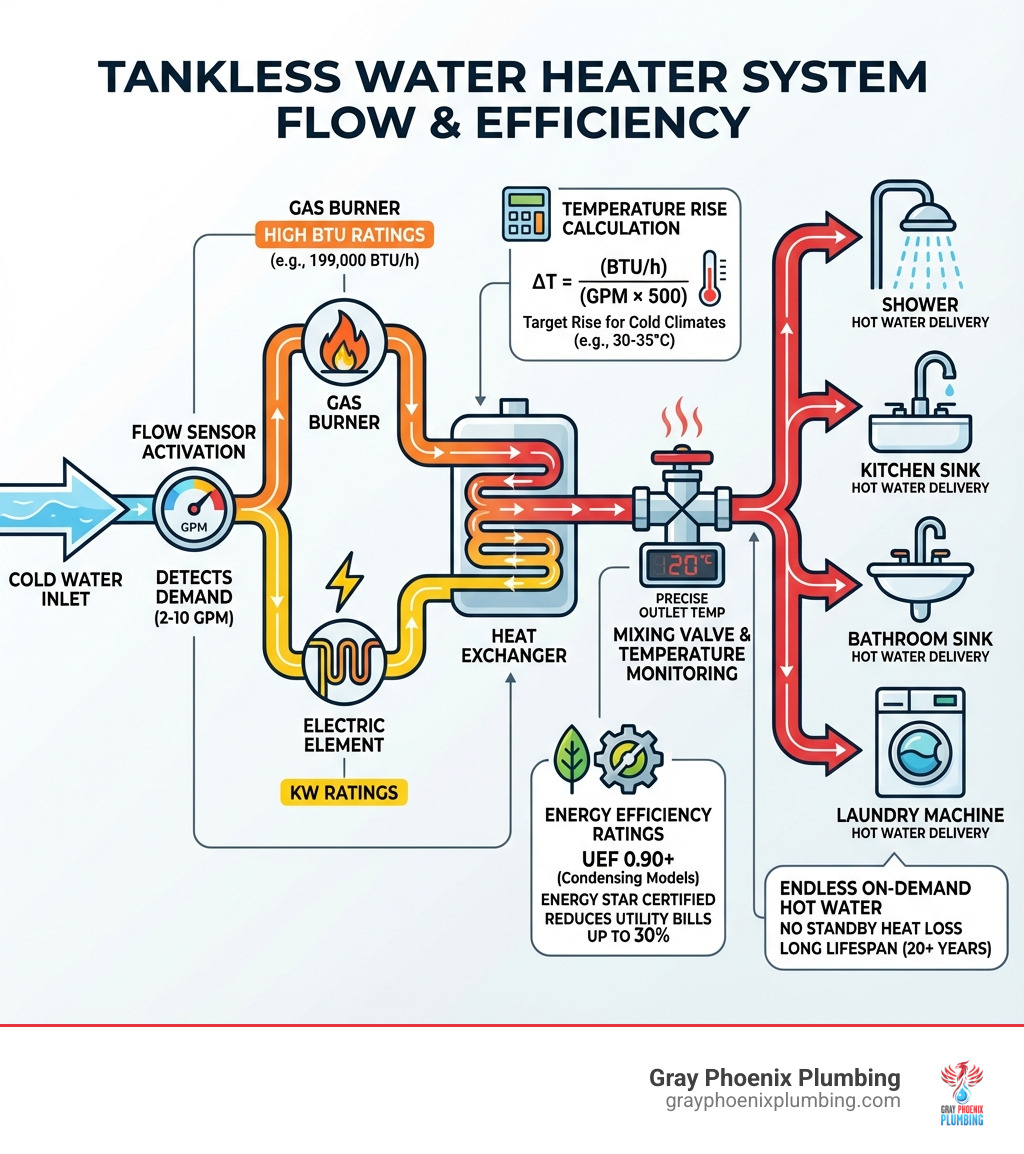
The heart of a tankless water heater lies in its ability to heat water instantaneously. When a hot water tap is opened, a flow sensor detects the water movement. This triggers a powerful gas burner or electric heating element to rapidly heat the water as it passes through a heat exchanger. A mixing valve ensures the water reaches your desired temperature, and then it’s delivered directly to your fixture. The unit only operates when hot water is needed, making it highly efficient.
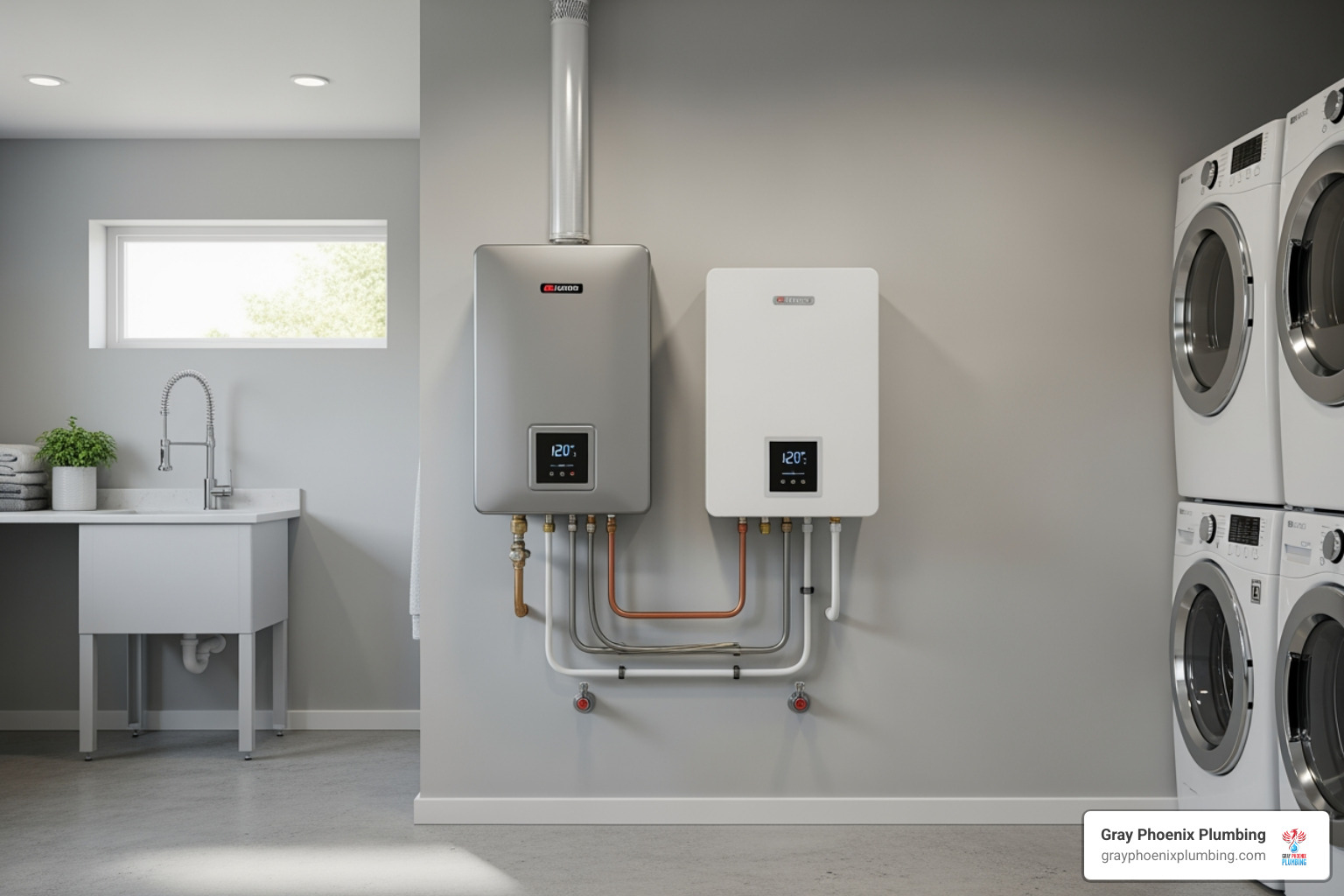
Choosing the right technology for your home in Colorado involves understanding the differences between gas and electric models, as well as the efficiency gains offered by condensing technology.
Gas vs. Electric Heaters: Which is Right for You?
The choice between gas (natural gas or propane) and electric tankless water heaters often comes down to your home’s existing infrastructure, hot water demand, and long-term operating costs.
Gas/Propane Heaters are generally the powerhouse option. They offer Higher flow rates, meaning they can heat more gallons per minute, making them ideal for larger homes or households with high simultaneous hot water demands. They heat water faster and are typically more efficient for whole-home use, especially in areas like Elizabeth, CO, where groundwater temperatures can be quite cold. However, they usually come with a Higher upfront cost and require proper Venting requirements to exhaust combustion gases safely to the outside. This often means installing a dedicated vent pipe, which can add to installation complexity and cost. If you don’t have an existing natural gas line, you’ll need to consider propane, which requires a storage tank and regular refills.
Electric Heaters, on the other hand, boast a Lower initial cost and typically offer Simpler installation since they don’t require gas lines or venting. They are often a good choice for smaller homes, point-of-use applications (like a single sink), or homes without natural gas access. However, electric tankless units demand significant electrical power. They often require substantial Potential electrical panel upgrades, typically needing at least 120 amps and dedicated high-voltage circuits. This can be a costly upgrade if your home’s electrical system isn’t already equipped, potentially negating the lower initial unit cost. For more detailed information on the costs associated with electric tankless water heaters, you can visit our guide on the topic: More info about the cost to install an electric tankless water heater.
Condensing vs. Non-Condensing: The Efficiency Game-Changer
When it comes to efficiency, the distinction between condensing and non-condensing tankless water heaters is crucial.
Condensing Technology represents the pinnacle of tankless efficiency. These units capture heat from the exhaust gases that would otherwise be wasted. By cooling these gases, they extract additional heat, leading to Higher efficiency (UEF >0.90). Many condensing models boast an industry-leading efficiency of up to 0.98 UEF. Because the exhaust gases are cooler, condensing units can use less expensive PVC piping for PVC venting, simplifying installation. This technology is often found in the best tankless water heater models on the market and can lead to greater long-term energy savings.
Non-Condensing Technology is the more traditional approach. These units vent hot exhaust gases directly outside without recapturing the latent heat. While they generally have a Lower initial cost, their efficiency ratings are typically lower (usually below 0.82 UEF). Due to the high temperature of the exhaust gases, they require more expensive and durable Stainless steel venting required, which can offset some of the initial cost savings. For many homes in the Denver area, the higher efficiency and lower operational costs of a condensing unit often make it the superior long-term choice, despite a slightly higher upfront investment.
How to Choose the Best Tankless Water Heater for Your Home
Selecting the best tankless water heater for your home in Colorado isn’t a one-size-fits-all decision. It requires careful consideration of your household’s specific hot water demands, our local climate conditions, and the unit’s technical specifications.
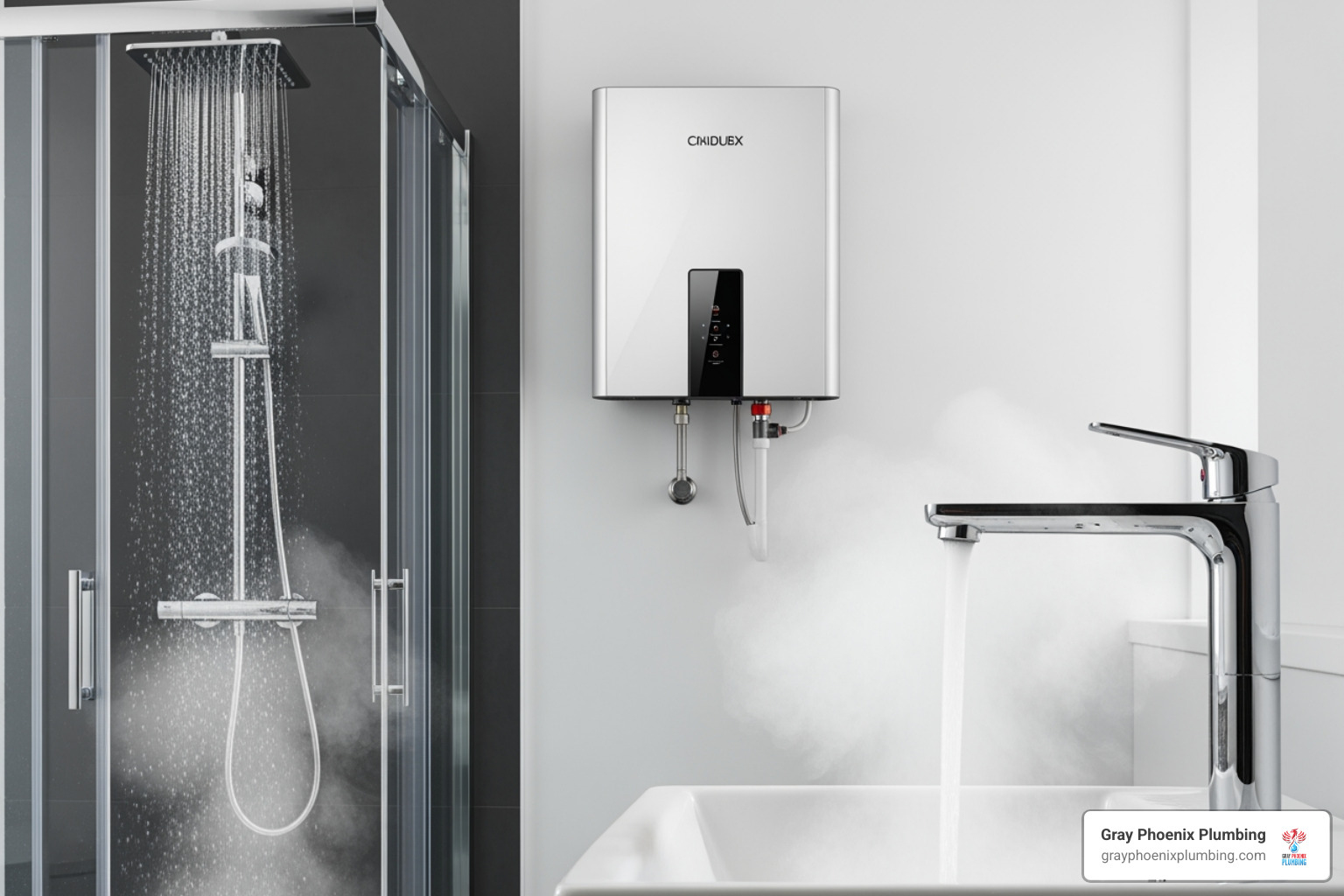
Sizing Your Unit: Flow Rate, Temperature Rise, and BTUs
Sizing is critical to ensure you never run out of hot water, even during peak demand. The main factors to consider are flow rate, temperature rise, and the unit’s BTU or kilowatt rating.
Flow Rate (GPM): This measures how many gallons of hot water the unit can deliver per minute. To determine your needs, you’ll need to calculate your Calculating peak demand. This means adding up the GPM requirements of all the hot water fixtures you anticipate using simultaneously. For example, a shower might use 1.25-2.5 GPM, a kitchen faucet 1.5-2.2 GPM, and a dishwasher 1-2.5 GPM. If you plan to run a shower (2 GPM) and a dishwasher (1.5 GPM) at the same time, you’d need a minimum of 3.5 GPM. Most residential units deliver 2 to 5 GPM, but larger homes or those with multiple simultaneous uses might need models with higher flow rates, like Rinnai’s superior 5.3 GPM for larger homes.
Temperature Rise calculation: This is where Colorado’s cold climate comes into play. The Cold groundwater impact is a significant factor. Groundwater temperatures in Elizabeth, CO, and surrounding areas can be quite low, especially in winter. A tankless water heater needs to raise this incoming cold water to your desired hot water temperature (typically 120°F). The difference between the incoming cold water temperature and the desired output temperature is the “temperature rise.” For example, if your incoming water is 40°F and you want 120°F, you need an 80°F temperature rise. The colder the incoming water, the harder the unit has to work, and the lower its effective GPM will be. This means a unit rated for 8 GPM in a warm climate might only deliver 4 GPM in a cold Colorado winter. Always account for the maximum temperature rise your unit will need to achieve.
BTU & Kilowatt ratings: For gas tankless water heaters, heating capacity is measured in British Thermal Units (BTUs). The higher the BTU rating, the more heat the unit can generate, and thus, the higher the flow rate it can maintain for a given temperature rise. Homes typically need between 140,000 and 380,000 BTUs. Electric tankless heaters are rated in kilowatts (kW) and are less powerful, making them better suited for point-of-use or smaller households. To help you further, the Department of Energy provides a comprehensive Sizing a new water heater guide.
Key Features to Look For in the best tankless water heater models
Beyond basic sizing, modern tankless water heaters offer advanced features that improve comfort, efficiency, and convenience:
- Recirculation pumps: Some models, like Navien’s with ComfortFlow™ technology, include built-in recirculation pumps and buffer tanks. This feature helps eliminate the dreaded ‘cold water sandwich’ effect, where you get a brief burst of cold water between hot water uses.
- Wi-Fi connectivity: Many top brands now offer Wi-Fi modules or integrated smart features. This allows for remote monitoring, control via smartphone apps, and even learning your usage patterns to optimize performance. This can be incredibly convenient, especially during the colder months when you might want to adjust settings without going to the basement.
- Smart home integration: Beyond Wi-Fi, some units can integrate with broader smart home ecosystems, allowing for voice control or automation routines.
- Scale reduction technology: To combat mineral buildup, especially in areas with hard water like parts of Colorado, some units feature technology designed to reduce scale formation, prolonging the life of the heat exchanger and maintaining efficiency.
- Freeze protection: Absolutely essential for outdoor tankless installations in Colorado’s freezing winters. Most outdoor units come with robust freeze protection, but it’s crucial to ensure the model you choose is rated for our climate.
- Leak detection: Features like built-in water and gas leak detection systems (found in models like the Rheem Prestige) offer an extra layer of safety and peace of mind.
Understanding Certifications for the best tankless water heater
When investing in a tankless water heater, certifications act as your roadmap to quality, efficiency, and safety. Here are the key ones to look for:
- ENERGY STAR rating: This is a government-backed symbol for energy efficiency. ENERGY STAR-certified tankless water heaters can save up to 30% more energy compared to conventional storage tank types. Many of these models also qualify for federal tax credits and local rebates, helping to offset the initial cost. Energy Star qualification typically requires a Uniform Energy Factor (UEF) of 0.95 or higher for electric models, or 0.87 for gas models.
- Uniform Energy Factor (UEF): This is the definitive metric for measuring a water heater’s overall energy efficiency, regardless of fuel type. A higher UEF indicates greater efficiency. Condensing heaters are the most efficient, with UEF ratings above 0.90, and some leading models reaching up to 0.98 UEF. Always compare the UEF when looking at different models.
- CSA Approval: The CSA (Canadian Standards Association) mark signifies that a product has been tested and meets applicable safety and performance standards. While based in Canada, CSA certification is widely recognized in North America and indicates adherence to rigorous safety protocols. This ensures your unit operates safely in your home.
These certifications provide assurance that the unit you choose is not only energy-efficient but also meets strict safety and performance criteria.
Installation, Maintenance, and Long-Term Value
Investing in the best tankless water heater is a significant decision that extends beyond the purchase price. Proper installation and diligent maintenance are crucial for maximizing its lifespan, efficiency, and the long-term value it brings to your Elizabeth, CO, home.
The Real Cost of a Tankless Water Heater
While tankless water heaters offer long-term savings, understanding the Upfront purchase price and Professional installation costs is essential. The typical cost range for a tankless water heater, including the unit itself and professional installation, runs from $2,500 to $7,500. The average tankless water heater cost is around $2,600, but units can range from $1,300–$3,900, with high-end installations potentially reaching $6,000. This is generally higher than the average installation cost for a traditional tank water heater, which sits around $2,100.
However, it’s important to consider Potential system upgrades. Gas tankless units may require larger gas lines than traditional tanks, and electric units often necessitate electrical panel upgrades (e.g., to 120 amps). These upgrades can add to the total project cost.
Despite the initial investment, the Long-term energy savings are substantial. You can expect up to 30% lower utility bills compared to tank models, with annual savings for gas tankless water heaters reaching up to $100 per year. These savings, combined with the unit’s longer lifespan, contribute to a favorable return on investment over time. For a comprehensive breakdown of these costs, we’ve prepared a detailed guide on More info about tankless hot water installation cost.
Why Professional Installation is Non-Negotiable
Installing a tankless water heater is not a DIY project. It’s a complex task that requires specialized knowledge and adherence to strict safety standards. Professional installation by licensed experts like our team at Gray Phoenix Plumbing offers several critical advantages:
- Safety codes: We ensure all installations comply with local building codes and safety regulations in Elizabeth, CO, and surrounding areas. Improper installation can lead to dangerous situations, including carbon monoxide leaks from gas units or electrical hazards from electric models.
- Gas line sizing: Gas tankless units demand a precise gas flow. Our technicians properly size and install gas lines to ensure your unit operates efficiently and safely.
- Electrical requirements: For electric units, or even the electronic components of gas units, correct wiring and dedicated circuits are essential. We ensure your electrical system can handle the load without issues.
- Proper venting: Gas tankless water heaters require specific venting materials and configurations to safely exhaust combustion byproducts. Our experts ensure correct venting to prevent harmful gases from entering your home.
- Protecting your warranty: Many manufacturers require proof of professional installation by a licensed technician to uphold your warranty. Attempting a DIY installation could void your coverage, leaving you responsible for costly repairs.
Think of it this way: a tankless water heater is a sophisticated appliance, and its installation is more akin to performing surgery than changing a lightbulb. Our team brings decades of experience to every installation, ensuring your system runs perfectly from day one. You can read our complete guide on the process here: More info about the complete guide to installing a tankless water heater.
Essential Maintenance to Maximize Lifespan
Just like your car, your tankless water heater needs regular upkeep to perform its best and reach its full expected lifespan of 20+ years. The most crucial maintenance task is Annual descaling (flushing). Over time, minerals in your water (especially if you have hard water, common in many parts of Colorado) can build up inside the heat exchanger, reducing efficiency and eventually damaging the unit. For homes with very hard water, we might even recommend descaling every six months. This process removes mineral deposits, ensuring optimal heat transfer and preventing costly breakdowns.
Beyond descaling, regular cleaning of the Inlet filter cleaning helps prevent debris from entering the system. We also recommend Professional inspections every year or two. During these visits, our technicians will check all components, ensure proper operation, and catch any potential issues before they become major problems. This proactive approach not only keeps your hot water flowing reliably but also helps your tankless unit outperform traditional tank heaters, which typically only last 8-12 years.
Frequently Asked Questions about Tankless Water Heaters
We often hear similar questions from homeowners in Elizabeth, CO, and the broader Denver area considering a tankless water heater. Here are some of the most common inquiries, answered:
What is the main downside of a tankless water heater?
While the benefits are many, tankless water heaters do come with a few potential challenges. The most common downside is the Higher initial cost compared to a traditional tank model. This includes both the unit itself and the professional installation, which can be more complex due to potential gas line or electrical upgrades. Another point to consider is the potential for a ‘cold water sandwich’ effect. This is a brief burst of cold water that can occur if you turn off the hot water for a moment and then turn it back on, as the unit takes a second to re-engage and heat the incoming cold water. However, many newer, high-end models feature recirculation technology that significantly mitigates this. Finally, if not properly sized, flow rate limitations can be a challenge, meaning the unit might struggle to keep up if too many hot water fixtures are used simultaneously.
How often should you descale a tankless water heater?
For most homes in our service area, we recommend Annual descaling (flushing). However, if you live in an area with particularly hard water (which is common in many parts of Colorado) or if you frequently set your water heater to very high temperatures, it’s often advisable to descale every six months. This process is crucial to prevent mineral buildup, which can reduce efficiency, restrict water flow, and eventually damage the heat exchanger. Regular descaling is a key part of ensuring your unit lasts its full 20+ year lifespan.
Can a single tankless unit provide enough hot water for a large family?
Absolutely, a single tankless unit can provide enough hot water for a large family, but it’s all about correct sizing. For households with high hot water demands, such as multiple teenagers taking showers, or frequent use of a washing machine and dishwasher simultaneously, you’ll want to opt for high-output gas models with a high GPM rating (typically 8-11 GPM or more). We take into account your specific usage patterns and the cold incoming water temperatures in Colorado to recommend a unit that can handle your peak demand. In rare cases of extremely high, simultaneous hot water demands, installing multiple units (often smaller, point-of-use units in addition to a main whole-home unit) can be a solution.
Conclusion: Is a Tankless Water Heater Right for You?
After exploring the ins and outs of these innovative systems, it’s clear why the best tankless water heater is revolutionizing home comfort and efficiency. You gain the luxury of Endless hot water, never having to worry about a cold shower or coordinating appliance use again. You benefit from significant Energy efficiency, slashing your utility bills by up to 30% and reducing your environmental footprint. And with a Long-term value that sees these units lasting twice as long as traditional tanks, the investment truly pays off over time.
While the upfront cost might be higher, the continuous savings, increased comfort, and extended lifespan make tankless water heaters an increasingly attractive option for homes in Elizabeth, CO, and across the Denver Metro area. The key to open uping these benefits lies in proper sizing for your specific household needs and the unique climate conditions of Colorado, along with professional installation to ensure safety, efficiency, and warranty compliance.
At Gray Phoenix Plumbing, we are your trusted partners for all your tankless water heater needs. Our licensed, background-checked pros are experts in selection, installation, and maintenance, ensuring you get the perfect system for your home. Don’t let cold water surprises dictate your daily routine.
Ready to experience the ultimate in hot water comfort and efficiency? Contact us for your tankless water heater installation service in Denver today, and let us help you find the best tankless water heater for your home!


