

When Your Drains Stage a Revolt: Understanding the Warning Signs
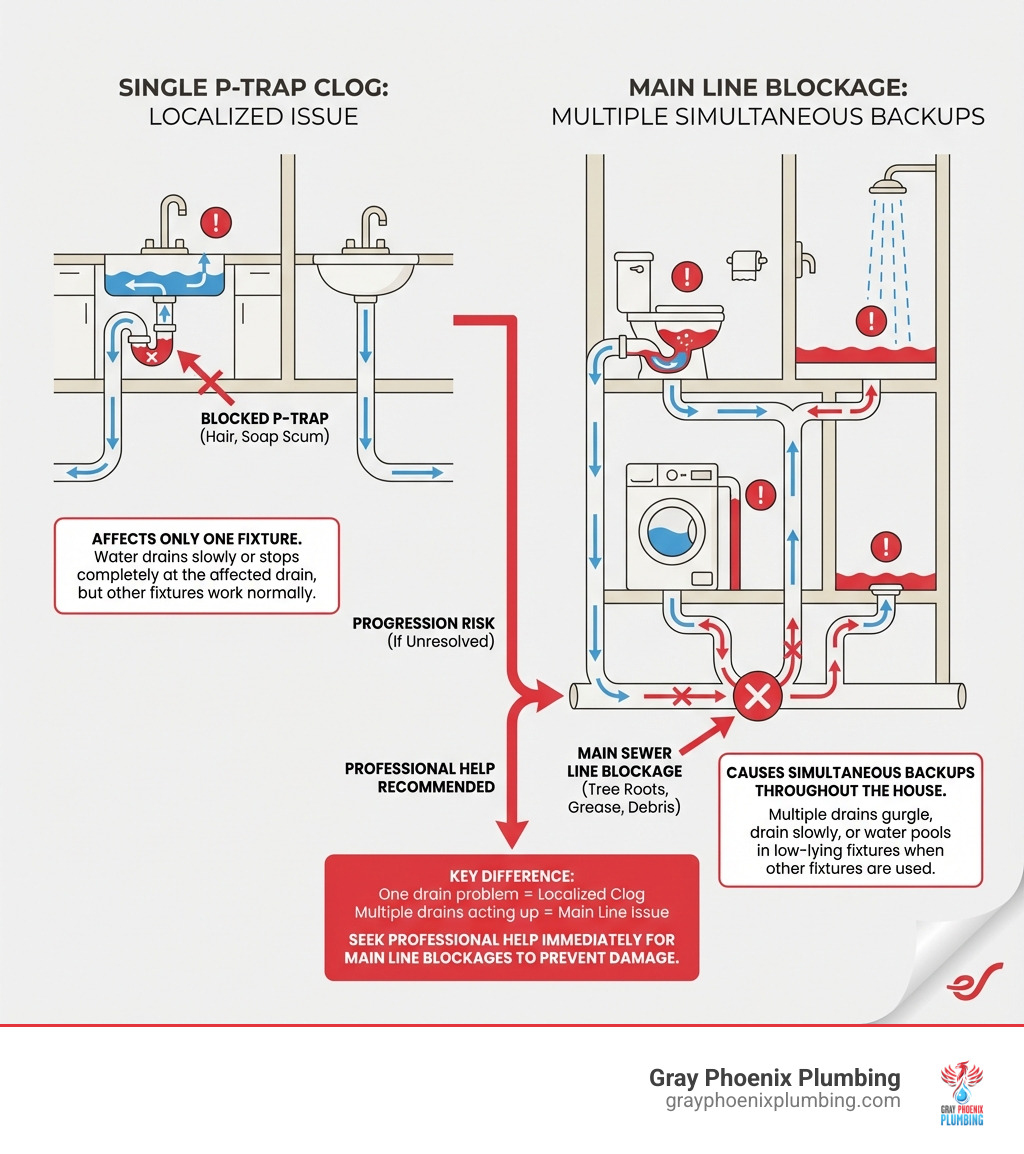
Multiple clogged drains are rarely a coincidence—they’re your home’s way of telling you something is seriously wrong deep in your plumbing system. When you have one slow drain, it’s probably just hair or soap scum in a P-trap. But when several drains start acting up at once? That’s a different story entirely.
Quick Answer: What Multiple Clogged Drains Mean
- Single drain clog = Localized issue (P-trap, fixture drain)
- Multiple drains in one room = Branch line blockage
- All drains throughout the house = Main sewer line problem
- Immediate action needed = Stop using water, call a professional
Here’s the reality: if your kitchen sink is backing up and your bathroom toilet is gurgling and water pools in your shower when you run the washing machine, you’re not dealing with three separate problems. You’re looking at one big issue in your main sewer line—the “trunk” that carries all wastewater away from your home.
This guide will help you diagnose what’s happening in your plumbing system, understand when you can handle it yourself (spoiler: probably not with main line clogs), and know exactly when to call in the professionals. More importantly, we’ll show you how to prevent this nightmare from happening again.
The good news? Once you understand how your drainage system works and recognize the warning signs, you can act fast to minimize damage and get your home back to normal.
Diagnosing the Problem: Signs and Causes of Multiple Clogged Drains
When we talk about your home’s plumbing, it’s helpful to think of it like a tree. Individual drains from your sinks, showers, and toilets are like the small branches. These branches converge into larger branch lines, which then all connect to the main sewer line – the sturdy trunk. This main sewer line collects all the wastewater from your home and carries it to the city sewer system or your septic tank.
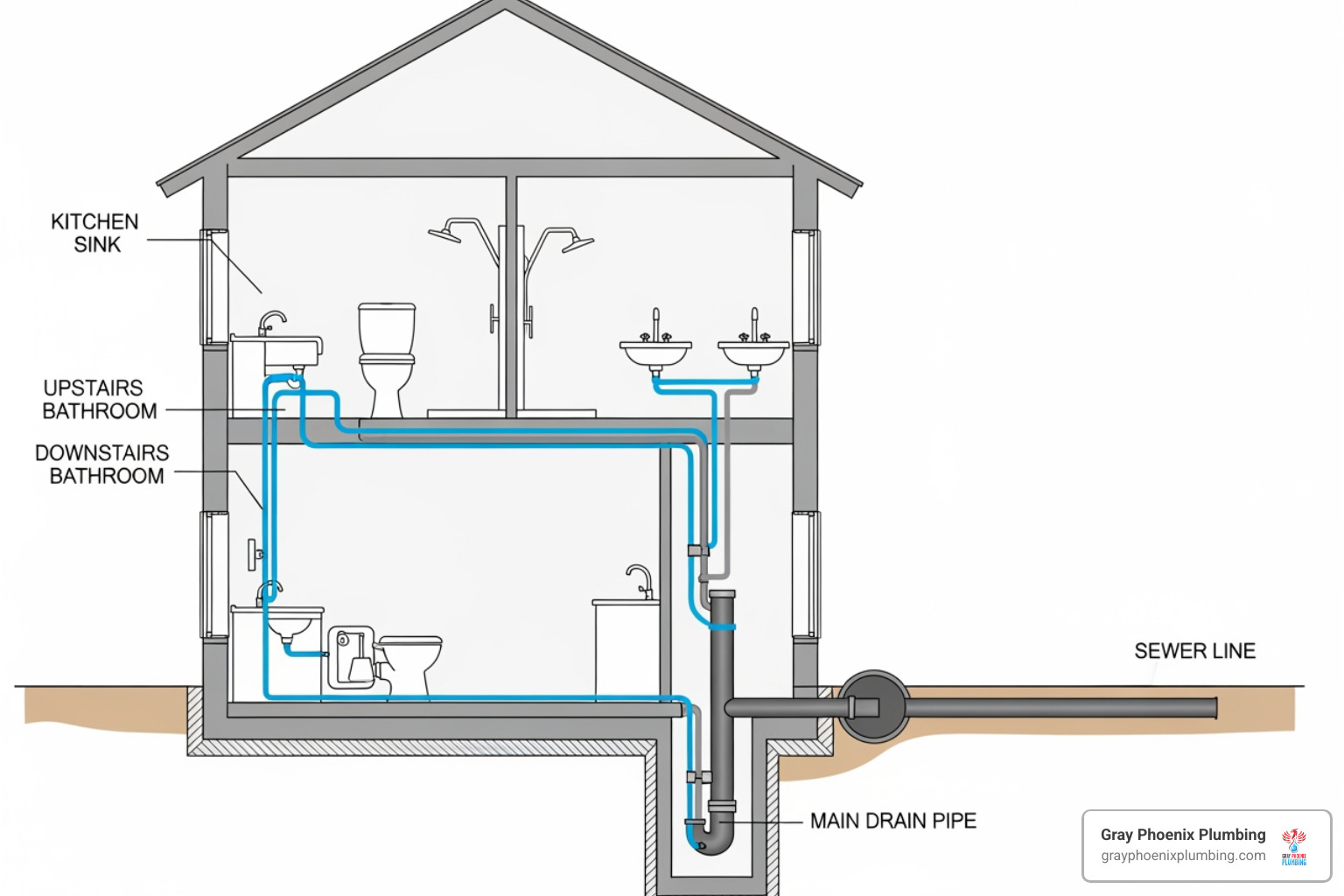
If you have a clog in a small branch, only that specific drain is affected. But if the problem is in a larger branch or, worse, the main trunk, then multiple drains will start to show symptoms. This is why differentiating between a localized issue and a systemic problem is so crucial. Multiple clogged drains are a strong indication that the issue lies deep within that “trunk” – your main sewer line.
Telltale Symptoms of a Main Line Blockage
How do you know if you’re facing a serious main sewer line blockage versus a simple, isolated clog? The key is to look for patterns. If you have multiple clogged drains or slow drainage in several fixtures, especially across different areas of your home, it’s time to pay close attention.
Here are the key symptoms to watch for:
- Multiple fixtures draining slowly: This is often the first red flag. If your kitchen sink, bathroom sink, and shower are all taking their sweet time to drain, it suggests a problem beyond a single P-trap.
- Gurgling sounds from drains and toilets: When you use one fixture, do you hear gurgling from another? For example, if your toilet gurgles when you run the bathroom sink, it’s a sign that air is being trapped by a main line blockage, creating pressure imbalances.
- Water backing up in unusual places: This is a classic indicator of a main sewer line issue. If flushing the toilet causes water to rise or back up into your tub or shower drain, or if running the washing machine causes your toilet to overflow, the wastewater has nowhere else to go but back into your lowest fixtures.
- Foul sewage odors from drains: Unpleasant, rotten-egg smells emanating from multiple drains are a strong sign of waste buildup in your sewer line, indicating that wastewater isn’t flowing away as it should.
- Standing water or frequent backups: If you constantly find standing water in multiple sinks, tubs, or toilets, or experience frequent backups, it’s a strong indication that your main sewer line is clogged.
Single Clog vs. Multiple Clogged Drains: What’s the Difference?
Understanding the distinction between a single clog and multiple clogged drains is paramount for effective troubleshooting.
- Single Drain Clog: This is usually a localized issue. If only your kitchen sink is slow, or just your shower drain is backing up, the problem is likely confined to that fixture’s P-trap or the short branch line immediately connected to it. Common culprits include hair, soap scum, or food debris that can often be resolved with a plunger or a simple drain snake.
- Multiple Drains in One Room (Branch Line Clog): If, for instance, your bathroom sink, shower, and toilet are all experiencing issues, but drains in other parts of the house are fine, the clog might be in the larger branch line serving that specific bathroom. This is more serious than a single fixture clog but still less severe than a main sewer line blockage.
- All Drains Throughout the House (Main Sewer Line Clog): When nearly all your drains—kitchen, bathrooms, laundry room—are slow, gurgling, or backing up, it’s almost certainly a main sewer line problem. Unlike a single clogged sink or shower, multiple clogged drains indicate a deeper issue within your entire sewer system, affecting the “trunk” of your home’s plumbing. The evidence suggests a sewer line blockage rather than a minor issue with a kitchen P-trap.
For a deeper dive into these symptoms, you can refer to The Telltale Signs of a Clogged Sewer Drain in Your House.
Common Culprits Behind Main Line Blockages
So, what causes these major blockages in your main sewer line? It’s rarely a single event, but rather a combination of factors that build up over time or sudden damage to the pipe itself.
- Grease and Fat Buildup: This is one of the most common offenders. When you pour cooking grease, oils, or fats down your kitchen drain, they cool and solidify as they travel through your pipes. Over time, these sticky substances accumulate, narrowing the pipe and trapping other debris, eventually leading to a complete blockage.
- Food Waste: While garbage disposals are convenient, they aren’t magic. Coffee grounds, eggshells, fibrous fruits and vegetables (like potato peels or celery), and even pasta can contribute to clogs, especially when combined with grease. Kitchen drains are often clogged by a variety of food waste.
- “Flushable” Wipes and Foreign Objects: Despite what some labels claim, “flushable” wipes are often not truly flushable. They don’t break down like toilet paper and can snag on pipe imperfections, accumulating and forming massive blockages. Other foreign objects like sanitary products, paper towels, excessive amounts of toilet paper, or even children’s toys can also block the main line.
- Tree Root Intrusion: If you have mature trees on your property, their roots are constantly seeking moisture and nutrients. They are incredibly strong and can find their way into even tiny cracks or loose joints in your underground sewer lines. Once inside, they grow, expand, and create a dense network that traps debris, leading to severe blockages and even pipe damage. This is a particularly common cause of main sewer line blockages, especially in older homes with clay or cast iron pipes.
- Sagging Pipes (“Bellies”): Over time, due to ground movement, poor installation, or soil erosion, a section of your sewer line can sink, creating a “belly” or low spot. Wastewater and solid waste collect in this sag, leading to frequent blockages and slow drainage.
- Collapsed or Broken Pipes: Aging pipes, especially those made of older materials like cast iron or clay, can deteriorate, shift, crack, or even collapse due to ground movement, heavy vehicle traffic above ground, or corrosion. This structural damage creates an immediate and severe blockage, preventing all wastewater flow.
Your Action Plan: From Immediate Steps to Professional Solutions
Facing multiple clogged drains can feel overwhelming, but knowing what to do immediately can prevent further damage and make the eventual repair process smoother. When dealing with serious plumbing issues deep in your sewer system, safety is paramount. Working on a sewer line can be hazardous if proper safety measures aren’t taken.
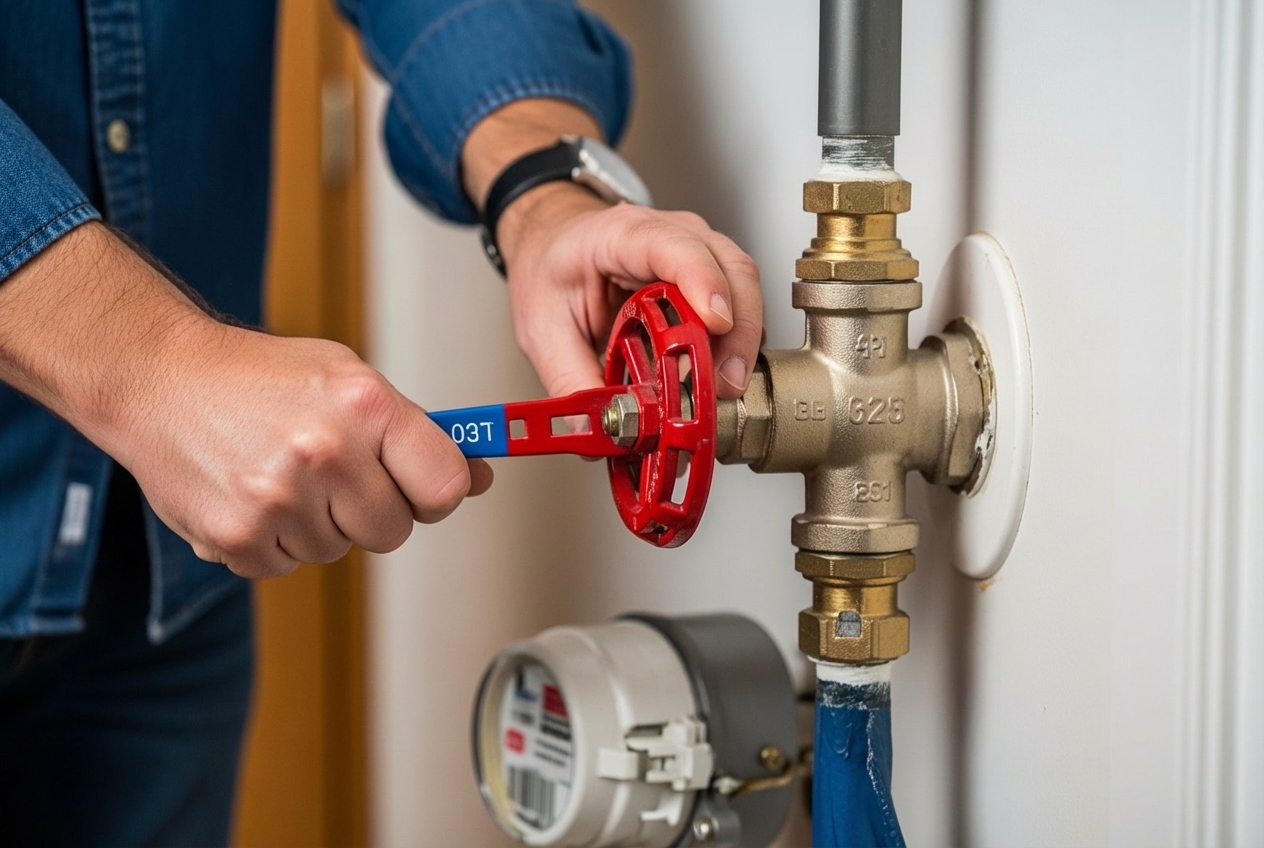
While we appreciate a good DIY project, for main sewer line clogs, professional tools and expertise are almost always necessary. DIY remedies are often insufficient for multiple drain clogs, necessitating professional attention.
Immediate Steps for Homeowners
When you suspect a main sewer line blockage, follow these steps immediately:
- Stop All Water Use: This is the most critical first step. Do not run any more water, turn off washing machines and dishwashers, and absolutely do not flush toilets. Every drop of water you send down the drain will only add to the backup, potentially causing sewage to overflow into your home. Inform all household members to avoid using water.
- Locate the Sewer Cleanout Access Point: Your main sewer cleanout is a capped pipe that provides direct access to your main sewer line. It’s usually a white PVC or black cast-iron pipe with a screw-on cap, located outside your home (often near the foundation, in the yard, or in the basement). Knowing where it is can help professionals quickly diagnose the problem.
- Avoid Using Chemical Drain Cleaners: We cannot stress this enough. Chemical drain cleaners are rarely effective for main sewer line clogs and can cause more harm than good. They can corrode your pipes, create dangerous fumes, and make the situation hazardous for plumbers who later need to work on the line.
When to Call for Professional Help
For multiple clogged drains, the answer is almost always: call a professional plumber. Here’s why and when:
- Sewage Backing Up into the Home: If you have raw sewage backing up into your sinks, tubs, or toilets, it’s a plumbing emergency that requires immediate attention.
- Foul Odors Persisting: Persistent sewage odors from multiple drains are a clear sign that waste is not properly draining and can indicate a health hazard.
- DIY Plunging or Snaking Fails: While a plunger might work for a single, minor clog, it’s highly unlikely to resolve a main sewer line blockage. If you’ve attempted basic DIY solutions without success, it’s time to call in the experts.
- You Suspect a Broken Pipe or Root Intrusion: These are complex issues that require specialized equipment and expertise to diagnose and repair safely.
- Anytime you’re unsure: If you’re not confident in diagnosing or attempting to fix the problem yourself, it’s always best to err on the side of caution and call a professional.
When you need immediate help, consider our 24/7 Emergency Plumbing Services to address urgent situations in Elizabeth, Elbert County, Parker, Castle Rock, Kiowa, Franktown, Denver, Littleton, Aurora, Lakewood, Thornton, Westminster, Brighton, Golden, Morrison, Conifer, Evergreen, Firestone, Erie, Bennett, Centennial, Agate, Jefferson, and Colorado Springs.
Professional Diagnostic and Cleaning Methods
When our Gray Phoenix Plumbing experts arrive, they don’t just guess. We use advanced techniques to accurately pinpoint the problem and provide a lasting solution.
- Sewer Camera Inspection: This is our go-to diagnostic tool. We insert a high-resolution, waterproof camera attached to a flexible rod into your sewer line via the cleanout. This allows us to visually inspect the inside of your pipes in real-time, identifying the exact location and nature of the clog—whether it’s tree roots, grease buildup, a foreign object, or a damaged pipe. Learn more about how this critical process works with a Sewer Scope Inspection.
- Drain Snaking (Augering): For many clogs, a professional-grade drain snake (or auger) is highly effective. Our powerful motorized augers, which can extend up to 150 feet, are designed to break through or retrieve stubborn blockages deep within the main sewer line. They’re much more powerful and longer than anything you’d find at a hardware store.
- Hydro Jetting: This is the ultimate weapon against tough clogs like heavy grease buildup, mineral deposits, and even tree roots. Hydro jetting uses highly pressurized water streams (up to 4,000 PSI) to scour the inside of your pipes, effectively removing years of accumulated debris and restoring the pipe to its original diameter. It’s an incredibly thorough cleaning method that can prevent future blockages.
Advanced Sewer Line Repair Options
Sometimes, the problem isn’t just a clog; it’s damage to the sewer line itself. Our camera inspection will reveal if your pipes are cracked, collapsed, or severely compromised. In such cases, we offer advanced repair options:
- Trenchless Pipe Relining: For cracked or compromised pipes that are still structurally sound, trenchless pipe relining is a less invasive and often more cost-effective solution. We insert a flexible, resin-coated liner into the existing pipe, inflate it, and allow it to cure, creating a new, seamless pipe within the old one. This repairs the damage without the need for extensive digging. Explore options for Pipe Relining Near Me in our service areas.
- Full Sewer Line Replacement: If the sewer line is severely damaged, collapsed, or has extensive root intrusion that cannot be cleared or relined, a full replacement may be necessary. Our team will assess the situation and provide the most efficient and least disruptive method for replacement, often using durable PVC piping that is resistant to future root intrusion. You can Find certified Sewer Line Repair Contractors with Gray Phoenix Plumbing.
Preventing Future Blockages: A Guide to Sewer Line Maintenance
An ounce of prevention is worth a pound of cure, especially when it comes to your home’s plumbing. Proactive care not only saves you from the headache of multiple clogged drains but also protects your property from costly water damage and unexpected plumbing emergencies. Long-term plumbing health starts with smart habits and regular maintenance.
Smart Habits for Healthy Drains
Adopting these simple habits can significantly reduce your risk of future clogs:
- Proper Grease and Oil Disposal: Never pour cooking grease, fats, or oils down any drain. Instead, collect them in an old container (like a coffee can), let them cool and solidify, and then dispose of them in the trash.
- Only Flush Human Waste and Toilet Paper: This rule is simple but often ignored. Avoid flushing anything else, including “flushable” wipes (they’re not!), paper towels, sanitary products, dental floss, or cotton balls.
- Use Drain Strainers in Sinks and Showers: These inexpensive devices catch hair, soap scum, and food particles before they can enter your pipes and cause blockages. Clean them regularly!
- Be Mindful of Your Garbage Disposal: While useful, a garbage disposal isn’t a trash can. Avoid putting coffee grounds, eggshells, fibrous vegetables (like celery or asparagus), fruit pits, and excessive amounts of food down it. Always run plenty of cold water while using the disposal.
Proactive Maintenance and Inspections
Beyond daily habits, professional maintenance plays a crucial role in preventing main sewer line blockages:
- Scheduling Regular Professional Inspections: For older homes or properties with mature trees, we recommend annual sewer line inspections. Our camera inspections can detect potential issues like root intrusion or minor pipe damage before they turn into major blockages.
- The Benefits of Routine Hydro Jetting: Consider scheduling routine hydro jetting, especially if you’ve had previous issues with grease buildup or slow drains. This powerful cleaning method can clear out accumulated debris, keeping your pipes flowing freely and preventing clogs from permanently taking hold.
- Using Enzyme-Based Drain Cleaners Safely: For minor issues or as a preventative measure, enzyme-based drain cleaners can help break down organic matter without damaging your pipes. Always follow the manufacturer’s instructions carefully. Avoid harsh chemical cleaners.
- Landscaping Awareness: When planting trees, be mindful of their root systems and their proximity to your underground sewer lines. Fast-growing trees with aggressive root systems should be planted far away from your plumbing infrastructure.
For a comprehensive guide to proactive care, check out A guide to scheduling a Sewer Inspection Near Me.
Frequently Asked Questions about Main Sewer Line Clogs
What are the health risks associated with multiple clogged drains?
Multiple clogged drains, especially those stemming from a main sewer line blockage, pose significant health risks that extend beyond mere inconvenience. Raw sewage contains harmful bacteria, viruses, and other pathogens that can cause serious illness if you come into contact with it. Ignoring these clogs can lead to:
- Exposure to Raw Sewage: Backed-up sewage can flood your home, contaminating floors, walls, and personal belongings. This creates a hazardous environment.
- Bacteria and Viruses in Wastewater: These can become airborne through aerosols from splashing water or evaporate into the air, leading to respiratory issues or infections.
- Potential for Mold and Mildew Growth: The moisture from sewage backups creates an ideal breeding ground for mold and mildew, which can cause allergic reactions, asthma attacks, and other respiratory problems.
- Unpleasant Odors Affecting Air Quality: The foul odors are not just unpleasant; they indicate the presence of sewer gases, which can be harmful in high concentrations and impact your home’s indoor air quality.
Clogged drains are a sanitation nightmare, attracting insects and vermin, and promoting mold and bacteria growth, making it essential to address them promptly. Scientific research highlights these health concerns, as detailed in this Scientific research on health risks from drainage systems.
How much does it cost to fix a main line clog?
The cost to fix a main line clog in areas like Elizabeth, CO, can vary widely depending on several factors:
- Cause of the Clog: A simple debris clog might be less expensive to clear than a severe tree root intrusion or a collapsed pipe.
- Solution Required: Basic snaking is typically less costly than hydro jetting, which is in turn less costly than trenchless pipe relining or a full sewer line replacement.
- Diagnostic Fees: Most professional plumbers charge a diagnostic fee to assess the problem, which may be waived if you proceed with their recommended repair.
- Accessibility: If the clog is hard to reach or requires extensive excavation, costs will increase.
- Emergency vs. Scheduled Service: Emergency services outside of normal business hours will generally incur higher fees.
While we can’t give an exact figure without a proper diagnosis, a professional plumber will provide an estimate after inspecting your sewer line with a camera. This ensures you understand the scope of work and associated costs upfront. Investing in a professional assessment is crucial to avoid temporary fixes that lead to more expensive problems down the line.
Does homeowners insurance cover sewer line backups?
This is a common and important question, and the answer is: it varies significantly by policy.
- Standard Policies Often Have Exclusions: Many basic homeowners insurance policies do not automatically cover damage caused by sewer line backups or sump pump failures. They might cover damage from a burst pipe inside your home, but not the external sewer line itself or the backup it causes.
- Water Backup Coverage is Often an Optional Add-On: To protect against sewer line backups, you typically need to purchase an additional rider or endorsement to your policy, often called “water backup and sump pump overflow” coverage.
- Reviewing Your Specific Policy is Crucial: We always recommend that homeowners in Elizabeth and surrounding areas review their policy documents or contact their insurance provider directly to understand their specific coverage. Don’t wait until a disaster strikes to find out you’re not covered!
Understanding your coverage can save you a lot of financial stress during a plumbing emergency. For more detailed information, we encourage you to read our guide on Home Insurance and Sewer Line Coverage.
Conclusion: Restore Your Home’s Flow and Peace of Mind
Experiencing multiple clogged drains is more than just an inconvenience; it’s a serious red flag that your home’s main sewer line is in distress. From the gurgling sounds and slow drainage to the unpleasant odors and water backing up in unusual places, these symptoms point to a deeper, systemic issue that demands prompt, professional attention. Ignoring these signs can lead to significant property damage, costly repairs, and potential health hazards.
At Gray Phoenix Plumbing, we understand the stress and disruption a main sewer line blockage can cause. As a family-owned business serving Elizabeth, Elbert County, Parker, Castle Rock, Kiowa, Franktown, Denver, Littleton, Aurora, Lakewood, Thornton, Westminster, Brighton, Golden, Morrison, Conifer, Evergreen, Firestone, Erie, Bennett, Centennial, Agate, Jefferson, and Colorado Springs, we’re committed to providing reliable residential plumbing services. Our licensed, background-checked pros use state-of-the-art diagnostic tools like sewer cameras and effective cleaning methods like hydro jetting to identify and resolve your plumbing issues with transparent pricing and a Customer Care Guarantee.
Don’t let multiple clogged drains ruin your day or damage your home. Proactive maintenance and seeking professional help at the first sign of trouble are your best defenses. We’re your one-stop shop for home service needs, dedicated to restoring your home’s flow and your peace of mind.
Contact the Sewer Experts Near Me to solve your drain issues today.


