

When Every Drop Counts: Understanding Your Main Water Line Emergency
Main water line repair is the process of fixing or replacing the underground pipe that delivers fresh water from your municipal supply or well directly to your home. When this critical pipe fails, your entire household loses access to clean waterno showers, no dishes, no laundry, and potentially no toilet flushing.
Quick Answer: What You Need to Know About Main Water Line Repair
- Average repair cost: $1,025 (range: $354-$1,696)
- Average replacement cost: $1,712 (range: $647-$2,827)
- Typical repair time: 4-8 hours for simple breaks
- Emergency first step: Shut off your main water valve immediately
- Call a professional: This isn’t a DIY jobpermits, specialized tools, and expertise required
Your main water line runs underground from the street to your house, delivering all the water you use daily. Most homeowners do not think about it until it fails, causing immediate and serious consequences. A broken main line can flood your yard, damage your foundation, spike your water bill, and cut off your water supply. Ignoring warning signs like soggy spots in the lawn or low water pressure can escalate a simple repair into a full, costly replacement. Fortunately, recognizing these signs and acting quickly can save you money and restore your water service promptly.
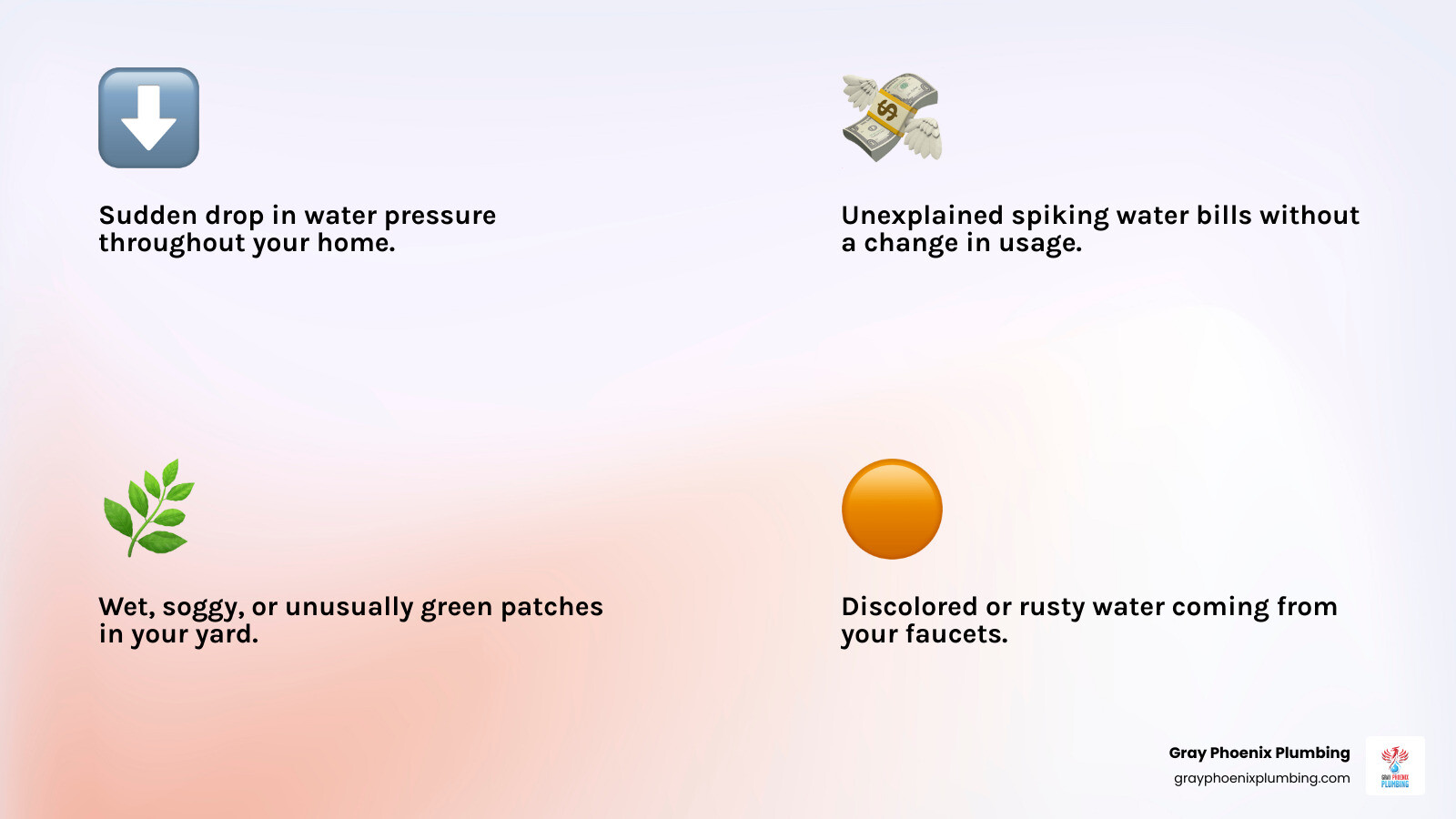
To understand the most common red flags, take a look at the visual guide below.
Is Your Main Water Line Failing? Key Signs and Common Causes
Imagine waking up to a squishy lawn, a skyrocketing water bill, or a sudden trickle from your showerhead. These are not just minor annoyances; they are often flashing red lights indicating a problem with your main water line. Because this essential pipe is buried underground, identifying an issue can be tricky. However, our years of experience serving homes in Elizabeth, Parker, Castle Rock, and across Colorado have taught us to look for some tell-tale signs.
Here are the most common indicators that your main water line might be failing or leaking:
- Sudden Drop in Water Pressure: If all faucets and showers suddenly have weak flow, water is likely escaping from a break in the main line, reducing pressure throughout your home.
- Unexplained Spiking Water Bills: A hidden leak can waste hundreds of gallons daily. If your water bill spikes without a change in usage, your main water line is a prime suspect.
- Soggy or Unusually Green Patches in Your Yard: A persistent wet spot or an unusually green patch of grass, especially in dry weather, is a visible sign of a leak directly beneath it.
- Discolored or Rusty Water: Rusty, brown, or cloudy water from your taps suggests that soil and sediment are entering the pipe through a crack, which can be a health concern.
- Hissing or Running Water Sounds: Hearing running water when all fixtures are off, especially near your foundation, points to a main line leak.
- Foundation Cracks or Basement Moisture: A main line leak can erode soil around your foundation, causing new cracks or moisture in your basement or crawl space. Ignoring this can lead to costly damage.
Ignoring these signs can lead to severe soil erosion, sinkholes, or foundation damage. Early detection is crucial to prevent costly repairs. For more on how we find leaks, see our page on Water Leak Detection.

What Causes Main Water Line Leaks?
Main water line failures are often the result of factors accumulating over time. Understanding these causes helps us diagnose the problem and recommend the most effective solution.
- Aging Pipes and Outdated Materials: Older homes in areas like Denver and Littleton often have pipes made of galvanized steel or iron, which corrode and fail after 30-50 years. Modern materials like copper and PEX are more durable.
- Tree Root Intrusion: Tree roots are drawn to moisture from tiny cracks in a water line. They can grow into the pipe, expanding the crack and causing blockages or breaks, a common issue in areas with mature trees.
- Shifting Soil and Ground Movement: Colorado’s expansive clay soils and ground movement from settling or construction put stress on underground pipes, causing them to shift, crack, or disconnect.
- Freeze-Thaw Cycles: Cold Colorado winters cause freeze-thaw cycles that put pressure on pipes as groundwater expands and contracts. This repeated stress can weaken pipes and joints, leading to breaks.
- Excessive Water Pressure: Excessively high water pressure strains the entire plumbing system, including the main line, leading to pipe fatigue, joint failure, and eventual bursts.
- Poor Installation Practices: Improper installation, such as using substandard materials or inadequate backfilling, can cause a main water line to fail prematurely.
- Soil Chemistry and External Corrosion: Corrosive soil can slowly eat away at pipes from the outside, causing invisible damage that eventually leads to a leak.
For more information on how environmental conditions and the aging process affect your plumbing infrastructure, visit our detailed page on environmental conditions and aging.
First Steps: What to Do When You Suspect a Leak
Finding a potential main water line leak can be unsettling, but knowing what to do immediately can prevent further damage and stress. Our Gray Phoenix Plumbing team is always ready to help, but these initial steps can make a big difference.
1. Confirm the Leak (and Rule Out Interior Issues)
First, confirm the leak is outside and not from an internal fixture.
- Check Your Water Meter: Make sure all water-using appliances are off and no one is using water. Then, check your water meter (usually near the street). If the leak indicator dial is moving, you have a leak. For a detailed guide, see our resource on how to shut off all water-based appliances and check your meter.
2. Locate and Turn Off Your Main Water Shut-Off Valve
If you have confirmed an active leak, especially one causing flooding, your next immediate action is to stop the flow of water into your home.
- Find Your Main Shut-Off Valve: This valve is typically located where the main water line enters your house, often in the basement, crawl space, or utility closet.
- Turn Off the Water Supply: Turn the valve clockwise until the water flow completely stops. This will prevent further damage and water waste. If you cannot find it or it is stuck, do not force itcall us immediately.
3. Call a Professional Plumber
Once the water is off, it is time to call in the experts. A main water line repair is not a DIY job. It requires specialized equipment, expertise in excavation, and knowledge of local codes and permits.
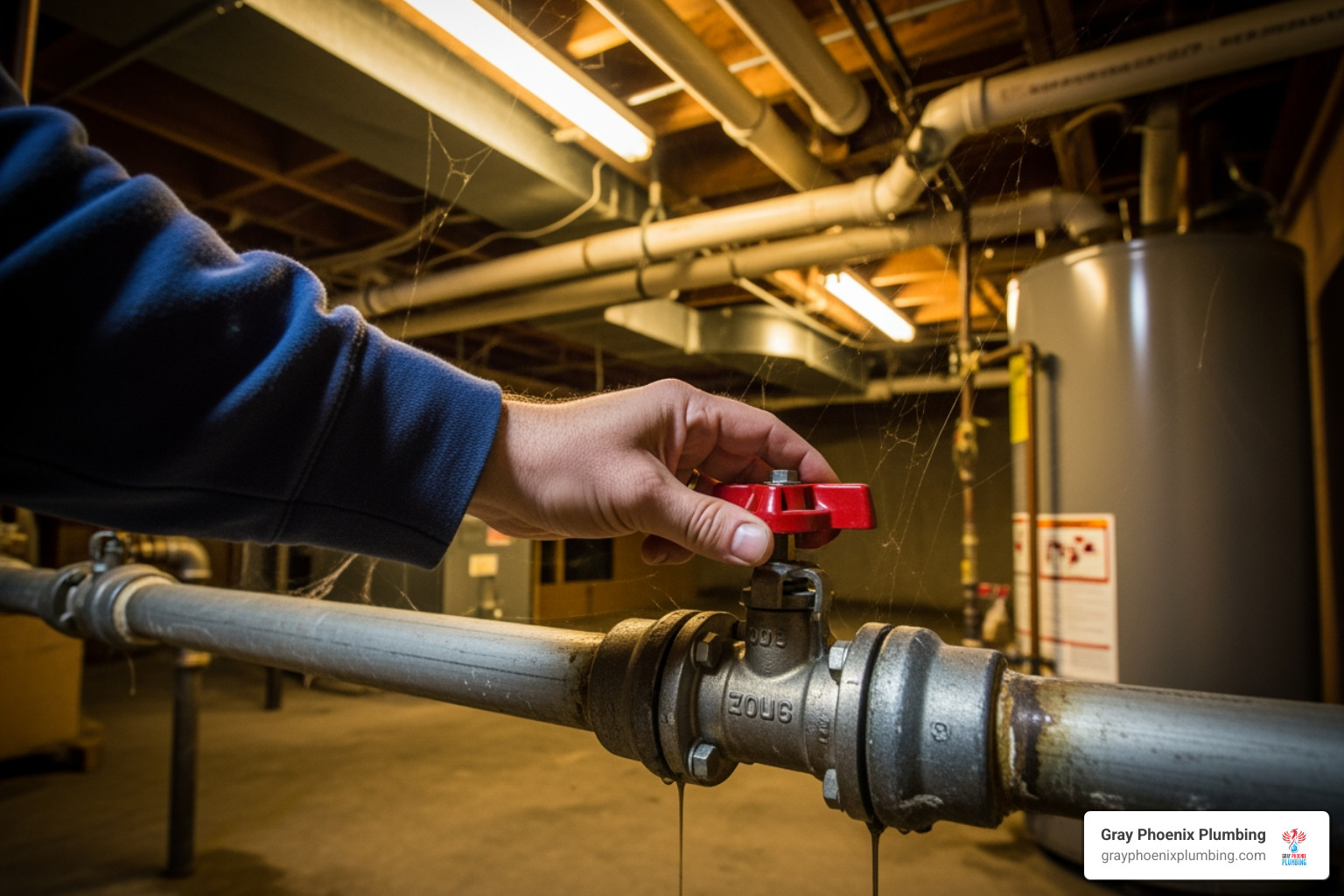
Here are 3 immediate actions to take if you suspect a main water line problem:
- Stop the Water Flow: Locate and turn off your home’s main water shut-off valve to prevent further damage.
- Document the Problem: Take photos or videos of any visible signs of the leak (soggy spots, discolored water, meter movement). This can be helpful for diagnosis and potential insurance claims.
- Contact Gray Phoenix Plumbing: Do not delay. Our team of licensed plumbers in Elizabeth, Parker, Castle Rock, and surrounding areas are equipped to handle main water line repair emergencies. For urgent plumbing needs, remember our Emergency and Sewer services are available.
The Big Decision: Repair vs. Full Replacement
Once we have identified a problem with your main water line, the next critical step is deciding whether to repair the existing line or replace it entirely. This is not a one-size-fits-all answer; it depends on the age of your pipes, the extent of the damage, and your long-term goals.
| Feature | Main Water Line Repair | Main Water Line Replacement |
|---|---|---|
| Cost | Lower upfront cost (Average: $1,025) | Higher upfront cost (Average: $1,712) |
| Time | Quicker, often 4-8 hours for simple breaks | Longer, can take 1-3 days or more |
| Longevity | Addresses immediate issue, but pipe may fail elsewhere soon if old | Provides a new, long-lasting solution (50+ years) |
| Invasiveness | Less disruptive if leak is easily accessible | Can involve significant excavation (traditional) or minimal (trenchless) |
| Warranty | Typically shorter (e.g., 1 year) | Often longer (e.g., 25 years or more on new lines) |
| Ideal For | Isolated, minor leaks in otherwise good condition, newer pipes | Old, corroded pipes, frequent leaks, major damage, outdated materials |
When to Repair Your Main Water Line:
Repair is best for localized, minor damage on an otherwise healthy pipe, like a small puncture or crack. A targeted repair, such as patching or replacing a small section, is a cost-effective solution for newer lines. This accounts for 34% of main water line projects.
When to Replace Your Main Water Line:
Replacement is the smarter long-term solution for old pipes (over 50 years), those made of outdated materials like galvanized steel, or lines with frequent leaks. A full replacement is the best investment for aging infrastructure with extensive corrosion or major breaks, preventing future issues. While only 15% of projects request a complete replacement, it is often the best investment for aging infrastructure.
We will help you weigh the pros and cons based on our professional inspection. For similar considerations regarding your home’s other vital lines, our Sewer Line Repair Contractors can provide valuable insights.
Replacement Methods: Traditional vs. Trenchless
If you decide on a full replacement, you will have options. Historically, this meant digging a long trench across your property. While effective, this “traditional” method is disruptive. Fortunately, modern technology offers less invasive alternatives.
-
Traditional Trenching (Open-Cut Method):
- How it works: This involves digging a trench from the street to your house to remove the old pipe and lay a new one.
- Pros: It is a straightforward method, often less expensive for shorter runs. It allows for a clear visual inspection of the entire pipe run.
- Cons: Highly disruptive to your landscaping, driveway, and yard. It requires significant restoration work afterward, adding to the overall cost.
-
Trenchless Methods:
- How it works: Trenchless methods minimize excavation by using small access points, preserving your landscaping. This is often preferred in areas like Aurora and Denver.
- Pipe Bursting: This technique pulls a new pipe through the path of the old one while simultaneously breaking apart the old pipe.
- Pipe Relining: A new epoxy-resin-soaked liner is pulled into the existing pipe and cured in place, creating a new “pipe within a pipe.”
- Directional Boring (Horizontal Drilling): A steerable drilling rig creates a new underground path for the pipe without disturbing the surface.
- Pros: Significantly less invasive, preserving landscaping and driveways. Often quicker and cleaner, reducing restoration costs.
- Cons: Can be more expensive per foot than traditional methods and may not be suitable for all situations, such as severely collapsed pipes.
Trenchless replacement costs $75-$150 per foot, while traditional trenching is $50-$250 per foot. Though the per-foot cost for trenchless can be higher, you save on restoration costs, often making it more economical overall. Our team will assess your property and recommend the best option. For more on trenchless solutions, see our page on Pipe Relining Near Me.
Understanding the Costs and Responsibilities of Main Water Line Repair
When facing a main water line repair, one of the first questions is, “How much will this cost?” We believe in transparent pricing and helping you understand what goes into the final bill.
The typical cost to repair a main water line is $1,025, with a range of $354 to $1,696. For a complete replacement, the average cost is $1,712, with a range of $647 to $2,827. Your specific cost will depend on several factors.
A significant portion of these costs goes toward labor. Plumber hourly rates typically range from $70 to $120. If excavation is required, excavator operators charge $120 to $150 per hour. For a comprehensive look at the financial aspects, you can visit our dedicated resource: How Much Does It Cost to Replace a Main Water Line?.
Key Factors Influencing Main Water Line Repair Costs
Several elements contribute to the overall cost:
- Length of Pipe: A longer pipe run from the street to your house requires more material and labor, increasing the cost.
- Depth of Pipe: Water lines in Colorado are buried deep to avoid freezing (18 inches to 6+ feet). Deeper pipes require more excavation, increasing labor costs.
- Accessibility: Lines under driveways, patios, or mature landscaping are harder to access, increasing excavation and restoration costs.
- Pipe Material Costs: Material costs vary by pipe type. Copper is $2-$8 per linear foot, while PVC is $0.50-$5. We recommend the best material for Colorado’s climate and your budget.
- Permits: Most projects require a municipal permit ($25-$500) to ensure work meets local codes and safety standards.
- Location: Costs can vary by location (e.g., Elbert County, Denver) due to local regulations, labor rates, and terrain.
Who is Responsible: Homeowner vs. Municipality?
This is a crucial question. Responsibility is generally split between you and your local municipality.
- Homeowner Responsibility: You are responsible for the water line from the curb stop (usually at your property line) into your house. If the leak is on your side, the repair costs are yours.
- Municipality Responsibility: Your local water utility is responsible for the water main under the street up to and including the curb stop and meter. If the leak is on their side, they handle the repair. City codes define these responsibilities. For more details on service line responsibilities, you can review information similar to what is found on Service Line Repairs.
If you are unsure where the responsibility lies, our team can help determine the leak’s location and advise you on the next steps.
Does Homeowners Insurance Cover Water Line Damage?
Standard homeowners insurance policies often have specific exclusions:
- Wear and Tear: Standard policies usually exclude damage from normal wear, tear, and aging. Since many main line failures are due to old, corroded pipes, they often are not covered.
- Sudden and Accidental Damage: Coverage is more likely for sudden, accidental damage, like a frozen pipe burst. However, the policy may only cover the resulting water damage, not the pipe repair itself.
- Service Line Coverage Add-on: Many insurers offer a “service line coverage” add-on to cover repairs to utility lines running to your house. We recommend checking your policy for this option, especially if you have older pipes.
It is crucial to review your policy thoroughly before a problem arises. For more insights into how homeowners insurance typically handles such claims, you can refer to our guide on Home Insurance and Sewer Line Coverage.
Frequently Asked Questions about Main Water Line Issues
We understand that a problem with your main water line can bring up a lot of questions. Here are some of the most common ones we hear from homeowners in Elizabeth, Denver, and across Colorado.
How long does a main water line last?
A main water line typically lasts 50 to 75 years, depending on the pipe material and local conditions.
- Metal Pipes (e.g., Copper, Galvanized Steel, Cast Iron): Copper pipes can last 50+ years. Galvanized steel and cast iron are prone to corrosion and may fail sooner.
- Plastic Pipes (e.g., PVC, PEX, Polyethylene): Modern PVC and PEX pipes are corrosion-resistant and can last 50 years or more.
Regular inspections, such as a Sewer Scope Inspection, help assess your pipe’s condition. To prevent damage, avoid planting large trees over the line and ensure proper drainage.
How long does it take to fix a main water line?
The duration of a main water line repair depends on the nature of the problem and the repair method.
- Simple Repairs: A simple, accessible repair (like patching a crack) can often be done in 4 to 8 hours.
- Complex Repairs or Replacements: A full replacement can take 1 to 3 days or more, depending on the method (trenching vs. trenchless) and complexity, such as digging under a driveway.
Factors like weather, pipe depth, and permits can also affect the timeline. We always work as efficiently as possible to restore your water service quickly.
Can I repair a main water line myself?
A main water line repair is definitely not a DIY project. This job should always be left to licensed professionals for several critical reasons:
- Complexity and Expertise: Locating leaks, excavating safely around other utility lines, and performing a code-compliant repair on a pressurized, buried pipe requires professional expertise.
- Specialized Tools and Equipment: The job requires excavation equipment, professional pipe cutters, and leak detection tools that homeowners do not have.
- Permits and Codes: Work on a main water line requires permits and must pass inspection to meet local codes. DIY work can lead to fines and future problems.
- Risks of Improper Repair: An improper repair can cause recurring leaks, water contamination, or dangerous utility line strikes. Before any digging, it is legally required to call 811 to have underground utilities marked.
- Warranty: Professional repairs come with a warranty for peace of mind; DIY repairs do not.
For these reasons, and to ensure the safety of your home’s water supply, we strongly recommend calling a professional. Our team is equipped, licensed, and experienced in all aspects of Residential Plumbing.
Protect Your Home with Professional Water Line Services
Your main water line is a critical component of your home’s infrastructure. A broken line can halt your daily life and cause costly damage. We have covered the warning signs, causes, first steps, and the choice between repair and replacement.
A proactive approach, including regular maintenance and prompt attention to warning signs, is the best defense against a major main water line repair emergency.
When you suspect a problem, do not hesitate. Attempting to fix a main water line yourself is risky and rarely leads to a lasting solution. Instead, trust the experts.
At Gray Phoenix Plumbing, we are a family-owned business providing reliable residential plumbing services across the Front Range, from Colorado Springs to Denver and surrounding areas like Elizabeth, Parker, and Castle Rock. Our licensed, background-checked pros offer transparent pricing and a Customer Care Guarantee, making us your one-stop shop for home service needs.
Our team has the equipment and expertise to diagnose your issue and recommend the best solution, from targeted repairs to trenchless replacements. We work safely and efficiently to restore your water and protect your home’s plumbing system.
Do not let a small leak turn into a catastrophic flood. If you are noticing any of the warning signs, or if you simply want peace of mind, contact us today to inspect your main water line. You can find out more about our services and reach us through our Service Area page to schedule service.


