

Protecting Your Littleton Home from the Ground Up
For Littleton homeowners, sump pump installation is a key defense against basement water issues caused by Colorado’s unpredictable weather. A professional system protects your home from flooding, foundation damage, and mold, whether from heavy rain, snowmelt, or a high water table.
Quick Answer: The Sump Pump Installation Process
- Site Assessment: Identify the lowest point in the basement.
- Pit Excavation: Dig a sump pit (15-25 gallon capacity) into the floor.
- Pump Installation: Position the pump in the pit on a gravel base.
- Drainage Connection: Connect interior perimeter drains to the pit.
- Discharge Line Setup: Run PVC pipe away from the foundation.
- Electrical & Testing: Make safe electrical connections and test the system.
Average Timeline: 1-2 days for standard installation
Typical Lifespan: 10-15 years (submersible), 25-30 years (pedestal)
Key Addition: Battery backup system for power outage protection
As Chris Hoffman, a Master Plumber with over 25 years of experience, I know that sump pump installation Littleton homeowners need is unique to our local soil and weather. At Gray Phoenix Plumbing, we’ve protected hundreds of local families from Colorado’s water challenges.
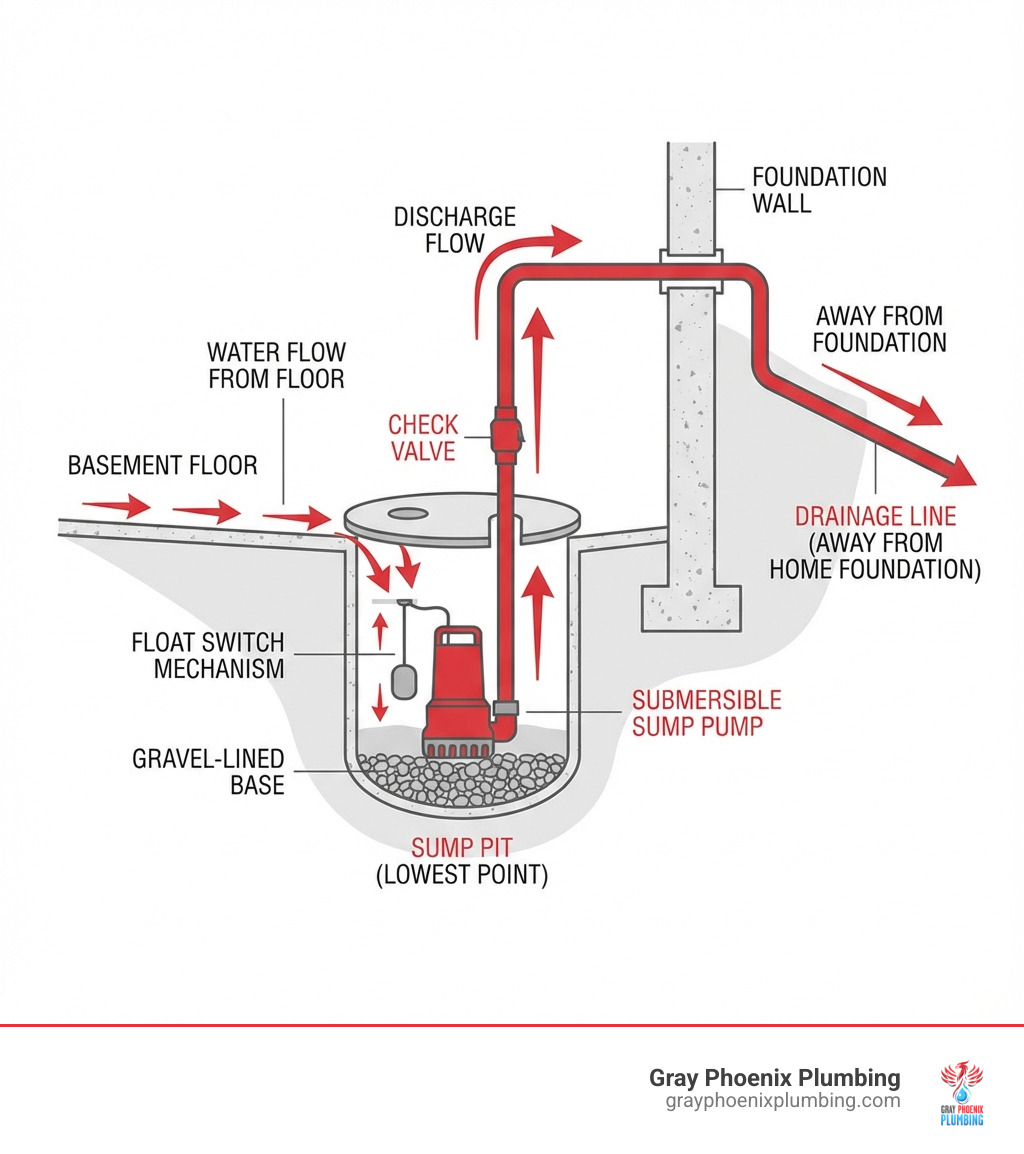
Sump pump installation Littleton basics:
Is Your Basement at Risk? Signs You Need a Sump Pump
Littleton’s diverse weather, from heavy rain to significant snowmelt, often leads to water in basements and crawl spaces. How do you know if your home is a prime candidate for a sump pump? Look for these tell-tale signs that your home needs a sump pump installation Littleton:
- Water Stains on Walls: Discolored patches near the bottom of basement walls are a key sign that water is seeping through your foundation.
- Musty Odors: A persistent damp or musty smell indicates moisture issues, even without visible water. This is often caused by hidden mold or mildew.
- Visible Mold or Mildew: Seeing mold on walls, floors, or stored items means there’s enough moisture for fungal growth, which is a health hazard.
- Dampness or Humidity: A consistently humid basement points to excessive moisture that can lead to structural issues and discomfort.
- Past Flooding Events: If your basement has flooded before, it will likely happen again. You can assess your area’s flood risk using resources like the FEMA Flood Map Service Center.
- Foundation Cracks: Water can enter through even the smallest cracks in your foundation. New or expanding cracks are potential entry points for groundwater.
- Efflorescence (White Chalky Residue): This powdery white substance on concrete or masonry walls is left behind after water evaporates, proving water has seeped through.
- General Basement Moisture Issues: Sump pumps also help with overall basement moisture. By collecting and diverting groundwater, they reduce humidity and prevent the conditions that lead to mold, improving your home’s air quality and comfort.
If you recognize any of these signs, it’s time to consider a professional sump pump installation Littleton. Acting early can save you significant frustration and cleanup time later.
Choosing Your Champion: Sump Pump Types and Backup Systems
When safeguarding your Littleton home, selecting the right sump pump is crucial. Understanding the different types and the importance of a backup system will ensure your basement stays dry.
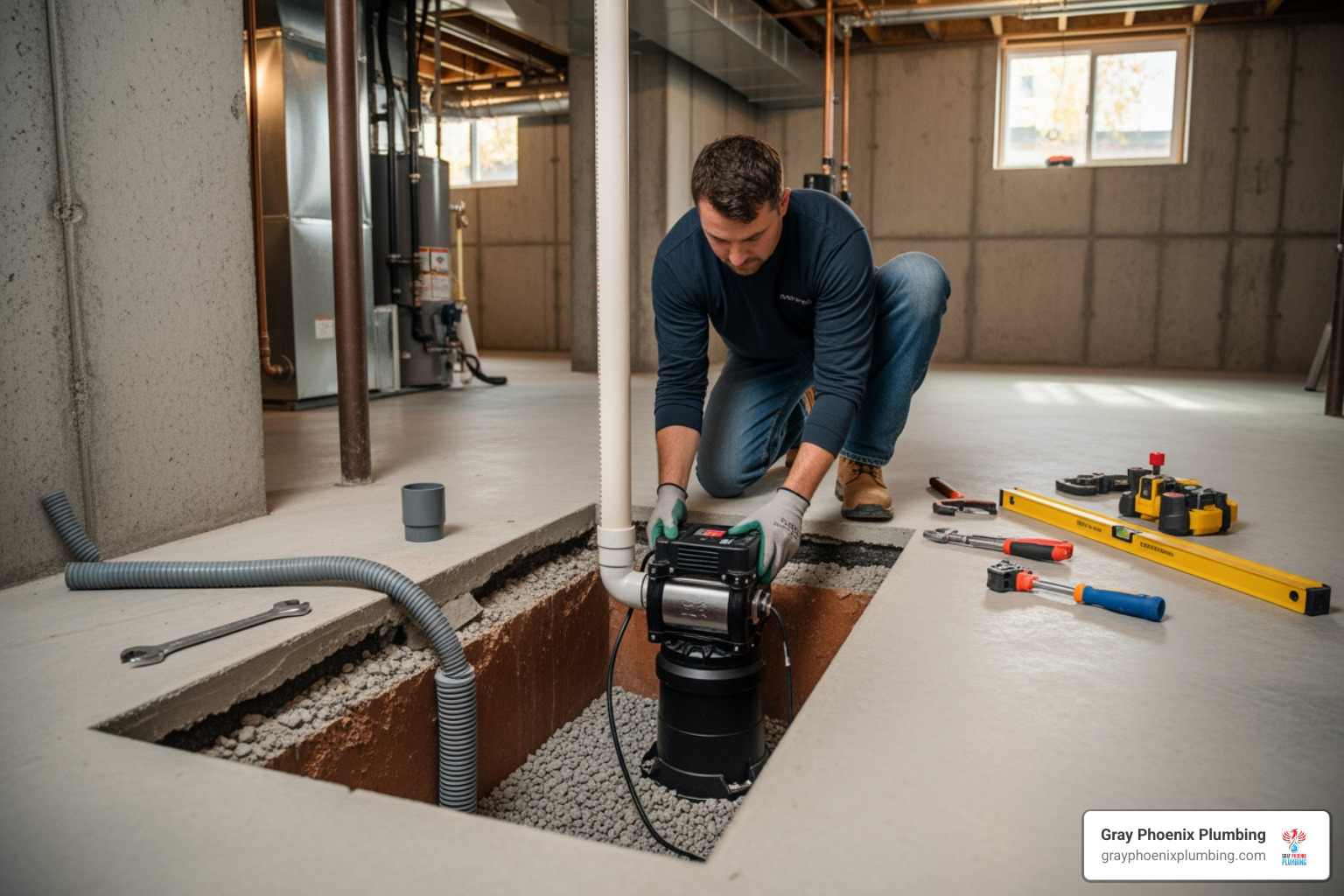
A sump pump is a device that removes water from a sump pit in your basement. When water in the pit rises, the pump activates and moves it away from your home, protecting against water damage, mold, and foundation issues.
Submersible vs. Pedestal Pumps
The two main types of sump pumps are submersible and pedestal. Each has distinct advantages for different basements.
| Feature | Submersible Pumps | Pedestal Pumps |
|---|---|---|
| Placement | Sits directly in the sump pit, fully submerged in water. | Motor is mounted above the sump pit, with an intake pipe in the water. |
| Noise Level | Generally quieter, as the water muffles the motor sound. | Can be louder, as the motor is exposed and above water. |
| Space | Requires a wider sump pit. | Takes up less space in the pit, suitable for narrower pits. |
| Maintenance | Harder to access for maintenance or repairs due to submersion. | Easier to service as the motor is readily accessible. |
| Lifespan | Average lifespan of 10-15 years. | Longer lifespan, typically 25-30 years. |
| Best For | Finished basements, areas with serious flooding issues. | Basements where ease of service and affordability are priorities. |
| Housing Material | Often cast iron for durability and heat dissipation. | Can be plastic or cast iron. |
For housing materials, cast iron is more durable and better at dissipating heat than plastic. We recommend and carry high-quality, reliable Zoeller sump pumps on all our plumbing trucks.
The Critical Role of a Battery Backup System
What happens when a heavy Littleton storm knocks out the power? Your electric sump pump stops. A battery backup system is the solution. It provides crucial protection during outages or primary pump failure by automatically activating to keep your basement dry. This essential layer of defense saves you from the frustration and cost of a flooded basement. For urgent issues, we also offer 24/7 emergency plumbing services to address sump pump emergencies.
The Step-by-Step Process for Sump Pump Installation in Littleton
Installing a sump pump is a precise job that requires expertise to ensure your home is protected. A professional sump pump installation Littleton guarantees proper placement, effective drainage, and compliance with local codes. Here’s a look at our process:
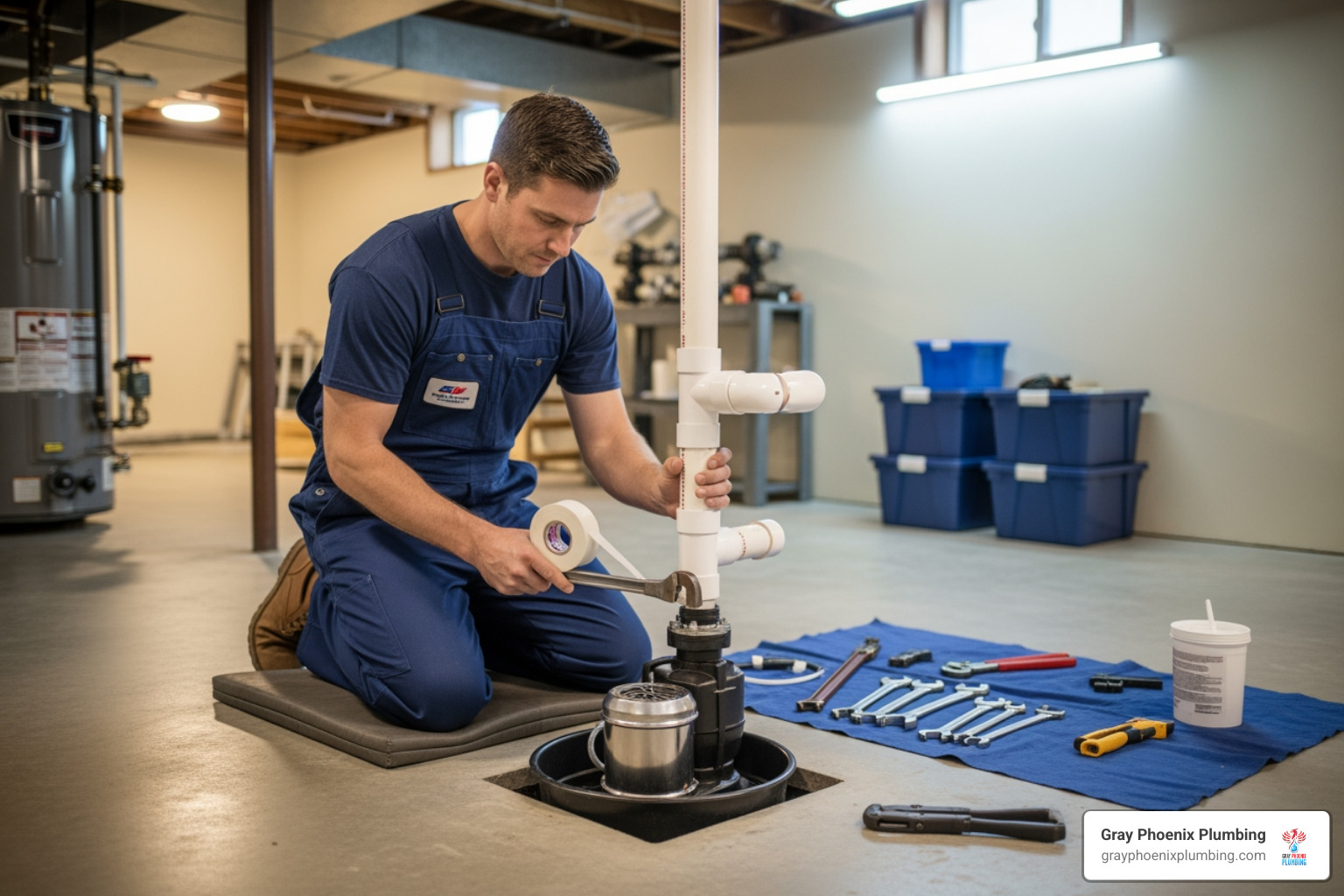
Step 1: Site Preparation and Pit Excavation
First, we find the lowest point in your basement for optimal water collection. We then excavate a properly sized pit (typically 15-25 gallons) to prevent the pump from over-cycling or working too hard. A pit that is too small will burn out the pump, while one that is too large is inefficient. The pit is lined and a gravel base is added to improve drainage and filter debris.
Step 2: Installing the Pump and Drainage
We place a durable sump pump liner in the pit and position the pump inside. For comprehensive water management, we can integrate the pump with an interior perimeter drain system. This system captures water from the walls and floor, directing it into the sump pit. If you have concrete block walls, we may drill weep holes to relieve pressure and allow water trapped inside the blocks to drain away.
Step 3: Running the Discharge Line
Next, we install the discharge line to carry water out of your home. A check valve is installed on the line to prevent water from flowing back into the pit after the pump shuts off. The PVC pipe is routed through the foundation wall and directed far enough from your home to ensure water doesn’t seep back toward the basement. We also take precautions to prevent the line from freezing in winter, a common cause of pump failure. Learn more in our guide on protecting your home from winter plumbing disasters.
Step 4: Final Connections and Testing
Our licensed professionals make the final electrical connections safely and according to code. We then install an airtight lid over the pit to keep out debris, reduce odors, and ensure safety. Finally, we test the entire system by filling the pit with water to confirm the pump activates, removes the water, and shuts off correctly. We check the float switch and restore the concrete floor, leaving your basement clean and protected.
DIY vs. Professional: Why Expertise Matters for Sump Pump Installation in Littleton
A DIY sump pump installation Littleton might seem like a way to save money, but the risks often outweigh the savings. This is a job where professional expertise is a valuable investment.
Risks of DIY Installation:
- Electrical Hazards: Incorrect wiring is a serious fire and shock risk that can damage your home’s electrical system.
- Incorrect Placement: An improperly located pump won’t collect water effectively, leaving your basement vulnerable to flooding.
- Code Violations: A DIY job can violate local building codes, leading to fines and problems when selling your home.
- Lack of Proper Tools: Professional installation requires specialized tools for cutting concrete, excavating, and plumbing that most homeowners don’t have.
- System Failure: DIY errors often lead to pump failure during a storm, resulting in a flooded basement and costly repairs.
Benefits of Professional Service:
- Expertise and Experience: Our licensed plumbers understand Littleton’s unique soil and weather, ensuring your system is right for your home.
- Correct Sizing and Type Selection: We help you choose the right pump and horsepower for your basement’s needs.
- Proper Installation and Integration: We ensure the pump, drainage system, and discharge line are all installed correctly for maximum effectiveness.
- Code Compliance: Our work adheres to all local building codes, giving you peace of mind.
- Warranties and Guarantees: Professional installations come with warranties on equipment and labor.
- Peace of Mind: Knowing your home is protected by a reliable, professionally installed system is priceless. Learn about our residential plumbing expertise.
How to Choose a Littleton Sump Pump Installer
Selecting the right professional is key. Look for a contractor who is:
- Licensed and Insured: This protects you from liability for accidents or faulty work.
- Experienced Locally: A company familiar with the Denver Metro area understands regional challenges.
- Transparent with Pricing: Get clear, upfront pricing with no hidden fees.
- Well-Reviewed: Check online reviews and references for a history of quality work.
- Willing to Explain: A good installer will walk you through the process and answer your questions.
- Comprehensive: Choose a company that also offers repair and maintenance for long-term support.
For more tips, check out our Guide to finding a master plumber.
Keeping Your Pump in Prime Condition: Maintenance and Replacement
Like any home appliance, your sump pump needs regular maintenance to ensure it works reliably during a heavy Littleton downpour. Proper care extends its life, but you also need to recognize the signs that it’s time for a replacement.
The average lifespan of a submersible sump pump is 10-15 years, while pedestal pumps can last 25-30 years. These lifespans depend heavily on annual maintenance.
Routine Sump Pump Maintenance Checklist
Follow this simple checklist annually (or quarterly) to keep your pump in top shape:
- Test the Pump: Pour a bucket of water into the pit to ensure the pump turns on, removes the water, and shuts off automatically.
- Clean the Pit: Remove any sediment, gravel, or debris from the pit to prevent clogs.
- Check the Float Switch: Make sure the float switch moves freely and is not obstructed.
- Inspect the Check Valve: Ensure the valve that prevents backflow is working correctly.
- Clean the Impeller: If accessible, check the impeller (the part that moves water) for clogs.
- Test the Backup Pump: Regularly test your battery backup system according to manufacturer instructions.
- Clear the Discharge Line: Check that the outdoor discharge pipe is clear of blockages, especially before winter.
Signs It’s Time for a Sump Pump Replacement
Even with good maintenance, pumps eventually wear out. Watch for these signs to avoid a sudden failure:
- Pump Age: If your pump is approaching the end of its typical lifespan (10+ years for submersible, 25+ for pedestal), consider a proactive replacement.
- Strange Noises: Grinding, rattling, or banging sounds usually point to a serious mechanical issue like a worn-out motor or damaged impeller.
- Excessive Vibration: Shaking can mean the impeller is damaged or unbalanced.
- Irregular Cycling: If the pump runs constantly or cycles on and off too frequently, the float switch may be faulty.
- Visible Rust or Corrosion: Significant rust can compromise the pump’s housing and lead to failure.
- Failure to Turn On: If the pump doesn’t activate with rising water, it could be a power issue, a stuck float switch, or a dead motor.
- Water in the Basement Despite Running Pump: This indicates the pump isn’t keeping up, possibly due to a clog or being undersized.
- Foul Odors: Musty smells may mean the pump isn’t removing water effectively, allowing it to stagnate.
If you notice these signs, call a professional. Learn more about when to consider sump pump repair.
Frequently Asked Questions about Sump Pumps in Littleton
Here are answers to some common questions we receive about sump pump installation Littleton.
How much does sump pump installation cost in Littleton, CO?
The cost of a sump pump installation in Littleton varies. Key factors include the pump type (submersible vs. pedestal), installation complexity (new pit vs. replacement), the need for new electrical or drainage work, and whether a battery backup is included. For an accurate price custom to your home, a professional assessment is necessary. We provide transparent, detailed quotes after an on-site evaluation.
How often should I test my sump pump?
We recommend testing your sump pump at least quarterly, and always before the spring snowmelt or heavy rain season. A simple bucket test is all you need:
- Pour a 5-gallon bucket of water into the sump pit.
- Watch to ensure the pump turns on, removes the water, and shuts off automatically.
- If it fails the test, call for a professional inspection.
Regular testing confirms your pump is ready when you need it.
Will a sump pump increase my home’s value?
Yes, absolutely! A professionally installed sump pump protects your home from costly water damage and mold, making it a valuable asset. For potential homebuyers, a dry, protected basement is a huge selling point that offers peace of mind. It increases your home’s appeal and usable square footage, making it more attractive in the competitive Littleton market.
Conclusion: Ensure Your Peace of Mind with a Dry Basement
In Littleton, where unpredictable weather can bring heavy rainfall and significant snowmelt, a reliable sump pump system is more than just an appliance—it’s your home’s first line of defense. We’ve seen how a properly installed and maintained sump pump protects against costly water damage, preserves your foundation’s integrity, and prevents the growth of mold and mildew, safeguarding both your property and your family’s health.
Investing in professional sump pump installation Littleton provides invaluable peace of mind, knowing your basement is protected year-round, even during power outages thanks to battery backup systems. Don’t wait for the next storm to find your home’s vulnerability. For a professional assessment and installation of your home’s primary defense against basement flooding, trust our team of experts. Explore our comprehensive residential plumbing services.


