

Why Installing a Tankless Water Heater Outdoors Makes Sense
Install tankless water heater outside to open up valuable indoor space and gain efficient, on-demand hot water. The process involves selecting a protected location, ensuring proper utility connections, mounting the unit securely, and weatherproofing all components.
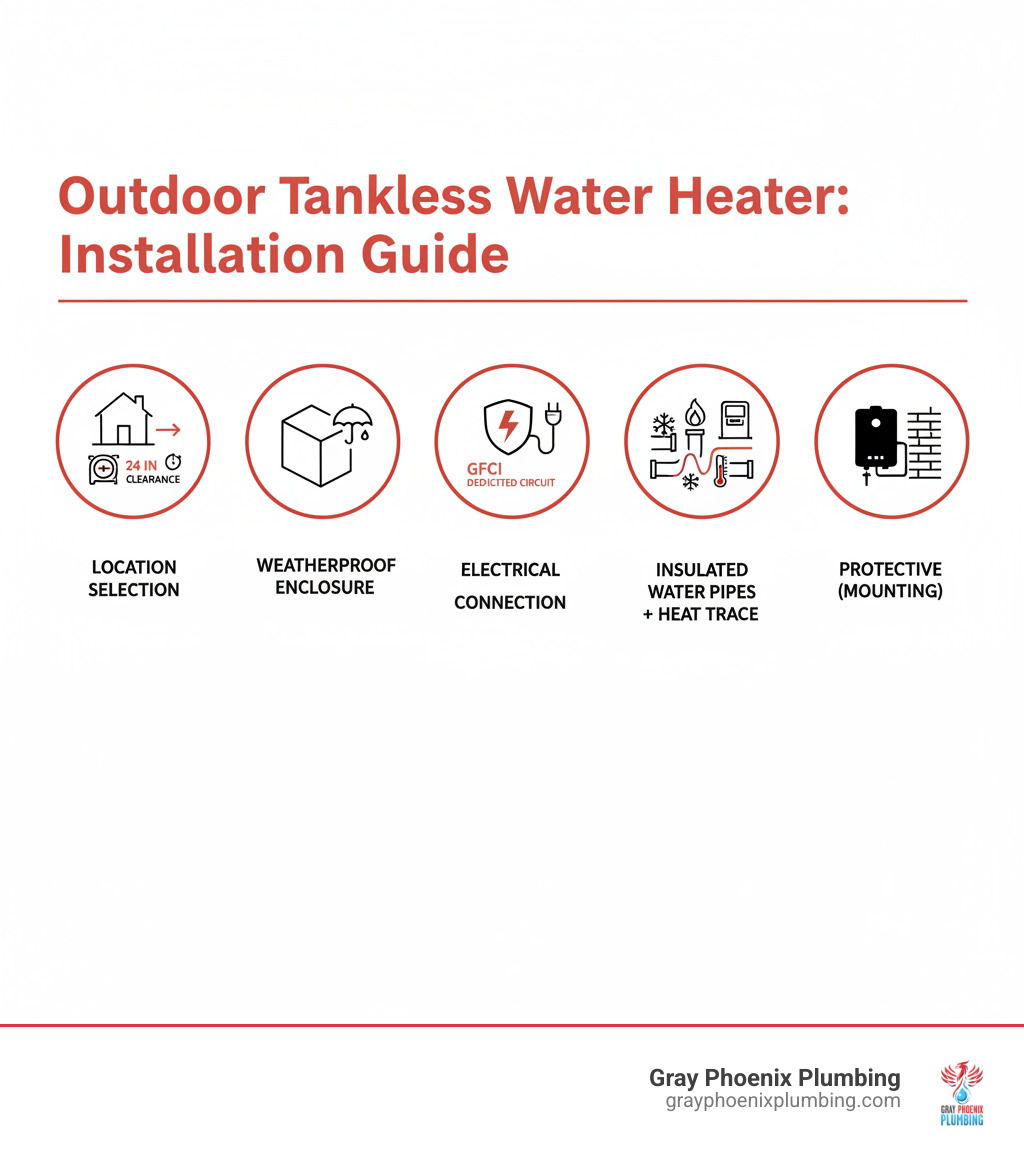
Key Steps to Install a Tankless Water Heater Outside:
- Choose the right location – Protected from direct weather, near utilities, accessible for maintenance
- Check electrical requirements – Dedicated circuit, GFCI protection, proper amperage
- Prepare the mounting surface – Sturdy, level, meets manufacturer clearances
- Install water connections – Insulated pipes, shut-off valves, pressure relief valve
- Weatherproof the unit – Protective cover, proper drainage, freeze protection in cold climates
- Test the system – Check for leaks, verify hot water flow, confirm proper operation
Outdoor units can save 30-45% on energy costs and never run out of hot water, but they require careful planning for cold climates and must meet local building codes.
Important: In freezing climates like Colorado, you’ll need freeze protection measures including insulated pipes, heat trace cables, and potentially automatic drain-down systems.
As Chris Hoffman, owner of Gray Phoenix Plumbing, I’ve guided many homeowners in the Denver metro area through this process. We ensure safe, code-compliant installations that deliver years of reliable performance, specializing in outdoor setups that withstand Colorado’s climate while maximizing energy efficiency.
Why Go Outside? Weighing the Pros and Cons
If you’re considering a tankless water heater for your home in the Denver metro area, you might not have considered an outdoor installation. To install tankless water heater outside offers real advantages, but it’s important to weigh the pros and cons.
Advantages of an Outdoor Installation
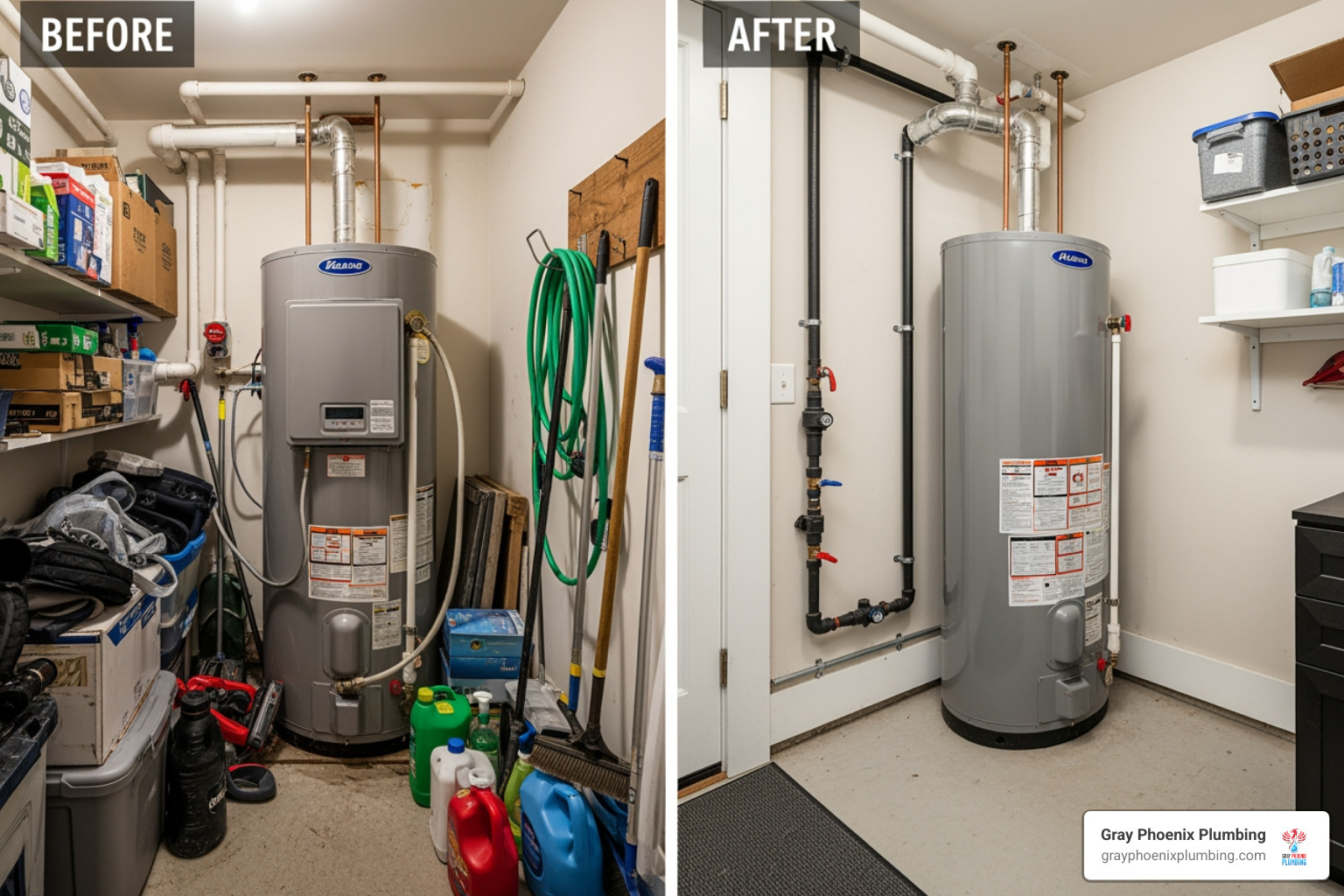
The most immediate benefit is reclaiming valuable indoor space. Traditional 40- to 60-gallon tank heaters are bulky, while compact tankless units free up significant real estate in a utility room or garage when installed outdoors.
Outdoor installations also eliminate the need for complex indoor venting. With the unit in open air, you don’t need exhaust systems running through your walls, which improves indoor air quality by keeping all combustion byproducts outside. An outdoor installation also reduces indoor noise, keeping your home’s interior peaceful.
Of course, the main benefit is endless hot water. Tankless units heat water on demand, allowing for simultaneous use of multiple appliances. This process can reduce energy consumption by 24% to 34% compared to tank heaters, saving you money on utility bills. Finally, outdoor units offer easier access for maintenance and repairs, as technicians can work without disrupting your home. Learn more about our water heater services.
Potential Challenges to Consider
Outdoor installations have challenges, especially in Colorado’s climate. Units are exposed to sun, snow, and wind, so proper protection is necessary to prevent damage and prolong the unit’s lifespan.
The risk of freezing is a major concern in the Denver area. While most outdoor units have built-in freeze protection, extreme cold requires backup measures. Connecting water lines are vulnerable and need pipe insulation and heat trace cables.
You can also expect higher initial costs. Outdoor-rated models are more expensive, and adding freeze protection and specialized labor increases the upfront investment. However, long-term energy savings often offset this.
Each municipality has its own local code restrictions for outdoor installations, covering clearances, electrical, and gas line specifications. Finally, a visible outdoor unit could be a target for theft or vandalism, so a protective enclosure is recommended to shield the unit from weather and deter tampering.
In short, an outdoor installation offers significant benefits but requires professional planning to manage Colorado’s climate challenges.
Pre-Installation Prep: Location, Codes, and Unit Selection
Before you install tankless water heater outside, proper pre-installation prep is critical. This includes choosing the right location, ensuring utility compatibility, and complying with local codes to avoid future issues and ensure a successful installation.
Choosing the Perfect Spot
Finding the ideal location involves several factors:
- Proximity to utilities: Choose a location close to existing water, gas, and electrical lines to minimize installation costs.
- Sturdy mounting surface: The unit requires a solid surface. We use appropriate anchors for wood siding, masonry, or concrete.
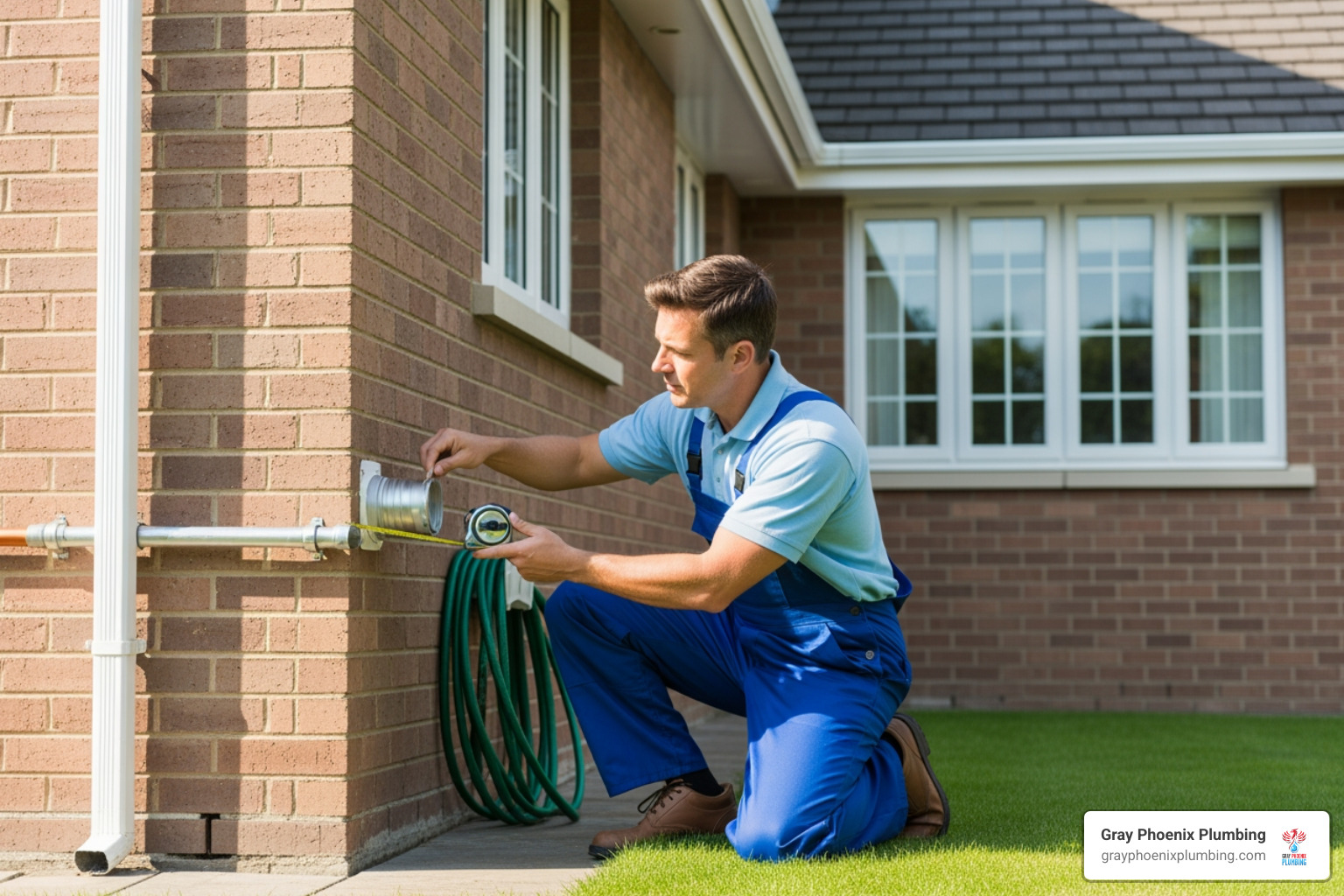
- Accessibility for maintenance: Ensure at least 24 inches of clearance in front of the unit to simplify future service. Our team at general plumbing can help with all your plumbing needs.
- Protection from elements: Installing under an eave or porch extends the unit’s lifespan but must still allow for adequate ventilation.
- Manufacturer clearances: These are mandatory for safety and warranty, specifying distances from windows, doors, and combustible materials.
Understanding Electrical and Gas Requirements
Electric tankless heaters need a dedicated 120V circuit, typically 15 or 20 amps. For outdoor installations, connections must be hard-wired into a weatherproof junction box with GFCI protection, as required by code. This is a job for a licensed electrician.
Gas tankless heaters require significantly more fuel than tank models (90,000-199,000 BTUs vs. 30,000-40,000 BTUs). This often means the existing gas line is too small and must be upgraded to a ¾-inch or 1-inch line. We calculate the correct size, ensure proper gas pressure, and professionally leak-test all connections for safe, efficient operation.
Navigating Local Codes and Permits
Building permits are required in the Denver metro area for tankless water heater installations because they involve significant changes to your home’s plumbing, gas, and electrical systems. Each municipality has detailed requirements, as shown in this example of tankless water heater guidelines.
We handle the entire permit and inspection process for our clients, ensuring all work complies with local codes and manufacturer specifications. Following the manufacturer’s installation manual is also essential for your warranty. Our experience and relationships with local inspectors in Elbert County and surrounding areas ensure a smooth process, saving you time and hassle.
Your Step-by-Step Guide to Install Tankless Water Heater Outside
Here’s a look at how we professionally install tankless water heater outside. Understanding the steps helps you appreciate the complexity. Safety is our top priority, and we strongly recommend professional installation due to the risks of working with water, gas, and electricity.
Step 1: Prepare the Mounting Surface and Utilities
Proper preparation is the foundation of a successful installation. First, we turn off the main water supply, power, and gas to the work area to ensure safety. We then create a sturdy mounting frame on the exterior wall, using appropriate anchors for siding, brick, or concrete to withstand Colorado weather. Finally, we run outdoor-rated electrical conduit and route the gas piping, which often involves upgrading the gas line to meet the new unit’s BTU requirements.
Step 2: Mount the Unit and Make Water Connections
With prep work done, we securely fasten the unit to the wall, ensuring it is level for proper operation. Next, we install service valves on the cold and hot water lines, which allow us to isolate the unit for future maintenance without shutting off water to the whole house. We then connect the cold water inlet and hot water outlet, insulating both lines to prevent freezing and heat loss. Installing the pressure relief valve (PRV) is a critical safety step to protect your unit and plumbing, and we install and test it per the manufacturer’s specifications.
Step 3: Finalize Electrical, Gas, and Weatherproofing
The final steps make the unit fully functional and weather-ready for Colorado’s climate.
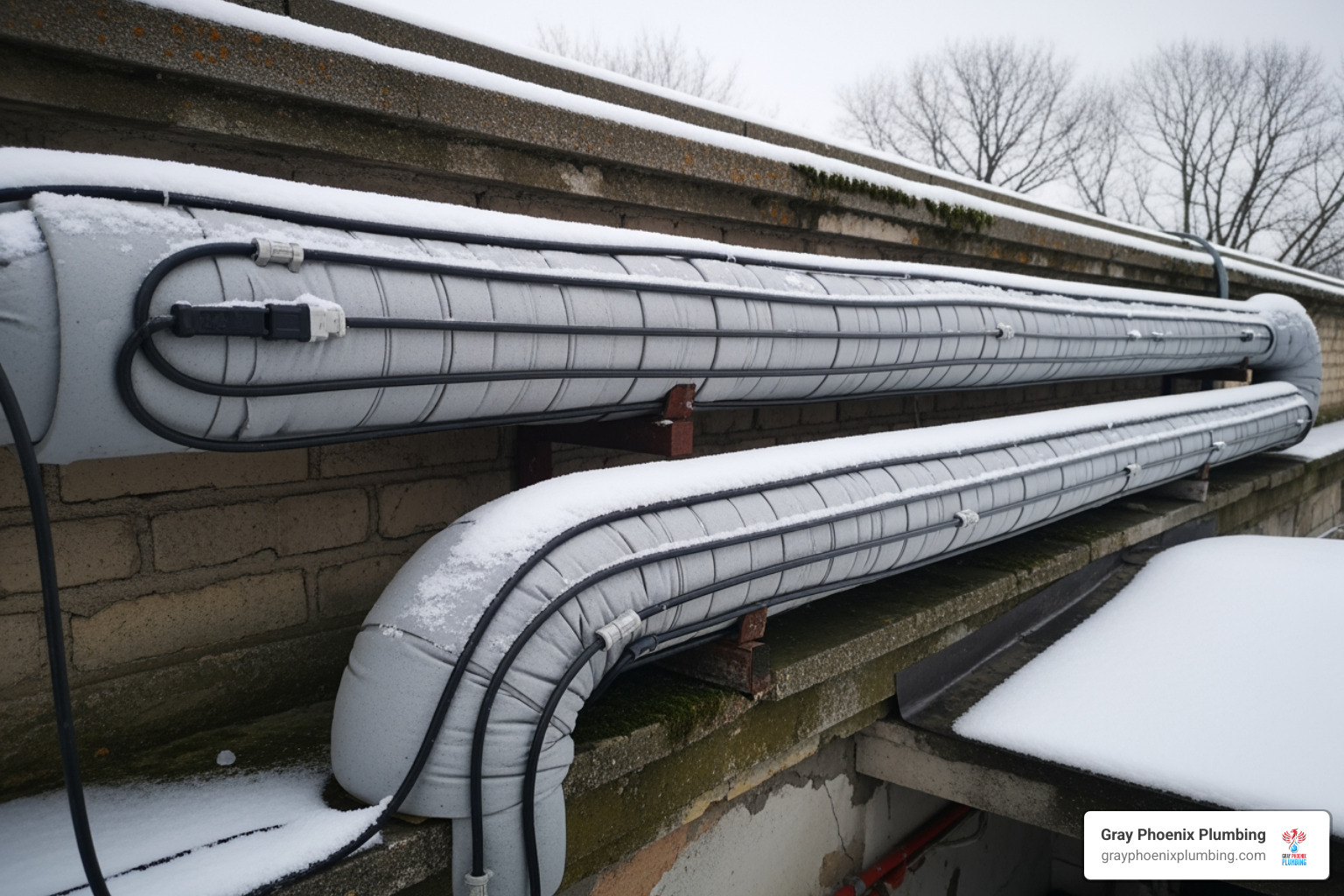
A licensed electrician hard-wires all connections to a weatherproof, GFCI-protected junction box. We connect the gas line and carefully test for leaks at every joint. We then install a protective enclosure or cover to shield the unit from sun, snow, and wind while allowing proper ventilation. Finally, we insulate all exposed pipes and often add heat trace cables for an extra layer of freeze protection. These key steps to install tankless water heater outside ensure your system is safe, efficient, and reliable.
Post-Installation: Testing and Long-Term Care
After we install tankless water heater outside, we perform thorough testing and establish a long-term care routine. This ensures your unit provides efficient, endless hot water for years, much like regular oil changes for a car.

Best Practices for Testing Your New System
After installation, we begin a systematic testing phase to ensure safe, reliable operation. This includes:
- Purging air from water lines to prevent airlocks.
- Checking all water and gas connections for leaks to prevent hazards.
- Verifying hot water flow at multiple faucets to ensure consistent delivery.
- Confirming temperature settings are accurate and adjusting them to your preference.
If you’re considering an upgrade, our team can help with your water heater replacement.
Essential Maintenance for Outdoor Units
Outdoor units in Colorado require specific maintenance for longevity and peak performance. Key tasks include:
- Regular visual inspections to catch small problems early. Check for wear, leaks, pests, and debris.
- Annual flushing to remove mineral buildup is the most critical task. Scale from hard water reduces efficiency and can damage the unit. We recommend professional annual descaling.
- Cleaning the inlet filter to prevent clogs that restrict water flow and strain the unit.
- Checking for corrosion or pest intrusion, as weather and pests can damage components.
Gray Phoenix Plumbing offers maintenance plans for outdoor tankless heaters in the Denver metro area. Professional service extends your unit’s life, ensures peak efficiency, and saves you money. We understand Colorado’s climate and are here to keep your hot water flowing.
Frequently Asked Questions about Outdoor Installations
Homeowners in the Denver metro area often ask about outdoor tankless water heater installations. Here are answers to the most common questions.
Can an electric tankless water heater be installed outdoors?
Yes, you can install an electric tankless water heater outside, but it must be a model specifically rated for outdoor use. These units are built with durable, weatherproof materials to handle Colorado’s climate. The installation also requires a weatherproof enclosure for protection. All electrical work must meet outdoor safety codes, including hard-wiring to a dedicated circuit with mandatory GFCI protection.
What special precautions are needed for winter in freezing climates?
In Colorado’s freezing winters, protecting your outdoor unit is crucial. You must insulate all water pipes with heavy-duty insulation. For active freeze protection, heat trace cables automatically warm pipes when temperatures drop. It’s also important to ensure the unit’s built-in freeze protection is active. For added security, especially in areas with power outages, automatic drain-down systems can drain the unit to prevent freezing. These precautions are vital in our climate, as confirmed by scientific research.
Do I need a professional for this installation?
Yes, professional installation is highly recommended as a DIY approach can be dangerous. The work involves complex plumbing, gas, and high-voltage electrical systems. Licensed plumbers and electricians ensure safety and prevent risks like gas leaks, fires, or water damage. Professionals also guarantee code compliance and protect your warranty, which can be voided by DIY work. The complex gas and electrical work is best left to experts. For a safe, code-compliant installation, trust the professionals. We also offer 24/7 emergency plumbing services in Denver: Rapid Response.
Conclusion: Enjoy Endless Hot Water with a Professional Installation
Choosing to install tankless water heater outside is a smart move for many Colorado homeowners. You’ll reclaim indoor space, cut energy bills by up to 30-45%, and enjoy endless hot water. However, this is not a DIY project. The complex gas, electrical, and weatherproofing work required for Colorado’s climate demands licensed expertise for safety and reliability.
Gray Phoenix Plumbing specializes in outdoor tankless installations across the Denver metro area. We know which units withstand our climate, how to implement proper freeze protection, and how to meet all local code requirements. Your family’s safety and comfort are our priority.
Our licensed professionals handle every detail, from permits to final testing, ensuring a code-compliant installation that protects your warranty. With our transparent pricing and Customer Care Guarantee, you can trust in a job done right.
Ready for endless hot water? Trust our team for expert outdoor tankless water heater installation in the Elizabeth area and beyond. Ensure your home’s comfort and efficiency by scheduling your water heater replacement today.


