

Understanding Hybrid Water Heater Installation: What You Need to Know
Hybrid water heater installation involves replacing an old water heater with a new heat pump model. These units pull warmth from the surrounding air to heat water, cutting energy use by up to 50%.
Quick Installation Overview:
- Space: Requires at least 700 cubic feet of air space (e.g., a 10×10 ft room).
- Electrical: Needs a dedicated 240-volt, 30-amp circuit.
- Time: A DIY replacement takes about 4-5 hours.
- Savings: DIY can save $500-$750 over professional installation.
- Key Steps: Remove the old unit, position the new one, connect water and condensate lines, make electrical connections, then fill and activate.
Homeowners with basic plumbing and electrical skills can often handle a simple electric-to-hybrid swap. However, converting from gas or installing a new circuit requires professional help.
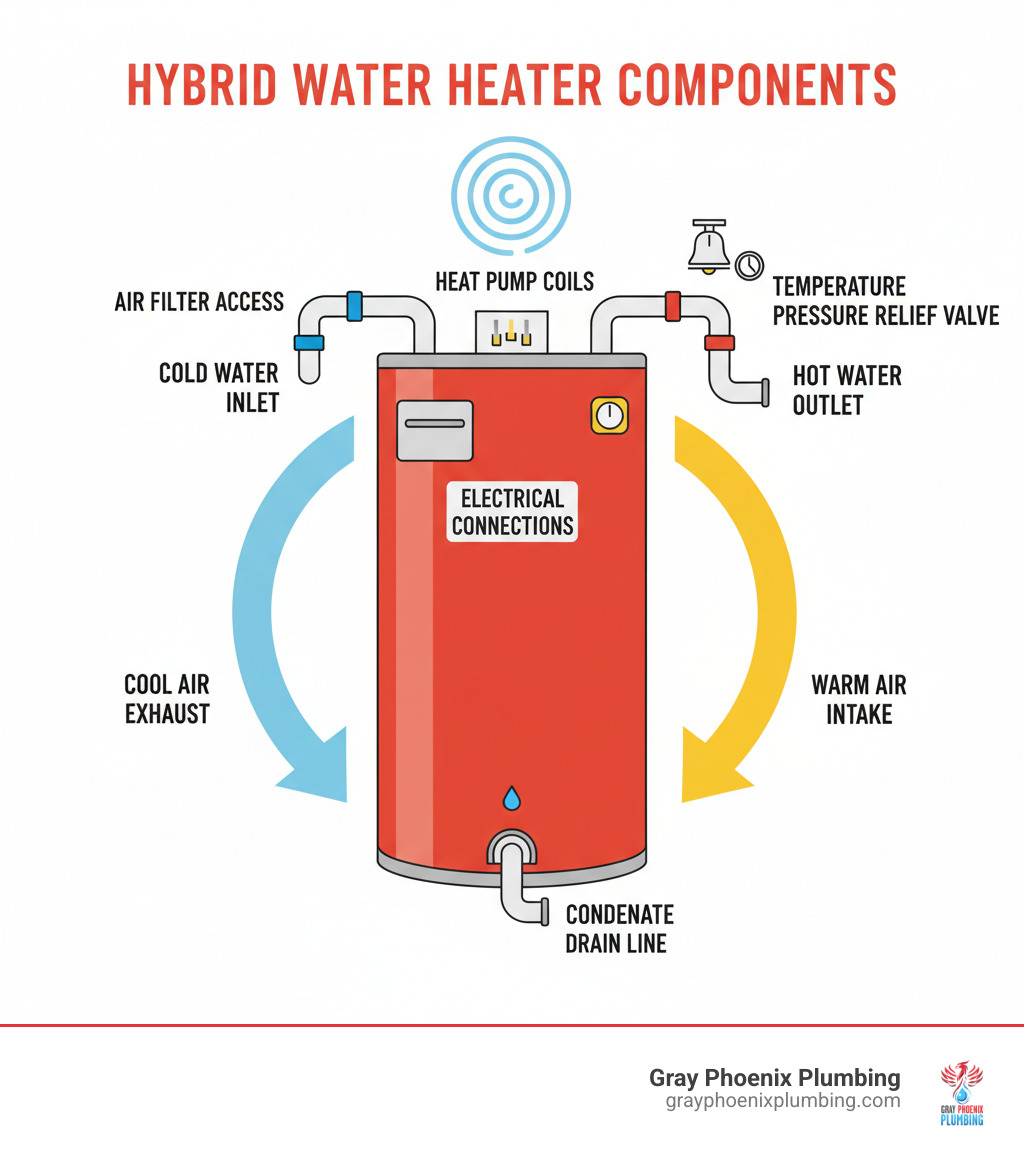
Also known as heat pump water heaters, these units work like a refrigerator in reverse, transferring ambient heat to the water in the tank. This makes them the most efficient water heaters available, saving hundreds annually. However, they are taller, need space to operate, produce condensate that must be drained, and exhaust cool air. Proper planning is key to a successful installation.
I’m Chris Hoffman, owner of Gray Phoenix Plumbing. My team and I have guided countless homeowners in the Elizabeth and Denver metro areas through this process. Understanding the requirements ensures you’ll get years of reliable, efficient hot water.
Why Choose a Hybrid Water Heater?
Hybrid water heaters, especially electric heat pump models, are the most efficient water heating technology today. They can reduce your water heating energy use by up to 50% compared to standard electric models. For an average family, this translates to about $550 in annual savings, or over $5,600 during the unit’s lifetime. Since water heating accounts for 15-20% of a home’s energy consumption, this upgrade pays for itself.
By using less energy, hybrid models also significantly reduce your carbon footprint. Unlike gas heaters, they produce no combustion gases, eliminating carbon monoxide risks and harmful emissions. With roughly 25 million standard water heaters in the U.S. over 10 years old, now is an ideal time to switch to this cleaner technology.
The Best Benefits of Going Hybrid
Choosing a hybrid water heater installation is an investment in efficiency and savings.
- Financial Savings: An annual reduction of around $550 in energy costs means more money in your pocket. While the upfront cost is higher, the savings quickly offset the initial investment.
- Environmental Impact: Using less electricity means a smaller carbon footprint, avoiding thousands of pounds of carbon emissions over the unit’s life.
- Modern Features: Many models offer smart connectivity to monitor and control the unit from your phone. Some can even shift operation to off-peak hours to save on electricity rates.
- Rebates and Incentives: Federal tax credits, state rebates, and utility incentives can significantly lower your upfront cost. These programs exist to reduce strain on the electrical grid.
Understanding the Technology: Hybrid Electric vs. Hybrid Gas
The term “hybrid water heater” can refer to two different technologies.
Hybrid electric models (heat pump water heaters) are the most common. They work like a refrigerator in reverse, extracting heat from the surrounding air and transferring it to the water. This process of moving heat is far more efficient than generating it. Most units include backup electric resistance elements for times of high demand or low ambient temperatures. They also produce condensate that must be drained.
Hybrid gas water heaters combine features of tankless and tank systems. A gas burner heats water on demand, but a small internal storage tank (around 2 gallons) eliminates the “cold water sandwich” effect common with pure tankless systems. These also produce condensate that requires drainage.
For most homeowners, hybrid electric models offer the best mix of efficiency and savings, and they are the focus of this guide.
| Feature | Hybrid Electric (Heat Pump) | Standard Electric (Tank) | Standard Gas (Tank) |
|---|---|---|---|
| Efficiency | Highest (up to 70% less energy than standard electric) | Moderate (100% efficient, but expensive energy source) | Moderate (depends on model, but less efficient than HP) |
| Operating Cost | Lowest (significant annual savings) | High | Moderate |
| Installation | 240V/30A circuit, condensate drain, specific air volume | 240V/30A circuit, no special air/drain requirements | Gas line, venting, no special air/drain requirements |
| Longevity | Typically 10-15+ years | 10-15 years | 10-15 years |
| Environmental | Low carbon footprint, no emissions | Moderate carbon footprint (depends on electricity source) | Higher carbon footprint, combustion emissions |
Pre-Installation: Planning and Preparation
Proper planning is essential for a successful hybrid water heater installation. Before you begin, check with your local building department in Elizabeth, Parker, or other Colorado communities for permit requirements to ensure safety and code compliance. Assessing your home’s electrical panel, plumbing, and the physical space will prevent headaches later.
Key Location and Space Requirements
Hybrid electric water heaters need “breathing room” to work efficiently.
- Air Space: Most models require at least 700 cubic feet of air space (a 10×10 ft room with a 7-ft ceiling). Check your unit’s manual, as some newer models need less. For more details, you can learn more about HPWH space requirements.
- Ceiling Height: Hybrids are often taller than standard units. Ensure you have enough clearance for installation and airflow, plus access to the air filter.
- Ambient Temperature: The ideal range is 40°F to 120°F. In colder spaces, the unit will rely on its less-efficient backup heating elements.
- Noise and Airflow: The unit produces noise similar to a refrigerator (45-55 decibels) and exhausts cool, dry air. This can be a benefit in summer but may cool a small room in winter. Consider locating it away from living areas.
- Ducting: If your space is too small, some models can be ducted to draw air from or exhaust it to an adjacent room or outdoors.
Essential Tools and Materials for Your Hybrid Water Heater Installation
Gather everything you need before you start to avoid a mid-project trip to the hardware store.
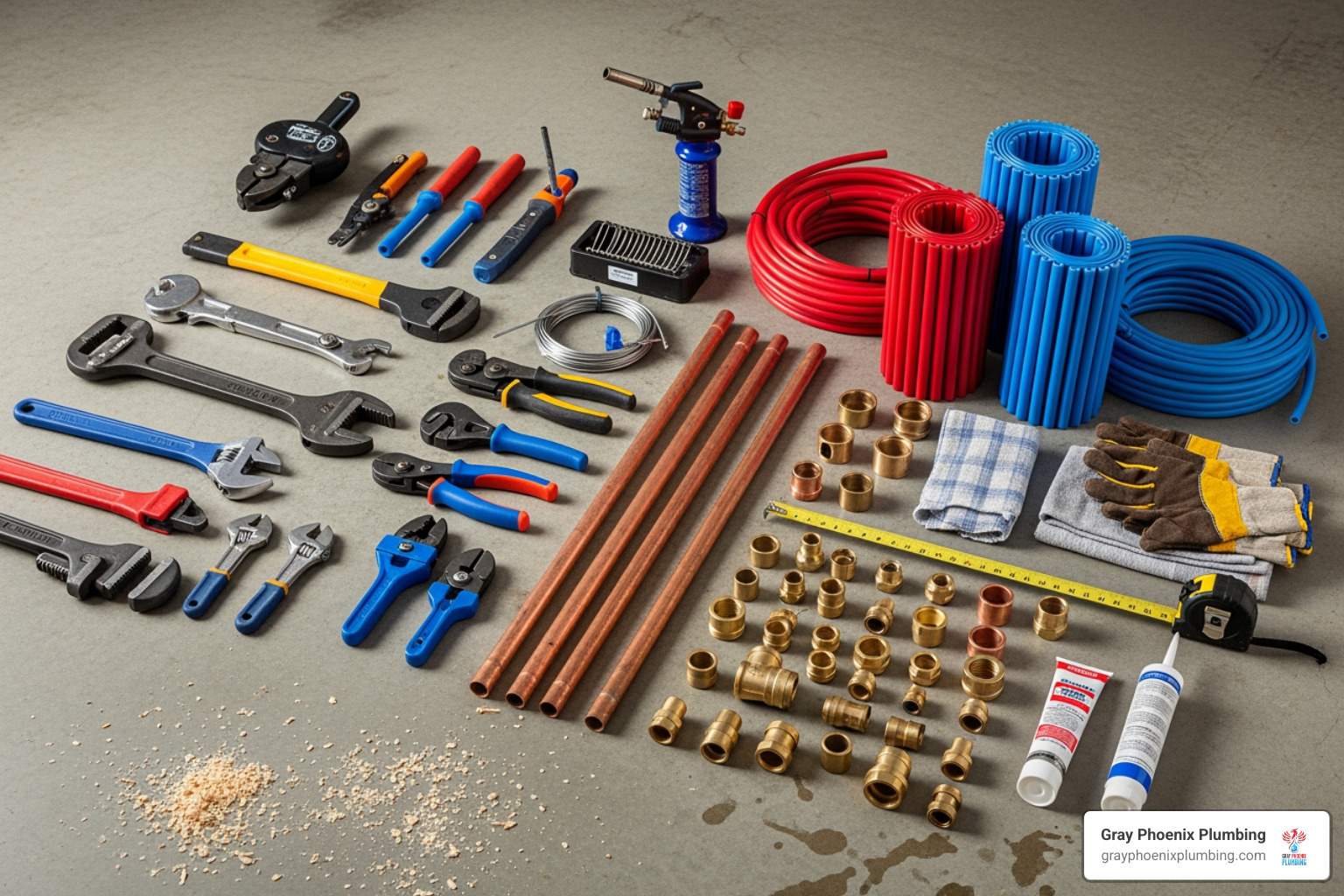
- Tools: Pipe wrenches (x2), adjustable wrench, tube cutter, PEX crimp tool (if using PEX), non-contact voltage tester, level, caulk gun, drill, screwdrivers, tape measure, utility knife, garden hose, wet/dry vac, and a hand truck or dolly. Always use safety glasses and work gloves.
- Materials: New hybrid water heater, flexible water supply lines, PEX tubing and fittings (if needed), Teflon tape, pipe insulation, a water heater drain pan, PVC pipe and fittings for the condensate drain, a condensate pump (if needed), shims, and earthquake straps. Confirm if a Temperature and Pressure (T&P) relief valve is included. You’ll also need a discharge pipe for the T&P valve and dielectric unions to prevent corrosion.
Electrical and Plumbing Pre-Check
Verify your home’s systems are ready for the new unit.
- Electrical: Most hybrids require a dedicated 240-volt, 30-amp circuit with 10-gauge wire. If you’re converting from gas, you’ll need an electrician to run a new circuit. Always consult a licensed electrician if you’re unsure.
- Water Pressure: Ideal pressure is 50-60 psi. If it’s consistently over 80 psi, install a pressure reducing valve (PRV) to protect your plumbing.
- Shutoff Valves: Ensure you have accessible and working shutoff valves on the hot and cold water lines.
- Thermal Expansion Tank: If you have a “closed” plumbing system, a thermal expansion tank is required to prevent pressure buildup as water heats.
- Pipes: Inspect your existing pipes for corrosion or damage. This is a good time to upgrade if needed. For more on how these systems fit together, explore our page on Water Heaters and Filtration Systems.
The Step-by-Step Hybrid Water Heater Installation Guide
With preparation complete, it’s time for the hybrid water heater installation. Safety is the top priority. Always follow the manufacturer’s instructions for your specific model.
Safety First:
- Turn off power at the main electrical panel and verify it’s off with a voltage tester.
- Turn off the water supply to the water heater.
- Wear safety glasses and work gloves.
- Use a hand truck or dolly and get help to move heavy units.
- If converting from gas, the gas line must be shut off and capped by a qualified professional. Never work on gas lines without proper training and licensing.
Step 1: Decommission and Remove the Old Water Heater
After shutting off power and water, connect a garden hose to the drain valve and run it to a floor drain. Open a hot water faucet to help the tank drain faster, then open the drain valve. Once empty, disconnect the electrical wiring and water supply lines. Carefully move the old unit out of the way with a hand truck.
Step 2: Position and Secure the New Unit
Place the drain pan in the desired location. Move the new hybrid water heater into the pan, using a level and shims to ensure it’s perfectly level for proper drainage. Install earthquake straps as required by local code, securing the unit to wall studs near the top and bottom. Ensure you leave adequate clearance for airflow and filter access.
Step 3: Connect Water Supply and Drainage Systems
Install the Temperature & Pressure (T&P) relief valve and its discharge pipe, which must run downward and terminate no more than six inches above a drain. Connect the cold water supply to the inlet (blue) and the hot water line to the outlet (red), using Teflon tape on all threaded connections. Insulate at least the first six feet of the hot water pipe to reduce heat loss.
Step 4: Manage Condensate Drainage
This step is critical for hybrid heaters. Connect a PVC pipe to the condensate drain port. If a floor drain is nearby, run the pipe with a downward slope (at least ¼-inch per foot) to the drain. Insulate the pipe if it runs through unconditioned spaces to prevent freezing.
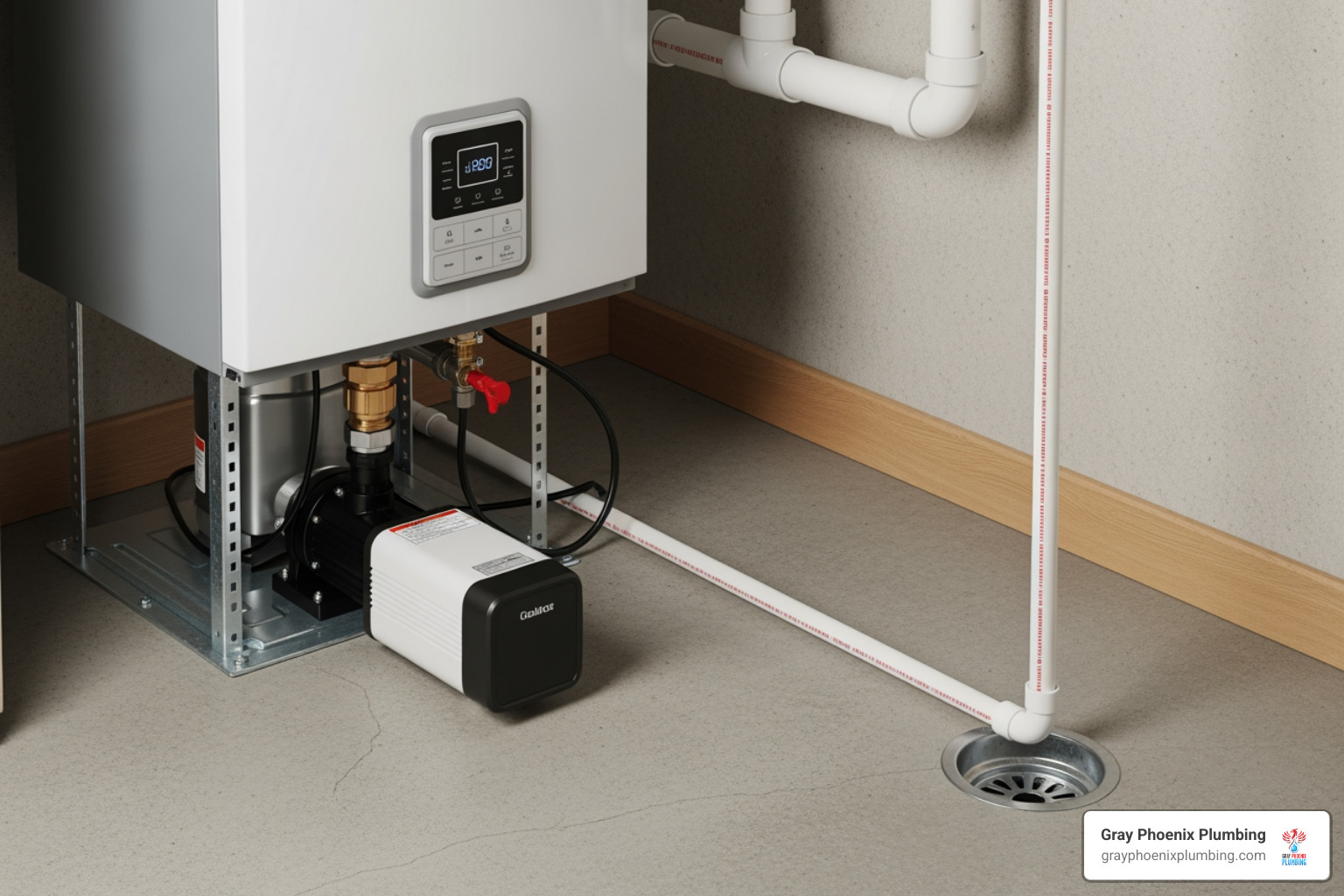
If a gravity drain isn’t available, you must install a condensate pump. These devices collect the water and pump it to a suitable drain. Follow the pump manufacturer’s instructions for installation.
Step 5: Make the Electrical Connections
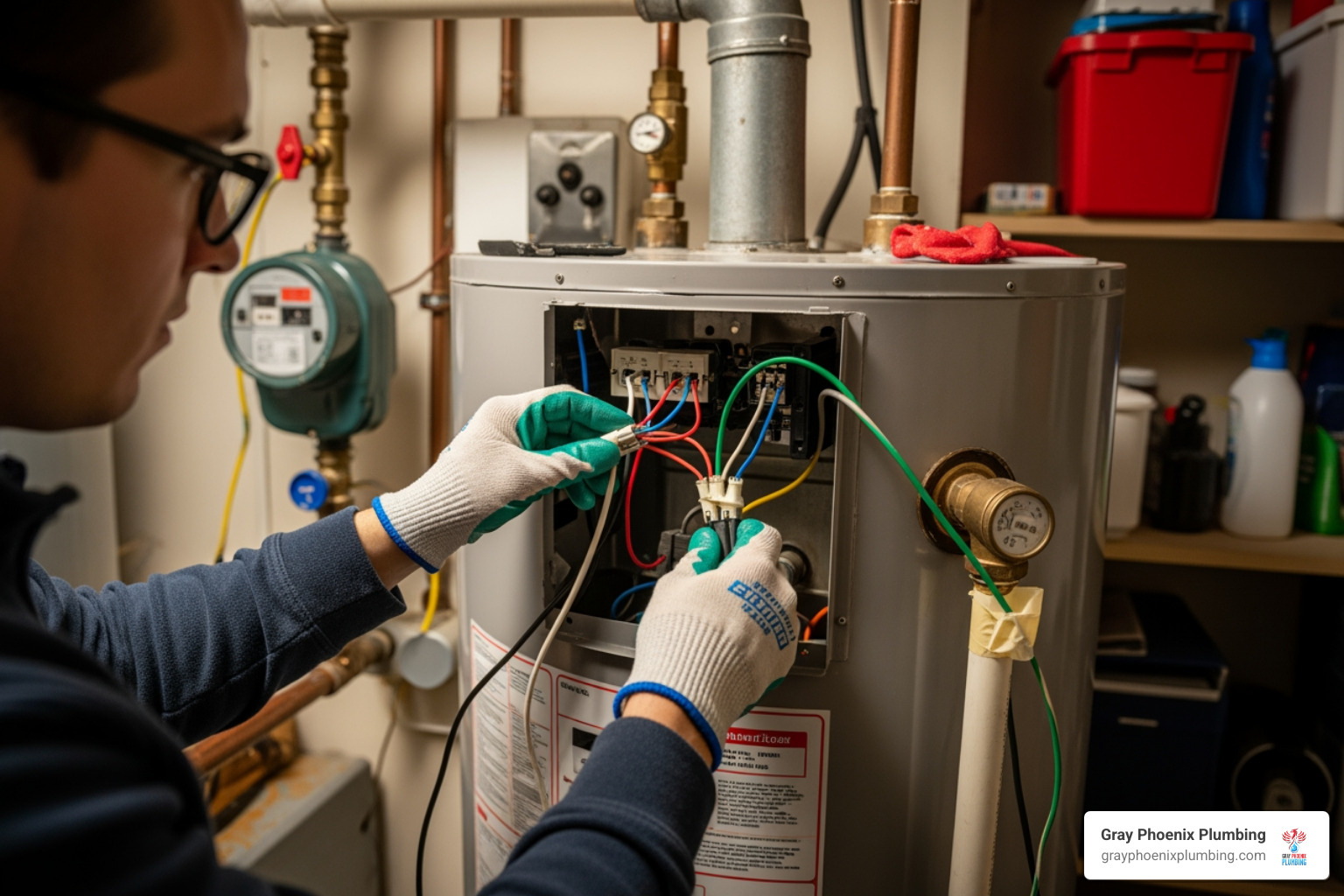
With the power confirmed to be off, remove the electrical access panel on the water heater. Following the manual and local codes, connect the 240-volt wires from your circuit to the unit, securing the ground wire to the green ground screw. Use correctly sized wire nuts for tight, secure connections. Replace the access panel. If you have any doubt about this step, stop and call a licensed electrician.
Activation, Maintenance, and Troubleshooting
With the physical hybrid water heater installation complete, it’s time to activate the unit and learn how to maintain it for peak performance.
Step 6: Fill, Power On, and Set Your New Heater
Crucially, you must fill the tank with water before turning on the power. Powering an empty tank will instantly destroy the heating elements.
- Open a hot water faucet somewhere in your home to let air escape.
- Slowly open the cold water supply valve to the water heater.
- Wait until a steady stream of water flows from the open faucet, indicating the tank is full. Then, close the faucet.
- Inspect all your new connections for leaks and tighten as needed.
- Go to your electrical panel and turn on the circuit breaker for the water heater.
- At the unit, press the power button. It will likely start in “Hybrid” or “Economy” mode.
- Set the temperature to 120°F, which is a safe and efficient setting for most homes.
- Verify that the condensate drain is working correctly.
Ongoing Maintenance for Peak Performance
Proper maintenance will ensure your water heater lasts 10-15 years or more.
- Clean the Air Filter: This is the most important task. Check the filter every 3-6 months (more often if you have pets) and rinse it with water. A clean filter is essential for efficiency.
- Flush the Condensate Line: Annually, pour a water and vinegar mixture through the line to prevent clogs.
- Test the T&P Valve: Once a year, lift the test lever to ensure water flows freely, then let it snap shut. Replace the valve if it leaks or fails to operate.
- Check the Anode Rod: Inspect the sacrificial anode rod annually after the first year. Replace it if the core wire is exposed or it’s less than 1/2 inch thick. This extends the life of your tank.
- Drain Sediment: Once a year, drain a few gallons from the bottom of the tank to remove sediment buildup.
Be alert for warning signs like strange noises or leaks. Catching problems early is key. Learn more about water heater warning signs in your Denver home.
Common Troubleshooting and Warranty Considerations
- No Hot Water: Check the circuit breaker, power to the unit, and operating mode. A clogged air filter is a common cause of poor performance.
- Error Codes: Your unit’s control panel will display error codes if there’s an issue. Consult your owner’s manual to diagnose the problem.
- Dripping T&P Valve: This often indicates high water pressure (over 80 psi) or the need for a thermal expansion tank. Address this promptly.
- Warranty: Most units have a 6 to 10-year warranty. Register your unit with the manufacturer within 90 days. Some manufacturers may require professional installation to honor the warranty, so read the documentation carefully. Professional installation ensures code compliance and protects your investment.
DIY vs. Professional Hybrid Water Heater Installation
After deciding on a hybrid water heater, the next question is whether to install it yourself or hire a professional. The choice depends on your skills, the complexity of the job, and your comfort level with plumbing and electrical work.
A hybrid water heater installation is not a beginner’s project, but it’s manageable for an experienced DIYer in the right circumstances.
When to DIY
DIY is a good option if you are performing a straightforward replacement of an old electric water heater with a new hybrid model in the same location. Consider DIY if:
- You have strong plumbing and electrical skills.
- A dedicated 240-volt, 30-amp circuit is already in place.
- Water lines are accessible and a condensate drain is nearby.
- You want to save $500-$750 on installation costs.
A typical DIY swap takes 4-5 hours. If you’ve handled similar projects before, you are likely capable. If not, it’s best to call a professional.
When to Hire a Professional
In many cases, hiring a licensed professional is the smartest and safest choice.
- Gas to Electric Conversion: This requires a new 240-volt circuit run by a licensed electrician and a qualified professional to cap the old gas line.
- Major Plumbing or Electrical Work: If old pipes need replacing or your electrical panel needs an upgrade, you need a pro.
- Permits and Codes: Professionals are familiar with local building codes in Elizabeth, Parker, and the Denver metro area, and they handle the permitting process.
- Warranty Compliance: Incorrect installation can void your warranty. A professional installation guarantees it’s done to manufacturer specifications.
There is significant value in the peace of mind that comes from a professional installation. A licensed plumber from Gray Phoenix Plumbing can complete the job correctly and efficiently, typically in 4-8 hours, ensuring your warranty remains intact and you get maximum savings from your new unit.
Frequently Asked Questions about Hybrid Water Heater Installation
How much space do I really need for a hybrid water heater?
Most hybrid electric models require a minimum of 700 cubic feet of air space to operate efficiently—think of a 10×10 foot room with a 7-foot ceiling. They need this volume to pull sufficient heat from the air. If your space is smaller, you can install louvered doors to allow airflow from adjacent areas or use ducting to connect the unit to a larger space or the outdoors. Always check the manual for your specific model’s requirements.
Will a hybrid water heater make my basement too cold?
Yes, a hybrid water heater installation will exhaust cool, dry air, which can lower the temperature in a small, enclosed room by a few degrees. In Colorado summers, this provides free dehumidification and cooling. In winter, the effect is more noticeable. To minimize this, install the unit in a larger, unconditioned space like a garage or spacious basement. You can also duct the cool air outside. Modern units have backup electric elements to ensure you always have hot water, even in cold conditions. You can learn about performance in cold climates from ENERGY STAR.
Can I replace my gas water heater with a hybrid electric model?
Yes, and it’s a popular upgrade for energy savings, but it is a complex project best left to professionals. The conversion requires several key steps:
- New Electrical Circuit: A licensed electrician must install a new, dedicated 240-volt, 30-amp circuit.
- Capping the Gas Line: The existing gas line must be safely shut off and capped by a qualified professional.
- Addressing Old Venting: The exhaust vent from the old gas heater must be properly removed or sealed.
- Adding Condensate Drainage: You’ll need to install a drain line for the condensate produced by the new hybrid unit.
This type of conversion requires permits and inspections to meet local codes. The team at Gray Phoenix Plumbing has extensive experience with gas-to-electric conversions in the Elizabeth and Denver metro areas, ensuring the job is done safely and correctly.
Conclusion
Upgrading to a hybrid water heater is a smart investment in your home’s efficiency and your financial future. By choosing a hybrid water heater installation, you can cut water heating energy use by up to 50%, saving hundreds of dollars annually and significantly reducing your carbon footprint.
These units work by efficiently moving heat from the air into your water, a process that pays for itself in energy savings over the unit’s lifetime. A successful installation hinges on careful preparation, from ensuring adequate air space and proper electrical service to managing condensate drainage.
Whether you tackle the project yourself or opt for professional installation, understanding the process is key. Regular maintenance, like cleaning the air filter, will ensure your unit operates at peak performance for years.
For homeowners in the Elizabeth, Parker, or greater Denver metro area who want the peace of mind that comes with a flawless, code-compliant installation, the licensed professionals at Gray Phoenix Plumbing are ready to help. We manage every detail, so you can enjoy the benefits of reliable, efficient hot water.
Ready to make the switch? Explore our water heater and filtration system services to get started.


