

Why Understanding Hybrid Water Heater Installation Cost Matters
Considering a hybrid water heater? The first question is usually about cost. The hybrid water heater installation cost isn’t a simple number; it depends on your home’s setup, the unit you choose, and any necessary plumbing or electrical work.
Quick Cost Breakdown:
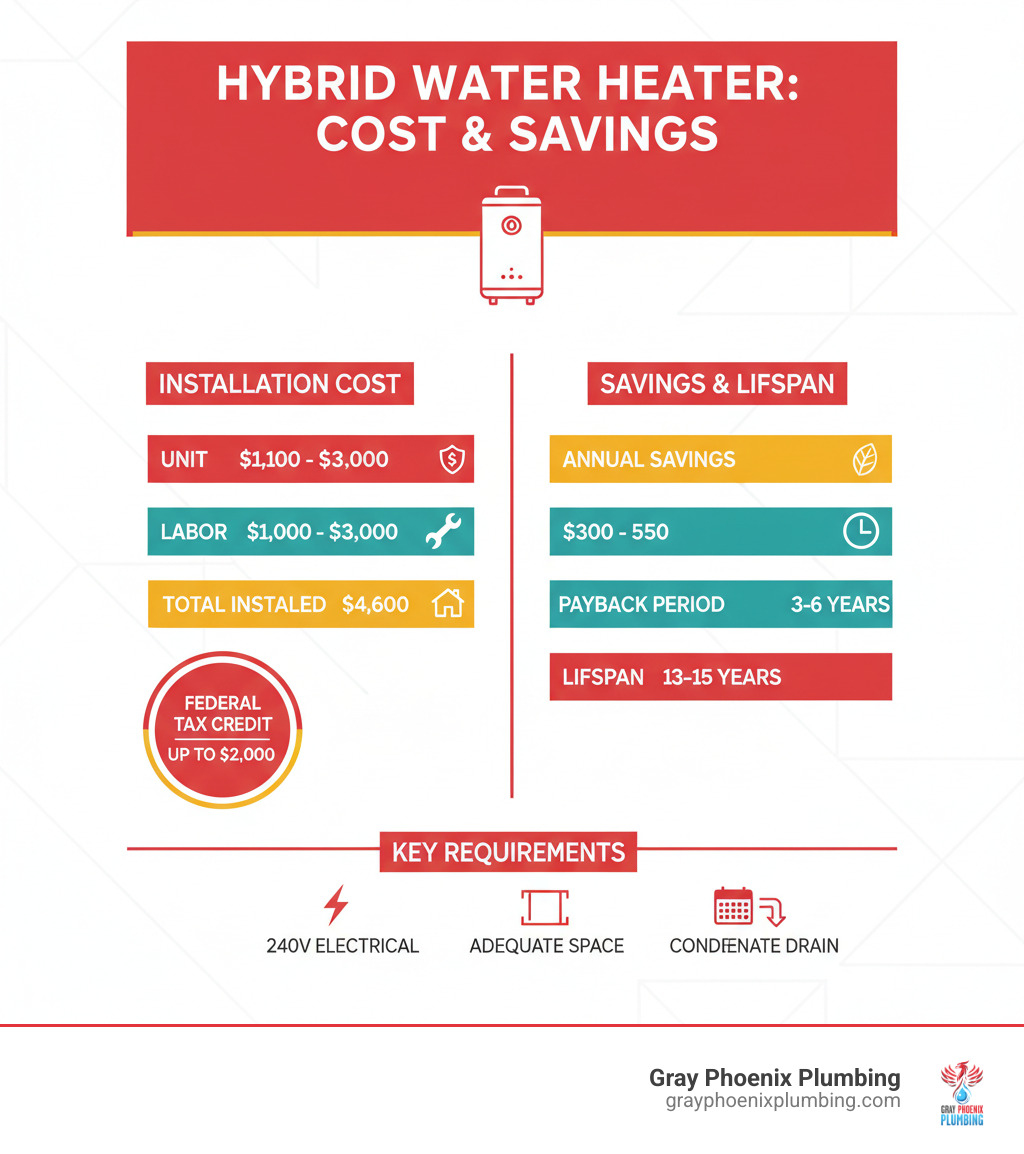
- Unit only: $1,100 – $3,000
- Labor and materials: $1,000 – $3,000
- Total installed cost: $2,000 – $4,600 (nationally)
- After federal tax credits: As low as $1,400 (up to 30% back or $2,000 max)
In the Denver metro area, homeowners often see costs from $5,800 to $7,500 due to common needs like electrical upgrades and site preparation.
While the upfront cost is higher than traditional models, the long-term benefits are significant. Hybrid water heaters are incredibly energy-efficient, saving a family of four nearly $550 per year. With a payback period of just 3-6 years and federal tax credits up to $2,000, the investment becomes much more attractive.
However, installation can be complex. These units require at least 450-700 cubic feet of air space, a 240-volt electrical supply, and a condensate drain. Switching from gas involves capping the gas line and running new electrical, which can add several hundred to over $2,000 to the project.
As the owner of Gray Phoenix Plumbing, I’ve helped many homeowners in Elizabeth, Parker, and the Denver area steer these costs. Proper installation is key to maximizing the efficiency and lifespan of your new unit.
The Bottom Line: Average Hybrid Water Heater Installation Cost
Nationally, the hybrid water heater installation cost lands between $2,000 and $4,600 for the unit and professional installation. The heater itself is $1,100 to $3,000, with labor and materials adding another $1,000 to $3,000.
Here in the Denver metro area, costs are often higher, ranging from $5,800 to $7,500. This is because many local homes in Elizabeth, Parker, and Castle Rock require electrical upgrades or other site prep to accommodate these advanced systems.
Despite the investment, hybrid water heaters are worth considering for their incredible efficiency. They combine traditional heating elements with heat pump technology that pulls warmth from the air, slashing energy use compared to conventional models.
Here’s how they stack up:
| Water Heater Type | Upfront Cost (Installed) | Lifespan | Annual Operating Cost |
|---|---|---|---|
| Traditional Electric | $1,900 – $2,200 | 10-12 years | $530 – $600 |
| Traditional Gas | $2,100 – $3,100 | 10-12 years | $250 – $420 |
| Tankless (Gas/Electric) | $1,400 – $5,600 | 15-20 years | $220 – $480 (Gas) |
| Hybrid (Heat Pump) | $2,000 – $7,500 | 13-15 years | $160 – $190 |
With an annual operating cost of just $160 to $190, a hybrid unit can save a family $300 to $550 annually compared to a standard electric model. Over its 13-15 year lifespan, the savings add up quickly, especially when combined with tax credits and rebates.
For more information on replacing your current water heater, visit our Water Heater Replacement page.
What’s Included in the Price?
A professional quote for hybrid water heater installation cost covers more than just the unit. Here’s a typical breakdown:
- The Unit: The largest single cost, from $1,100 to $3,000, depending on brand, capacity, and efficiency.
- Professional Labor: Licensed plumbers handle complex water and 240-volt electrical connections, taking anywhere from two to eight hours.
- Materials and Supplies: This includes new shut-off valves, supply lines, an expansion tank, condensate drain components, and other essential fittings.
- Permit Fees: Most communities like Denver and Lakewood require permits ($50 to $200) to ensure safety and code compliance.
- Old Unit Disposal: We haul away and properly dispose of your old water heater, which can cost $75 to $500.
Why Such a Wide Cost Range?
The broad cost range for a hybrid water heater installation cost is due to every home being unique. Key variables include:
- Geographic Location: Labor and material costs vary between areas like Colorado Springs and Castle Rock.
- Your Home’s Existing Setup: This is the biggest factor. Do you have a 240-volt outlet? Is there a drain nearby? Are you switching from gas? Converting from gas is more complex, requiring the gas line to be capped and new electrical circuits to be run.
- Unit Size and Features: A 50-gallon unit costs less than an 80-gallon one. Higher efficiency ratings (UEF) and smart features also increase the price.
- Installer Experience: Choosing a reputable company like Gray Phoenix Plumbing ensures you get licensed, background-checked professionals and transparent pricing. This peace of mind is a valuable part of the cost.
Breaking Down the Bill: Key Factors That Influence Your Total Cost
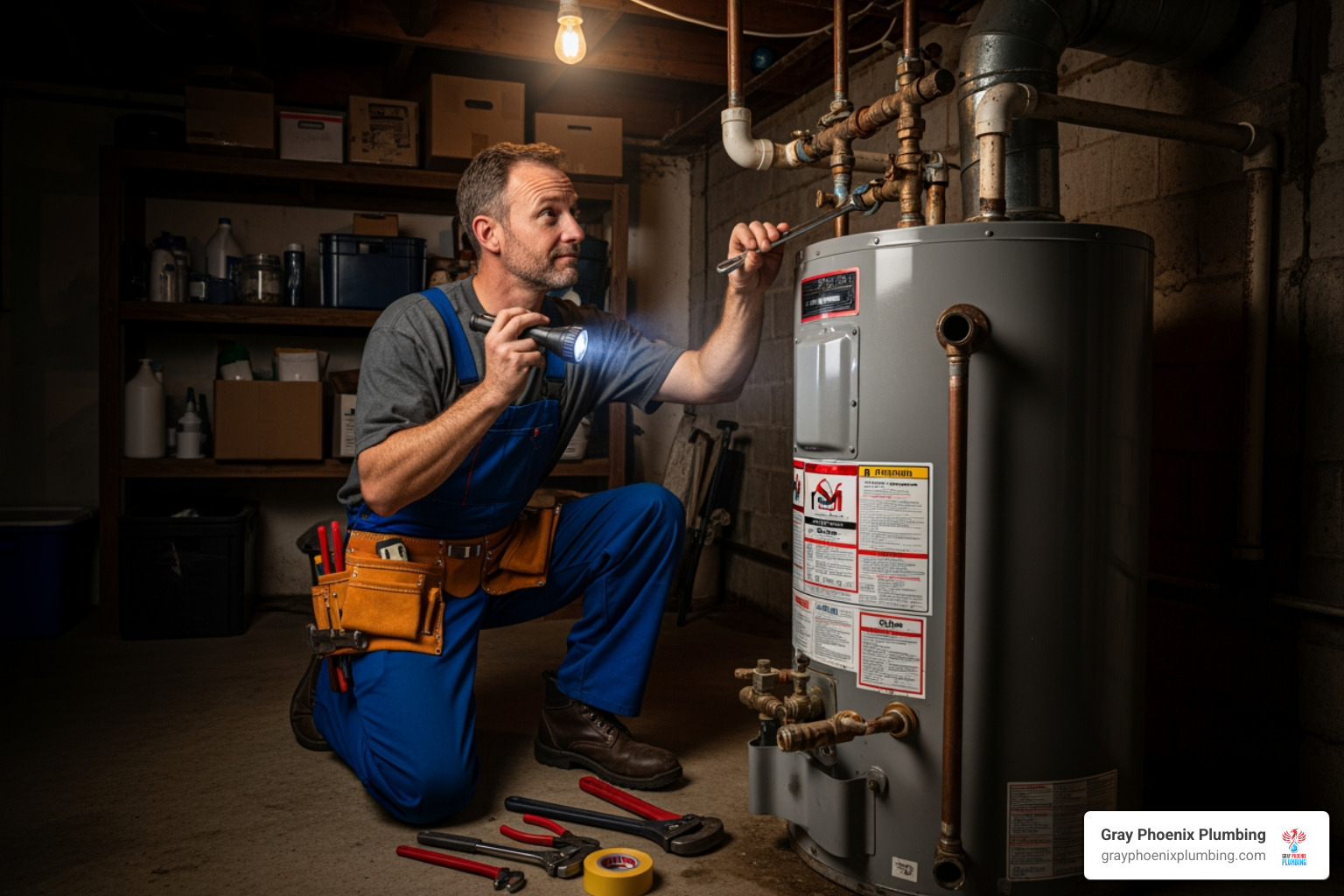
Your final hybrid water heater installation cost is a custom puzzle. Your neighbor’s $3,500 installation and your $6,000 quote could both be reasonable, depending on the specifics of each home. Factors like your electrical panel’s age, utility room size, and current water heater type all shape the final price.
The Unit Itself: Brand, Size, and Efficiency
The unit is the core of your cost, typically ranging from $1,100 to $3,000. This price is influenced by:
- Brand Reputation: Trusted manufacturers with solid warranties and support command higher prices, offering peace of mind.
- Tank Size: A family of five in Brighton will need a larger (and more expensive) 65- or 80-gallon tank than a couple needing a 40-gallon unit. If switching from gas, we often recommend sizing up to a 50-gallon hybrid to match the performance of a 40-gallon gas heater.
- Uniform Energy Factor (UEF): A higher UEF means better efficiency and more long-term savings, but also a higher upfront cost.
Labor and Professional Installation
Expert installation is crucial and is a key part of the hybrid water heater installation cost. These units require licensed professionals who understand both plumbing and electrical systems. Installation time can range from 2-3 hours for a simple swap to 8+ hours for a complex conversion from gas, which involves capping gas lines, running new electrical, and ensuring everything meets code.
For more information about our comprehensive approach to water heating, visit our Water Heaters and Filtration Systems page.
Site Preparation and Unique Installation Requirements
This is where costs can vary significantly. Hybrid water heaters have specific needs that often require modifications:
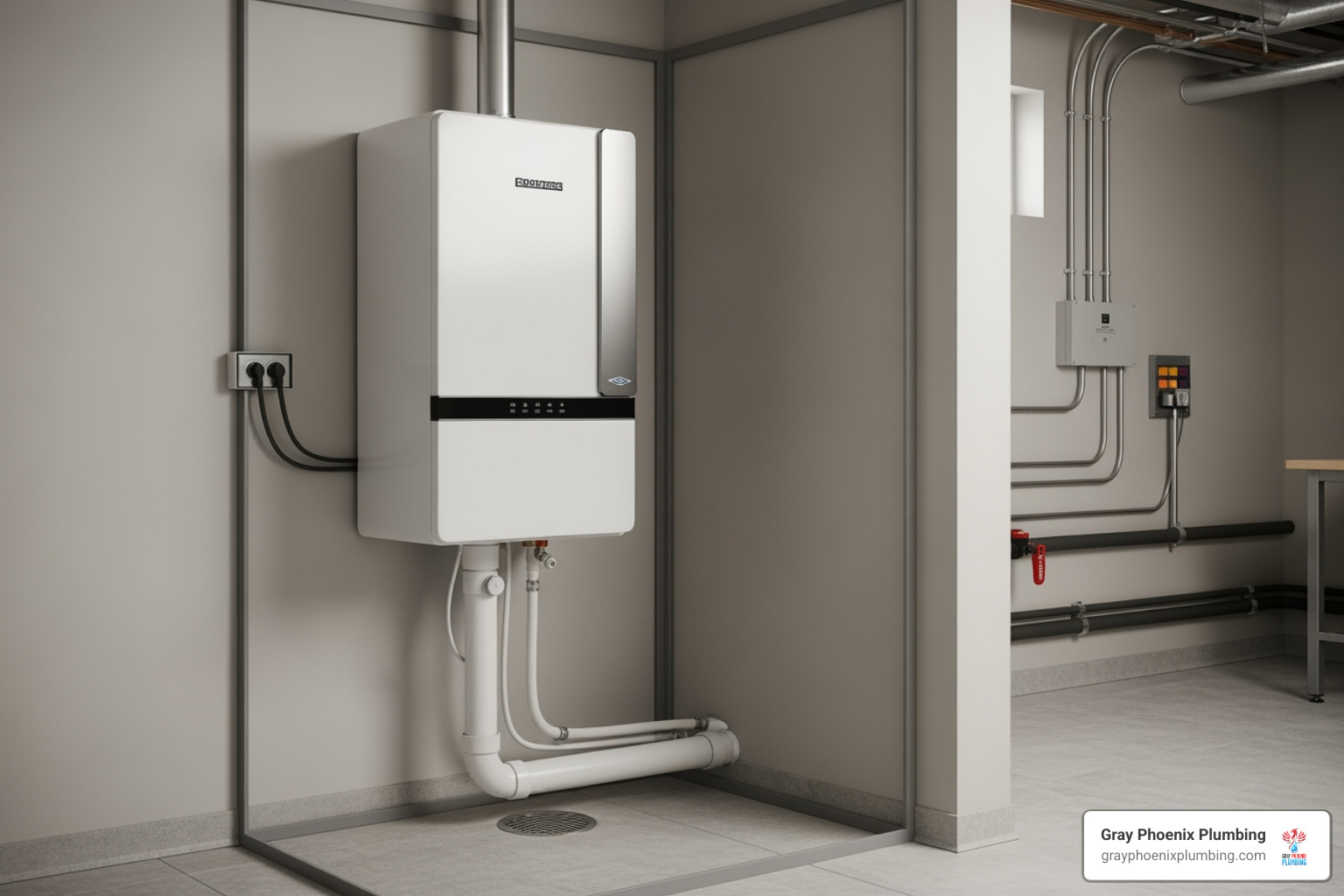
- Space Requirements: They need 450 to 700 cubic feet of air to operate efficiently (roughly a 10×10 room). For tight spaces, louvered doors or ductwork can be installed, adding $500 to $1,500 to the cost.
- Electrical Upgrades: A dedicated 240-volt circuit is required. If one isn’t present, running new wiring can cost $250 to $900. Older homes may need a panel upgrade ($850 to $1,700).
- Switching from Gas: This always involves running a new electrical circuit and safely capping the gas line.
- Plumbing Modifications: Rerouting water lines or adding a required expansion tank ($100 to $400) can add to the cost.
- Condensate Drain Line: These units produce condensation that must be drained away, requiring a new drain line to a floor drain or pump.
Special Considerations for Colder Climates
In Colorado, winter performance is a key consideration. Hybrid heaters extract heat from the air, so a 45°F basement means the unit works harder and may rely more on its backup electric elements. While still more efficient than a standard electric heater, savings may be lower in winter.
Ideally, the unit should be in a space that stays above 50°F year-round. The cool air they exhaust is a bonus in summer (free cooling and dehumidifying) but can make a chilly basement colder in winter. Ducting this cool air outside is an option if it becomes an issue.
For a deeper dive into how these units perform in cold climates like ours, check out this helpful article: Heat Pump Water Heaters in Cold Climates: Pros and Cons.
The Payback: How Savings and Incentives Offset the Upfront Cost
While the initial hybrid water heater installation cost is high, the long-term view reveals a smart investment. The total cost of ownership is often far less than with traditional models, thanks to significant energy savings and financial incentives.

Open uping Government Rebates and Tax Credits
This is one of the best times to upgrade, thanks to generous incentives. The federal Inflation Reduction Act offers a tax credit for up to 30% of your total project cost, capped at $2,000. A $6,000 installation could net you an $1,800 credit.
Additionally, Colorado homeowners can often find state and local rebates from $300 to $1,000. Your local utility, like Xcel Energy, may also offer its own incentives. To find what’s available, check these resources:
- The ENERGY STAR website
- The DSIRE database (Database of State Incentives for Renewables & Efficiency)
- Your local utility company’s rebate page
For more on costs and incentives, see What Goes into the Cost of Installing a Heat Pump Water Heater?
Calculating Your Long-Term Energy Savings
Hybrid water heaters prove their worth on your monthly utility bill. By being 3 to 4 times more efficient than standard electric models, they can save a typical family of four nearly $550 per year. Most households see annual savings between $300 and $550.
With these savings and available rebates, most homeowners achieve a payback period of just 3 to 6 years. After that, the savings are pure profit for the remainder of the unit’s lifespan. Choosing a hybrid also lowers your home’s carbon footprint, a significant benefit for eco-conscious Coloradans.
If your current water heater is struggling, see our guide: Don’t Ignore These Water Heater Warning Signs in Your Denver Home.
Lifespan and Maintenance Costs
A well-maintained hybrid water heater should last 13 to 15 years, a few years longer than a typical 10-12 year traditional tank. This extra longevity adds to the overall value of your investment.
Maintenance is straightforward and comparable to a traditional tank, typically costing $100 to $200 annually. Key tasks include:
- Anode Rod Inspection: Check periodically to prevent tank corrosion.
- Air Filter Cleaning: The heat pump’s air filter needs regular cleaning to maintain efficiency.
- Annual Professional Check-up: Ensures all components are working correctly.
Regular care ensures your unit delivers maximum savings for its entire lifespan.
Frequently Asked Questions about Hybrid Water Heaters
Homeowners in Westminster, Golden, and Morrison often ask about the practicalities of owning a hybrid water heater. Here are answers to the most common questions.
How do hybrid water heater installation costs compare to tankless models?
This is a frequent comparison. The hybrid water heater installation cost ($2,000 – $7,500) is often in a similar range or slightly higher than a tankless installation ($1,400 – $5,600), especially when electrical work is needed. The key difference is in the type of work: hybrids need a 240-volt circuit and airflow, while tankless models require specific gas line sizing or very heavy-duty electrical service.
Where hybrids excel is in long-term operating costs. Their heat pump technology is generally more cost-effective to run than even the most efficient tankless gas models, giving them the lowest annual energy cost of any water heater type.
For more details on tankless options, check out our Tankless Water Heater Installation Service in Denver.
Do hybrid water heaters make a lot of noise?
Yes, they make some noise. Because they use a compressor and fan, modern hybrid units operate at around 45 to 60 decibels (dB)—similar to a quiet refrigerator or a normal conversation. It’s a low hum, not a disruptive roar.
Whether you’ll notice it depends on the location. In a garage or isolated basement, the sound is typically unnoticeable. If installed in a closet next to a bedroom, you might hear it. We can discuss placement and sound reduction strategies during our assessment to ensure your comfort.
Can I install a hybrid water heater in a small closet?
This is challenging. Hybrid units require 450 to 700 cubic feet of surrounding air to function efficiently. Without enough airflow, the unit will run inefficiently, relying on its backup elements and negating your energy savings.
However, if a closet is the only option, there are solutions. Installing louvered doors is a common fix that allows air to circulate from adjacent spaces. In more difficult situations, we can install ducting to pull air from another room, though this adds to the installation cost ($500 to $1,500). We will assess your space and recommend the most practical and cost-effective solution.
Is a Hybrid Water Heater the Right Choice for Your Home?
So, is a hybrid water heater the right fit? For many Colorado homeowners, the answer is a clear yes.
The hybrid water heater installation cost ($2,000 to $7,500) is higher than a traditional electric model ($1,900 to $2,200). However, you’re investing in a system that slashes energy bills by $300 to $550 annually, offers a lifespan of 13-15 years, and can pay for itself in as little as 3-6 years. When you add in federal tax credits up to $2,000 and local rebates, the financial case becomes very compelling.
A hybrid water heater is an ideal choice if:
- You plan to stay in your home long enough to realize the savings.
- You have adequate space (a basement, garage, or large utility room).
- Your home already has, or can easily accommodate, a 240-volt circuit.
If you have a very small space or require major electrical upgrades, the added complexity and cost might make another option, like a tankless heater, more suitable. We can have an honest conversation about the best path for your home.
At Gray Phoenix Plumbing, our goal is to help you make a confident decision that fits your home and budget. As a family-owned business serving Elizabeth, Parker, Castle Rock, and the entire Denver metro area, we provide transparent pricing and expert guidance. Our Customer Care Guarantee means you get honest answers, not a sales pitch.
For a precise quote customized to your home, our licensed professionals can provide a detailed assessment. We’ll evaluate your space, check your electrical system, and explain exactly what your hybrid water heater installation cost will include.
Ready to explore your options? Visit our Water Heaters and Filtration Systems page to learn more and schedule your consultation today.


