

Why Reliable Hot Water Matters in Your Denver Home
Denver water heater replacement is a critical service for homeowners facing an aging or failing unit. When your water heater breaks down, it disrupts daily routines—from morning showers to washing dishes—and can quickly escalate into property damage if not addressed.
Quick Answer: What You Need to Know About Denver Water Heater Replacement:
- Average Cost: $800 to $2,500+ depending on type (tank vs. tankless), size, and installation complexity
- Typical Lifespan: 8-12 years in Colorado’s climate due to hard water and mineral buildup
- Permit Required: Yes, in most Denver metro municipalities for safety and code compliance
- Installation Time: Usually completed in a single day by a licensed professional
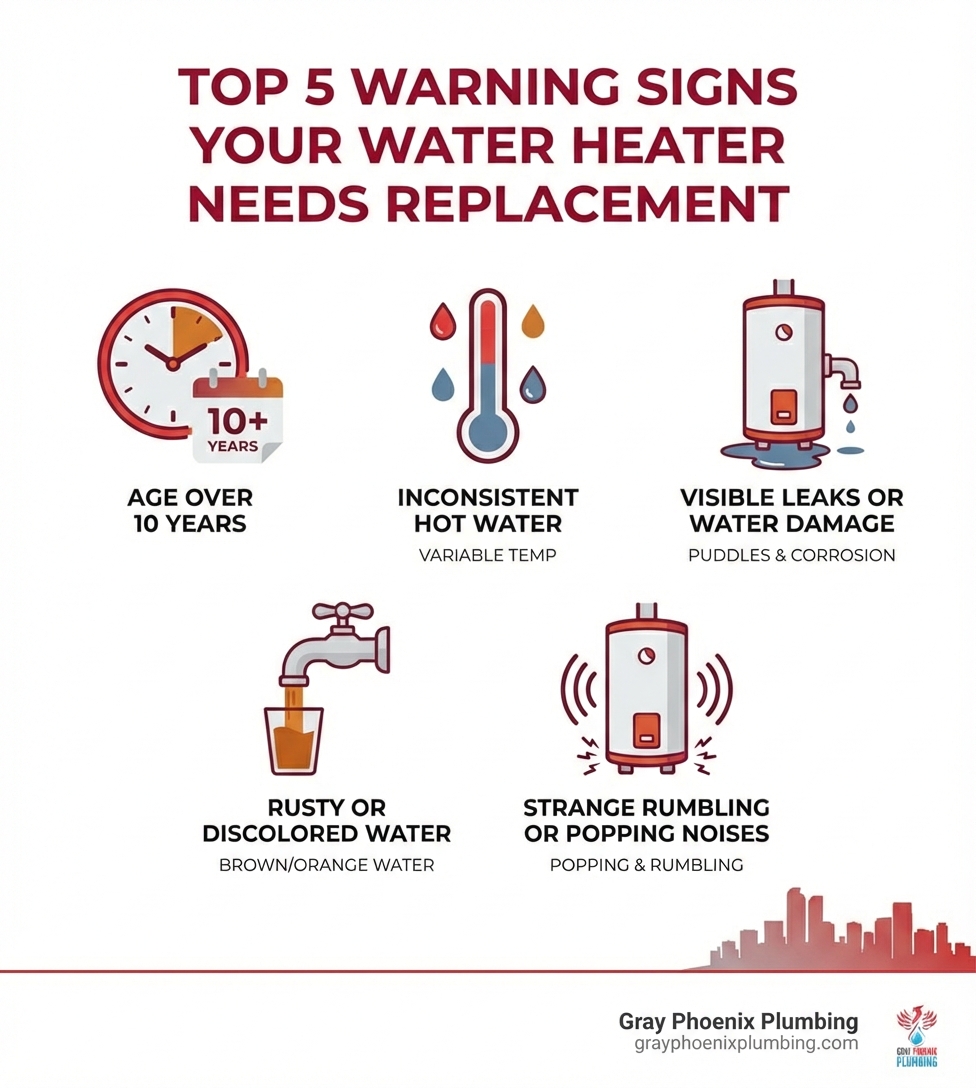
- Key Signs to Replace: Age over 10 years, inconsistent hot water, leaks, rusty water, or strange noises
Every day, your water heater quietly works behind the scenes, heating thousands of gallons for showers, laundry, and dishes. A typical family of four uses about 2,000 gallons of hot water each month. But when that system fails—especially during a cold Colorado morning—the inconvenience is immediate and frustrating.
Whether you’re dealing with lukewarm showers, rising energy bills, or visible leaks around your unit, this guide walks you through everything you need to know about replacing your water heater in Denver. We’ll cover the warning signs, your options for new systems, the replacement process, and how to find a trustworthy professional.
I’m Chris Hoffman, a Master Plumber with over 25 years of experience serving the Denver Metro area, and I’ve helped hundreds of homeowners steer denver water heater replacement with confidence. At Gray Phoenix Plumbing, we’ve seen how the right replacement—done right the first time—can restore comfort and peace of mind to your home.
Is It Time for a Replacement? Key Signs and Local Factors
Nobody wants to face a cold shower on a frosty Denver morning, or find an uninvited pool party in their basement. Knowing when your water heater is nearing the end of its life can save you a lot of hassle and expense. While water heaters are designed to be durable, they don’t last forever. The projected average life of a home water heater is about 10 years, though some tanks can last up to 12 to 15 years under ideal conditions. However, many factors can shorten this lifespan, particularly in Denver.
Signs Your Water Heater Is Failing
Recognizing the warning signs is the first step in avoiding a water heater emergency. Here’s what to look out for:
- Age Over 10 Years: If your water heater is over a decade old, it’s likely nearing the end of its projected lifespan. Even if it’s still working, it’s probably losing efficiency and could fail unexpectedly. Around this time, conventional water heaters start to rust and develop leaks.
- No Hot Water or Lukewarm Water: This is the most obvious sign. If you’re consistently running out of hot water, or if the water never gets hot enough, your heating elements or thermostat might be failing. Inconsistent water temperature can be a real nuisance.
- Discolored or Rusty Water: If the hot water coming from your faucets appears rusty, cloudy, or has a metallic taste, it often indicates internal corrosion of the tank. This means the protective lining inside is breaking down, and a leak is likely imminent.
- Leaks Around the Unit: Any visible water pooling around the base of your water heater is a serious red flag. Leaks can stem from cracks in the tank, loose connections, or a failing pressure relief valve. If you notice a leak, contact us immediately to prevent further water damage. For more information on addressing leaks, check out our guide on leak repair.
- Strange Noises: Banging, rumbling, popping, or whistling sounds coming from your water heater usually mean there’s sediment buildup at the bottom of the tank. This sediment hardens over time, reducing efficiency and potentially causing the tank to overheat and fail prematurely.
- Inefficient Heating and Rising Energy Bills: An older, less efficient water heater has to work harder to heat water, leading to higher energy consumption. If your energy bills are creeping up without a clear explanation, your water heater could be the culprit.
Don’t ignore these crucial indicators. Addressing them proactively can save you from a major plumbing disaster. For a deeper dive into these warnings, read our article on don’t ignore these water heater warning signs.
How Denver’s Climate and Water Affects Your Heater
Denver’s unique climate and water quality play a significant role in your water heater’s longevity and performance. We have what’s often referred to as “hard water,” meaning it contains a higher concentration of minerals like calcium and magnesium.
Over time, these minerals can accumulate as sediment buildup at the bottom of your water heater tank. This sediment acts as an insulator, making it harder for the heating elements to transfer heat to the water. The result? Reduced efficiency, increased energy costs, and a shorter lifespan for your unit. This buildup can also contribute to those strange rumbling noises we mentioned earlier. Regularly flushing your water heater can help mitigate this, but it’s a battle against nature in Denver.
Additionally, Denver’s cold winters mean your water heater works harder to bring incoming cold water up to temperature, putting extra strain on the system. This constant heating and cooling cycle can accelerate wear and tear. That’s why considering a robust, energy-efficient unit is even more important here. To learn more about managing Denver’s water, explore the Denver water solution.
The Risks of an Old or Failing Water Heater
An old or failing water heater isn’t just an inconvenience; it can pose significant risks to your home and family.
- Catastrophic Leaks and Flooding: The most common and damaging risk is a tank rupture. A failing tank can burst, quickly releasing dozens of gallons of water into your home. This can lead to basement flooding, extensive property damage to flooring, walls, and personal belongings, and create an ideal environment for mold growth.
- Safety Hazards: Gas water heaters, if not properly maintained or installed, can pose a risk of carbon monoxide leaks. All water heaters, regardless of fuel type, can build up excessive pressure if the temperature and pressure relief (T&P) valve malfunctions, potentially leading to an explosion. Hot water exceeding 125°F also poses a serious burn risk, especially to children.
- Reduced Water Quality: A corroding tank can introduce rust and other contaminants into your hot water supply, affecting your health and the longevity of your plumbing fixtures.
Addressing these issues before they become emergencies is crucial for your home’s safety and your peace of mind. For general information on water heating safety, you can refer to Wikipedia’s article on Water heating.
Choosing Your New Water Heater: Types, Sizes, and Efficiency
Upgrading your water heater is more than just replacing a broken appliance; it’s an opportunity to improve your home’s comfort, save money on energy bills, and reduce your environmental footprint. A new, energy-efficient water heater can significantly improve your daily life, providing reliable hot water while consuming less energy.

Exploring Water Heater Types for Denver Homes
When considering denver water heater replacement, you’ll find a variety of options, each with its own benefits:
- Traditional Tank Heaters: These are the most common type, storing and continuously heating a reservoir of water. They are generally more affordable upfront and simpler to install. Tank sizes typically range from 20 to 80 gallons, with 40-gallon units being the most common for average households. They provide a reliable and consistent hot water supply, which is often preferred in colder climates like Denver.
- Tankless Water Heaters: Also known as on-demand water heaters, these units heat water only when you need it, eliminating standby energy losses from keeping a tank of water hot. They are significantly more energy-efficient, can last longer, and save space. While the upfront cost and installation can be higher, they offer endless hot water and considerable long-term energy savings. Learn more about our tankless installation services.
- Hybrid (Heat Pump) Water Heaters: These innovative systems combine conventional electric heating with a heat pump that extracts heat from the air to heat the water. They are highly energy-efficient, using up to 60% less energy than standard electric tank heaters. They require more space and specific installation conditions but offer impressive savings without compromising performance. Find out more about hybrid installation.
- Gas vs. Electric Models: The choice between gas and electric often depends on your home’s existing infrastructure and local energy costs. Gas water heaters often heat water more quickly, which can be a plus in colder climates. Electric models are generally cheaper to install initially, especially if you already have the necessary electrical hookups.
[TABLE] comparing Tank vs. Tankless Water Heaters
To help you decide, here’s a quick comparison of the two most common types for denver water heater replacement:
| Feature | Traditional Tank Water Heater | Tankless Water Heater |
|---|---|---|
| Upfront Cost | Generally lower | Generally higher |
| Operating Cost | Higher due to standby heating losses | Lower due to on-demand heating (can save hundreds annually) |
| Lifespan | 10-15 years | 20+ years |
| Hot Water Supply | Limited by tank size; can run out during peak demand | Endless hot water; heats on demand |
| Space Requirements | Requires a dedicated space for the tank | Compact, wall-mounted unit; saves space |
| Installation Complexity | Easier and often cheaper to install | More complex, may require gas line or electrical upgrades, higher cost |
How to Choose the Right Size for Your Household
Choosing the correct size for your new water heater is crucial for comfort and efficiency. A tank that is too small results in cold showers, while an oversized one leads to increased energy bills from heating water you don’t use.
For traditional tank heaters, sizing is typically based on the First-Hour Rating (FHR), which indicates how many gallons of hot water the heater can deliver in an hour, starting with a full tank. This is usually matched to your family size and peak hot water demand. For instance, a 40-gallon tank is common for average households.
For tankless units, sizing depends on the required Gallons Per Minute (GPM) and temperature rise (how much the water needs to be heated from its incoming temperature). We’ll assess your hot water usage patterns (e.g., how many showers run simultaneously) to recommend a unit that can meet your demand.
Don’t guess on sizing! Our plumbing experts at Gray Phoenix Plumbing can help you determine the perfect unit for your home with an installation evaluation. You can consult with a professional to ensure you get the right fit.
Energy Efficiency, Rebates, and Environmental Impact
Upgrading to an energy-efficient water heater in Denver offers significant advantages beyond consistent hot water.
- Lower Utility Bills: Energy-efficient models, especially tankless and hybrid units, consume less energy, directly translating to lower monthly utility bills. Heating water accounts for approximately 20% of utility bills, so improvements here can mean substantial savings.
- Reduced Carbon Footprint: By using less energy, you’re also contributing to a smaller environmental impact, making your home more sustainable.
- Tax Credits and Rebates: Certain ENERGY STAR certified water heaters qualify for federal tax credits, providing additional savings on your investment. We recommend checking the federal tax credits for energy efficiency to see what incentives might be available.
Choosing an energy-efficient model for your denver water heater replacement is a smart investment that pays dividends in comfort, cost savings, and environmental responsibility.
The Denver Water Heater Replacement Process and Costs
When it’s time for a denver water heater replacement, you want the job done right, safely, and efficiently. Our process at Gray Phoenix Plumbing ensures professionalism, adherence to safety standards, and compliance with all local codes.

What to Expect During a Professional Installation
The typical process for a water heater replacement in Denver, from assessment to installation, involves several key steps:
- Assessment and Consultation: We start with a thorough evaluation of your current system, your household’s hot water needs, and your budget. We’ll discuss the different types of water heaters (tank, tankless, hybrid, gas, electric) and help you choose the best option.
- Draining and Removing the Old Unit: Our licensed plumbers will safely shut off the water and power/gas supply, drain the old tank, and carefully remove it from your property. We handle the disposal of the old unit according to environmental regulations.
- Site Preparation: This may involve preparing the installation area, ensuring proper venting, and making any necessary adjustments to plumbing or electrical connections to accommodate your new unit.
- New Unit Installation: Your new water heater will be expertly installed, connected to your home’s water lines, and hooked up to the appropriate gas or electrical supply.
- Connecting Water, Gas, and Electrical: All connections are made to local code, ensuring safety and optimal performance. For gas units, this includes proper gas line connections and venting.
- Testing for Leaks and Performance: After installation, we rigorously test the new system to ensure there are no leaks, the water heats correctly, and all safety features are functioning as they should.
- Cleanup and Disposal: We pride ourselves on leaving your home as clean as we found it. We’ll clean up the work area and ensure all debris is removed.
Our team is dedicated to providing a seamless experience, often completing the entire replacement in a single appointment. For more on our approach to home plumbing, see our residential plumbing process.
Factors Influencing the Cost of a Denver Water Heater Replacement
The cost to replace a water heater in Denver can vary widely, typically ranging from $800 to $2,500 for a standard replacement, including the unit and installation. Several factors play a role in this variation:
- Unit Type: Tankless and hybrid water heaters generally have a higher upfront cost than traditional tank models. However, traditional tank-style water heaters are much easier & cheaper to install.
- Size and Capacity: Larger tanks or higher GPM tankless units will naturally cost more. The greater the tank capacity, the higher the cost of your new water heater.
- Brand and Model: Different manufacturers and models come with varying price points and features.
- Installation Complexity: If your new water heater requires significant plumbing modifications, gas line upgrades, or electrical work (e.g., switching from a tank to a tankless unit, or moving the unit’s location), the installation complexity will increase the overall cost.
- Venting Requirements: Gas water heaters require proper venting, and if your existing venting system needs an upgrade or modification for a new, more efficient unit, that will add to the cost.
- Permit Fees: As permits are required, the associated fees will be part of the total cost.
- Labor Rates: Professional installation by licensed and experienced plumbers ensures safety and compliance, but labor costs will vary by company.
We believe in transparent pricing. We’ll provide a detailed quote upfront so you know exactly what to expect. For more detailed cost breakdowns, you can always view our cost guides.
Navigating Denver’s Local Permits and Regulations
Yes, when undertaking a denver water heater replacement, permits are almost always required. In many areas of Colorado, including Denver and surrounding counties, a permit is typically required to ensure the installation complies with local building codes, safety regulations, and environmental standards. These codes cover plumbing, gas, and electrical work.
Obtaining a permit ensures that your new water heater is installed safely and correctly, protecting your home and family. As licensed professionals, we handle the entire permitting process for you, from application to final inspection. This means you don’t have to worry about navigating complex city or county regulations. We ensure your installation meets all local requirements, giving you peace of mind. For complex plumbing needs, always rely on a master plumber.
Finding a Trusted Professional for Your Installation
Choosing the right company for your denver water heater replacement is just as important as choosing the right unit. You want a team that is experienced, reliable, and committed to customer satisfaction. After all, a water heater is a major component in your home and plays a big role in determining how much it costs you.
What to Look for in a Reputable Denver Plumber
Here’s what we recommend looking for when selecting a company for your water heater replacement:
- Licensed and Insured: Always ensure your plumber is fully licensed and insured. This protects you in case of any accidents or issues during the installation. We are fully licensed and our technicians are background-checked for your safety and peace of mind.
- Positive Customer Reviews: Check online reviews and testimonials. A company with thousands of 5-star reviews and a strong satisfaction guarantee indicates a commitment to quality service. Our focus on customer satisfaction is highlighted in thousands of 5-star reviews. You can check out our customer reviews.
- Local Experience: Companies with experience in Denver and surrounding areas understand the unique challenges posed by our climate and water quality. Our technicians have been providing Denver, CO and surrounding areas with tankless and regular water heaters for over 20 years.
- Transparent Pricing: A reputable company will provide a clear, upfront estimate with no hidden fees.
- Background-Checked Technicians: For your safety and security, ensure the technicians entering your home are thoroughly vetted.
- Emergency Availability: Water heater failures don’t always happen during business hours. Look for a company that offers emergency services when you need them most. We offer 24/7 emergency services for unexpected breakdowns.
Understanding Warranties and Guarantees
A good warranty and satisfaction guarantee are hallmarks of a trustworthy company. When investing in a new water heater, you should understand:
- Manufacturer Warranty: This covers defects in the unit itself, often for 6-10 years for the tank and 1-2 years for parts. Tankless units often have longer heat exchanger warranties.
- Labor Warranty: This covers the installation work performed by the plumbing company. We offer a 1-year labor warranty on all our installations, ensuring any issues related to our workmanship are covered.
- Satisfaction Guarantees: Many reputable companies offer a satisfaction guarantee, promising to make things right if you’re not completely happy with their service. We stand by our work with a 100% satisfaction guarantee.
These warranties and guarantees provide peace of mind, knowing your investment is protected and your new water heater will perform as expected.
Frequently Asked Questions about Water Heater Replacement in Denver
We get a lot of questions about denver water heater replacement. Here are some of the most common ones we hear:
How long does a water heater typically last in Colorado?
In Colorado’s climate, the typical lifespan of a water heater is about 8-12 years. While some units might last 12 to 15 years, Denver’s hard water and mineral deposits can significantly shorten this. Without proper care, such as regular flushing or the installation of a water filtration system, sediment buildup can cause premature wear and tear, reducing efficiency and lifespan. We generally recommend considering replacement if your unit is approaching or has exceeded the 10-year mark, especially if you’re noticing any performance issues.
How much does it cost to replace a water heater in Denver?
The cost to replace a water heater in Denver can vary widely, typically ranging from $800 to over $2,500. This variation depends on several factors: the type of water heater (traditional tank, tankless, or hybrid), its size and capacity, the brand and model you choose, and the complexity of the installation. For instance, converting from a tank to a tankless unit often requires more extensive plumbing or gas line modifications, which can increase the overall cost. For an accurate quote custom to your specific needs and home, we always recommend getting a professional estimate.
Do I need a permit for a water heater replacement in Denver?
Yes, in most municipalities within the Denver metro area, including Denver, Littleton, Aurora, and other surrounding communities, a permit is required for water heater replacement. This requirement is in place to ensure that the installation complies with local building codes, safety regulations for plumbing, gas, and electrical work, and environmental standards. As licensed plumbers, we will handle the entire permitting process for you, ensuring your new water heater is installed safely and legally.
Your Partner for Reliable Hot Water in Denver
Navigating denver water heater replacement doesn’t have to be a headache. By understanding the signs of a failing unit, exploring your options for new, energy-efficient systems, and choosing a reputable local plumbing partner, you can ensure your home enjoys reliable hot water for years to come.
At Gray Phoenix Plumbing, we’re committed to providing expert advice, transparent pricing, and seamless installation services across Denver and our wider service area, including Elizabeth, Parker, Castle Rock, Littleton, and Aurora. Our licensed and background-checked pros have the experience and knowledge to guide you through every step, from selecting the perfect unit to a flawless installation.
For expert advice and a seamless installation experience, explore our tankless water heater services or contact us today for a personalized assessment. Let us bring you back to the comfort of consistent hot water, with no hassle!


