

Why Hot Water Matters for Aurora Homeowners
Hot water heater Aurora systems are essential for daily comfort, powering everything from showers to laundry. As one of your home’s largest energy consumers after heating and cooling, water heaters account for about 17.2% of your household energy bill.
Quick Answer: Hot Water Heater Essentials for Aurora Residents
- Tank Water Heaters: Store 40-60 gallons; last 8-12 years; lower upfront cost
- Tankless Water Heaters: Heat on-demand; last 15-20 years; save 15-40% on energy bills
- Average Installation Cost: Varies by type, labor, and permits; professional quotes recommended
- Key Maintenance: Annual flushing; anode rod checks; extends lifespan significantly
- Available Rebates: Federal tax credits and local Aurora Water Conservation programs
Whether you have no hot water, are planning a replacement, or want to lower utility bills, understanding your options is key. Many Aurora homeowners face frustrations like running out of hot water, seeing rust-colored water, or hearing strange noises from an aging tank.
This guide covers everything you need to know about hot water heaters in Aurora, from types and sizing to installation costs and maintenance, helping you keep your system running efficiently.
Gray Phoenix Plumbing serves Aurora residents with professional water heater installation, repair, and maintenance services backed by licensed technicians who understand local codes and conditions.
Understanding Your Water Heater Options in Aurora
Choosing the right hot water heater for your Aurora home is a big decision. We’ll break down the main types available to help you understand their mechanics, benefits, and key considerations.
Conventional Storage Tank Water Heaters
These are the most common water heaters in Aurora homes.
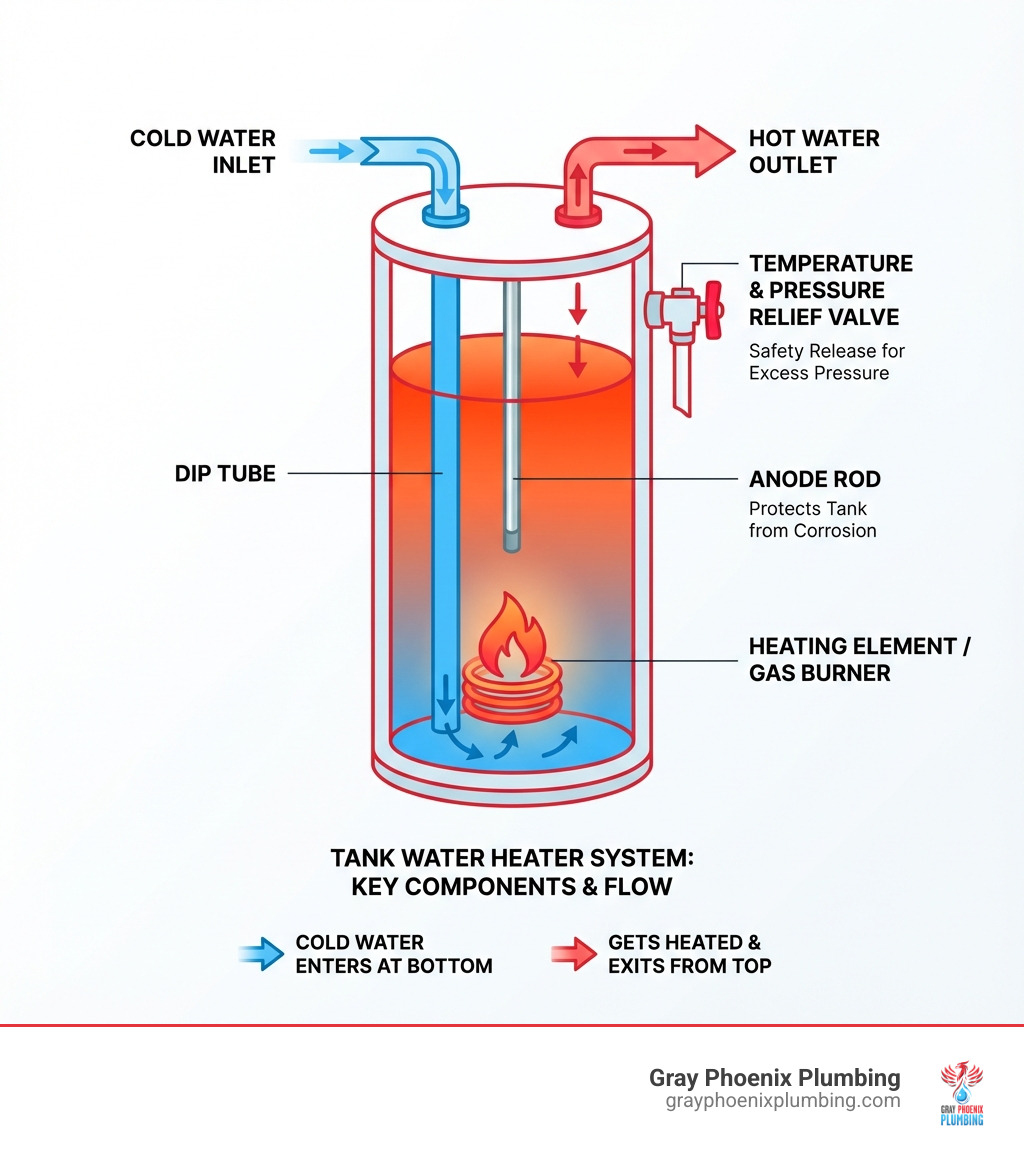
How They Work: These heaters keep 40 to 80 gallons of water hot in an insulated tank. When you turn on a tap, hot water is drawn from the top while cold water enters the bottom to be heated. This ensures a ready supply of hot water is always on standby.
Benefits:
- Lower Upfront Cost: Storage tank heaters generally have a lower initial purchase and installation cost than tankless models.
- Reliable Performance: A properly sized 40-, 50-, or 60-gallon tank delivers a steady, predictable flow of hot water for daily tasks.
- Easy Maintenance: Their maintenance requirements are often simpler compared to tankless models.
Fuel Types:
- Gas Heaters: Using natural gas, these units heat water quickly and can be more energy-efficient depending on local utility costs.
- Electric Heaters: A popular choice where natural gas is unavailable, electric heaters may have lower upfront costs but tend to heat water more slowly.
For more details on these systems, explore our resources on More info about water heaters and filtration systems.
Tankless (On-Demand) Water Heaters
Imagine endless hot water, no matter how much you use. That’s the primary benefit of a tankless water heater.
How They Work: Tankless, or on-demand, water heaters don’t store water. Instead, they heat it instantly as you need it. When you open a hot water tap, cold water flows through the unit and is rapidly heated by a gas or electric element, providing a continuous supply.
Benefits:
- Endless Hot Water: You’ll never run out of hot water mid-shower again.
- Energy Efficiency: By heating water only on demand, these units eliminate the standby energy loss of a tank, saving 15-40% on water heating costs.
- Space-Saving Design: These compact, wall-mounted units free up valuable floor space.
- Longer Lifespan: Tankless heaters typically last 15-20 years, compared to 8-12 years for conventional tanks.
If you’re considering a switch, our Complete guide to installing a tankless water heater has all the details. We also offer Tankless water heater installation services in Aurora.
Hybrid (Heat Pump) Water Heaters
For a highly energy-efficient option with long-term savings, consider a hybrid water heater.
How They Work: Hybrid models use heat pump technology to pull warmth from the surrounding air and transfer it to water in a storage tank—like a refrigerator working in reverse. This process is highly efficient because it moves heat instead of creating it. Most include a backup electric element for periods of high demand.
Benefits:
- High Energy Efficiency: Hybrid heaters can cut electricity use for water heating by up to 60% compared to standard electric models.
- Long-Term Savings: While the initial cost is higher, significant energy savings often lead to a quick return on investment.
- Environmental Impact: Reduced energy consumption means a smaller carbon footprint.
Installation Requirements: Hybrid heaters need to be installed in a space that remains above 40°F with at least 1,000 cubic feet of air space, like a basement or garage. They also require a drain for condensate.
To see if this technology is right for you, Learn about hybrid water heater installation.
Choosing the Right Hot Water Heater for Your Aurora Home
Selecting the perfect water heater means matching the unit’s capacity, fuel source, and efficiency to your family’s needs and budget.

Sizing Your Water Heater Correctly
Properly sizing your water heater is critical. An undersized unit leads to cold showers, while an oversized one wastes energy.
- First Hour Rating (FHR): For tank heaters, FHR is key. It indicates how many gallons of hot water the unit can supply in one hour from a full tank, a better sizing metric than tank capacity alone.
- Gallon Capacity: Common residential tank sizes are 40, 50, and 60 gallons. A 40-gallon tank is often fine for 1-2 people, 50-gallon for 2-4 people, and 60-gallon or more for larger households.
- Flow Rate (GPM): For tankless heaters, sizing is based on flow rate in gallons per minute (GPM). This is determined by how many fixtures you might use at once.
- Temperature Rise: In colder climates like Aurora, tankless units must work harder to heat incoming cold water. This “temperature rise” affects the maximum GPM a unit can produce.
- Household Size: Your family’s size and water usage habits are the starting point for determining your peak hot water demand. We can help you calculate this to ensure you always have enough.
Fuel Type and Availability
Your water heater’s energy source impacts operating costs and environmental footprint. In Aurora, the main choices are natural gas and electric.
- Natural Gas: Where available, natural gas heaters are popular. They heat water quickly and are often more cost-effective to run than electric models, though their upfront cost may be higher.
- Electric: Electric heaters are a good option if you don’t have a gas line. They typically have lower upfront costs and are easier to install but can be more expensive to operate depending on electricity rates.
- Propane: For homes in rural parts of Aurora or Elbert County without natural gas, propane heaters offer similar performance but require an on-site storage tank.
We can help you assess the operating costs and local availability in Aurora, CO, for each fuel type.
Energy Efficiency and Long-Term Savings
An energy-efficient hot water heater Aurora system can lead to significant savings.
- ENERGY STAR® Certified: Look for the ENERGY STAR® label, which indicates the unit meets strict energy efficiency guidelines set by the EPA.
- Uniform Energy Factor (UEF): This rating measures a water heater’s overall efficiency. A higher UEF means a more efficient unit and lower operating costs.
- Reducing Energy Bills: High-efficiency models minimize heat loss and maximize energy use. Tankless heaters can cut energy use by 30-45%, while high-efficiency tanks feature better insulation. Choosing an efficient model can reduce your water heating costs by 15-40%.
While the initial cost may be higher, the long-term savings from a high-efficiency unit make it a smart investment. Learn more with our Cost guide for hybrid water heater installation.
Installation, Costs, and Incentives for a Hot Water Heater in Aurora
Once you’ve chosen a water heater, it’s time to consider installation, costs, and available financial incentives. We believe in transparency to help you get the most value.
Average Cost of a New Hot Water Heater in Aurora
The cost to install a new hot water heater Aurora depends on several factors beyond the unit’s price:
- Unit Type: Conventional tanks have lower upfront costs than more advanced tankless or hybrid models.
- Labor Costs: Professional installation by licensed plumbers is crucial. Costs vary based on the complexity, such as needing new gas lines or venting.
- Permit Fees: Aurora often requires permits for water heater installations to ensure work meets local safety codes. Our team handles this process for you.
- Professional Quotes: The best way to get an accurate estimate is with a professional, on-site quote. We provide clear, upfront estimates and will often deduct any call-out fee from the final cost if you proceed with our service.
DIY installation is dangerous and can lead to gas leaks, water damage, or electrical hazards. Always trust a licensed professional. For a cost breakdown, see our guide on the Cost to install an an electric tankless water heater.
Rebates and Incentives for Aurora Residents
Aurora residents can often find rebates and incentives for installing energy-efficient water heaters.
- Federal Tax Credits: The federal government may offer tax credits for installing qualifying high-efficiency water heaters.
- Utility Rebates: Local utility companies in the Aurora area sometimes offer rebates for upgrading to energy-efficient models.
- Aurora Water Conservation Programs: The City of Aurora is committed to water conservation. Check their Aurora Water Conservation programs for current resources and potential incentives.
Always check with your utility provider and federal programs for the latest information. For general info, you can consult General information on water heating.
Renting vs. Buying: What’s the Best Option?
For your hot water heater Aurora, you can either buy or rent. The best choice depends on your budget and preferences.
-
Ownership Benefits (Buying):
- Long-Term Investment: Buying is often cheaper over the unit’s lifespan.
- Full Control: You choose the exact model and brand you want.
- Increased Home Value: A new, owned water heater can be a selling point.
-
Renting Benefits:
- Low Upfront Cost: Avoid a large initial purchase and installation fee.
- Included Maintenance and Repairs: Rental agreements often cover all service, meaning no surprise repair bills.
- Predictable Monthly Payments: A fixed monthly fee makes budgeting simple.
While Gray Phoenix Plumbing focuses on the sale and service of owned units, we recognize renting suits some homeowners. However, buying and properly maintaining a quality unit is often the most cost-effective solution long-term.
Maintenance, Repairs, and Lifespan of Your Water Heater
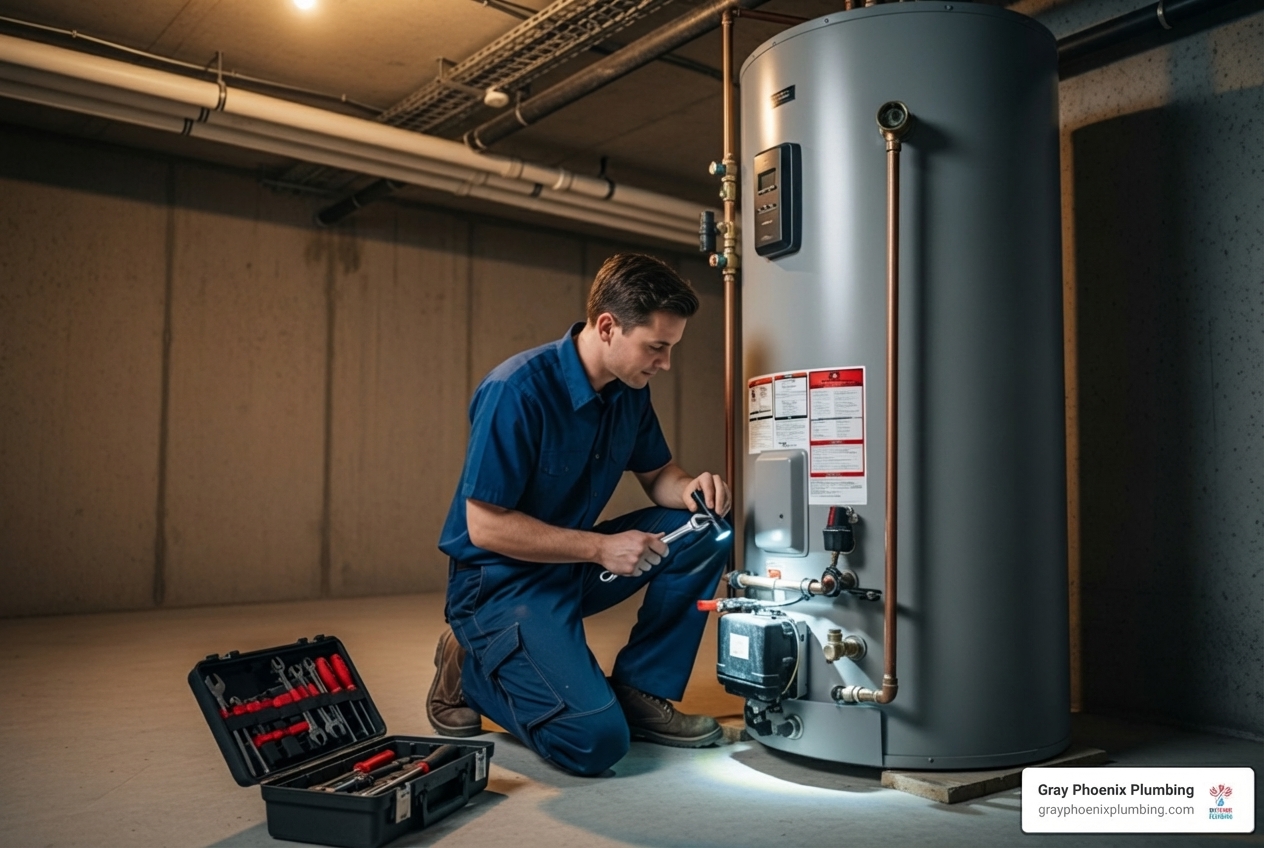
Like a car, your water heater needs regular care to maximize performance, extend its life, and prevent unexpected breakdowns. Neglecting maintenance is a common cause of premature failure.
Common Signs Your Water Heater Needs Repair
Your water heater will often give hints that it needs attention. Addressing these signs promptly can prevent major problems.
- No Hot or Lukewarm Water: The most obvious sign of a problem, this could indicate a faulty heating element, thermostat, or burner.
- Leaks: Water pooling around the base of your tank is a red flag. It can signal a loose connection or, more seriously, a corroded tank that needs replacement.
- Strange Noises: Rumbling, popping, or banging sounds often point to sediment buildup in the tank, which reduces efficiency and can cause damage.
- Discolored Water: Rusty or cloudy hot water can mean the inside of your tank is corroding and nearing the end of its life.
- Foul Odors: A “rotten egg” smell from your hot water is usually caused by bacteria in the tank, often related to a failing anode rod.
Don’t ignore these issues. Learn more about Warning signs for your water heater.
Lifespan and When to Consider Replacement
Knowing your water heater’s typical lifespan helps you plan for a replacement before you’re left in the cold.
- Tank Heater Lifespan: A conventional tank heater lasts 8 to 12 years with proper maintenance. After 10 years, its efficiency and reliability decline.
- Tankless Heater Lifespan: Tankless models have a longer lifespan, typically 15-20 years.
- Water Quality Impact: Hard water, common in Colorado, accelerates mineral buildup and can shorten any water heater’s lifespan.
- Repair vs. Replacement Cost: If your unit is old and requires frequent, costly repairs, replacement is often the more economical choice. Our technicians can inspect your unit and help you weigh the costs.
When it’s time for an upgrade, we offer Professional water heater replacement to ensure a smooth transition.
Essential Maintenance for Your Hot Water Heater in Aurora
Regular maintenance is the key to a long, efficient life for your hot water heater Aurora.
- Annual Flushing: Crucial for tank heaters, annual flushing removes sediment that accumulates at the bottom. This buildup reduces efficiency, causes noise, and can damage the tank.
- Anode Rod Inspection: The “sacrificial” anode rod corrodes to protect the tank from rust. It should be inspected and replaced every 3-5 years.
- T&P Valve Testing: The Temperature and Pressure (T&P) relief valve is a critical safety feature. Test it annually to ensure it works correctly.
- Professional Maintenance Benefits: A professional check-up ensures all components are inspected, adjusted, and cleaned correctly, spotting potential issues early and optimizing efficiency.
For professional help, rely on a trusted hot water heater contractor like us.
Frequently Asked Questions about Hot Water Heaters in Aurora
Here are answers to some of the most common questions we receive from Aurora homeowners.
Do I need a permit to replace my water heater in Aurora, CO?
Yes, a permit is generally required to replace a water heater in Aurora, CO. Permits ensure the installation is performed safely, meets local plumbing codes, and is inspected for quality workmanship by a licensed professional.
Our team at Gray Phoenix Plumbing handles all necessary City of Aurora regulations and permit acquisition, giving you peace of mind that your new system is installed correctly and up to code.
Why is my brand new water heater not producing enough hot water?
If a new unit isn’t providing enough hot water, several factors could be the cause:
- Incorrect Sizing: The unit may be too small for your household’s demand (e.g., low FHR for a tank or low GPM for a tankless).
- Thermostat Settings: The temperature setting may be too low.
- Installation Errors: Improper pipe sizing, venting, or gas/electrical connections can hinder performance.
- Faulty Components: Though rare in new units, a defective part like a heating element or thermostat could be the issue.
- Crossover Issues: Cold water might be mixing into the hot water lines due to a faulty faucet or valve elsewhere in your home.
A professional diagnosis is the best way to identify and fix the problem. We can get your new hot water heater Aurora running at peak performance.
How does Aurora’s hard water affect my water heater?
Aurora, CO, has hard water, meaning it contains high levels of minerals like calcium and magnesium. While safe to drink, hard water is tough on appliances, especially your water heater.
Here’s how it has an impact:
- Mineral Buildup (Scale): When hard water is heated, minerals form scale deposits. In tank heaters, scale collects at the bottom; in tankless units, it clogs the heat exchanger.
- Reduced Efficiency: Scale acts as an insulator, forcing your heater to work harder and use more energy, which increases your utility bills.
- Shorter Lifespan: Scale buildup causes wear and corrosion, leading to premature failure and leaks.
- Importance of Flushing: Annual flushing of tank heaters is crucial to remove sediment. Tankless units require periodic descaling with a vinegar solution.
- Water Softeners: A whole-home water softener is an excellent investment in Aurora. It removes minerals before they enter your water heater, preventing scale and extending the life of your plumbing system.
We can advise you on managing hard water effects and recommend solutions to protect your investment.
Conclusion
Choosing and maintaining a hot water heater Aurora system doesn’t have to be daunting. This guide covered everything from the types of units and selection criteria to installation costs and proper maintenance.
Key Takeaways:
- Diverse Options: Whether you choose a conventional tank, a tankless model, or a hybrid unit, there’s a solution for your Aurora home.
- Smart Choices Save Money: Sizing your unit correctly and choosing an energy-efficient model leads to significant long-term savings.
- Professional Expertise is Key: Professional guidance is invaluable for selection, code-compliant installation, and routine maintenance.
- Maintenance Extends Life: Regular flushing and prompt repairs are crucial to maximizing your water heater’s lifespan and efficiency.
For expert advice and professional service in our service area, the licensed technicians at Gray Phoenix Plumbing can help. We’re committed to ensuring you have reliable, efficient hot water.
Ready to upgrade or service your water heater? Contact us for professional hot water heater services in Aurora, CO. We’re here to keep your hot water flowing!


