

When Every Minute Without Hot Water Counts
Emergency water heater replacement near me is a search that often happens in moments of panic—when your morning shower turns ice cold, water pools around your tank, or you smell gas near your unit. Here’s what you need to know right now:
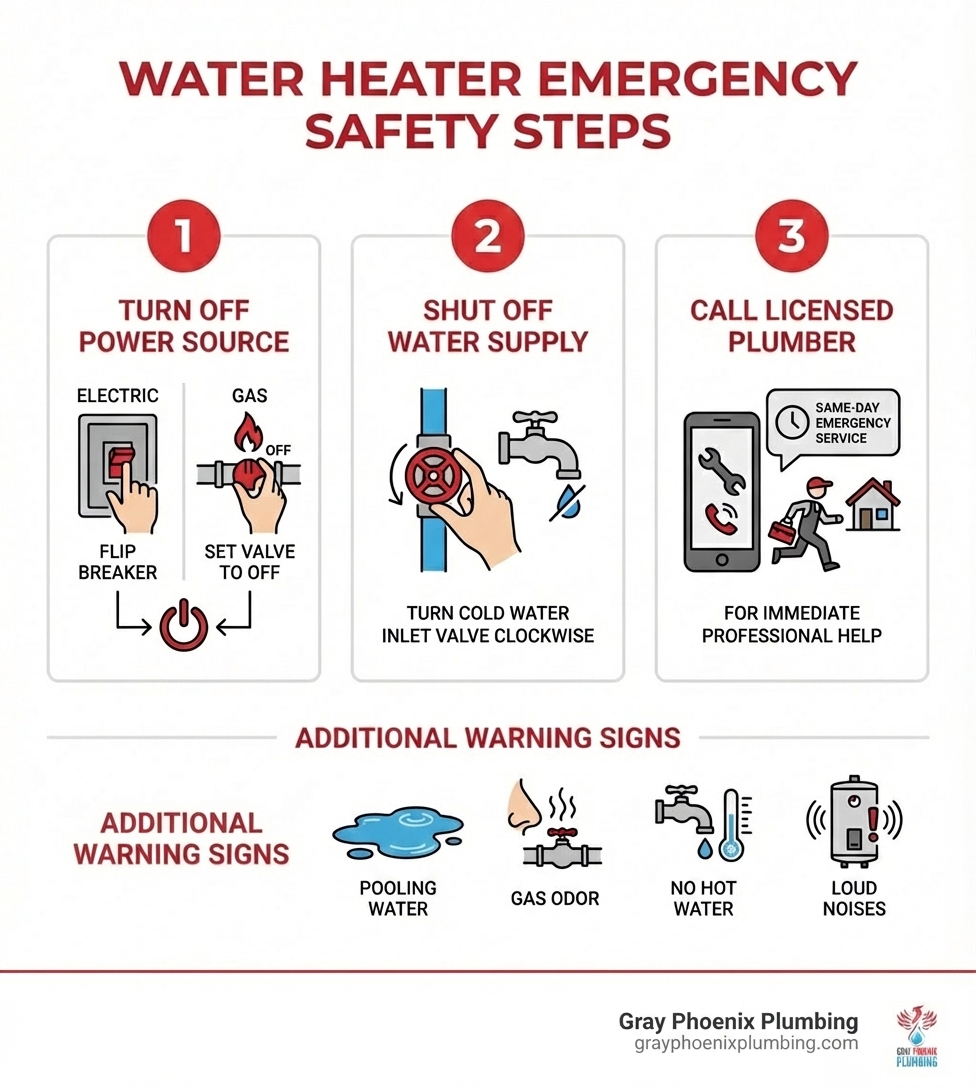
If you’re facing a water heater emergency:
- Turn off the power (flip the breaker for electric units or set gas valve to “OFF”)
- Shut off the water supply (turn the cold water inlet valve clockwise)
- Call a licensed plumber immediately for same-day service
- Expect 2-4 hours for a complete emergency replacement
- Average cost ranges from $1,200 for a standard 40-gallon tank to $3,000+ for tankless systems
Water heater failures don’t follow a schedule. As one homeowner finded at midnight, a bursting tank or failed pilot light on a freezing morning can bring your household to a standstill. Hot water isn’t a luxury—it’s essential for cooking, cleaning, bathing, and basic hygiene.
If you are unsure whether your system uses gas or electricity, you can learn the basic differences between gas and electric water heaters from this simple overview on residential water heating, then follow the specific safety steps below.
Major emergencies requiring immediate replacement include:
- Active leaks or flooding from the tank
- Complete loss of hot water that can’t be restored
- Gas odor (rotten egg smell) near a gas unit
- Loud banging, rumbling, or popping sounds
- Rusty or discolored water flowing from taps
I’m Chris Hoffman, a Master Plumber with over 25 years of experience handling emergency water heater replacement near me calls throughout the Denver Metro and Elbert County areas. I’ve seen how quickly a failing water heater can escalate from an inconvenience to a crisis, which is why my team at Gray Phoenix Plumbing maintains a 96% on-time service record and offers 24/7 emergency response for situations exactly like yours.
First Steps: What to Do Immediately When Your Water Heater Fails
When your water heater decides to call it quits, especially in the middle of a cold Colorado morning, the first thing to do is prioritize safety and minimize potential damage. We know it’s stressful, but taking these immediate actions can save you a lot of headache and expense while you wait for us to arrive.
How to Safely Shut Down Your Unit
The goal here is to stop the flow of water and energy to the unit, preventing further leaks, potential electrical hazards, or gas issues.
Here’s a step-by-step guide to safely shutting down your water heater:
- Turn off the Power Supply (Electric Units): If you have an electric water heater, head to your main electrical panel. Locate the circuit breaker labeled for your water heater and flip it to the “OFF” position. This prevents any electrical shorts or continued heating of an empty or leaking tank.
- Turn off the Gas Supply (Gas Units): For gas water heaters, find the gas control knob on the unit itself. Turn this knob to the “OFF” position. Natural gas is flammable and a potential fire hazard, so never attempt to work on a gas unit yourself. If you smell gas, leave your home immediately and call your gas provider from a safe distance.
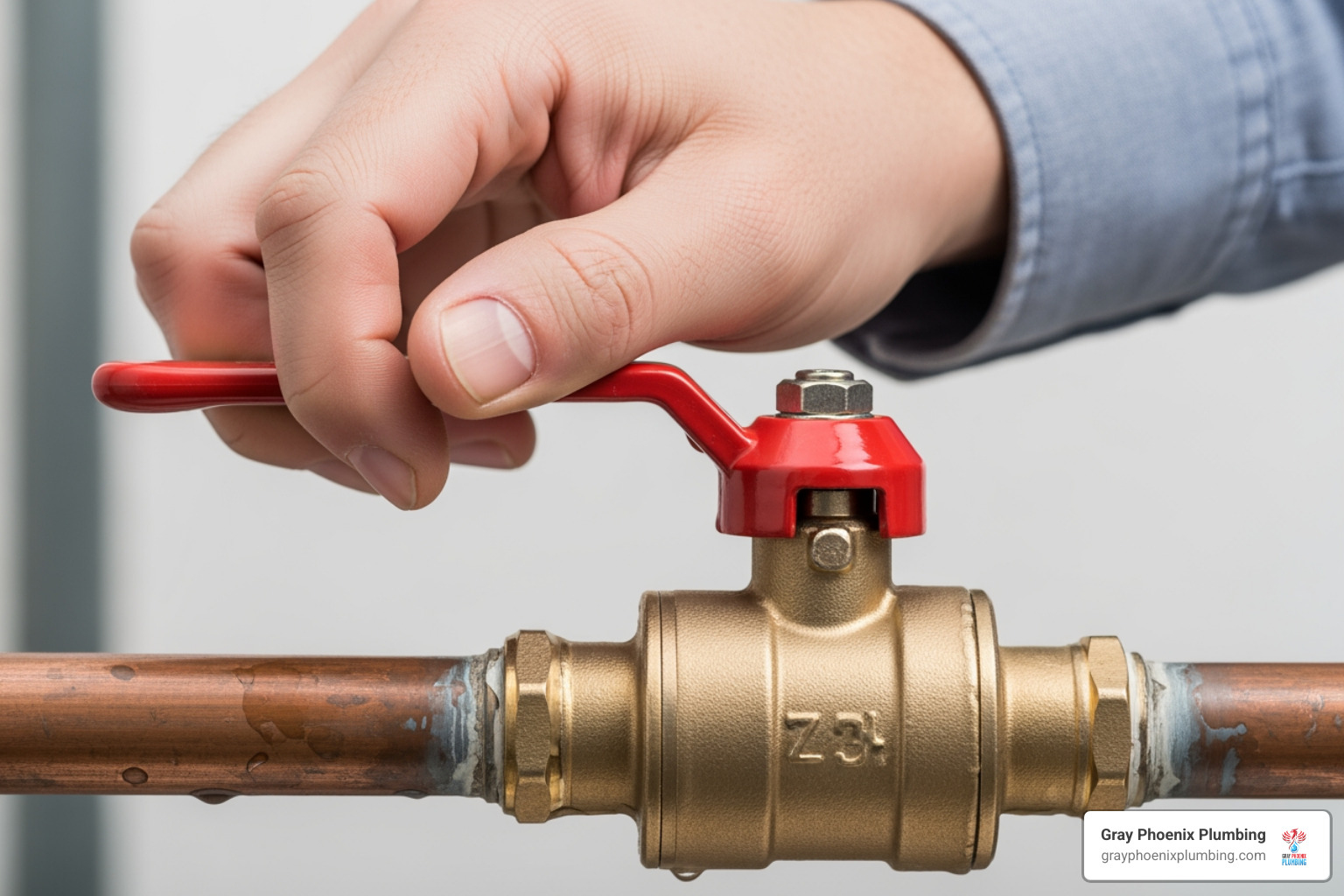
- Shut off the Cold Water Inlet Valve: This is crucial for stopping water from continuously entering a leaking tank. Look for a handle or knob on the cold water pipe leading into your water heater (usually on the right side, near the top). Turn it clockwise until it’s completely closed.
- Drain the Tank (if leaking severely): If your tank is actively leaking, you’ll want to drain it to prevent further water damage. Attach a standard garden hose to the drain valve located at the bottom of the water heater. Run the other end of the hose to a floor drain, a utility sink, or outside to a safe area where water can disperse without causing damage. Once the hose is securely in place, open the drain valve. Be aware that the water inside can be very hot, so exercise extreme caution.
- Call a Professional: Once these immediate safety measures are in place, the next step is to call us for emergency water heater replacement near me. We have licensed and background-checked pros ready to help you in Elizabeth, Elbert County, Parker, Castle Rock, Kiowa, Franktown, Denver, Littleton, Aurora, Lakewood, Thornton, Westminster, Brighton, Golden, Morrison, Conifer, Evergreen, Firestone, Erie, Bennett, Centennial, Agate, Jefferson, Colorado Springs, and throughout Colorado.
A poorly maintained or antique water heater can be an emergency waiting to happen. For more insights on recognizing issues before they become crises, check out our guide on Don’t Ignore These Water Heater Warning Signs in Your Denver Home.
Warning Signs: When Is It an Emergency?
Sometimes a water heater might give you subtle hints it’s struggling. Other times, it just quits. But there are specific signs that scream “emergency!” and indicate it’s time for an emergency water heater replacement near me. Ignoring these warnings can lead to significant water damage, safety risks, and even health hazards.
Here are the critical indicators that your water heater needs immediate professional attention:
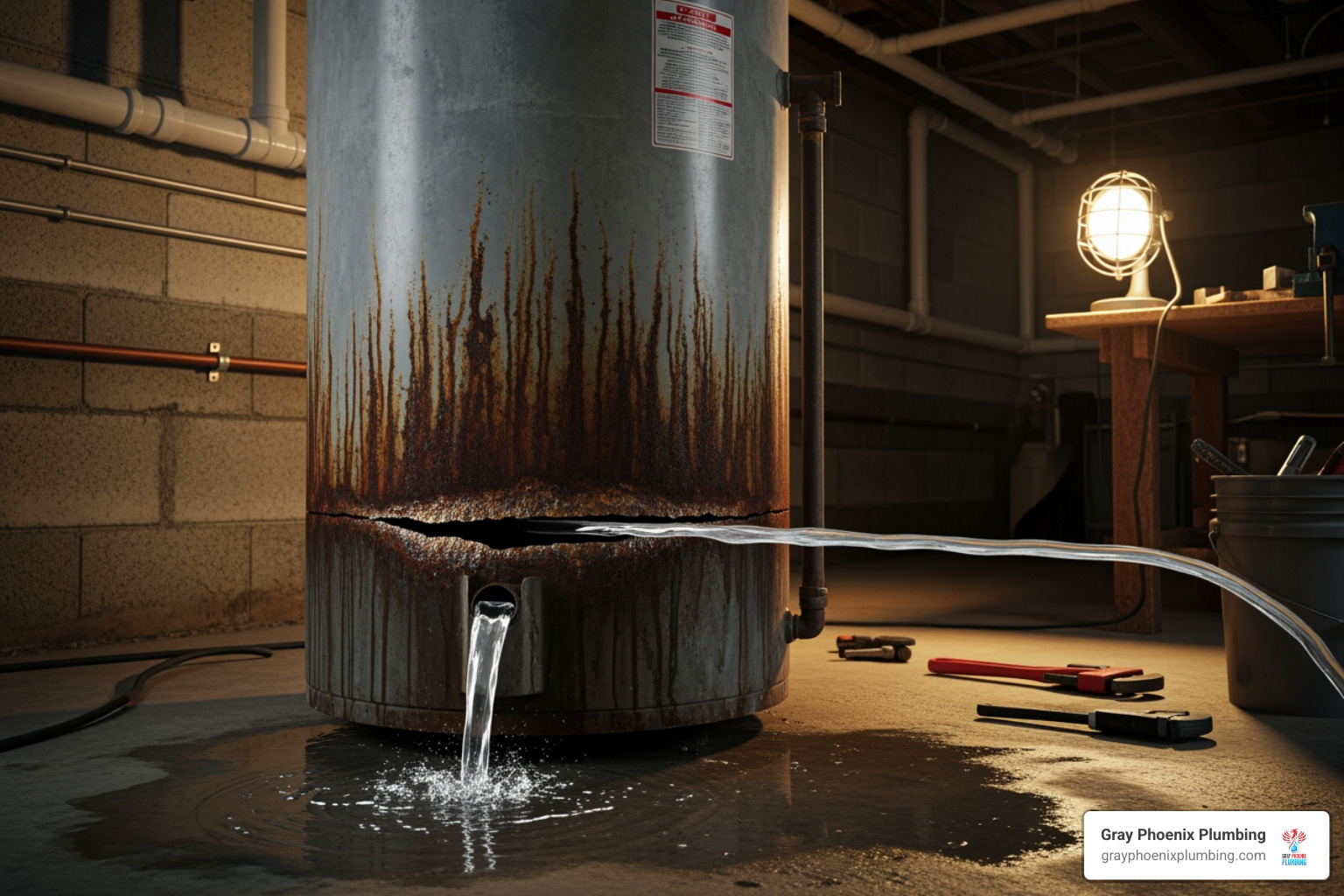
- Major Leaks or Flooding: This is perhaps the most obvious sign. If you see water actively pooling around the base of your unit, dripping consistently, or worse, flooding your basement or utility room, it’s an emergency. This often indicates a corroded tank or a ruptured tank, which usually means replacement is the only option.
- No Hot Water: While a lack of hot water can sometimes be a simple fix (like a tripped breaker or pilot light issue), if you’ve checked the basics and still have no hot water, especially after a period of normal function, it can indicate a major component failure. As one customer noted, a unit could start leaking, leading to water damage, especially in basements.
- Loud Rumbling, Banging, or Popping Noises: These sounds are often caused by sediment buildup at the bottom of the tank. As the heating element tries to heat the water, it also heats the sediment, causing it to boil and create these unsettling noises. This reduces efficiency and can eventually damage the tank, making it prone to leaks.
- Rusty or Discolored Water: If the hot water coming out of your faucets has a reddish-brown tint, it’s a strong sign that the inside of your water heater tank is rusting. This corrosion can lead to leaks and tank failure.
- Gas Smell (Rotten Egg Odor): If you have a gas water heater and detect a sulfur or “rotten egg” smell, it could indicate a gas leak. This is extremely dangerous and requires immediate evacuation and a call to your gas company and us from a safe location. Do not ignore this!
- Scalding Hot Water: While no hot water is bad, water that is too hot can also be an emergency. If your water heater is producing scalding hot water, it could mean a faulty thermostat or a pressure issue, posing a serious burn risk, especially for children. Water temperature exceeding 125°F is a safety concern.
Potential Risks of Delaying Water Heater Replacement:
Delaying action when you notice these signs can lead to:
- Extensive Water Damage: Leaks can quickly ruin flooring, drywall, and personal belongings, leading to costly repairs and potential mold growth.
- Mold Growth: Water damage often leads to mold, which can cause respiratory issues and further property damage.
- Structural Damage: Long-term or severe leaks can compromise the structural integrity of your home.
- Increased Energy Bills: A failing or inefficient water heater will work harder to produce hot water, driving up your utility costs.
- Complete System Failure: What starts as a small leak can turn into a burst tank, leaving you without any hot water and a significant mess.
If you’re experiencing any of these issues, it’s time to call in the experts. For more information on water heater problems and repairs, visit our Water Heater Repair Littleton page.
Your Guide to Emergency Water Heater Replacement Near Me
When faced with a water heater emergency, you need more than just a technician; you need a reliable, professional, and swift solution. That’s exactly what we provide at Gray Phoenix Plumbing. We understand the urgency, and our local expertise means we’re ready to respond quickly to your emergency water heater replacement near me needs across Elizabeth, Elbert County, Parker, Castle Rock, Kiowa, Franktown, Denver, Littleton, Aurora, Lakewood, Thornton, Westminster, Brighton, Golden, Morrison, Conifer, Evergreen, Firestone, Erie, Bennett, Centennial, Agate, Jefferson, Colorado Springs, and the surrounding areas in Colorado.
What to Expect from an Emergency Water Heater Replacement Near Me
When you reach out to us for an emergency water heater replacement, here’s what you can expect:
- 24/7 Dispatch and Rapid Response: Water heater failures don’t keep business hours, and neither do we. Our 24/7 dispatch means we’re always ready to take your call. We pride ourselves on rapid response times, often arriving within 60-90 minutes, sometimes even sooner, depending on traffic and your location.
- Technician Arrival and Diagnosis: Our licensed, background-checked pros will arrive in a fully stocked service van, ready to tackle the problem. We conduct a thorough diagnosis to confirm the issue and determine the best course of action—repair or replacement. We often stock common parts and even have local inventory of replacement units to ensure a quick resolution.
- Transparent, On-Site Quote: Once we’ve assessed the situation, we’ll provide you with an upfront, no-gimmicks quote. There are no hidden fees or surprises. While there might be an after-hours diagnostic fee (typically $79-$129), it’s often waived if you proceed with the repair or replacement.
- Same-Day Service: In most emergency cases, our goal is to provide same-day service. Whether it’s a repair or a full emergency water heater replacement near me, we work efficiently to restore your hot water as quickly as possible. Most installations are completed in 2-4 hours, though some complex scenarios might take a bit longer. For immediate service, check out our Plumber Same Day Water Heater Repair Denver page.
How to Choose a Reputable Emergency Plumber
Choosing the right professional for an emergency can feel daunting, but a few key factors can guide you:
- Licensed and Insured: Always ensure the company and its technicians are fully licensed and insured. This protects you from liability and guarantees that the work meets industry standards. All our pros at Gray Phoenix Plumbing are licensed and highly trained.
- Background-Checked Technicians: For your peace of mind, choose a service that performs thorough background checks on all employees. Our team consists of background-checked pros, so you can feel safe inviting us into your home.
- Positive Customer Reviews: Look for companies with a strong track record of customer satisfaction. Online ratings and testimonials (like our impressive 4.8-star average from over 105,000 reviews for similar services) speak volumes about reliability and service quality.
- Transparent Pricing: A reputable company will offer clear, upfront pricing with written estimates before any work begins. Avoid services that are vague about costs or pressure you into decisions.
- Local Service Area: For an emergency water heater replacement near me, you need a company that genuinely serves your community. We are your local neighbors, serving Elizabeth, Elbert County, and all our listed Colorado locations with dedicated teams.
- Customer Care Guarantee: A strong guarantee demonstrates a company’s commitment to quality and customer satisfaction. We stand by our work with a Customer Care Guarantee.
Understanding the Cost of an Emergency Water Heater Replacement Near Me
The cost of an emergency water heater replacement near me can vary significantly based on several factors, but we believe in transparent pricing from the start.
Here’s what typically influences the total cost:
- Heater Type and Size: A standard 40-gallon electric tank can cost around $1,200, including installation. However, a high-capacity tankless system or a heat pump water heater can range from $3,000 or more. The larger the tank or the more complex the technology, the higher the material cost.
- Installation Complexity: Factors like relocation of the unit, plumbing modifications, electrical upgrades, or specialized venting for gas units can add to the labor cost. For instance, installing a new attic water heater might involve more complex work than a simple basement replacement.
- After-Hours Fees: While diagnostic fees for emergencies can range from $79-$129, these are often waived if you proceed with the repair or replacement. Our transparent pricing means you’ll know these costs upfront.
- Permit Costs: Local codes in Colorado often require permits for water heater installations to ensure safety and compliance. We handle all necessary mechanical permits, schedule inspections, and ensure compliance with local codes, including seismic strapping, proper venting, expansion tanks, and dielectric connections. Permit costs vary by municipality but are a necessary part of a safe, legal installation.
- Additional Parts: Sometimes, during an emergency replacement, additional parts like new shut-off valves, expansion tanks, or pressure regulators might be needed, adding to the overall cost.
We offer flexible financing options to make significant replacements more manageable, ensuring you can get your hot water back without undue financial stress. For a detailed breakdown on specific types, consult our Hybrid Water Heater Installation Cost Guide.
Choosing Your New Water Heater: Tank vs. Tankless
When you’re facing an emergency water heater replacement near me, the decision between a conventional tank unit and a tankless system often comes up. Both have their advantages, and the best choice depends on your household needs, budget considerations, and long-term savings goals.
We’ll help you explore the best options for your home in Elizabeth, Denver, Littleton, or any of our service areas. Our licensed water heater installers can provide and recommend a full range of options. For a complete guide, visit our Install Tankless Water Heater Complete Guide.
Conventional Tank Water Heaters
Conventional tank water heaters store a large volume of hot water and constantly heat it, keeping it ready for use.
- Lower Upfront Cost: These units are generally less expensive to purchase and install than tankless models, making them a budget-friendly option for many households.
- High-Demand Households: Tank water heaters can accommodate high-demand households, especially those that use a lot of hot water at once (e.g., multiple showers running simultaneously). They are dependable and cost-effective.
- Lifespan: An electric tank water heater typically lasts 10 to 15 years, while a gas water heater should last 15+ years with regular inspections and maintenance. However, many homeowners consider replacement around the 10-year mark as efficiency declines and warranty coverage may end.
- Storage Capacity: Available in various sizes (up to 80 gallons), you can choose a tank that matches your family’s hot water needs.
We offer seamless Water Heater Installation Littleton and in all our service areas.
On-Demand Tankless Water Heaters
Tankless water heaters, also known as on-demand water heaters, heat water only when needed as it flows through the unit, without a storage tank.
- Higher Upfront Cost: Tankless systems have a higher initial purchase and installation cost due to more complex technology and potential venting modifications.
- Energy Savings: Despite the higher upfront cost, tankless water heaters can reduce energy usage by around 30% compared to conventional tanks. This translates to significant savings on your utility bills over time, as they only heat water when you need it.
- Longer Lifespan: With proper maintenance, tankless water heaters can last around 20 years, sometimes even longer, which is nearly double the lifespan of traditional tank units.
- Endless Hot Water: One of the biggest perks is an endless supply of hot water. You’ll never run out, no matter how many showers or loads of laundry you run.
- Space-Saving Design: Without a large tank, these units take up much less space, often mounting on a wall.
Considering a tankless upgrade? Our team specializes in Tankless Water Heater Installation Service in Denver and throughout our service regions.
Preventing Future Emergencies with Regular Maintenance
An emergency water heater replacement near me is often a reactive solution to a problem that could have been avoided. Proactive care through regular maintenance is key to extending your water heater’s lifespan, improving its efficiency, and preventing those dreaded cold showers.
Here’s how regular maintenance can help:
- Extending Lifespan: The average conventional water heater lasts about 11 years, while tankless units can last around 20 years. However, these lifespans are often achieved with proper maintenance. Regular servicing helps mitigate wear and tear, allowing your unit to function optimally for longer.
- Improving Efficiency: Sediment buildup, especially in areas with hard water like parts of Colorado, forces your water heater to work harder. This reduces efficiency and drives up energy bills. Annual flushing to remove sediment can maintain peak efficiency.
- Avoiding Costly Breakdowns: Many common problems, from strange noises to inconsistent temperatures, can be caught and addressed during routine maintenance before they escalate into an emergency.
Annual Maintenance Tasks to Consider:
- Anode Rod Replacement: The anode rod is often called the “sacrificial rod” because it corrodes to protect the steel tank from rust. We recommend having it inspected and potentially replaced every 6-8 years, or more frequently in areas with hard water.
- T&P Valve Testing: The temperature and pressure relief (T&P) valve is a critical safety device that prevents your water heater from exploding if pressure or temperature gets too high. We suggest testing it twice a year to ensure it’s functioning correctly.
- Flushing the Tank: Especially important in areas with hard water, flushing your water heater annually helps remove mineral deposits and sediment that accumulate at the bottom of the tank. This prevents crackling noises, improves heating efficiency, and extends the tank’s life.
- Inspections: Monthly inspections for signs of damage, moisture, rust streaks, or burnt-smell wiring can catch problems early. Setting your thermostat to 120°F also helps with safety and component longevity.
Did you know that federal tax credits might be available for certain energy-efficient water heaters? This is another great reason to consider upgrading and maintaining your system. You can find information on federal tax credits for efficient water heaters on the ENERGY STAR® website.
We can also help you understand how water filtration systems can protect your water heater from hard water issues. Learn more at Water Heaters and Filtration Systems.
Frequently Asked Questions about Emergency Water Heater Replacement
Facing an emergency often brings up a lot of questions. Here are some common ones we hear when homeowners need emergency water heater replacement near me:
Should I repair or replace my water heater in an emergency?
This is a common dilemma, and the answer depends on several factors:
- Age of Unit: If your water heater is over 10-15 years old (the typical lifespan), replacement is usually the more cost-effective long-term solution. An older unit is likely to have more issues and be less energy-efficient.
- Cost of Repair vs. Replacement: Simple fixes, like replacing a thermostat or heating element, might cost $150–$250. More involved repairs, such as gas valve replacement, could be $300–$450. If the repair cost approaches 50% of a new unit’s price, replacement makes more sense.
- Type of Failure: A corroded or ruptured tank almost always necessitates replacement, as the structural integrity is compromised and repairs are usually not feasible. If your tank is leaking from the tank itself, it’s time for a new one.
- Energy Efficiency: Newer water heaters are significantly more energy-efficient. If your old unit is struggling, a replacement can save you money on utility bills in the long run.
A professional assessment from our licensed plumbers is key to making a cost-effective decision custom to your specific situation and home in Elizabeth, Parker, Denver, or anywhere we serve.
How long does an emergency replacement take?
For a straightforward emergency water heater replacement near me, you can typically expect the process to take 2-4 hours. This includes:
- Draining and Removal: Safely draining and disconnecting your old unit, then removing it from your home (we handle disposal).
- Installation: Installing the new water heater, connecting it to your plumbing and electrical/gas lines, and ensuring all connections are secure and up to code.
- Testing: Filling the new tank, checking for leaks, and ensuring it’s heating water correctly and safely.
Factors like the location of the water heater, the need for plumbing or electrical modifications, or unforeseen issues can sometimes extend the duration. For instance, if a tankless unit is replacing a conventional tank, new venting might be required, which adds to the installation time. Our goal is always to restore your hot water as quickly and safely as possible.
Can I get a temporary solution while waiting for a full replacement?
When your water heater fails, especially with a major leak or no hot water, temporary solutions are often very limited and not always safe or practical for hot water supply.
- Safety First: The immediate steps of shutting off power, gas, and water are primarily for safety and to prevent further damage, not to provide temporary hot water.
- Professional Diagnosis: For major failures, a professional diagnosis is required to ensure safety. Attempting DIY temporary fixes could exacerbate the problem or create hazards.
- Full Replacement is Often Fastest: For issues like a ruptured tank or corroded unit, a full emergency water heater replacement near me is often the fastest and safest solution. While you wait for us, you might boil water on the stove for small tasks, but a continuous hot water supply will not be possible until the new unit is installed.
We prioritize getting your new water heater installed quickly and efficiently to minimize your time without hot water.
Get Your Hot Water Back Today
A sudden loss of hot water is more than an inconvenience; it’s a disruption to your home and daily life. We hope this guide has empowered you with the knowledge to handle the immediate aftermath of a water heater crisis and understand the process for an emergency water heater replacement near me.
Remember the key steps: prioritize safety by shutting down your unit, act quickly when you notice warning signs, and always rely on a trusted professional. At Gray Phoenix Plumbing, we’re dedicated to providing fast, reliable, and transparent service to get your hot water—and your peace of mind—back. We serve Elizabeth, Elbert County, Parker, Castle Rock, Kiowa, Franktown, Denver, Littleton, Aurora, Lakewood, Thornton, Westminster, Brighton, Golden, Morrison, Conifer, Evergreen, Firestone, Erie, Bennett, Centennial, Agate, Jefferson, Colorado Springs, and all our neighbors throughout Colorado.
For immediate, trustworthy help, you need a team that offers 24/7 Emergency Plumbing Services. Don’t let a hot water crisis leave you in the cold. Contact us today!


