

Why Annual Electric Water Heater Service Saves You Money and Stress
Electric water heater service is the key to avoiding cold showers, water damage, and premature replacement. A simple annual maintenance routine can extend your water heater’s lifespan by years and prevent costly emergency repairs.
What You Need to Know About Electric Water Heater Service:
- Annual flushing removes sediment that reduces efficiency and causes failures.
- Basic inspections catch small problems before they become expensive emergencies.
- DIY maintenance takes about one hour with minimal tools.
- Professional service is best for electrical issues, major leaks, or older units.
- Proper maintenance can extend a water heater’s life from 8-12 years to over 15 years.
Most water heater failures are preventable. Since water heating accounts for nearly 18% of your energy bill, a poorly maintained unit costs you money every month. The good news is that you can handle most annual service tasks yourself in about an hour. This guide walks you through the essential steps for efficiency and reliability, and we’ll show you when to call a pro.
I’m Chris Hoffman, owner of Gray Phoenix Plumbing. My team has helped homeowners across the Denver metro area, including Parker and Elizabeth, prevent emergency calls and extend equipment life with proper electric water heater service. I’m here to share those insights with you.
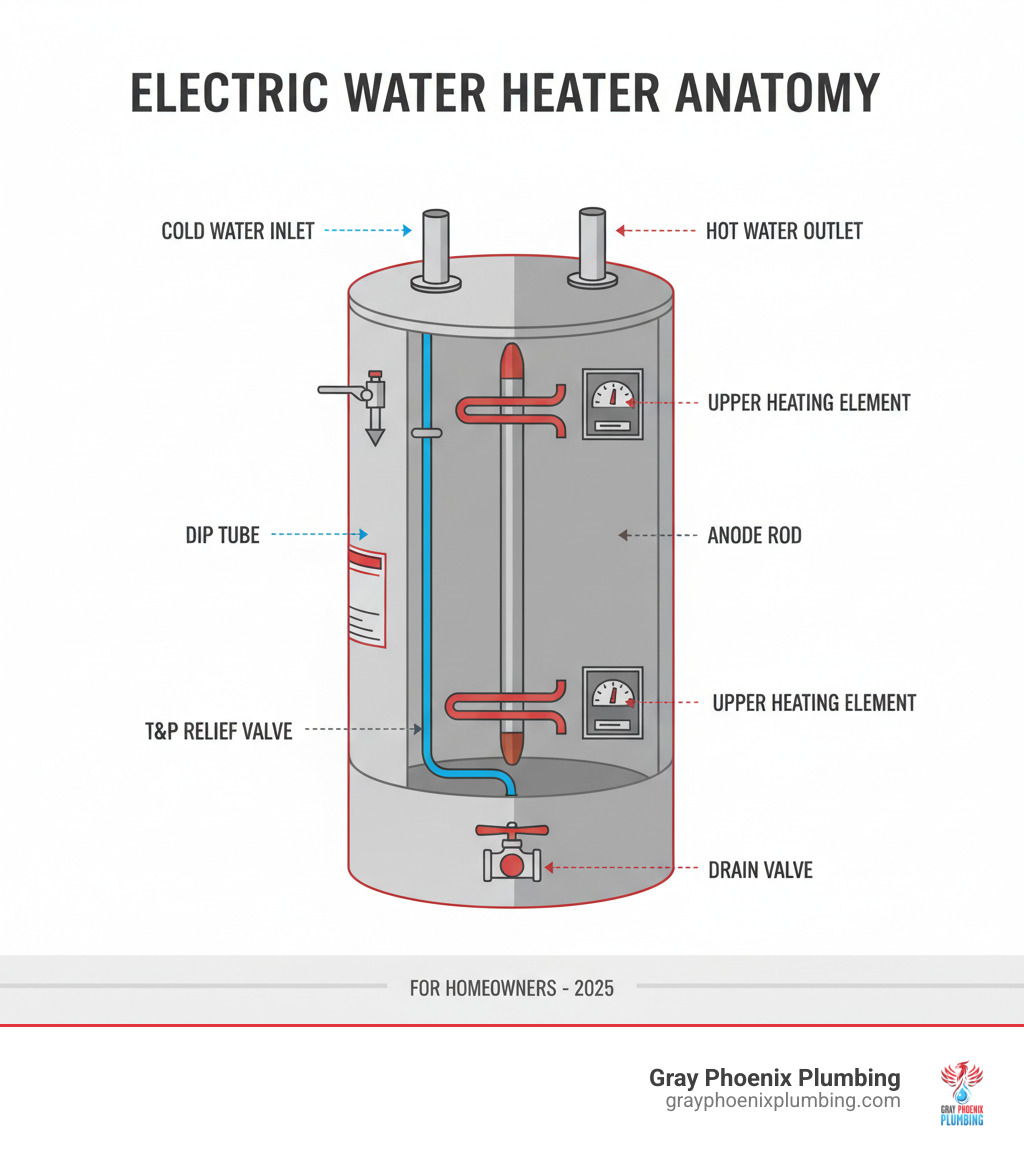
Easy electric water heater service glossary:
Before You Begin: Safety First and Tool Prep
Before starting any electric water heater service, safety is paramount. You’re working with electricity and water, so taking a few minutes to prepare can prevent serious accidents or a flooded utility room.
Essential Safety Shutdown
The golden rule is simple: kill the power first, then shut off the water.
- Go to your home’s circuit breaker panel, find the breaker for your water heater, and flip it to the OFF position. Do not rely on switches on the unit itself.
- Locate the cold water inlet valve at the top of your water heater (usually on the right) and turn it clockwise until it stops. This isolates the unit.
- (Optional for beginners) Shut off your home’s main water supply for extra security. It’s typically in the basement or near the water meter.
To verify the power is off, turn on a hot water tap in your house. If the water runs cold and the heater is silent, you’re ready. If not, double-check the breaker. Knowing these emergency procedures is valuable for any future water heater issues.
Gathering Your DIY Toolkit
You don’t need specialized equipment for basic electric water heater service. Most of these items are likely in your garage.
- Garden hose: Long enough to reach a floor drain, sump pump, or an outdoor area.
- Bucket: To catch initial drips and inspect the drained water for sediment.
- Pliers and Screwdrivers: Channel-lock pliers and a flathead screwdriver for the drain valve. A pipe wrench is good to have on hand just in case.
- Protective gloves: The water will be hot, and old plumbing can have sharp edges.
- Flashlight: For inspecting tight spaces and the drain valve output.
Lay everything out where you can easily reach it before you begin.
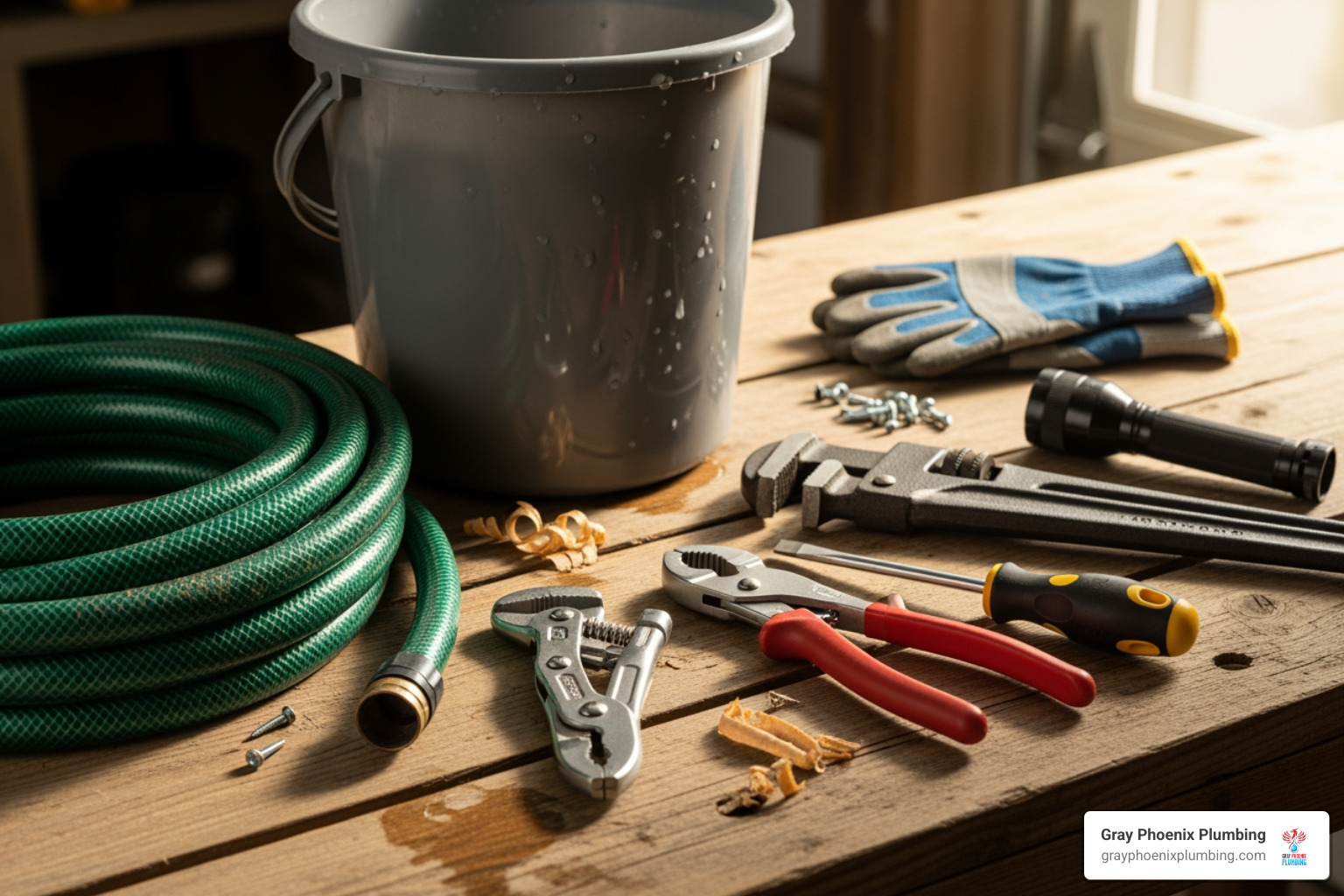
Lay everything out where you can easily reach it. Once you start draining that tank, you don’t want to be hunting for tools.
The Annual Flush: Removing Performance-Killing Sediment
Minerals from your water supply, especially in areas with hard water like Elizabeth and Parker, settle in your water heater tank. This sediment buildup acts as an insulator, forcing your heating elements to work harder, which causes reduced efficiency, higher energy bills, and strange popping noises.
An annual flush is the most effective electric water heater service task for combating this. It removes these minerals, improves efficiency, and can add years to your tank’s life. We recommend flushing at least once a year, or more often if you have very hard water.
Step-by-Step Flushing Guide
With the power and water off, you’re ready to flush the tank.
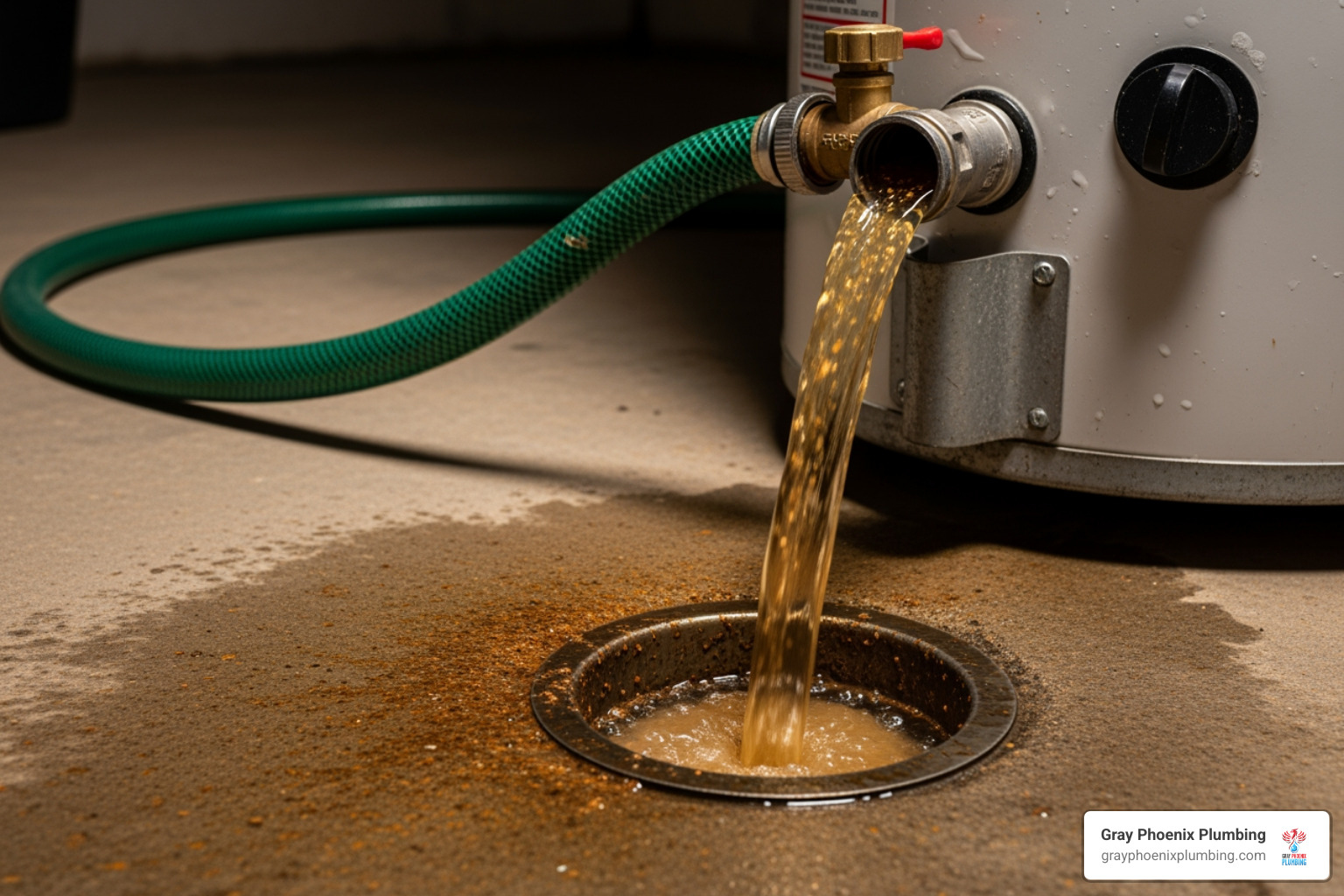
- Connect a garden hose to the drain valve at the bottom of the tank. Run the other end to a safe drainage point.
- Open a hot water faucet somewhere in the house to act as a vent and prevent a vacuum.
- Slowly open the drain valve. Be careful, as the initial water will be hot. Let the tank drain until the water runs clear (about 15-20 minutes). You should see cloudy water and sediment chunks come out.
- Close the drain valve and turn off the hot water faucet you opened earlier.
- Slowly open the cold water inlet valve to refill the tank. Open a hot water faucet again to release trapped air until the water flows smoothly.
- Restore power at the circuit breaker. Check that your thermostat is set to 120°F, a safe and efficient temperature for most homes.
Troubleshooting Before Calling for Electric Water Heater Service
- Faulty drain valve: If the valve won’t open, close, or seals improperly after flushing, it needs to be replaced. This is a common issue, especially with older plastic valves. Give us a call if this happens.
- No water draining: The valve may be clogged with sediment. Try gently tapping it to dislodge the blockage. If it’s still clogged, the buildup is likely severe and requires professional help.
- New leaks after flushing: Check that all connections are tight. If a leak persists around the drain valve, it may be damaged or indicate a more serious problem.
For more information on keeping your water quality high and your entire plumbing system healthy, check out our resources on water heaters and filtration systems.
Inspecting Key Components for a Healthy Heater
Beyond the annual flush, a quick visual inspection can spot early warning signs. Use a flashlight to look for any signs of moisture around the base of the tank and pipe connections. Also, check for rust or corrosion on the tank’s exterior, pipes, or valves, which can signal aging and potential failure.
Essential DIY Electric Water Heater Service Checks
During your annual electric water heater service, focus on these three components:
- Anode Rod: This sacrificial rod is designed to corrode so your tank doesn’t. It attracts corrosive elements in the water, dissolving over time. Once it’s gone, the tank itself begins to rust. Check the anode rod every two years and replace it every 4-5 years (sooner if you have a water softener). This inexpensive task can add years to your water heater’s life.
- T&P (Temperature and Pressure) Relief Valve: This critical safety device releases water if the temperature or pressure gets too high. To test it, place a bucket under the discharge pipe and lift the lever for a few seconds. Water should flow out and stop when you release the lever. If it doesn’t, or if it keeps dripping, the valve must be replaced as it’s a safety hazard.
- Fittings and Connections: Inspect all pipe connections and valves for drips, water stains, or crusty mineral buildup, which indicates a slow leak. Tighten any loose connections, but if leaks persist (especially from the tank body), it’s a sign your heater is nearing the end of its life.
If you’re seeing warning signs during your inspection, our guide on Don’t Ignore These Water Heater Warning Signs in Your Denver Home can help you understand what they mean and what to do next.
Understanding Your Water Heater’s Energy Use
Water heating is a major home expense, accounting for nearly 18% of a monthly bill. Proper electric water heater service ensures your unit operates efficiently. A well-maintained heater without sediment buildup uses less energy, lowering your utility bills. Conversely, a neglected unit with heavy sediment or failing elements works overtime, increasing your energy costs.
For maximum efficiency, consider a hybrid water heater installation. These units use heat pump technology and are far more efficient than standard electric models, offering long-term savings.
When to Call for Professional Electric Water Heater Service
While DIY maintenance is great, there’s a clear line where you should call in the pros. Working with high-pressure water and electricity is dangerous without the right training. Attempting complex repairs can void your warranty, cause more damage, or lead to injury. If you’re ever unsure or encounter a serious warning sign, it’s always best to contact a qualified hot water heater contractor.
Warning Signs That Demand an Expert
Knowing when to call for professional electric water heater service can save you time, stress, and money.
| DIY-Fixable Issues (with caution) | Pro-Required Issues (Call a professional immediately) |
|---|---|
| Annual flushing (sediment removal) | It’s over 10 years old |
| Testing T&P relief valve | Leaking from the tank body |
| Checking for minor leaks at fittings | Rusty or cloudy water (persisting after flush) |
| Adjusting thermostat settings | No hot water at all |
| Clearing area around the heater | Tripped breaker won’t reset |
| Loud rumbling or banging noises | |
| Any electrical issues (e.g., flickering lights) | |
| Smell of burning or unusual odors |
Here’s a quick look at what these pro-required issues mean:
- It’s over 10 years old: Units over a decade old are near the end of their reliable life. Replacement is often more cost-effective than frequent repairs.
- Leaking from the tank body: This indicates internal corrosion and means the tank has failed. It cannot be repaired and requires immediate replacement to prevent water damage.
- Rusty or cloudy water: If this persists after a flush, it signals severe internal tank corrosion and is a precursor to a leak.
- No hot water at all: After checking the breaker, this likely points to a failed heating element, thermostat, or other electrical problem that needs a professional diagnosis.
- Tripped breaker won’t reset: This indicates a serious electrical fault, like a short circuit. It’s a safety hazard that requires an expert immediately.
- Loud rumbling or banging noises: This suggests a severe sediment buildup that is over-stressing the tank, which can lead to failure.
- Any electrical issues or unusual smells: A burning smell or flickering lights are serious safety concerns. Turn off power to the unit and call a professional.
If you’re seeing these signs, it might be time for an upgrade. A tankless water heater installation service in Denver can be a great way to boost efficiency!
Frequently Asked Questions about Electric Water Heater Maintenance
Homeowners in Littleton, Aurora, and Lakewood often ask about caring for their electric water heaters. Here are answers to the most common questions:
How long does an electric water heater typically last?
The average lifespan for a tank-style electric water heater is 8 to 12 years. Longevity depends on the unit’s quality, usage, and local water hardness. However, the most significant factor is consistent maintenance. Annual electric water heater service, like flushing sediment and checking the anode rod, can extend the unit’s life by several years, especially in areas with hard water.
Why is my hot water rusty or discolored?
Rusty or discolored hot water is a red flag for serious internal corrosion in your water heater tank. It usually means the anode rod has completely dissolved, and the tank itself is now rusting from the inside. This is a major warning sign that the tank is nearing failure and could leak soon. If the problem persists after a flush, it’s time to consider a water heater replacement.
What is the most common problem with electric water heaters?
Most issues involve the heating elements or the thermostats.
- Heating element failure: A bad element can result in lukewarm or no hot water. Sediment buildup is a common cause of premature failure.
- Thermostat issues: A faulty thermostat can cause water temperature to be too hot, too cold, or inconsistent.
- Sediment buildup: This reduces efficiency, causes popping noises, and puts extra strain on heating elements.
- Leaks: Leaks can come from connections, the T&P valve, or the tank itself. A tank leak is critical and usually means the unit must be replaced.
The good news is that addressing these common issues promptly through regular electric water heater service and professional repairs can head off bigger problems. It ensures your hot water keeps flowing reliably, day in and day out!
Conclusion: Protect Your Investment with Annual Care
Annual electric water heater service is a small commitment with big rewards. By flushing sediment, checking the anode rod, and testing the T&P valve, you protect one of your home’s most vital appliances. This yearly check-up provides peace of mind, prevents expensive emergencies, lowers energy bills, and extends the lifespan of your unit.
We understand that not everyone is comfortable with DIY maintenance involving water and electricity. Whether you’re in Elizabeth, Parker, or Castle Rock, the important thing is that the work gets done, either by you or a professional.
If the DIY approach feels daunting, or if you’ve spotted red flags like an old unit, rusty water, or leaks, we’re here to help. At Gray Phoenix Plumbing, we offer reliable service with transparent pricing. Our licensed, background-checked technicians can help your water heater run efficiently and safely.
Your water heater works hard every day and deserves attention. Whether you do it yourself or call us, ensuring it gets proper care is key. If your unit has served its time, we can help you find a new water heater replacement that fits your home and budget. We’re just a phone call away when you need us. Here’s to many more years of reliable hot water!


