

Why Knowing How to Emergency Shut Off Water Heater Matters
An emergency shut off water heater procedure is a critical skill every homeowner should master. When a water heater starts leaking, time is not on your side—a single burst can release 30-80 gallons of water, potentially causing $10,000 to $20,000 in damage to your home.
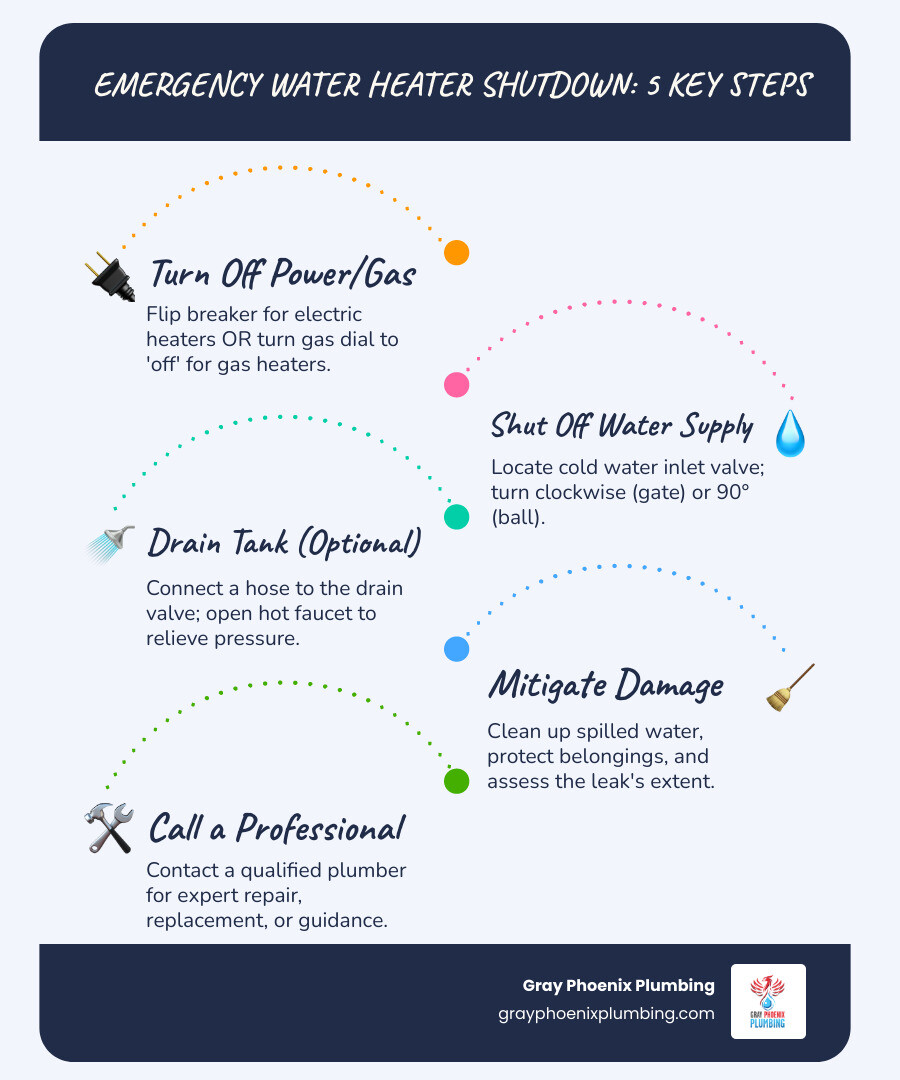
Quick Answer: How to Emergency Shut Off Your Water Heater
- Turn off the power source – Flip the breaker for electric heaters OR turn the gas dial to “off” for gas heaters
- Shut off the water supply – Turn the valve on the cold water pipe (clockwise for gate valves, 90 degrees for ball valves)
- Drain the tank (optional) – Connect a hose to the drain valve and open a hot water faucet to relieve pressure
The difference between a minor inconvenience and a major disaster often comes down to knowing where your shut-off valve is located and how to use it. A leaking water heater won’t fix itself—and every minute you wait, more water pours into your home, seeping into floors, walls, and belongings.
Whether you’ve finded a puddle around your tank at 2 AM or noticed rusty water dripping from pipes, understanding the emergency shutdown process gives you the power to stop the damage immediately. This isn’t just about saving money on repairs—it’s about protecting your home and your family’s safety.
I’m Chris Hoffman, a Master Plumber with over 25 years of experience responding to water heater emergencies throughout the Denver Metro area. I’ve guided countless homeowners through the emergency shut off water heater process, and I’m here to walk you through each step so you’re prepared when it matters most.
First, Identify the Emergency: Signs You Need to Act Fast
Before we dive into the “how-to,” let’s talk about the “when.” Knowing the signs of a water heater emergency is the first step in preventing costly damage. A leaking water heater can waste hundreds of gallons of water per month, leading to increased utility bills and potential water damage. In the event of a plumbing emergency, every second counts. Shutting off the water supply quickly can significantly reduce damage. The cost of repairing water damage can range from minor cosmetic fixes to extensive structural repairs, often costing thousands of dollars. Homeowners insurance may not cover all water damage costs, especially if the damage is due to neglect or lack of maintenance.
Here are some tell-tale signs that demand your immediate attention:
- Puddles around the tank: This is the most obvious sign. Even a small puddle can indicate a significant internal leak that could worsen rapidly. Look for water at the base of the heater.
- Dripping sounds: If you hear persistent dripping coming from your water heater, even if you don’t see visible water, it’s a red flag. This could be a slow leak that’s accumulating unnoticed.
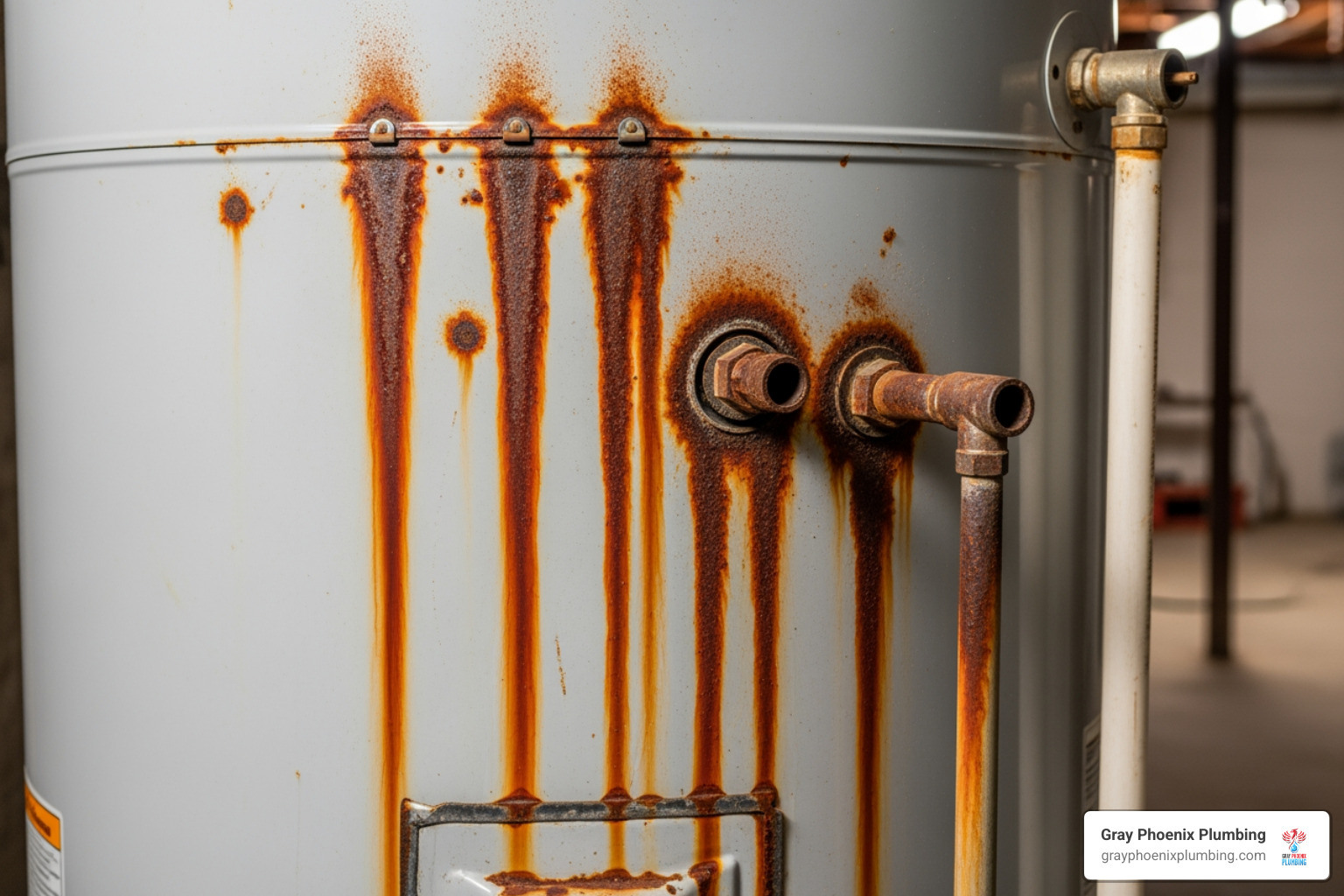
- Rusty or discolored water: If the hot water coming out of your faucets is rusty or has a reddish tint, it often means the inside of your water heater tank is corroding. This corrosion can lead to leaks and eventually a tank rupture.
- Lack of hot water: While not always a leak indicator, a sudden and complete loss of hot water, especially if accompanied by other signs, could mean a major issue with the tank or heating element.
- Strange noises: Loud rumbling, popping, or banging noises from your water heater can indicate sediment buildup inside the tank. This sediment can lead to overheating, inefficiency, and eventually, tank failure and leaks.
Ignoring these warning signs can turn a manageable problem into a catastrophic one. For more insights on what to look out for, check out our guide on Dont Ignore These Water Heater Warning Signs in Your Denver Home.
Step-by-Step Guide: How to Perform an Emergency Shut Off for Your Water Heater
When faced with a leaking water heater, our primary goal is to stop the water flow and prevent further damage. This process involves two main actions: cutting off the power/gas supply and shutting off the water intake. Safety first! Always be cautious when dealing with water and electricity or gas. You can also watch a helpful guide on Water Heater Emergency Shutdown | Step-by-Step Safety Instructions.
Step 1: Turn Off the Power or Gas Supply
This is crucial for safety and to prevent damage to the water heater itself.
-
For Electric Water Heaters:
- Locate your home’s main electrical panel, usually in the basement, garage, or a utility closet.
- Find the breaker labeled “Water Heater.” It’s often a double-pole breaker (two switches connected together).
- Flip the breaker to the “OFF” position. If your panel uses fuses, carefully remove the fuse for the water heater.
- Turning off the electricity prevents the heating elements from burning out if the tank drains or runs low on water.
-
For Gas Water Heaters:
- Locate the gas control valve on the water heater itself. This is typically a dial on the thermostat.
- Turn the dial from “ON” or “PILOT” to the “OFF” position.
- Additionally, locate the main gas supply line leading to the water heater and turn the handle or knob to the “OFF” position. This usually means turning it perpendicular to the pipe.
- Safety Precaution: If you smell gas, hear a hissing sound, or see a white mist around your property, do not operate any electrical switches, use matches, or create any sparks. Evacuate your home immediately and call your gas company from a safe distance. Signs of a gas leak include: a hissing sound, the smell of rotten eggs, white mist or fog around your property, or dead plants in your garden. Our team at Gray Phoenix Plumbing is always here to help with gas line issues, but your safety is paramount.
Step 2: Locating the Emergency Shut Off Water Heater Valve
Now that the power or gas is off, let’s stop the water flow. The emergency shut off water heater valve is specifically designed to cut off the cold water supply to the water heater, isolating it from your home’s plumbing system.
- This valve is almost always located on the cold water inlet pipe, which typically runs into the top of your water heater.
- Look for a pipe coming out of the wall or ceiling, usually on the right side (when facing the water heater), that connects directly to the top of the tank.
- Follow this pipe down a short distance, and you should find a valve. This is your water heater’s dedicated shut-off valve.
Step 3: Identify and Operate the Shut-Off Valve
There are two common types of shut-off valves you might encounter:
| Valve Type | Appearance | Operation |
|---|---|---|
| Gate Valve | Round, circular handle (like a spigot) | Turn clockwise until it stops. This type of valve usually requires multiple rotations. Older models may be stiff or stuck due “` |
| Gate Valve | Round, circular handle (like a sprot) | Turn clockwise until it stops. This type of valve usually requires multiple rotations. Older models may be stiff or stuck. |
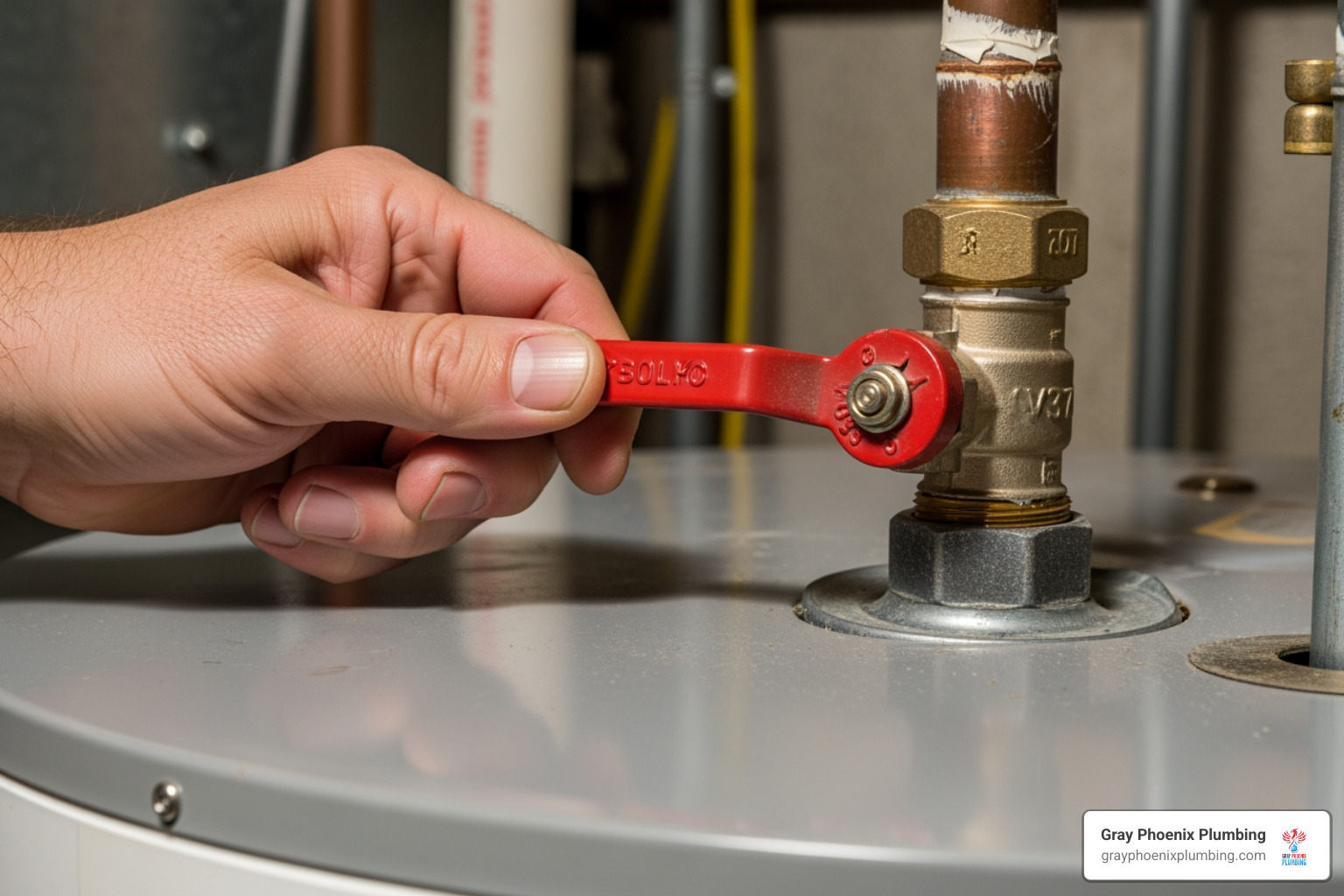
| Ball Valve | Lever handle, typically in-line with the pipe when open | Turn the handle a quarter-turn (90 degrees) until it is perpendicular to the pipe. Ball valves are generally easier to operate and more reliable. |
Important Note: If your valve is stuck, rusted, or difficult to turn, try using a wrench or pliers for leverage. You can also try applying penetrating oil to the valve stem. However, be careful not to bend or break the pipe it’s attached to. If you can’t get your valve is stuck, it’s time to call a professional. Don’t force it to the point of causing further damage.
What to Do After Shutting Off the Water
Once you’ve successfully cut off the water supply and power/gas to your water heater, you’ve taken the most critical first step. Now, it’s about minimizing the impact of the existing water and preparing for repairs. Water damage can be extensive, and every drop you clean up now saves you potential headaches and costs later. This is especially true in our Colorado climate, where frozen pipes can burst and cause significant damage, making quick action vital. Our team often handles Frozen Burst Pipe Repair across Denver, Littleton, and Aurora.
What to Do After an Emergency Shut Off of Your Water Heater
-
Drain the Tank (Optional, but Recommended): If your water heater is actively leaking, draining the remaining water from the tank will prevent further spillage.
- Locate the drain valve at the bottom of the water heater. It usually looks like a spigot or a hose bib.
- Attach a standard garden hose to the drain valve.
- Direct the other end of the hose to a safe drainage location, such as a floor drain, a large bucket, or even outside if it’s safe and won’t cause damage to landscaping. Be aware that the water might be hot and rusty.
- To allow the water to drain properly and prevent a vacuum lock, open the nearest hot water faucet in your home (e.g., in a sink or bathtub). You can also lift the lever on the pressure relief valve (T&P valve) located on the side or top of the water heater.
- Open the drain valve on the water heater. The water will begin to flow out. Draining a full tank can take 10-30 minutes, depending on its size. For more detailed instructions, see To Drain Your Water Heater:.
-
Clean Up the Water: Mop up any standing water immediately. Use towels, a wet/dry vacuum, or buckets. The faster you remove the water, the less chance it has to cause secondary damage like mold growth or structural issues.
-
Assess the Damage: Once the area is dry, carefully inspect the water heater and the surrounding area.
- Try to identify the source of the leak (e.g., a crack in the tank, a faulty pipe connection, a leaking pressure relief valve).
- Document the damage with photos and videos for insurance purposes.
-
Contact a Professional: Unless the leak was from a simple, easily fixable connection you’re comfortable with, it’s best to call a qualified plumber. They can diagnose the problem accurately and advise whether a repair or replacement is necessary.
Water Heater Valve vs. Main House Shut-Off: What’s the Difference?
It’s common for homeowners to confuse their water heater’s shut-off valve with the main water supply shut-off for the entire house. While both are crucial for emergencies, they serve different purposes:
-
Water Heater Shut-Off Valve: This valve (which we discussed in Step 2) isolates only your water heater from the rest of your plumbing system. When you turn this off, water will stop flowing to the water heater, but the rest of your home will still have water. This is ideal for addressing issues specific to the water heater, such as a leak from the tank itself.
-
Main House Shut-Off Valve: This valve controls the entire water supply coming into your home. When you turn this off, all water to every faucet, toilet, and appliance in your house will stop. This is a more drastic measure but necessary in certain situations.
Where to Find Your Main House Shut-Off Valve:
- Inside the House: Often located in the basement, crawl space, utility room, or garage, usually where the main water line enters your home. It might be near your water meter or furnace.
- Outside the House: Sometimes found in a ground-level utility box, along an exterior wall, or at the property line near your water meter.
When to Use the Main House Shut-Off Valve:
You should use the main house shut-off valve if:
- The water heater’s shut-off valve is broken, stuck, or inaccessible.
- The leak is coming from a main water pipe, not just the water heater.
- You have multiple leaks throughout your home.
- You’re leaving for an extended vacation and want to prevent any potential water damage while you’re away.
- You are performing major plumbing repairs that require the entire water system to be dry.
For a comprehensive guide on locating and operating your main water valve, refer to How to Turn Off Main Water Valve for Plumbing Repairs and Turning Off the Utilities . Knowing both valves and how they operate gives you maximum control in an emergency.
When to Call a Professional and How to Maintain Your Valve
While knowing how to perform an emergency shut off water heater is empowering, there are times when DIY efforts reach their limit. We’re proud to offer reliable residential plumbing services in Elizabeth, CO, and across the Denver Metro Area, and we’re always here to help. Whether it’s a simple repair or a full Water Heater Repair Littleton, our licensed professionals have the expertise. For our neighbors in Aurora, our Hot Water Heater Aurora Guide offers additional tips.
Maintenance Tips for Your Shut-Off Valve
Your water heater’s shut-off valve is your first line of defense in an emergency, so ensure it’s always in working order.
- Annual Testing: We recommend testing your shut-off valve at least once a year. Slowly turn the valve clockwise (for gate valves) or 90 degrees (for ball valves) until the water flow to the heater stops, then open it fully again. This helps keep the internal components from seizing up.
- Checking for Corrosion: Regularly inspect the valve for any signs of rust or corrosion. If you see significant rust, especially around the stem or handle, the valve may be compromised and should be replaced.
- Ensuring Free Movement: If the valve is stiff or difficult to turn during your annual test, try applying a penetrating lubricant to the stem. Work the valve back and forth gently to free it up.
- Preventing Stuck Valves: When opening any valve, open it all the way and then turn it back slightly (a quarter turn). This small action can prevent the valve from “freezing” in the fully open position, making it easier to operate when you truly need it.
Know When to Call for 24/7 Emergency Plumbing Services
While we encourage homeowners to be prepared, there are clear situations where professional help is not just recommended, but essential. Don’t hesitate to call us if:
- The valve is stuck or broken: If you can’t turn the valve, or if it breaks when you try, you’ll need professional assistance to safely shut off the water and replace the valve.
- The leak is significant and uncontrollable: If water is gushing out and you can’t stop it, or if the leak is coming from behind walls or underground, call us immediately.
- You smell gas: As mentioned earlier, if you suspect a gas leak, evacuate and call your gas company first, then us if you need help with your gas water heater once the area is safe.
- You are unsure of the steps: If you’re uncomfortable or unsure about any part of the shutdown process, it’s always better to call a professional plumber. We can guide you over the phone or dispatch a technician to your home in Denver, Littleton, Aurora, or surrounding areas right away.
- You need a new water heater: If your water heater is beyond repair, our team specializes in Water Heater Replacement and can help you select and install a new, efficient unit. We also offer Plumber Same Day Water Heater Repair Denver for urgent situations.
Conclusion
Knowing how to perform an emergency shut off water heater is a fundamental skill for any homeowner in Elizabeth, CO, and across the Denver Metro Area. It’s about empowering ourselves to take immediate action, preventing minor leaks from escalating into costly water damage disasters. By understanding the signs of trouble, knowing where your valves are, and how to operate them, you gain invaluable peace of mind.
We, at Gray Phoenix Plumbing, believe in equipping our community with the knowledge to handle emergencies, but we also stand ready to provide expert assistance when you need it most. Our licensed, background-checked pros are here for you, offering transparent pricing and a Customer Care Guarantee.
For immediate assistance with a leaking water heater or any plumbing emergency, contact our team for 24/7 emergency plumbing services. We’re your trusted partner for all residential plumbing, heating, cooling, and electrical needs.


