

Why Your Drain Smells Bad (And What You Can Do About It)
Clean stinky drain issues are one of the most common plumbing complaints homeowners face. That foul odor wafting up from your kitchen or bathroom sink isn’t just unpleasant—it’s a sign that something needs attention.
Quick Answer: How to Clean a Stinky Drain
- Pour boiling water down the drain to flush loose debris
- Add ½ cup baking soda followed by 1 cup white vinegar
- Let it sit for 10-15 minutes while the mixture fizzes
- Flush with hot water to rinse everything away
- Run water regularly in unused drains to keep P-traps filled
You’ve likely noticed a drain that smells particularly foul, especially after it hasn’t been used for several hours. Maybe it’s a musty, moldy smell. Or worse—a rotten egg odor that makes you wrinkle your nose every time you walk by.
The good news? Most smelly drains are easy to fix yourself.
The culprit is usually decomposing organic matter stuck in your pipes—food particles, grease, hair, soap scum, or bacteria buildup. Sometimes it’s as simple as a dried-out P-trap that’s no longer blocking sewer gases from entering your home.
In this guide, we’ll walk you through identifying exactly what’s causing your drain odor, show you simple DIY cleaning methods using common household items, and help you know when it’s time to call in a professional. We’ll also share prevention tips so you can keep those drains fresh-smelling for good.
What’s That Smell? Identifying the Cause of Your Stinky Drain
Sinks are notorious for developing unpleasant smells, and it’s not just bad luck—various things can go wrong inside the pipes. Often, the smell is our first clue that something isn’t quite right.
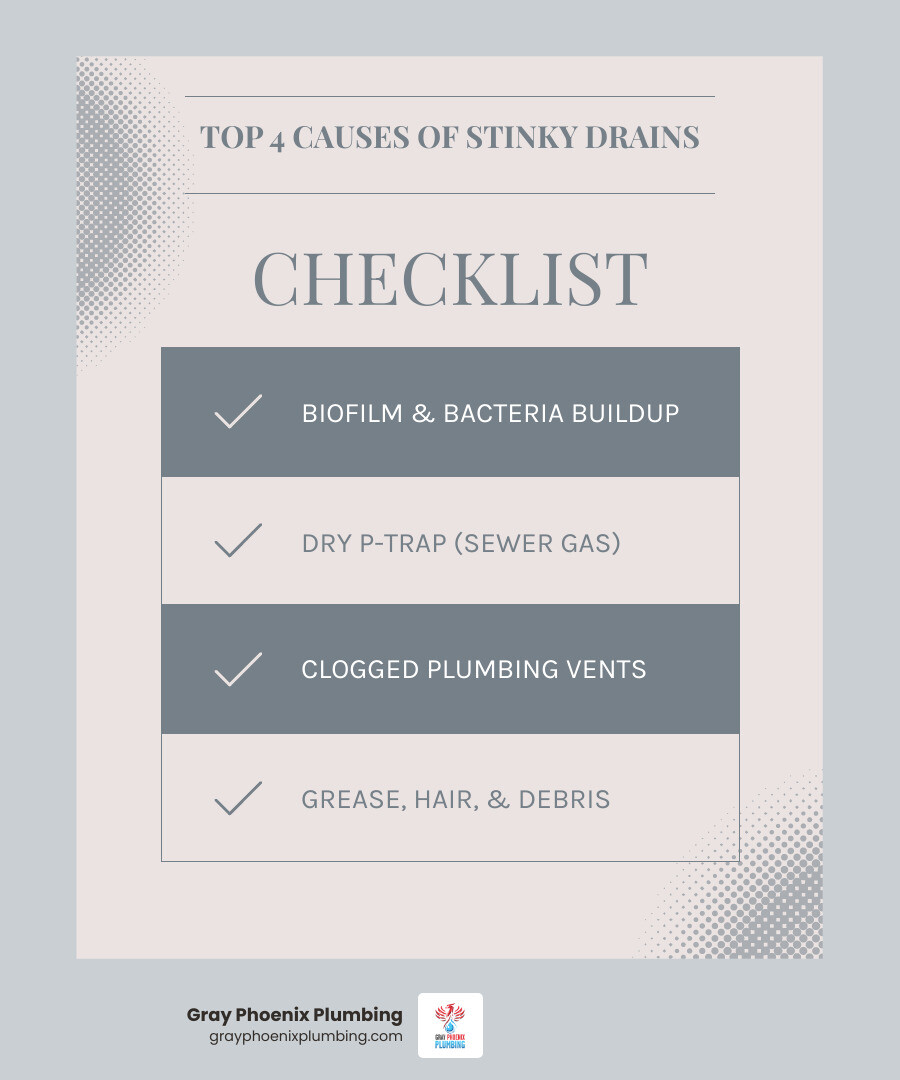
The most common cause of a clean stinky drain problem is something rotting within the drain line itself. When organic matter gets trapped, it creates a moist, nutrient-rich environment perfect for microbes and bacteria to multiply. As these microscopic organisms feast, they release gases that travel back up the line and out of your drain, causing that distinct, often unpleasant, aroma. This buildup of gunk and bacteria, also known as biofilm, can occur even without a full-blown clog.
Beyond simple decomposition, other culprits include:
- Decomposing food residues: Particularly in the kitchen, food particles rinsed down the drain can get trapped and decay, releasing a pungent odor.
- Grease and oil accumulation: In kitchen drains, grease, oils, and fats can solidify and cling to pipe walls, accumulating food particles and becoming a haven for odor-causing bacteria.
- Hair and soap scum: These are the notorious duo of bathroom drains. Hair combines with soap scum to form sticky, smelly clogs that trap even more gunk.
- Clogged plumbing vents: Your home’s plumbing system has vents that facilitate the expulsion of sewer gases outdoors. If these vents become clogged or obstructed, sewer gases can accumulate indoors, leading to a noticeable stench.
- Dry P-trap: This unsung hero of your plumbing system plays a crucial role in preventing odors. We’ll dive deeper into it below, but a dry P-trap is a very common reason for smells, especially in drains that aren’t used often.
By understanding these common causes, we can better identify the source of the stink and choose the right approach to make our drains fresh again.
Kitchen Drain Smells vs. Bathroom Drain Smells
While the general principles of decay and blockages apply to all drains, the specific types of gunk that accumulate often differ between your kitchen and bathroom, leading to distinct smells and requiring slightly different cleaning tactics.
Kitchen Drain Smells: Our kitchen sinks and garbage disposals are particularly susceptible to odors from food. Decomposing food residues, grease, oils, and fats are the main culprits here. These can get trapped, creating a breeding ground for bacteria that release foul, often rotten-egg or spoiled-food-like smells. A garbage disposal, while convenient, can also become a source of odor if food particles linger on its blades or within the rubber splash guard.
Bathroom Drain Smells: In bathrooms, the primary offenders are usually hair, soap scum, and other personal care products. These combine to form sticky, slimy biofilm that clings to pipe walls, fostering mold and mildew growth. The resulting smell is often musty, earthy, or even a bit sulfuric, especially in shower drains where warm, moist conditions are ideal for bacterial growth.
Identifying whether the smell is coming from the kitchen or bathroom is the first step in tackling your clean stinky drain mission.
The Unsung Hero: Understanding Your P-Trap
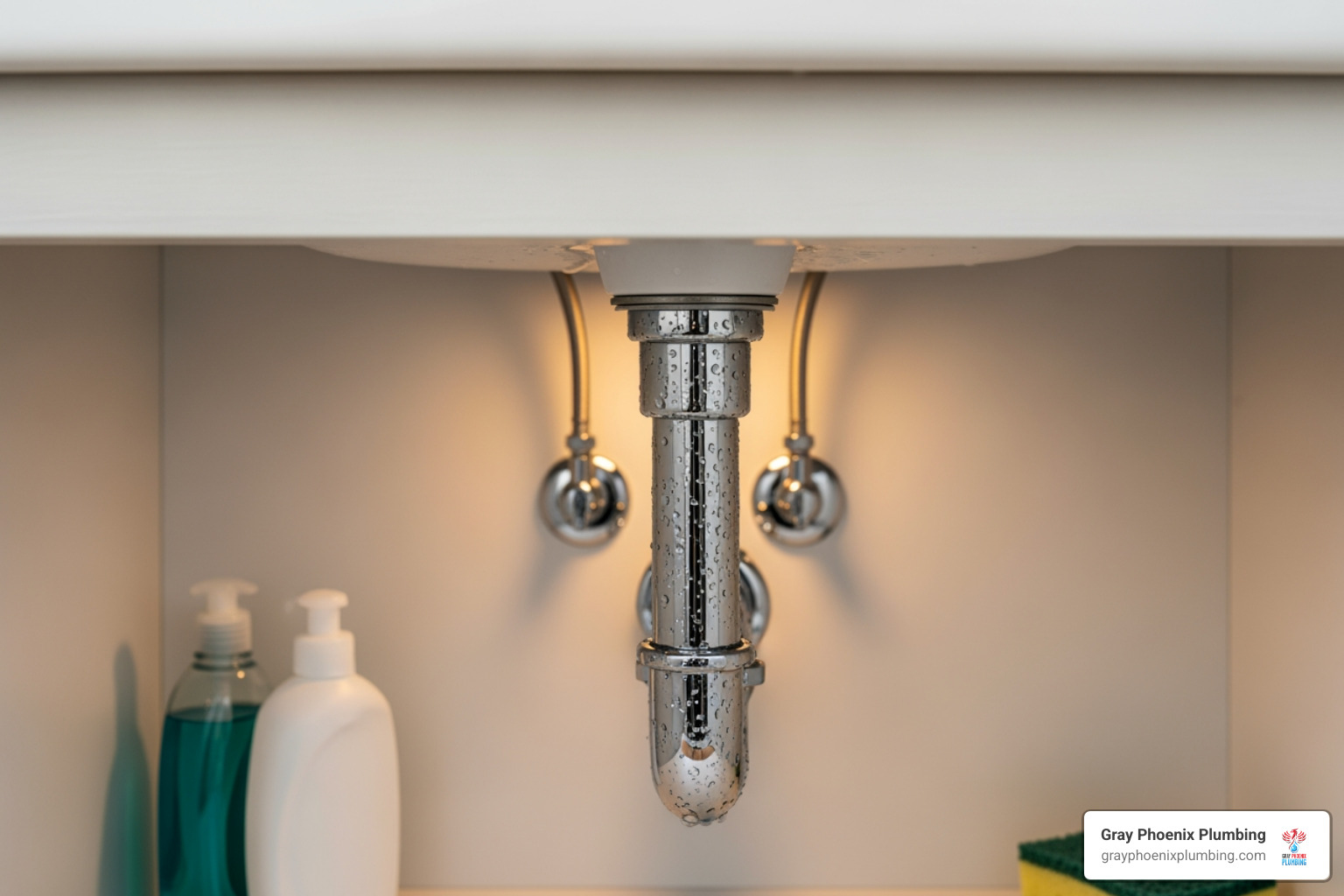
Beneath every sink, you’ll find a U-shaped bend in the pipe, often innocently overlooked. This is your P-trap, and it’s an engineering marvel designed to keep your home smelling fresh.
The P-trap’s primary function is to hold a small amount of water, creating a barrier—a water seal—that prevents noxious sewer gases from traveling up from the sewer line and entering your home. It’s like a liquid bouncer, denying entry to all the unpleasant smells from the underworld of your plumbing system.
However, this water seal isn’t foolproof. If a drain isn’t used for an extended period, the water in the P-trap can evaporate. When this happens, the seal is broken, and sewer gases, which are typically a mix of methane and hydrogen sulfide, are free to waft into your living space. This is a common reason why rarely used guest bathrooms or utility sinks might start smelling foul. Plumbing systems also rely on vents to safely expel these gases outdoors. If these vents are blocked or improperly installed, it can disrupt the pressure in your pipes, allowing sewer gases to be drawn back into your home.
So, if you’re battling a dry, musty, or outright sewage-like smell from a drain, especially one that hasn’t seen much action lately, a dry P-trap is a prime suspect. Understanding its role is key to solving many clean stinky drain problems. For more in-depth information about your home’s plumbing system, you can explore our resources on general plumbing.
Your DIY Toolkit: How to Clean a Stinky Drain at Home
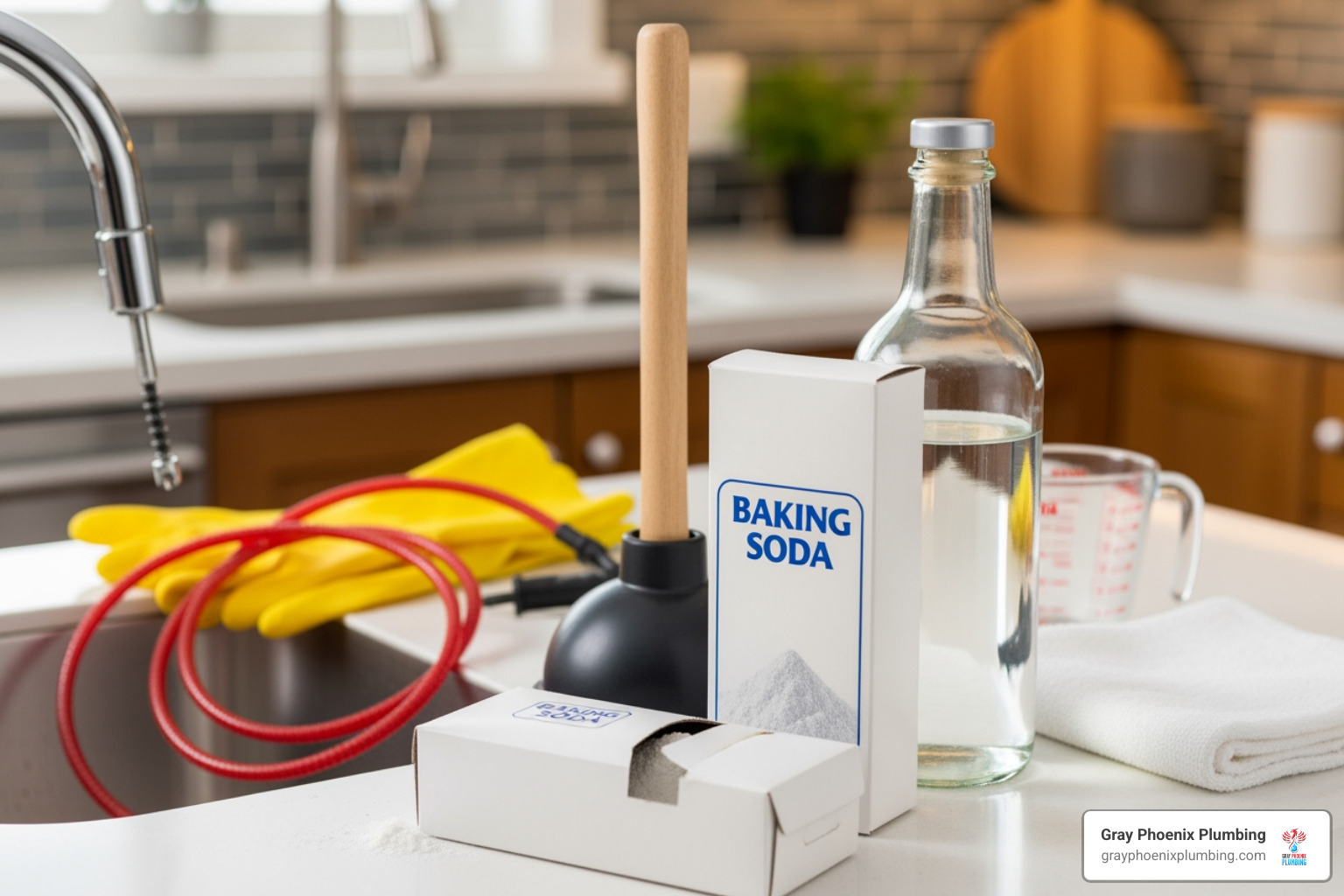
Now that we’ve identified the common culprits, let’s roll up our sleeves and tackle that clean stinky drain issue with some effective DIY methods using everyday household items.
Boiling Water Flush
One of the simplest and often most effective first steps is a good old-fashioned boiling water flush. Hot water can help melt away grease and loosen up organic matter clinging to your pipes.
How to do it:
- Boil a kettle of water (2-3 cups should do the trick).
- Carefully pour the near-boiling water directly down the drain in two to three stages, allowing a few seconds between pours.
- Caution: If you have PVC pipes, ensure the water isn’t rapidly boiling, as extremely hot water can potentially damage them. Let it cool slightly before pouring.
Baking Soda and Vinegar Reaction
This classic science fair volcano isn’t just for school projects; it’s a powerful and natural drain cleaner! The fizzing action helps dislodge buildup and deodorize.
How to do it:
- Pour about ½ cup of baking soda down the drain. Try to get as much as possible directly into the drain opening.
- Follow with 1 cup of white vinegar.
- Quickly cover the drain with a stopper or cloth to contain the chemical reaction and force the fizzing action deeper into the pipes.
- Let it sit for 10-15 minutes (or even up to 30 minutes for tougher smells).
- Flush the drain thoroughly with hot water.
Enzyme-Based Cleaners
For a gentler, more natural approach, enzyme-based drain cleaners are a great option. These products contain beneficial bacteria that “eat” organic matter like grease, food particles, and soap scum, breaking them down naturally without harsh chemicals.
How to do it:
- Follow the product instructions carefully.
- Typically, you’ll pour the cleaner down the drain, often letting it sit overnight to work its magic.
- Flush with water in the morning.
Manual Removal with a Drain Snake
Sometimes, gunk is simply too stubborn or too far down for chemical reactions or hot water alone. That’s when a drain snake (or auger) comes in handy. This tool can physically break apart clogs and pull out accumulated debris.
How to do it:
- Insert the snake into the drain opening.
- Feed it down the pipe until you feel resistance (the clog!).
- Twist and push the snake to break up or hook onto the clog.
- Carefully pull the snake back out, hopefully bringing the offending debris with it.
- Flush the drain with hot water.
How to Clean a Stinky Drain in the Kitchen
Kitchen drains, especially those with garbage disposals, demand specific attention.
Garbage Disposal Gunk: The rubber splash guard on your disposal can harbor food particles and bacteria. Wipe it down regularly, inside and out, using a sponge and a gentle but powerful dish soap like Dawn.
Cleaning Disposal Blades:
- Ice Cubes: Fill the disposal with ice cubes (add a handful of rock salt for extra abrasion) and run cold water while turning on the disposal. The ice helps dislodge food particles and clean the blades.
- Citrus Peels: After the ice, put slices of citrus (lemon, lime, or orange peels) into the disposal and run it with cold water. The citric acid helps to sanitize and leave a fresh scent. As one source noted, “The volcano built for a science fair in elementary school can teach you how to solve a smelly drain,” referring to the baking soda and vinegar, but citrus is also a great natural cleaner!
What Not to Put in a Disposal: To prevent future smells and clogs, be mindful of what goes down there:
- Grease, oils, and fats (they solidify and cling to pipes)
- Fibrous foods like celery, artichokes, asparagus, corn husks, or potato peels (they can wrap around blades)
- Egg shells (the membrane can stick and rot)
- Pasta, rice, potatoes, and beans (they can swell and create a paste-like clog)
How to Clean a Stinky Drain in the Bathroom
Bathroom drains are notorious for accumulating hair and soap scum, leading to musty, unpleasant odors.
- Remove the Drain Stopper: This is often where a lot of hair and grime collect. Use a screwdriver if needed.
- Clear Hair and Soap: Use a pair of tweezers or needle-nose pliers to pull out visible hair. A Zip-It tool or a small drain snake is excellent for reaching deeper clogs of hair and soap scum. For smaller jobs, even a Q-tip can snag surprising amounts of hair from just inside the drain opening.
- Scrub the Drain Opening: Use an old toothbrush or a small bottle brush to scrub around the drain opening and the visible parts of the pipe.
- Clean the P-trap (if necessary): If the smell persists, the P-trap under your bathroom sink might be the culprit. Place a bucket underneath, unscrew the nuts holding it in place, and carefully remove it. You’ll likely find a revolting concoction of hair, soap scum, and other gunk. Scrub the inside with a nylon bottle brush and paper towels, then reassemble and run water to refill the trap.
- Rinse Thoroughly: Finish with a hot water flush, perhaps preceded by a baking soda and vinegar treatment, to wash away any remaining residue.
When a Stinky Drain Signals a Bigger Problem
While many clean stinky drain issues can be resolved with DIY methods, sometimes an odor signals a more serious underlying problem that requires professional attention. It’s crucial to know when to call in the experts to prevent minor issues from becoming major (and costly!) headaches.
You should consider contacting a plumber if you experience any of the following:
- Persistent odors after cleaning: If you’ve tried all the DIY tricks and the smell keeps returning or never fully goes away, it’s a sign that the problem is deeper or more complex than surface-level buildup.
- Multiple drains smelling at once: If foul odors are emanating from several drains throughout your home (e.g., kitchen, bathroom, and utility sink), it could indicate a systemic issue, such as a problem with your main sewer line or a widespread vent obstruction.
- Gurgling sounds: Gurgling from drains or toilets can mean that air is trapped in your pipes, often due to a partial blockage or a venting issue. This can lead to odors as gases try to escape through the water seals.
- Slow draining throughout the house: If water is draining slowly from multiple fixtures, it’s a strong indicator of a significant clog in the main sewer line or a widespread vent problem affecting the entire system.
- Visible leaks under the sink: A small leak, even if it’s not directly causing an odor, can be a symptom of a larger plumbing issue that might be contributing to smells or could lead to water damage. For any issues related to your toilet repair needs, we’re here to help.
Addressing a Sewage Smell and Its Risks
A sewage smell, often described as a rotten egg odor, is particularly concerning and should be addressed immediately. This distinct smell is usually hydrogen sulfide gas, a component of sewer gas.
Why it’s serious:
- Health Risks: Exposure to sewer gas can lead to health problems. While low-level exposure might cause headaches, dizziness, nausea, and fatigue, higher concentrations can be dangerous. Prolonged exposure to even low levels can cause respiratory issues.
- Flammability: In large enough quantities, sewer gas (which contains methane) is flammable and poses a risk for explosion. This is why any persistent sewage smell is not just an annoyance but a potential safety hazard.
If you detect a sewage smell, especially if it’s pervasive or affects multiple drains, it’s important to act quickly. While a dry P-trap can cause a sewer smell, a persistent or strong odor could indicate a more serious problem like a compromised sewer line, marked by cracks or blockages, or an issue with your plumbing’s ventilation system. For such serious concerns, our team can help with sewer line issues.
It’s also important to differentiate a sewer gas smell from a natural gas leak. If you’re smelling rotten eggs and suspect it might be natural gas, this is a serious safety concern that requires immediate evacuation and a call to your utility company. Sewer gas smells are usually less potent than natural gas and typically localized to drains, but always err on the side of caution.
Proactive Prevention: How to Keep Your Drains Smelling Fresh
An ounce of prevention is worth a pound of cure, especially when it comes to keeping your drains smelling fresh and avoiding the need to clean stinky drain disasters. Implementing a few simple habits can make a world of difference.
- Regular Hot Water Flushes: Make it a habit to pour a gallon of near-boiling water down all your drains weekly. This helps to melt away minor grease buildups and flush away any lurking organic matter before it has a chance to decompose and stink.
- Use Drain Strainers: This is a simple but incredibly effective tool. Place mesh drain strainers in your kitchen sinks to catch food particles and in your shower and tub drains to catch hair and soap scum. It’s much easier to toss caught debris in the trash than to fish it out of a pipe!
- Proper Garbage Disposal Habits:
- Always run cold water when using your garbage disposal, and keep it running for at least 20 seconds after the grinding sounds stop to ensure all particles are flushed through.
- Avoid putting grease, oils, fats, fibrous foods, eggshells, pasta, rice, or potato peels down the disposal. These items are notorious for causing clogs and odors.
- Scrape food scraps into the trash or compost bin before rinsing dishes.
- Never Pour Grease Down the Drain: This is perhaps the golden rule of drain prevention. Grease solidifies as it cools, coating your pipes and acting as a magnet for other debris, leading to stubborn clogs and terrible smells. Pour cooled grease into an old container and dispose of it in the trash.
- Run Water in Unused Drains Weekly: Remember our friend, the P-trap? To prevent its water seal from evaporating, make sure to run water in rarely used sinks (like guest bathrooms) for 10-15 seconds and showers/tubs for about a minute once a week. For floor drains that are seldom used, you can even pour a cup of vegetable oil into them after running water. The oil floats on top, slowing down evaporation and maintaining the seal.
- Clean Sink Basins and Faucet Aerators: Don’t forget to clean the visible parts of your sinks and faucets. Toothpaste spatter, rogue lotion, and general grime can contribute to ambient odors. Faucet aerators can also harbor bacteria and cause smells, so unscrew them, rinse them, and soak them in vinegar periodically.
By adopting these proactive measures, we can significantly reduce the chances of encountering a clean stinky drain problem and keep our homes smelling fresh and clean.
Frequently Asked Questions about Cleaning Stinky Drains
We hear a lot of questions about smelly drains, and we’re here to clear up some common misconceptions and provide clear answers.
Are chemical drain cleaners a good way to clean stinky drain pipes?
While readily available, we generally advise against chemical drain cleaners for persistent smelly drains. Here’s why:
- Harsh on Pipes: Many chemical cleaners contain highly corrosive agents that can damage your pipes, especially older ones or those made of certain plastics like PVC, leading to leaks or even burst pipes over time.
- Potential for Corrosion: Repeated use can weaken pipe materials, compromising the integrity of your plumbing system.
- Environmental Concerns: These chemicals are harsh on the environment and can pose risks if they enter waterways.
- Often a Temporary Fix: Chemical cleaners might dissolve part of a clog, but they often don’t fully clear the pipe walls of the biofilm and gunk that cause recurring odors. They’re more of a band-aid than a permanent solution.
- Safety Risks: Mixing different chemical cleaners or mixing them with existing organic matter in your pipes can create dangerous fumes or even explosive reactions. Always prioritize safety!
For truly effective and safe drain cleaning, especially for stubborn issues, professional methods like hydro-jetting or snaking are far superior. If you’re curious about the science behind drain odors and why certain methods are safer, you can find more information on drain odors from university experts.
What are the potential health risks associated with a smelly drain?
Most unpleasant drain odors are just that—unpleasant. However, a persistent sewage smell can indicate the presence of sewer gas, which does pose potential health risks.
- Sewer Gas Exposure: Sewer gas is a complex mixture of gases, including hydrogen sulfide, ammonia, methane, carbon dioxide, and nitrogen. The rotten egg smell is primarily due to hydrogen sulfide.
- Hydrogen Sulfide Poisoning Symptoms: Low-level, prolonged exposure to hydrogen sulfide can cause symptoms like headaches, dizziness, nausea, fatigue, and eye irritation. At higher concentrations, it can be extremely dangerous, affecting the respiratory and nervous systems.
- Importance of Addressing Sewer Smells Promptly: Beyond the health concerns, sewer gas is also flammable due to its methane content. If you suspect a sewer gas leak, it’s crucial to investigate and resolve the issue quickly. While most common drain smells are from benign bacteria, a genuine sewage smell from your drains should be attended to immediately.
My drain still smells after cleaning. What’s next?
If you’ve tried all the DIY methods—boiling water, baking soda and vinegar, manual removal—and your drain still smells bad, it’s time to consider that the problem might be beyond a simple home fix.
Here are some possibilities and what to do next:
- Deeper Clog: The clog might be located too far down the pipe for your home tools to reach, or it could be a particularly dense blockage that requires more powerful equipment.
- Blocked Vent Pipe: As we discussed, your plumbing system relies on vent pipes to release sewer gases outdoors and maintain proper air pressure. If a vent pipe is blocked (often by bird nests, leaves, or even dead animals on the roof), sewer gases can get trapped or be drawn back into your home, causing persistent smells and often gurgling sounds.
- Main Sewer Line Issue: A problem with your main sewer line, which carries all wastewater from your home to the municipal sewer system or septic tank, can cause widespread odors and slow drains throughout the house. This could be due to tree root intrusion, cracks, or significant blockages.
- Faulty Plumbing: Occasionally, the issue might stem from incorrectly installed or damaged plumbing components, such as a cracked P-trap, loose connections, or missing cleanouts.
- Contaminated Water: In rare cases, a sulfur smell (like rotten eggs) can come from your water supply itself, often related to an old magnesium anode rod in your water heater reacting with water. You can test this by collecting water in a glass from the tap; if the smell is present in the water, it’s a water quality issue, not a drain issue.
When DIY methods fall short, it’s a clear signal to call a professional plumber. We have specialized tools like sewer cameras to inspect pipes, powerful drain augers, and hydro-jetting equipment to clear even the toughest blockages. For any major plumbing concern, including emergency sewer services, it’s best to rely on licensed experts.
Take Back Your Drains from Foul Odors
Nobody wants a clean stinky drain problem. That unpleasant odor can make your home feel less welcoming and even raise concerns about hygiene and health. But as we’ve seen, most smelly drain issues are solvable, often with simple DIY steps.
We encourage you to:
- Identify the source and specific type of smell.
- Clean effectively using natural methods like boiling water, baking soda, and vinegar, or by manually removing clogs.
- Prevent future odors with good habits like using drain strainers, proper garbage disposal use, and regular hot water flushes.
While empowering yourself with these DIY solutions is fantastic for common issues, sometimes a problem needs an expert’s touch. For persistent drain and sewer problems in the Elizabeth, CO area, or if you’re in Elbert County, Parker, Castle Rock, Kiowa, Franktown, Denver, Littleton, Aurora, Lakewood, Thornton, Westminster, Brighton, Golden, Morrison, Conifer, Evergreen, Firestone, Erie, Bennett, Centennial, Agate, Jefferson, or Colorado Springs, trust the licensed professionals at Gray Phoenix Plumbing. We’re here to provide reliable residential plumbing, heating, cooling, and electrical services, ensuring your home runs smoothly and smells fresh.


