

Understanding Water Heater Replacement Costs in Denver
Water heater replacement cost Denver typically ranges from $1,400 to $7,500+, depending on the type of unit you choose and your home’s specific requirements. Here’s what you need to know right away:
Quick Cost Breakdown:
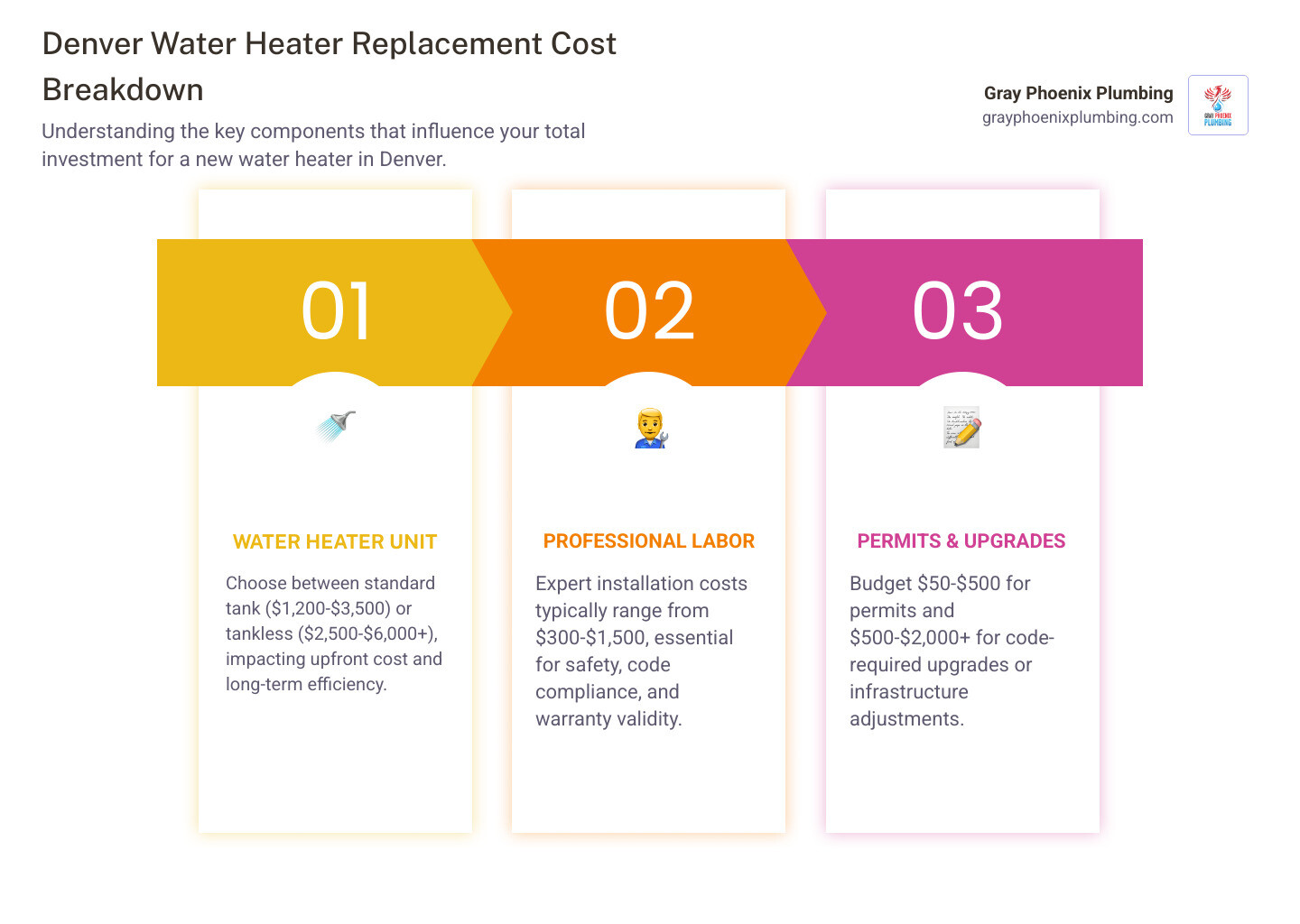
- Standard Tank (40-50 gallon): $1,200 – $3,500
- Tankless Systems: $2,500 – $6,000+
- Labor: $300 – $1,500
- Permits & Fees: $50 – $500
- Additional Upgrades: $500 – $2,000+
When your water heater fails in Denver—especially during one of our freezing winters—it’s more than an inconvenience. It’s an emergency that needs immediate attention. But understanding what you’ll actually pay can feel overwhelming when quotes vary by thousands of dollars.
The truth is, your final bill depends on several factors beyond just the unit itself. The type of water heater you choose, your home’s existing infrastructure, Denver’s specific building codes, and whether you need electrical or gas line upgrades all play a role. A simple like-for-like tank replacement might cost $1,400, while upgrading to a high-efficiency tankless system with new venting could exceed $6,000.
Location matters too. Denver’s altitude affects how gas appliances vent, and our climate means your water heater works harder than it would in milder regions. Historic neighborhoods may require additional considerations, and our local permit requirements add another layer to your budget.
Most importantly, this isn’t just about hot showers. A properly installed water heater that meets current safety codes protects your home from water damage, gas leaks, and carbon monoxide risks. Professional installation ensures your warranty stays valid and your investment lasts its full lifespan—10 to 15 years for tank models, or 20+ years for tankless systems.
This guide breaks down every cost component so you can budget confidently and make the right choice for your home and family.
Key terms for water heater replacement cost denver:
Average Water Heater Replacement Cost Denver: A General Guide
When we talk about the water heater replacement cost Denver, we’re looking at a pretty broad spectrum. The overall cost to replace a water heater in Denver typically ranges from $1,800 to $7,500+, according to various local sources. This might seem like a huge range, but it accounts for all the variables we’ll dive into.
To give you some perspective, the national average for water heater replacement hovers around $1,330, with most homeowners paying between $882 and $1,809. As you can see, Denver’s costs are generally higher, reflecting our unique market, labor rates, and specific installation requirements. For a standard 50-gallon electric water heater, Denver homeowners can expect to pay $1,400 to $2,000. For a standard 50-gallon gas model, that range is $1,400 to $2,200.
These figures encompass the unit itself, the labor involved, and often some basic installation materials. However, they don’t always include potential upgrades or additional costs that might arise. The type of water heater you choose—standard tank, tankless, or even a hybrid—will significantly impact the final price.

Labor costs for water heater installation in Denver typically fall between $50 and $150 per hour. Depending on the complexity of the job, this can translate to a total labor cost of $300 to $1,500. This is why getting a detailed, itemized quote is so important.
For more in-depth information on replacing your water heater, you can explore our resources on Water Heater Replacement.
Standard Tank Water Heater Replacement Cost in Denver
The traditional tank water heater remains a popular choice for many Denver homes, balancing upfront cost with reliable performance. For a standard tank unit, you can expect the water heater replacement cost Denver to fall between $800 and $6,000+, depending on size, brand, and installation specifics.
Let’s break down typical price ranges for the most common tank sizes:
- 40-gallon water heaters: These usually cost between $800 and $2,300 for the unit and installation. A 40-gallon regular vent model might cost $1,399 with a 6-year warranty, or up to $1,699 with a 12-year warranty. These are generally sufficient for 1-2 people.
- 50-gallon water heaters: For a 50-gallon unit, expect costs ranging from $1,000 to $6,500. A 50-gallon regular vent model could be $1,499 with a 6-year warranty, or $1,799 with a 12-year warranty. This size is typically recommended for 3-4 people.
- Larger tanks (75-100 gallons): If your household requires more hot water, 75-gallon units can range from $1,500 to $7,000, and 100-gallon units from $1,800 to $7,500+.
The choice between a gas or electric tank water heater also influences the price.
- Standard electric tank installation: Costs typically range from $1,000 to $3,000. They might be cheaper to install initially, as they don’t require gas lines or venting.
- Standard gas tank installation: These usually range from $1,200 to $3,500. While installation might be slightly higher due to the need for gas line connections and proper venting, gas water heaters often have lower monthly operating costs in areas where natural gas is affordable, like many parts of Denver.
Most traditional tank water heaters, with proper maintenance, have a lifespan of about 10-15 years. This makes them a solid, dependable choice for many homeowners.
Tankless Water Heater Installation Cost in Denver
If you’re looking for endless hot water and long-term energy savings, a tankless water heater might be your ideal solution. However, the water heater replacement cost Denver for a tankless system comes with a higher upfront investment.
Tankless water heaters heat water on demand, meaning you never run out of hot water, which is a huge perk for larger families or those who enjoy long showers! They also offer significant energy savings. Tankless units can be 24% to 34% more energy-efficient than tank-based models, potentially reducing your utility bills by up to 30%. Over time, these savings can offset the higher initial cost.
The installation cost for a tankless water heater in Denver typically ranges from $2,500 to $7,000+.
- Tankless gas water heater installation: Expect costs from $2,700 to $6,000+. These are often preferred for their ability to heat large volumes of water quickly.
- Tankless electric water heater installation: These can range from $1,700 to $4,500. While potentially cheaper to install than gas tankless, they often require significant electrical upgrades in older homes, which can drive up the cost.
One of the most appealing aspects of tankless water heaters is their longevity. With proper care, these units can last 20 years or more, significantly outlasting their tank counterparts. This extended lifespan, combined with energy savings, makes them a wise long-term investment for many Denver homeowners.
To learn more about the specifics of tankless systems, check out our guide on Tankless Water Heater Installation Service in Denver.
Key Factors That Influence Your Final Bill
Understanding the average costs is a great start, but to truly budget for your water heater replacement cost Denver, we need to dig into the factors that can swing that price up or down. It’s rarely just about the cost of the unit itself. Think of it like buying a car: the sticker price is just the beginning; upgrades, features, and installation complexity all add to the final bill.

The final price tag is a combination of the heater’s price, the plumber’s time and skill, and any necessary modifications to your home’s existing plumbing or venting systems. These modifications are often where unexpected costs can arise, especially in older Denver homes that may not meet current building codes.
Our team of experienced Denver Plumbers can help you steer these complexities.
Unit Type, Size, and Fuel Source
Choosing the right water heater is a balancing act between your budget, hot water needs, and long-term energy goals.
| Feature | Standard Tank Water Heater | Tankless Water Heater |
|---|---|---|
| Upfront Cost | Lower ($800 – $3,500 installed) | Higher ($2,500 – $7,000+ installed) |
| Lifespan | 10-15 years | 20+ years |
| Energy Efficiency | Moderate (standby heat loss) | High (heats on demand, 24%-34% more efficient) |
| Hot Water Supply | Limited by tank capacity | Endless |
| Space Required | Large (takes up floor space) | Compact (wall-mounted) |
| Installation | Generally simpler, less modifications needed | More complex, often requires upgrades to gas/electrical/venting |
Sizing Guide:
- For tank heaters: A 40-50 gallon tank is usually sufficient for 2-3 people. For larger households (5+ people), 60-80 gallon tanks are often recommended.
- For tankless heaters: Sizing is based on flow rate (gallons per minute, GPM) and temperature rise needed. A professional will calculate this based on your fixture usage and Denver’s incoming water temperature.
Gas vs. Electric:
- Gas water heaters typically have higher installation costs due to the need for gas line connections and proper venting. However, they often boast lower monthly operating costs in regions like Denver with affordable natural gas. High-efficiency gas heaters often require special PVC venting, which means new holes and pipes, adding to complexity.
- Electric water heaters are generally cheaper to install initially, as they don’t require gas lines. However, their operating costs can be higher depending on local electricity rates. Electric tankless units, in particular, can demand significant electrical service, sometimes requiring a dedicated circuit or even a full electrical panel upgrade in older homes.
High-Efficiency Models: While more expensive upfront, high-efficiency water heaters (including hybrid heat pump models, which can cost $2,500-$7,500+) can lead to substantial long-term savings on utility bills and may qualify for rebates or tax credits.
Installation Complexity and Location
The “where” and “how” of your water heater installation can drastically affect the water heater replacement cost Denver.
- Accessibility Issues: Is your water heater tucked away in a cramped closet, a dark crawlspace, or an attic? Difficult-to-reach locations require more labor time and effort, increasing costs. A simple swap in an open basement is far less expensive than a contorted installation in a tight spot.
- Rerouting Plumbing or Gas Lines: If you’re changing the type of water heater (e.g., from electric to gas, or moving its location), or if your existing lines are outdated, modifications will be necessary. Plumbing or gas line upgrades can cost anywhere from $500 to $1,500. This is particularly true if your home’s current infrastructure isn’t compatible with a newer, more efficient model.
- Electrical Panel Upgrades: For powerful electric tankless water heaters, older homes may need a full electrical panel upgrade, which can add a significant $500 to $2,000 to the project.
- Venting Requirements for Gas Models: Gas water heaters, especially high-efficiency ones, need proper venting to safely expel combustion byproducts. Denver’s altitude can affect appliance performance and venting requirements. If your new gas water heater requires a different venting system (like special PVC for high-efficiency models), this can add $500 to $1,000 and may involve cutting new holes or running new pipes. Improper venting is a serious safety hazard, risking carbon monoxide buildup.
These complexities highlight why professional installation isn’t just a convenience; it’s a necessity for safety and code compliance.
Beyond the Unit: Additional Costs & Denver Permit Requirements
When budgeting for your water heater replacement cost Denver, it’s crucial not to overlook the “hidden” costs. These aren’t hidden because plumbers are trying to trick you; they’re often necessary upgrades or regulatory requirements that ensure your new system is safe, efficient, and up to code. Ignoring them can lead to bigger problems (and expenses) down the line.
Setting a realistic budget means accounting for these items from the start. We always aim for transparency, so you know exactly what you’re paying for.
Permits, Inspections, and Code Upgrades
In Denver, almost every water heater installation or replacement requires a permit.
- Denver Permit Requirements: The City and County of Denver mandates plumbing permits to ensure that installations are done by licensed professionals and adhere to current safety and building codes. This protects you, your home, and your family.
- Permit Fee Estimates: Permit fees can range from $50 to $500. According to Denver’s Building Permit Policy, projects valued between $1 and $500 require a $20 permit fee, while projects from $501 to $2,000 require a $35 fee. Higher-value projects follow a sliding scale. A professional plumber will typically handle the permit application and ensure all work passes inspection.
- Thermal Expansion Tanks: Many Denver homes are now required to have an expansion tank installed with a new water heater. This device absorbs excess water pressure created as water heats up, protecting your plumbing system and water heater from damage. Installation typically costs $200 to $400.
- Shut-off Valves: Upgrading old or missing water and gas shut-off valves is a common code requirement for safety. Each can cost around $99.
- Old Unit Disposal Fees: Don’t forget about hauling away the old, heavy unit. Disposal fees typically range from $50 to $150, but can be up to $300+.
These code upgrades and fees are not optional; they are critical for safety and compliance. A reputable plumber will include them in your quote.
The Risks of DIY vs. Professional Installation
We get it – saving money is always appealing. And watching a few YouTube videos might make a water heater replacement cost Denver seem like a manageable DIY project. But when it comes to water heaters, especially gas models, the risks far outweigh the potential savings.
- Voided Warranties: Most water heater manufacturers explicitly state that their warranties are void if the unit is not installed by a licensed professional. If something goes wrong, you’ll be on the hook for the full cost of repair or replacement.
- Safety Hazards: This is the big one. Improper installation can lead to:
- Gas Leaks: A faulty gas connection can result in dangerous, potentially deadly, gas leaks or carbon monoxide poisoning.
- Water Damage: Poorly soldered pipes or connection failures can lead to leaks, causing extensive and costly water damage to your home.
- Electrical Hazards: Incorrect wiring for electric units, especially tankless models, poses a serious risk of electrical fires or shock.
- Code Violations: DIY installations often bypass the permit and inspection process, leading to code violations. These can cause problems when you try to sell your home, potentially requiring expensive remediation.
- The Value of Professional Expertise: When you hire a licensed plumber, you’re not just paying for their time; you’re paying for their training, experience, and adherence to safety protocols and local codes. They ensure your installation is done correctly, safely, and efficiently the first time. Plus, a professional installation typically comes with a labor warranty, giving you peace of mind. A cheap installation is rarely a good one, and the cost of fixing a botched DIY job can far exceed what you would have paid a professional.
Repair or Replace? Making the Smart Financial Decision
One of the most common questions we hear is, “Should I repair my water heater or replace it entirely?” It’s a critical decision that impacts not only your immediate budget but also your long-term comfort and expenses.
The answer often depends on several factors:
- Age of the Unit: This is a major indicator. Traditional tank water heaters generally last 10-15 years. If your unit is approaching or past this age and experiencing issues, replacement is often the more economical choice. Tankless water heaters have a longer lifespan, often 20 years or more.
- Frequency of Repairs: If you’re calling for repairs every few months, or if the cost of a single repair is more than half the cost of a new unit, it’s time to consider replacement. While repairing a faulty gas valve ($150-$500) or a heating element ($200-$300) might seem cheaper now, recurring issues add up.
- Signs of Failure: Your water heater often gives you clues that it’s on its last legs.
Here are common warning signs:
- Inconsistent Hot Water: Hot water runs out quickly or fluctuates wildly.
- Rusty or Discolored Water: This can indicate rust inside the tank.
- Strange Noises: Popping, rumbling, or banging sounds often signal sediment buildup.
- Leaks Around the Base: Even small leaks can indicate a failing tank.
- Frequent Repairs: You’re on a first-name basis with your plumber for water heater issues.
- High Energy Bills: An inefficient or aging water heater has to work harder, consuming more energy.
- Slow Heating: Takes longer than usual to heat water.
- Unit Age: As mentioned, if it’s over 10-15 years old for a tank model.
Don’t ignore these red flags! They’re not just an inconvenience; they can lead to bigger problems like tank rupture and significant water damage. For more details on these indicators, read our guide on Dont Ignore These Water Heater Warning Signs in Your Denver Home.
Calculating Long-Term Value: While a repair might be $100-$1,300, a new installation can be $1,400-$7,500+. It’s easy to focus on the immediate cost savings of a repair. However, a new, more efficient water heater will save you money on energy bills every month. Over its lifespan, these savings, plus the peace of mind of a reliable hot water supply, often make replacement the smarter financial decision. It’s an investment in your home’s comfort and efficiency.
Frequently Asked Questions about Denver Water Heater Replacement
We understand you likely have a lot of questions when considering a water heater replacement cost Denver. Here are some of the most common inquiries we receive:
How long does a water heater installation take?
The duration of a water heater installation can vary significantly depending on the type of unit and the complexity of the job:
- Standard Replacement Time (Like-for-like tank): If you’re replacing an old tank water heater with a new one of the same type and size in the exact same location, the process typically takes 2-4 hours. This is usually a straightforward swap where existing connections can be reused.
- Complex Installation Time (Tank to Tankless, Fuel Change, Upgrades): More involved projects will naturally take longer. For example, upgrading from a tank to a tankless system, or switching fuel types (e.g., electric to gas), requires additional work like running new gas lines, electrical upgrades, or installing new venting. These types of installations can take anywhere from 6-10 hours, and sometimes even a full day, or potentially multiple days if major infrastructure changes are needed.
Factors that affect the duration include:
- Accessibility: A water heater in a cramped closet or crawlspace will take more time than one in an open utility room.
- Infrastructure Upgrades: If new plumbing, gas lines, or electrical circuits are required, this extends the job.
- Permit and Inspection Scheduling: While the physical installation might be quick, coordinating inspections can add to the overall project timeline.
Can a new water heater increase my home’s value?
Yes, a new water heater can absolutely increase your home’s value, though the extent depends on the type of unit you choose.
- Standard Replacement: Replacing an old, failing water heater with a new, standard tank model doesn’t necessarily “increase” value as much as it preserves it. Buyers expect a functional water heater, and a new one provides peace of mind that they won’t have to deal with a replacement soon. It makes your home more appealing and reduces potential buyer concerns.
- Upgrade to High-Efficiency or Tankless Models: This is where you see a real boost in home value. High-efficiency models and tankless systems are highly appealing to modern buyers due to:
- Energy Savings: Buyers are increasingly conscious of utility costs, and a more efficient system means lower monthly bills. Tankless water heaters, for instance, can reduce energy consumption by 24%-34%.
- Longevity: Tankless units lasting 20+ years are a significant selling point.
- Modern Appeal: These systems are seen as an upgrade, signaling a well-maintained and updated home.
The return on investment comes from both the reduced utility bills you enjoy while living in the home and the increased appeal and potentially higher selling price when you eventually put your home on the market.
Are there rebates available for high-efficiency water heaters in Denver?
Absolutely! Investing in a high-efficiency water heater can often come with financial incentives, helping to offset the upfront water heater replacement cost Denver.
- Federal Tax Credits: The federal government often offers tax credits for certain energy-efficient home improvements, including water heaters. For example, hybrid heat pump water heaters can qualify for significant federal tax credits, sometimes up to $2,000. It’s always a good idea to check the latest information on the Energy Star website. You can find more details on federal tax credits for energy efficient water heaters.
- Utility Company Incentives: Many local utility companies in Colorado, including those serving Denver and surrounding areas like Elizabeth, Parker, Castle Rock, Littleton, and Aurora, offer rebates or incentive programs for homeowners who install Energy Star-certified or high-efficiency water heaters. These programs are designed to encourage energy conservation and can save you hundreds of dollars. We recommend checking with your specific natural gas or electric provider (e.g., Xcel Energy) for current offerings.
- Energy Star Program: Always look for the Energy Star label when purchasing a new water heater. This certification indicates that the product meets strict energy efficiency guidelines set by the U.S. Environmental Protection Agency. These are the models most likely to qualify for rebates and credits.
These rebates and incentives are a fantastic way to make a high-efficiency water heater a more affordable and attractive option for your home.
Conclusion
Navigating the water heater replacement cost Denver can feel like a complex journey, but by understanding the various factors at play, you can approach the process with confidence. We’ve seen that the final price isn’t just about the unit itself; it’s a comprehensive calculation that includes the type and size of heater, its fuel source, the complexity of installation, necessary code upgrades, permits, and professional labor.
While the upfront cost for a new water heater, especially a high-efficiency or tankless model, might seem significant, remember to balance this against the long-term savings. A modern, energy-efficient system can drastically reduce your monthly utility bills and provide years of reliable, endless hot water. Plus, it’s an investment that can increase your home’s value and appeal.
Most importantly, prioritizing a reliable, professional installation is non-negotiable. It ensures your system is safe, adheres to all Denver building codes, maintains your warranty, and operates efficiently for its full lifespan. Trying to cut corners with DIY or unlicensed installers can lead to dangerous situations, expensive repairs, and voided warranties.
At Gray Phoenix Plumbing, we believe in transparent pricing, quality workmanship, and exceptional customer service. Our licensed and background-checked professionals are dedicated to providing the best solutions for your home in Denver and throughout Elizabeth, Parker, Castle Rock, and our broader service areas. We’re a family-owned business committed to keeping your home warm and safe.
For expert guidance and a clear estimate on your Denver plumbing needs, explore our general plumbing services. We’re here to ensure your water heater replacement is a smooth, stress-free experience.


