

Why Basement Leaks in Aurora Demand Your Immediate Attention
Basement leak repair Aurora is a critical service for homeowners dealing with water intrusion in their lower levels. Whether you’re facing damp walls, musty odors, or visible water pooling, understanding your options can save you thousands of dollars in structural damage and protect your family’s health.
Quick Answer: What You Need to Know About Basement Leak Repair in Aurora
- Common Causes: Foundation cracks, hydrostatic pressure from Colorado’s expansive clay soil, poor drainage, and clogged gutters
- Warning Signs: Musty smells, damp spots, peeling paint, water stains, efflorescence (white chalky residue), and bowing walls
- Repair Methods: Interior crack injection (epoxy/polyurethane), exterior excavation with waterproofing membranes, drainage systems, and sump pump installation
- Typical Costs: $50-$650 for crack repairs, $500-$3,000 for sump pumps, $50-$300+ per linear foot for waterproofing
- Why Act Now: Ignoring leaks leads to foundation failure, mold growth, decreased property value, and health risks
Water in your basement isn’t just stressful—it’s a threat to your home’s structural integrity and your family’s well-being. Colorado’s unique climate, with its dry conditions averaging just seventeen inches of rainfall per year, creates soil that rapidly shrinks and expands. This movement puts constant pressure on your foundation, especially during spring snowmelt and summer storms.
Even a hairline crack can allow a surprising amount of water when hydrostatic pressure builds up in the clay soil around your foundation. Left unchecked, that small drip becomes a flood, destroying stored belongings, weakening your home’s foundation, and creating the perfect breeding ground for toxic mold.
The good news? Professional basement leak repair can stop water at its source, restore your home’s value, and give you back the dry, usable space you deserve. From interior crack injection to comprehensive exterior waterproofing systems, modern solutions are more effective and affordable than ever.
I’m Chris Hoffman, a Master Plumber with over 25 years of experience serving Aurora and the Denver Metro area. I’ve helped hundreds of homeowners resolve basement leak repair Aurora challenges, from emergency burst pipe situations to complex foundation waterproofing projects, and I’m here to guide you through this process.
Identifying the Problem: Signs and Causes of Basement Leaks
This section will help you become a detective in your own home, spotting the subtle and obvious signs of water intrusion before they become major disasters. Ignoring these early warning signs can lead to far more extensive and costly repairs down the road. We believe in empowering homeowners with knowledge, so let’s dive into what to look for and why it happens.
Telltale Signs of Water Intrusion
Catching a basement leak early is crucial. We’ve seen countless cases where homeowners wished they had paid attention to these subtle indicators sooner. Here are the signs we always advise our Aurora neighbors to look out for:
- Musty Odors: This is often one of the first and most common signs of a moisture problem. If your basement smells damp, earthy, or like old socks, it’s a strong indicator of mold or mildew growth, which thrives in moist environments. Even if you don’t see water, the smell means moisture is present.
- Damp Spots on Walls or Floor: You might notice discoloration, dark patches, or areas that simply feel cool and clammy to the touch. These damp spots can appear on concrete walls, floors, or even on stored items. They indicate that water is seeping through, even if it hasn’t formed puddles yet.
- Peeling or Bubbling Paint: If your basement walls are painted, moisture seeping through the concrete can cause the paint to lose adhesion, leading to unsightly peeling, bubbling, or blistering. This is a clear sign that water is present behind the surface.
- Visible Water Stains: Water stains, often yellowish or brownish, can appear on walls, floors, or even the ceiling of a finished basement. These are residue left behind after water has dried, indicating a past or ongoing leak. They can sometimes be mistaken for dirt, but their pattern usually reveals their watery origin.
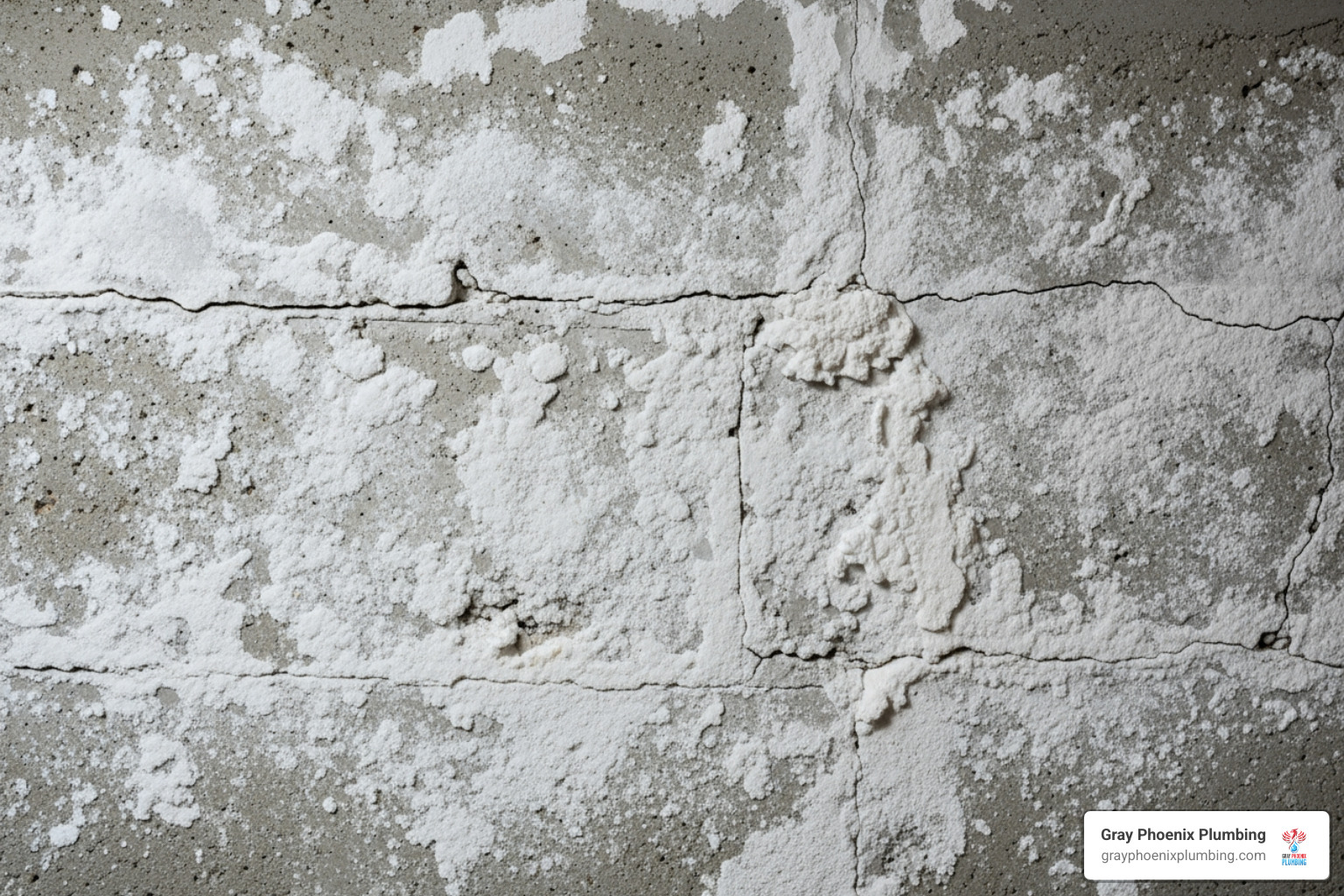
- Efflorescence: This is that white, chalky, powdery substance you might see on concrete or masonry basement walls. It’s caused by water dissolving salts and minerals within the concrete as it passes through, then depositing them on the surface as the water evaporates. It’s a definitive sign of moisture intrusion.
- Bowing or Leaning Walls: This is a more severe sign, indicating significant structural stress. When external pressure (often from hydrostatic pressure in the soil) pushes against your foundation walls, they can begin to bow inward or lean. This requires immediate professional assessment, as it can lead to foundation failure.
- High Humidity: An unusually high humidity level in your basement, even without visible water, suggests that moisture is constantly entering the space. High humidity can lead to condensation, mold growth, and a generally uncomfortable living environment.
- Cracks: While not always a leak indicator on their own, cracks in basement walls or floors are pathways for water. We’ll discuss these more below.
If you notice any of these signs, don’t hesitate. Early detection is key to preventing minor issues from becoming major headaches. Our team is equipped with advanced tools for Water Leak Detection to pinpoint the exact source of your problem.
Why Is My Aurora Basement Leaking? Common Culprits
Understanding why your basement is leaking is the first step to finding a lasting solution. In Aurora, Colorado, our unique climate and geological conditions play a significant role. With an average of only seventeen inches of rainfall per year, our dry and arid climate might seem counterintuitive to basement leaks, but it actually contributes to a specific set of challenges. The soil around homes rapidly shrinks and expands with moisture fluctuations, leading to differential settling and immense pressure on foundations.
Here are the primary causes we encounter in Aurora:
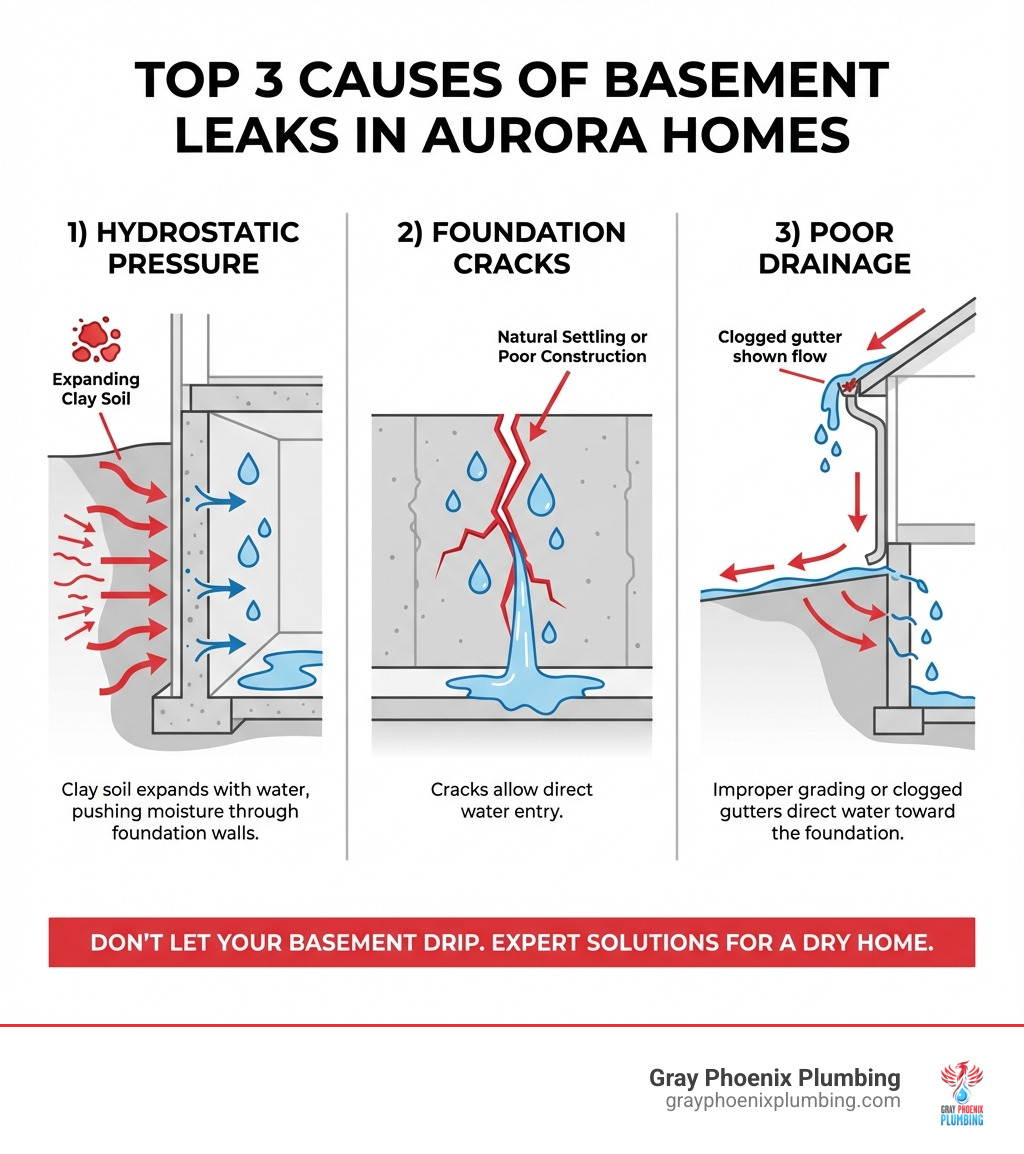
- Expansive Soil: Colorado’s clay-rich soil is notorious for its expansive properties. When it gets wet (from rain, snowmelt, or irrigation), it swells and exerts tremendous pressure on your foundation walls. As it dries, it shrinks, creating voids that can lead to settlement. This constant movement is a major contributor to foundation issues and subsequent leaks.
- Hydrostatic Pressure: This is the pressure exerted by water in the soil against your basement walls. When the ground around your foundation becomes saturated, especially after heavy rains or snowmelt, water can’t drain away fast enough. This water builds up, creating immense pressure that can force its way through even the smallest cracks or porous areas in your foundation. Even hairline cracks can let in a surprising amount of water under these conditions.
- Foundation Cracks: These are direct pathways for water. Cracks can develop due to natural settling of the house, soil movement (like the expansive clay mentioned above), poor construction, or even seismic activity. They can be vertical, horizontal, or stair-step patterns.
- Poured Concrete Foundations: Often develop hairline or vertical cracks due to curing shrinkage or minor settlement.
- Block Foundations: More prone to stair-step or horizontal cracks as individual blocks shift or mortar joints fail under pressure. Horizontal cracks are particularly serious, indicating significant external pressure.
- Poor Exterior Grading: If the ground around your home slopes towards the foundation instead of away from it, rainwater and snowmelt will naturally collect there. This creates prime conditions for hydrostatic pressure and water intrusion. We always check the grading as part of our assessment.
- Clogged Gutters and Downspouts: Your gutters and downspouts are designed to divert rainwater safely away from your home’s foundation. If they are clogged with leaves and debris, or if your downspouts discharge water too close to the foundation, that water will pool against your walls, saturating the soil and increasing hydrostatic pressure.
- Leaking Window Wells: Window wells are common in basements, but if they don’t have proper drainage or if their covers are damaged, they can fill with water during heavy precipitation. This water then sits against your basement window, eventually seeping through the window frame, surrounding wall, or even the foundation itself.
- Frozen or Burst Pipes: While less common as an external basement leak, internal plumbing issues can certainly cause significant water damage in your basement. A frozen pipe that bursts can quickly flood a section of your basement. Our expert team at Gray Phoenix Plumbing can handle these emergencies with our Frozen Burst Pipe Repair services.
Understanding these causes is vital for determining the correct basement leak repair Aurora solution. We always conduct a thorough inspection to identify the root cause, ensuring our repairs are effective and long-lasting.
The High Cost of Inaction: Consequences of Ignoring a Leaky Basement
A small drip might seem harmless, but ignoring it can lead to a cascade of expensive and hazardous problems. We’ve seen how a seemingly minor leak can escalate into a home-threatening disaster. Don’t let a “small problem” become a financial and health nightmare.
Here’s what can happen if you delay addressing a leaky basement:
- Structural Damage: This is perhaps the most concerning consequence. Continuous water intrusion can weaken your home’s foundation over time. Water can erode soil supporting the foundation, cause concrete to spall (flake), or compromise the integrity of support beams and joists. Bowing walls, shifting foundations, and even cracks in upper-level walls and ceilings can all be traced back to basement water problems. This type of damage is often the most expensive to repair.
- Foundation Failure: In extreme cases, unchecked water problems can lead to differential settling of your foundation, causing it to fail. This means expensive and invasive foundation underpinning or stabilization might be required, potentially costing tens of thousands of dollars.
- Mold and Mildew Growth: Moist, dark environments are breeding grounds for mold and mildew. These fungi can start growing within 24-48 hours of water exposure. Once established, they can spread rapidly across walls, floors, stored items, and even into your HVAC system. Mold not only causes a persistent musty odor but also degrades building materials.
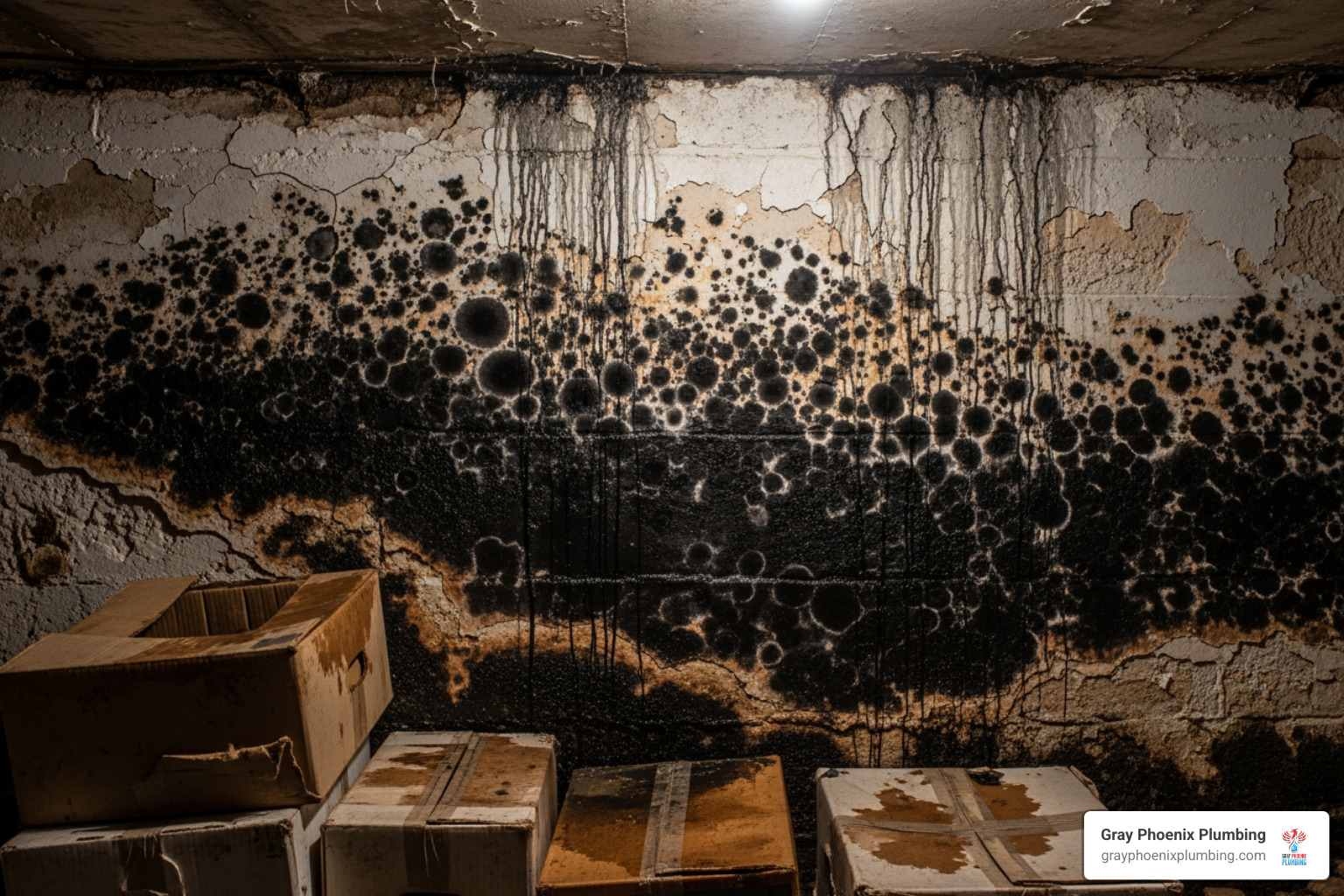
- Health Risks (Allergies, Asthma): Beyond the structural damage, mold and mildew pose significant health risks. Spores released into the air can trigger allergies, asthma attacks, respiratory issues, and other health problems, especially in children, the elderly, and those with compromised immune systems. According to the EPA, mold exposure can cause a variety of health effects. High humidity also encourages dust mites, another common allergen. A wet basement affects not just the basement air, but the entire home’s air quality.
- Damaged Belongings: Anything stored in a leaky basement is at risk. Furniture, electronics, cherished family heirlooms, documents, and seasonal items can be ruined by water, dampness, and mold. Replacing these items can be costly, and some are irreplaceable.
- Decreased Property Value: A wet or damp basement significantly detracts from your home’s value. Potential buyers are wary of homes with water problems due to the associated repair costs and health risks. It can make your home harder to sell and force you to accept a lower asking price. A dry, well-maintained basement, on the other hand, can improve property value.
- Pest Infestations: Damp basements attract pests. Insects like termites, cockroaches, silverfish, and spiders, as well as rodents, thrive in moist environments. A leaky basement essentially rolls out the welcome mat for unwanted guests.
We understand that dealing with a wet basement can feel overwhelming, but the importance of addressing basement leaks promptly cannot be overstated. By taking action now, you can prevent these severe consequences and safeguard your home and family.
Your Guide to Professional Basement Leak Repair Aurora
When it comes to addressing water intrusion, a professional approach to basement leak repair Aurora is essential. Generic DIY fixes often fail because they don’t address the root cause, leading to recurring problems. Understanding the professional methods available empowers you to choose the right solution for your home’s specific needs. Our team has over 50 years of combined experience in this field, ensuring we have the expertise to tackle any challenge.
Interior vs. Exterior Repair Methods
When we assess a basement leak, one of the first considerations is whether an interior or exterior repair method is most appropriate. Both have their advantages and disadvantages, and the best choice depends on the specific nature of the leak, your foundation type, and site conditions.
| Feature | Interior Repair |


