

Why Backflow Testing in Centennial Protects Your Family’s Health
Backflow testing Centennial ensures your drinking water stays safe by verifying that contaminated water cannot flow backward into your clean water supply. Here’s what you need to know:
Quick Facts:
- What it is: Annual testing of backflow prevention devices to prevent water contamination
- Who needs it: Properties with irrigation systems, fire sprinklers, pools, or commercial connections
- Cost: Typically $75 per device per year in Centennial
- Required by: Colorado Department of Public Health and Environment (CDPHE) – must be done annually
- Tested by: Only certified backflow assembly testers
- Deadline: Varies by system type (irrigation by July 1st, domestic/fire by October 1st for commercial)
Backflow happens when water flows in reverse—bringing dirty water, chemicals, or bacteria from your irrigation system, pool, or other sources back into your home’s drinking water. A cross-connection is any point where your clean water system could connect with a contaminated source, like a garden hose sitting in a puddle or a sprinkler system with fertilizer.
In Centennial, protecting our water supply isn’t optional. As public water systems can become polluted through uncontrolled cross-connections, state regulations require annual testing to prevent serious health risks. Whether you own a home with a sprinkler system or manage a commercial building, compliance protects both your family and our community’s water quality.
I’m Chris Hoffman, and over my 25+ years as a Master Plumber, I’ve seen countless cases where proper backflow testing Centennial residents depend on has prevented contamination that could have made families seriously ill. At Gray Phoenix Plumbing, we help property owners throughout the Denver Metro stay compliant and protected.
Why Backflow Prevention is a Non-Negotiable in Centennial
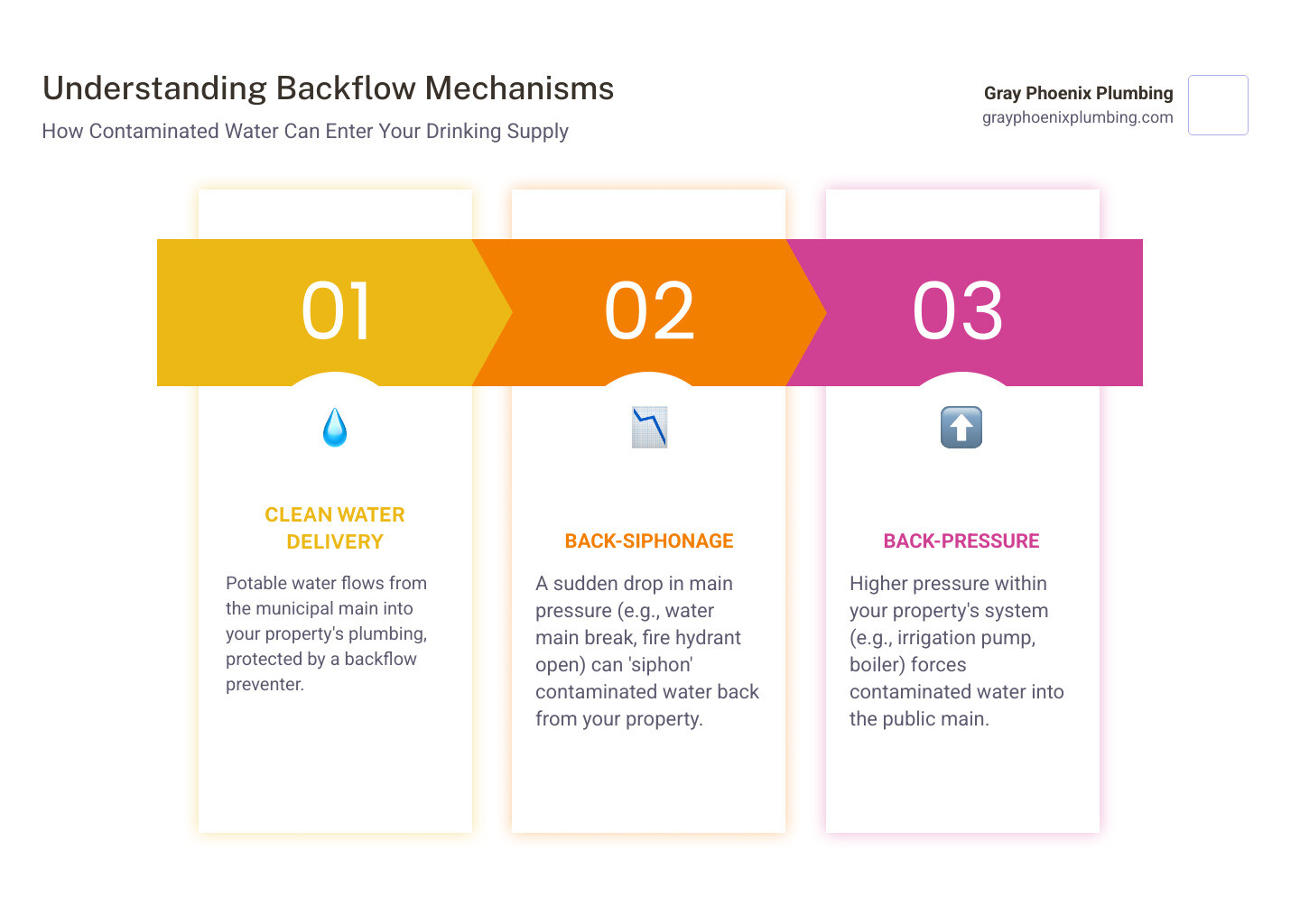
Backflow is an undesirable reversal of water flow from a property’s system back into the clean, potable water supply. This reversal can introduce contaminants into your drinking water, posing serious health risks. A safe water supply is fundamental to the health of our Centennial community, which is why we take this threat seriously.
Backflow is primarily caused by back-siphonage or back-pressure. Back-siphonage happens when public water system pressure drops, such as during a water main break, sucking contaminated water back into your pipes. For example, if a garden hose is in a soapy bucket, a pressure drop could pull that soap into your drinking water. Back-pressure occurs when a private system’s pressure (e.g., a boiler or irrigation pump) exceeds the public supply’s pressure, forcing non-potable water into the clean municipal lines. Both scenarios risk introducing harmful chemicals and bacteria into the water we use daily.
The health hazards associated with contaminated water are severe. We’re talking about waterborne illnesses, gastrointestinal issues, and exposure to dangerous chemicals from fertilizers, pesticides, or industrial processes. The Colorado Department of Public Health and Environment (CDPHE) recognizes these risks and mandates stringent regulations to protect our drinking water from such contamination. These regulations are critical, and you can find more information about them and other public health concerns on the Colorado Department of Public Health and Environment (CDPHE) regulations website.
Signs Your Backflow Preventer Needs Attention
Your backflow prevention device works silently to protect your water, but it can wear down. Recognizing the signs of a malfunction is crucial for water safety. Here are common indicators that it’s time for a professional inspection or backflow testing Centennial:
- Discolored Water: If your tap water appears rusty, murky, or has an unusual tint, it could indicate contamination from a backflow event or a failing device.
- Bad Taste or Odor: A metallic, chemical, or sewage-like taste or smell in your water is a strong warning sign that non-potable substances might be entering your system.
- Slow or Fluctuating Water Pressure: While this can be a symptom of various plumbing issues, a sudden and unexplained drop or inconsistency in water pressure could point to a problem with your backflow preventer.
- Visible Leaks from the Device: Any water leaking directly from the backflow prevention device itself is a clear sign of a malfunction or damage.
- Debris in Water: If you notice sediment, particles, or other foreign materials coming out of your faucets, it’s a serious red flag.
If you observe any of these signs, don’t delay. Contact us immediately for a professional assessment. We have the expertise to diagnose the issue and ensure your water supply is safe.
The Dangers of Contaminated Water
The most critical reason for diligent backflow prevention is the protection of public health. Contaminated water can carry a myriad of pathogens and toxic substances that lead to severe health problems. Waterborne illnesses, ranging from mild gastrointestinal distress to life-threatening infections, are a real threat when backflow occurs. Imagine the impact on your family, employees, or customers if they were to consume contaminated water.
Beyond immediate health concerns, backflow incidents can also cause significant damage to your plumbing fixtures and even contribute to environmental pollution if contaminated water enters groundwater or surface water systems. The long-term effects of exposure to certain contaminants can be devastating. This is why organizations like the EPA provide extensive information on water contaminants and their risks, emphasizing the importance of prevention. You can learn more about these efforts and the various substances that can affect water quality by visiting the EPA information on water contaminants page. Our commitment at Gray Phoenix Plumbing is to help you safeguard against these dangers, ensuring your water is clean and safe for everyone.
Centennial’s Backflow Regulations and Compliance
In Centennial, protecting our drinking water is a legal requirement. Colorado’s plumbing codes mandate annual backflow testing Centennial properties must undergo, performed by a licensed professional. This state law is critical for preventing contamination.
Local authorities like the Centennial Water & Sanitation District and the Arapahoe County Water and Wastewater Authority (ACWWA) enforce these regulations, ensuring all properties comply with Colorado Department of Public Health and Environment (CDPHE) requirements. This collective effort keeps our water safe, and we work closely with these authorities to ensure our services keep your property fully compliant.

Who Needs Backflow Testing?
Backflow testing in Centennial is required for a wide range of properties, including many residential homes. Here’s a breakdown of who typically needs backflow testing Centennial:
- Commercial Properties: All commercial, industrial, municipal, and government buildings are required to have working backflow prevention systems, with annual testing being mandatory. This includes everything from office buildings and restaurants to schools and healthcare facilities, where clean water is critical for patient recovery.
- Residential Properties: While not all residential properties require annual testing for their main domestic line, many homes do need it for specific systems.
- Irrigation Systems: If your home or business has an underground lawn irrigation system, it absolutely requires an approved backflow prevention assembly. These systems are a common source of potential contamination, as water containing fertilizers or pesticides could backflow into your potable supply.
- Fire Sprinkler Systems: Properties equipped with fire sprinkler systems must have backflow prevention devices, and these are subject to annual testing.
- Pools and Hot Tubs: If you have a permanently plumbed pool or hot tub, its backflow prevention device must be tested and certified annually.
- Boilers: Large boilers can create back-pressure, necessitating a backflow prevention device and regular testing.
- Properties with Cross-Connections: Any property with a cross-connection between potable and non-potable water lines—such as a utility sink where a hose might be submerged in dirty water—increases the risk of contamination and likely requires a backflow device.
If you’re unsure whether your property requires backflow testing Centennial, it’s always best to consult with a certified professional. We can assess your plumbing system and provide clear guidance.
Consequences of Non-Compliance
Ignoring backflow testing regulations in Centennial can lead to serious repercussions, both for your property and for public health. We’ve seen the consequences firsthand, and they are not to be taken lightly.
- Violation Notices: Water purveyors and the CDPHE actively monitor compliance. If your property’s backflow prevention device is due for testing and you haven’t complied, you will likely receive a violation notice. In some cases, districts have received violation notices from the State of Colorado due to low testing rates, highlighting the seriousness of the issue.
- Water Service Interruption: This is one of the most severe consequences. If you fail to comply with testing requirements, local water authorities have the right to interrupt your water service until compliance is achieved. Imagine your business or home without water—it’s a scenario we want you to avoid at all costs.
- Fines and Penalties: Non-compliance often comes with financial penalties. These fines can accumulate, making it far more costly than simply scheduling the required annual test.
- Legal Liability: Should a backflow event occur on your property due to a non-compliant or malfunctioning device, you could face significant legal liability if the contamination causes harm to others or the public water supply.
- Importance of Documentation: Proper documentation of your backflow testing Centennial is crucial. Certified test reports must be submitted to the relevant authorities. Without this documentation, you may be considered non-compliant, even if the test was performed.
Our goal is to help you avoid these stressful and costly consequences by ensuring your backflow prevention is always up to code.
The Process of Professional Backflow Testing in Centennial
Professional backflow testing Centennial is a straightforward procedure. First, schedule an appointment with a certified tester, like the experts on our team. Before the test, ensure the device is accessible to prevent delays. The test involves a brief water interruption, often so short it’s unnoticeable. Afterward, the certified tester submits the report to the water purveyor, often using platforms like BSI Online. We handle all the necessary paperwork and submissions for you, ensuring a streamlined compliance process.
What to Expect During Your Backflow Testing in Centennial
When our certified technician arrives for your backflow testing Centennial, they will follow a systematic process to ensure your device functions correctly.
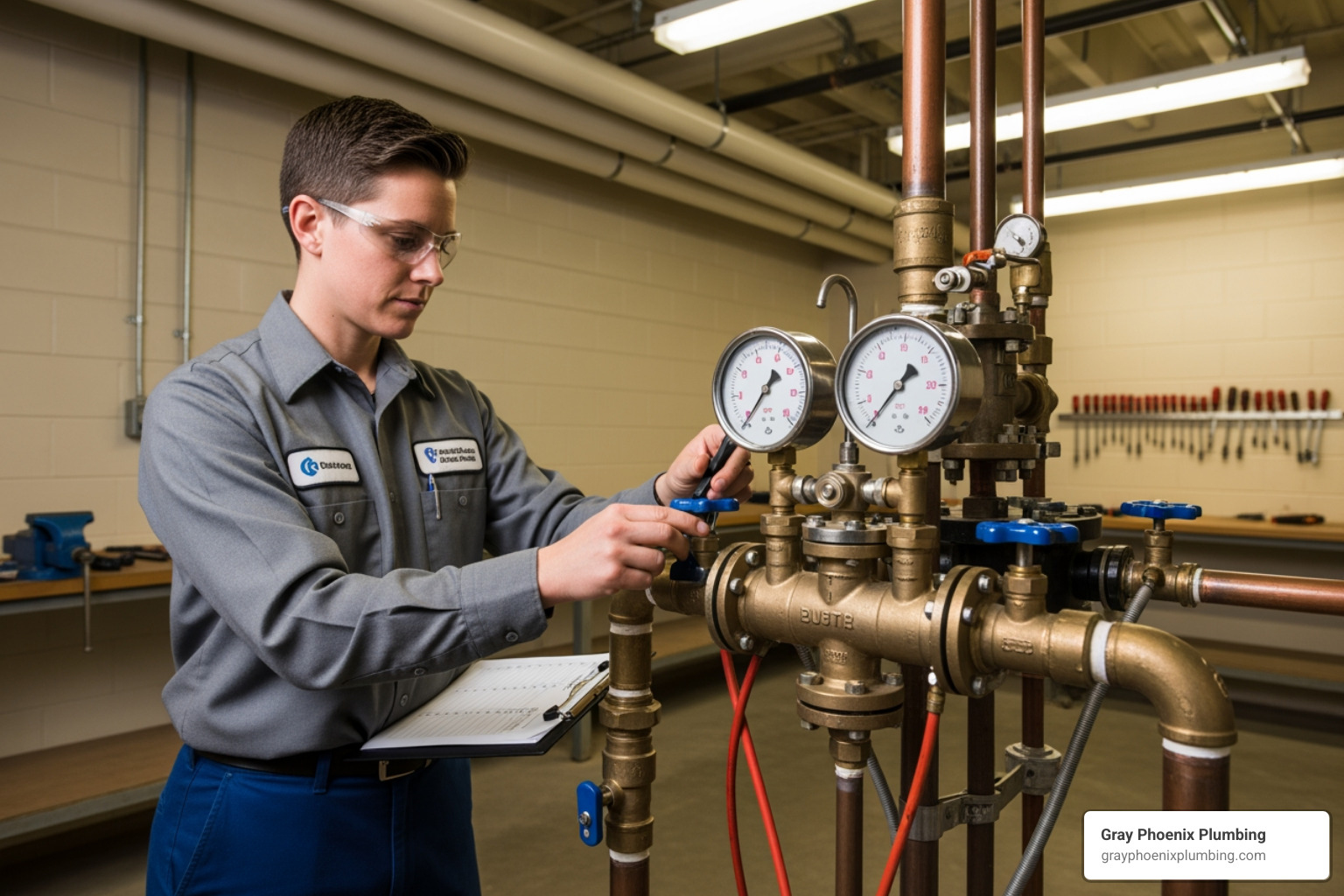
Here’s a breakdown of what typically happens:
- Inspection of Assembly: Our technician will visually inspect the backflow preventer assembly, including check valves, relief valves, shutoff valves, test cocks, and pressure gauges. We’re looking for any signs of damage, corrosion, leaks, or improper installation.
- Pressure Differential Checks: Using specialized gauges, we will measure the pressure differentials across different parts of the device. This is crucial for devices like Reduced Pressure Zone (RPZ) assemblies, which rely on maintaining a lower pressure zone to prevent backflow.
- Check Valve Verification: We’ll test the check valves to ensure they are holding pressure correctly and preventing reverse flow. These valves are designed to open in one direction only.
- Relief Valve Testing: For devices with relief valves, we’ll test their functionality to ensure they open at the correct pressure, discharging water to prevent backflow in case of a malfunction.
- Official Documentation: Upon successful completion of the test, we will provide you with a certified test report. This document confirms your device is working properly and is essential for demonstrating compliance with local regulations. We also handle the submission of this report to your water purveyor, as required.
Our goal is to make the process as seamless and transparent as possible, providing you with peace of mind that your water supply is protected.
Understanding Repair and Replacement
If your backflow device fails its test, it must be repaired or replaced to bring your property back into compliance. A failed test means your water supply is not adequately protected. Water purveyors often require repairs within a short timeframe, such as 14 days, highlighting the urgency.
While some minor on-the-spot repairs may be included in the testing fee, significant work or replacement is the property owner’s responsibility. Replacement is the most reliable solution for devices that are too worn, outdated, or damaged for effective repair. We can help you select and install a new, compliant device, then re-test it and provide all necessary certifications to confirm its functionality.
Costs Associated with Backflow Testing in Centennial
Understanding the financial aspects of backflow prevention is an important part of compliance. The costs associated with backflow testing Centennial can vary, but we aim to provide transparent pricing.
- Typical Testing Costs: Based on information from local water districts, the cost for annual backflow testing in Centennial is often around $75 per backflow device, per year. This fee typically covers the actual testing, any minimal repairs that can be done on-site, and the administrative costs associated with reporting the results. This charge is often invoiced to customers through their water utility bill.
- Repair Costs: If your backflow device fails its test and requires more than minimal repairs, the costs will depend on the extent of the damage and the parts needed. As mentioned, some minor repairs might be included in the annual testing fee, but significant repairs are the property owner’s responsibility. We always provide clear estimates before proceeding with any repair work.
- Replacement Costs: When a backflow preventer is beyond repair or outdated, replacement becomes necessary. The cost of replacement can vary widely based on the type of device, its size, location, and the complexity of the installation. Factors influencing the price include the labor involved, the cost of the new device itself, and any necessary modifications to your plumbing system. We can provide a detailed quote for replacement services, including optional upgrades like pressure regulators or strainers that can extend the life of your new system.
While these costs are an investment, they are significantly less than the potential fines, water service interruption, or health risks associated with non-compliance and contaminated water.
Backflow Systems: Residential, Commercial, and Irrigation
Backflow prevention systems are not one-size-fits-all. The type of device required depends heavily on the specific application, the potential hazard level, and the system it’s protecting. In Centennial, we deal with a variety of systems for residential, commercial, and irrigation needs, each with its own requirements.
The key differences lie in the hazard level associated with the water use. For instance, a residential garden hose submerged in a puddle poses a different risk than a chemical processing plant connected to the municipal water supply. This dictates the type of backflow prevention device installed. Common devices include:
- Reduced Pressure Zone (RPZ) Assembly: This is considered the highest level of backflow protection. It features two independent check valves, a differential pressure relief valve, and two shutoff valves. RPZs are typically used for high-hazard applications where contaminants could be toxic or life-threatening.
- Double Check Valve Assembly (DCVA): This device consists of two independently operating check valves and two shutoff valves. It’s used for medium-hazard applications where the contaminants pose a health risk but are not immediately life-threatening.
- Pressure Vacuum Breaker (PVB): Often seen on irrigation systems, PVBs are designed to prevent back-siphonage. They have a spring-loaded check valve and an air inlet valve that opens to break the vacuum if pressure drops.
Residential Backflow Prevention
For homeowners in Centennial, backflow testing Centennial often focuses on specific points of potential cross-connection. While your main domestic water line might not require annual testing unless it has a specific high-hazard connection, several common residential systems do:
- Hose Bibbs: Simple hose bibbs, especially those where a hose might be submerged in standing water (like a bucket or pool), are potential cross-connections. We recommend installing hose connection vacuum breaker fittings on all threaded faucets if they lack a built-in vacuum breaker.
- Lawn Irrigation Systems: These are among the most common residential systems requiring backflow prevention. Water in irrigation lines can contain fertilizers, pesticides, and other chemicals. An approved backflow prevention assembly, often a PVB, is required on all underground lawn irrigation systems to prevent these substances from entering your drinking water.
- Pools and Spas: If you have a permanently plumbed pool or hot tub, its backflow prevention device needs annual testing. This prevents pool chemicals from contaminating your home’s potable water.
Our goal is to help you protect your home’s potable water from these common residential hazards, ensuring every tap delivers clean, safe water.
Commercial and Fire System Requirements
Commercial properties in Centennial face stricter regulations and require more robust backflow prevention measures due to the higher potential for contamination and the larger number of people who rely on their water supply.
- Stricter Regulations: The Colorado Department of Public Health and Environment (CDPHE) requires all commercial backflow devices to be tested once per year. This applies to devices installed on domestic, fire, and irrigation systems within commercial properties. Local water authorities often set specific deadlines; for example, commercial irrigation systems may have a July 1st deadline, while domestic and fire systems might be due by October 1st.
- Protecting the Public Water Supply: Commercial properties often have complex plumbing systems that can include chemical mixing stations, industrial processes, and large boilers, all of which pose a significant risk of contaminating the public water supply if not properly protected.
- Fire Suppression Systems: Fire sprinkler systems are a critical component of commercial building safety, but they also require dedicated backflow prevention devices. These devices, often Double Check Valve Assemblies, must be tested annually to ensure they are functional and won’t allow stagnant or chemically treated water from the fire system to backflow into the potable supply.
For commercial property owners, compliance is not just about avoiding penalties; it’s about safeguarding employees, customers, and the entire community. We specialize in commercial backflow services, ensuring your business meets all regulatory demands.
For more information about residential plumbing services in general, you can visit our page here: More info about residential plumbing services.
Frequently Asked Questions about Backflow Testing
We understand that backflow testing Centennial can raise many questions. Here are some of the most common inquiries we receive:
How often do I need to get my backflow preventer tested in Centennial?
In Centennial, the requirement for backflow testing is clear: annually. Colorado’s updated plumbing codes, backed by the Colorado Department of Public Health and Environment (CDPHE) mandate, require annual backflow testing and certification by a licensed professional for many systems. Your local water purveyor, such as Centennial Water & Sanitation District or Arapahoe County Water and Wastewater Authority (ACWWA), will typically send notifications when your device is due for its annual test. It’s crucial to adhere to this annual schedule to ensure continuous protection of your water supply and to maintain compliance.
Can I perform my own backflow test?
No, you cannot perform your own backflow test. Backflow testing Centennial must be conducted by a certified backflow assembly tester. These professionals have undergone specialized training and hold specific certifications that qualify them to perform these tests. They use calibrated equipment and follow strict procedures to accurately assess the functionality of your backflow prevention device. Attempting to test it yourself is not only against regulations but could also lead to an inaccurate assessment, leaving your water supply vulnerable to contamination. The integrity of our drinking water supply is too important to leave to untrained individuals.
What happens if my device fails the test?
If your backflow prevention device fails its annual test, you will be notified of the failure. This indicates that the device is not adequately protecting your water supply from potential contamination. The next steps typically involve:
- Repair or Replacement: You will be required to have the device repaired or replaced by a certified plumber. Many water purveyors stipulate a specific timeframe for this, often requiring repairs to be completed within 14 days of the failed test.
- Re-testing: After the repair or replacement, the device must be re-tested by a certified backflow tester to confirm it is now functioning correctly and providing the necessary protection.
- Responsibility of Property Owner: As the property owner, you are ultimately responsible for ensuring that your backflow prevention device is operational and compliant. This includes arranging for the necessary repairs or replacement and the subsequent re-testing.
Our team can guide you through this process, from diagnosing the issue to completing repairs or replacement and ensuring your device passes its re-test.
Ensure Your Water’s Safety and Compliance
As we’ve explored, backflow testing Centennial is not merely a regulatory hurdle; it’s a vital safeguard for the health and well-being of our families, businesses, and the entire community. By understanding what backflow is, recognizing the signs of a failing device, and complying with local and state regulations, we collectively ensure our precious drinking water remains clean and safe.
The peace of mind that comes from knowing your water supply is protected is invaluable. At Gray Phoenix Plumbing, we are committed to providing expert, certified backflow testing Centennial residents and businesses can rely on. Our team of licensed, background-checked professionals is equipped with the knowledge and tools to handle all your backflow prevention needs, from routine testing to complex repairs and installations. We’re here to help you steer the requirements and maintain a clear conscience about your water.
For expert plumbing assistance and to ensure your home is compliant and safe, explore our residential plumbing services.


